Your nails are like tiny shields on your fingers and toes. They protect your sensitive skin and help you pick up things. But did you know nails can tell you a lot about your health? This guide explains everything from how nails work to keeping them super healthy.
What Are Nails Made Of?
Nails grow from special skin under your fingertips called the **nail matrix**. This is like a factory that makes new nail cells. These cells harden into a tough material called keratin, the same stuff in your hair and skin. Fingernails grow faster than toenails—about 3 millimeters a month for fingers, but only 1 millimeter for toes. Kids’ nails grow quickly, especially between ages 10 and 14, reaching up to 1.5 mm per month.
The shiny white part at the base is the **lunula**, meaning ‘little moon.’ It’s where new nail is forming. The skin around the nail is the **cuticle**—don’t pick it! The hard plate you see is the nail itself, sitting on the **nail bed**.
- Nail parts: Matrix (growth area), lunula (white crescent), cuticle (skin edge), plate (hard top), bed (skin underneath).
- Newborn nails are soft and thin, getting thicker as you grow.
How Fast Do Nails Grow?
Nails are always growing, even if you can’t see it. In kids, growth speeds up during busy play times or summer. Things that help growth: good food with protein, vitamins like biotin, and staying active. But if you’re sick or stressed, growth slows down.
| Nail Type | Growth Speed (per month) | Full Regrowth Time |
|---|---|---|
| Fingernails | 3 mm | 6 months |
| Toenails | 1 mm | 12-18 months |
Toenails take longer because toes don’t get as much blood flow. If you lose a nail from a slam, it grows back unless the matrix is hurt badly.
Daily Nail Care Tips for Kids
Keeping nails clean and short stops germs and breaks. Wash hands with soap after playing outside. Dry them well—no wet nails mean no infections.
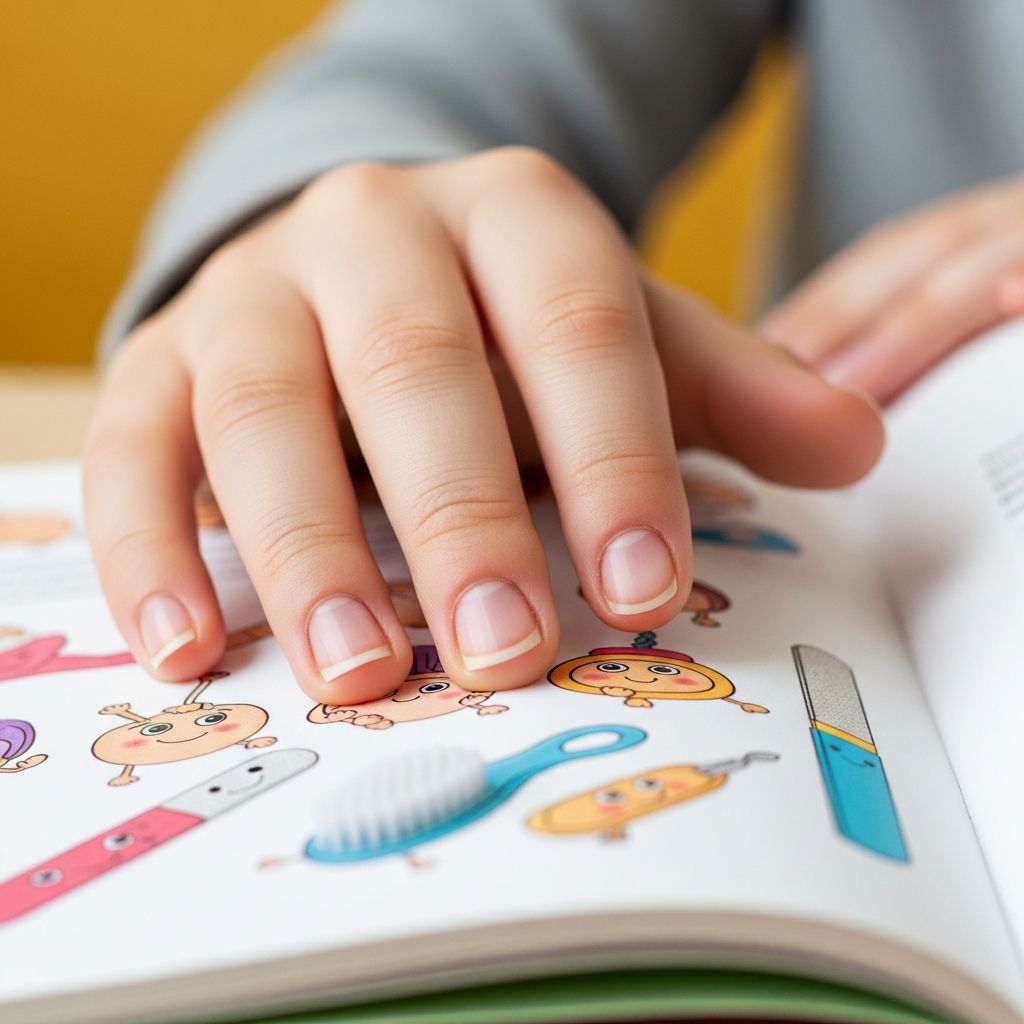
- Trim regularly: Cut straight across, round corners slightly. Parents help until age 9-10. Use baby clippers or emery boards for little ones.
- Moisturize: Rub lotion on nails and cuticles to keep them strong. Dry nails split easily.
- Protect feet: Wear flip-flops in pools or locker rooms to avoid warts or fungus. Change socks daily.
- Shoes matter: Pick roomy shoes so toes wiggle free—no ingrown nails.
Check nails weekly: Look for dark lines, crumbling, or color changes. These can signal bigger health issues—tell a grown-up.
Common Nail Problems Kids Face
Kids get nail troubles from play, habits, or germs. About 3-11% of kids have nail issues, often infections or trauma. Spot them early!
Bitten or Picked Nails
Nail biting is super common. It lets germs in, causing redness or pus around nails. Try bitter polish or fun stickers to stop. Short nails help too.
Ingrown Toenails
This hurts when nail edge digs into skin. Tight shoes or wrong cutting cause it. Soak in warm water, keep clean. Doctor helps if infected.
Infections: Bacteria, Fungus, Warts
Bacterial ones make pus and swelling (paronychia). Kids get these from bites or water play. Fungus yellows nails, rare in kids. Warts from public floors—flip-flops prevent.
- Signs: Red, swollen skin; pus; thick/yellow nails.
- Treatment: Keep dry, antibiotic cream. See doc for bad cases.
Ridges, Splitting, or Rough Nails
Vertical ridges come from matrix bumps, like Beau’s lines from illness. Horizontal ones from injury. Trachyonychia makes nails sandy-rough, often clears alone. Peeling? Moisturize or check iron levels.
Injuries and Trauma
Slammed fingers cause blood under nail or loss. Ice it, protect till new grows. Toddlers get mallet finger from play—nail bends wrong.
When Nails Show Bigger Health Clues
Nails mirror your body. White spots? Usually trauma, not calcium lack. Spoon-shaped (koilonychia)? Maybe iron low. Clubbing (curved tips)? Heart or lung check needed.
In kids, 75% of genetic syndromes affect nails—like nail-patella with tiny, ridged nails. Yellow nails? Infection. Crumbling? Psoriasis or fungus.
| Nail Sign | Possible Cause | What to Do |
|---|---|---|
| Dark streak | Skin cancer (rare) | See dermatologist now |
| Yellow/thick | Fungus or psoriasis | Antifungal meds |
| Ridges | Aging or illness | Buff gently; check health |
| Peeling | Dryness or iron lack | Moisturize, eat iron foods |
Fun Facts About Nails
- Your longest nail grows fastest—pinkie slowest!
- Animals have claws; ours are flat for tools.
- Nails grow faster in summer and on dominant hand.
- Space slows growth—no gravity!
Polish is okay sometimes, but let nails breathe. No acetone remover—it dries them.
Age-by-Age Nail Tips
Babies (0-1 Year)
Nails grow fast—trim twice weekly with clippers. Toenails softer, monthly okay. No biting—risks herpes infection.
Toddlers (1-3 Years)
Play causes trauma: Beau’s lines, thick nails. Cuticles from thumb-sucking. Keep hands clean.
School Kids (4-12 Years)
Biters and pickers—teach checking. Sports? Protect from stubs. Fast growth now.
FAQs
Why do I bite my nails?
Stress or habit. Try fidget toys or rewards to quit. Short nails make it hard.
Can nails get sick?
Yes! Germs cause swelling. Keep clean, see doc if pus or pain.
How do I stop ingrown toenails?
Cut straight, wear big shoes, soak if sore.
Do white spots mean low calcium?
No, usually bumps. Real issues show other ways.
Is nail polish bad?
Not if occasional. Use gentle remover, moisturize after.
Quick Nail Health Checklist
- Are they clean and short?
- No pain, redness, or pus?
- Smooth, pink, strong?
- Lunula visible?
- Same shape/color on all?
Yes to all? Great job! No? Talk to parents or doctor.
Healthy nails mean happy hands and feet. With these tips, yours will shine!
References
- Nail Disorders in Children — PMC – PubMed Central – NIH. 2018-11-26. https://pmc.ncbi.nlm.nih.gov/articles/PMC6219237/
- Teaching your child healthy nail care — American Academy of Dermatology (AAD). 2023-11-14. https://www.aad.org/public/everyday-care/nail-care-secrets/basics/nail-care
- Nail Health Chart: Common Problems and Treatment — Healthline. Accessed 2026. https://www.healthline.com/health/beauty-skin-care/healthy-nails
- Nail Care: Fingers and Toes — HealthyChildren.org (AAP). Accessed 2026. https://www.healthychildren.org/English/ages-stages/baby/bathing-skin-care/Pages/Nail-Care-Fingers-and-Toes.aspx
- Healthy Habits: Nail Hygiene — Centers for Disease Control and Prevention (CDC). Accessed 2026. https://www.cdc.gov/hygiene/about/nail-hygiene.html