Halloween can be one of the most joyful (and chaotic) nights of the year for families. Between school parties, neighborhood events, and trick-or-treating, children often care about two things: looking awesome and being comfortable enough to enjoy every minute. This guide gathers creative, practical ideas for kids’ Halloween costumes, inspired by classic looks, modern trends, and easy DIY options parents can pull together without losing sleep.
What Makes a Great Kids’ Halloween Costume?
Before diving into specific ideas, it helps to understand what turns a costume from “just okay” into a kid (and parent) favorite. Research on child play and dress-up shows that costumes can support imaginative play, social interaction, and confidence when kids feel free to move and pretend.
- Comfort: Soft fabrics, layers appropriate for the weather, and shoes a child can actually walk in.
- Mobility: Costumes that allow running, climbing porch steps, and bathroom breaks without a meltdown.
- Safety: Flame-resistant materials, good visibility, and reflective elements for nighttime events.
- Personality match: Outfits that reflect what your child is genuinely into—whether that’s dinosaurs, ballerinas, or traffic cones.
- Practicality: Options you can afford in time, money, and energy.
| Type | Pros | Cons |
|---|---|---|
| DIY Costumes | Often cheaper using clothes on hand; customizable; great for unique kid ideas; fun project for crafty families. | Time-consuming; may require sewing or crafting skills; last-minute changes can be stressful. |
| Store-Bought Costumes | Fast and convenient; wide variety of characters; often include accessories; helpful if you’re short on time. | Sizing can be tricky; some fabrics can be itchy; popular characters may look similar to everyone else’s. |
| Hybrid (DIY + Store) | Best of both worlds: buy a simple base (like a jumpsuit or dress) and customize with DIY accessories. | Still requires some planning and light crafting; costs can creep up with add-ons. |
Classic Costume Themes That Always Work
Some costume ideas show up year after year because kids love them and parents know how to pull them off quickly. Retailers consistently list superheroes, animals, and spooky creatures as among the most popular kids’ Halloween themes.
1. Superheroes and Storybook Heroes
Whether your child wants to be a caped crusader, an intergalactic guardian, or a hero from their favorite picture book, this category is endlessly flexible.
- Use leggings or joggers and a solid-colored T-shirt as a base.
- Add a simple felt cape tied with ribbon or Velcro for safety.
- Create a cardboard or foam board “shield,” emblem, or badge.
- For younger kids, skip masks that cover the whole face and opt for a headband or small eye mask for visibility.
2. Friendly (or Spooky) Creatures
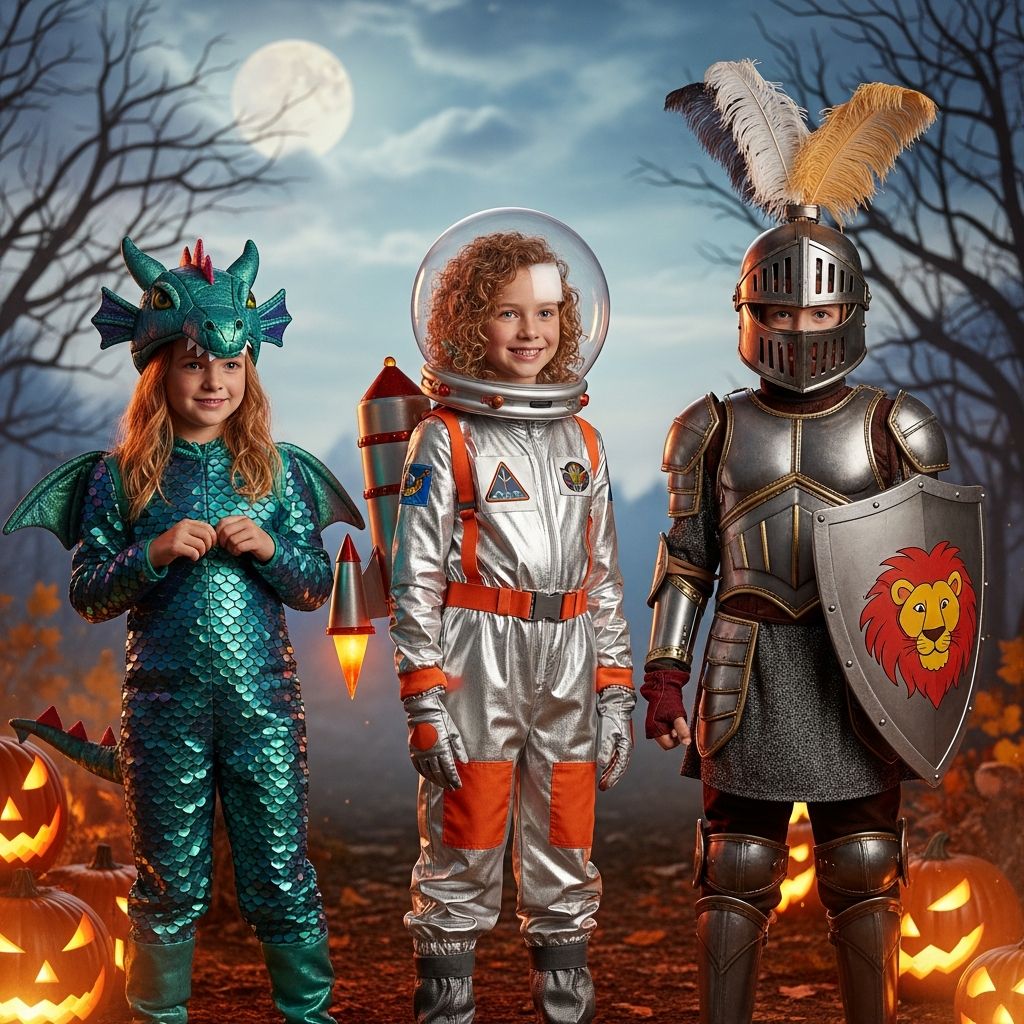
From kittens and dragons to classic ghosts and skeletons, creature costumes work for almost any age.
- Animals: Hoodies with ears, fabric tails attached to belts, and face paint whiskers are all you need.
- Ghosts: A white sheet is traditional, but you can make a safer version with a white dress or T-shirt and glow-in-the-dark fabric paint.
- Skeletons: Pre-printed skeleton pajamas layered with a jacket make a comfy, bedtime-ready costume.
Parents often favor these costumes because many pieces—like hoodies and pajamas—can be reused after Halloween.
3. Community Helpers and Real-World Heroes
Many kids love dressing as the people who keep their communities running, such as firefighters, doctors, chefs, and astronauts. This type of pretend play can support social understanding and empathy.
- Use play doctor kits or toy tool belts as accessories.
- Repurpose dress-up clothes from the toy bin or school play wardrobe.
- Add name badges, ID cards, or mission patches printed on cardstock.
Creative DIY Ideas Using Clothes You Already Own
You do not need a sewing machine or hot-glue burns to create a memorable costume. Many clever ideas come from looking at everyday clothes differently and adding a few details.
Costumes Built from Basics
Start with pieces you already have—like jeans, striped shirts, plain dresses, or hoodies—and build a character around them.
- Color-Themed Characters: Dress your child in all one color (e.g., all red or all green) and turn them into an abstract character like a “crayon,” “gumball,” or “berry bush” using simple paper or felt cutouts.
- Wordplay Costumes: Combine an everyday outfit with a funny sign or prop (e.g., a shirt with attached paper “raindrops” for a “cloudy day,” or a shirt with paper cut-out emojis).
- Comfort-First Looks: Pajamas plus a robe can become a “sleepy wizard,” “bedtime superhero,” or “dream explorer.”
Household Items as Props
With basic safety in mind, many lightweight household items can be transformed into kid-friendly props.
- Cardboard boxes: turn into vehicles, vending machines, or mini stages.
- Old pillowcases: become tunics, cloaks, or oversized treat bags.
- Paper plates and construction paper: ideal for shields, animal faces, or oversized costume jewelry.
When designing your DIY masterpiece, keep edges smooth, avoid small detachable pieces for toddlers, and make sure nothing blocks vision or hearing.
Costume Ideas by Age Group
What works for a preschooler might frustrate a grade-schooler. Matching costume ideas to age can make the night much happier for everyone.
Toddlers and Preschoolers
At this age, comfort and safety are more important than elaborate details. Young children may also be wary of masks and very spooky themes.
- One-piece outfits: Rompers or jumpsuits with simple animal or character themes are easy to put on and take off.
- Soft hoods instead of hats: Hoods are less likely to fall off and can be pushed back if your child gets warm.
- Minimal face paint: A small nose, whiskers, or a star is usually enough and won’t smear as badly as a full-face design.
Elementary School Kids
Kids in this group often care more about the specific character and details. They may enjoy helping to design or build the costume.
- Include them in brainstorming and let them sketch their dream costume.
- Consider two-part costumes (like a hoodie plus accessory) that can be removed at school if needed.
- Friends may coordinate as a group theme—such as different planets, colors, or characters from the same story.
Tweens and Early Teens
Older kids might want costumes that are funny, slightly spooky, or tied to pop culture. They can take on more of the work, from planning to crafting.
- Encourage thrift-store upcycling for jackets, hats, or dresses they can safely modify.
- Lean into pun-based costumes or retro references they find online (while helping them keep it age-appropriate).
- Support comfort: sneakers, leggings, and layers that work for longer walks.
Family and Sibling Costume Ideas
Coordinated costumes can make photos unforgettable without requiring everyone to wear matching outfits. Many families pick a simple shared theme and let each person interpret it differently.
- Color Families: Each person chooses a different color and becomes a “crayon box,” “rainbow,” or “paint palette.”
- Classic Story Worlds: Think explorers, pirates, fairytale royalty, or travelers from the same imaginary land.
- Everyday Objects: One child as a sun, another as a cloud, a parent as a rainbow, and a baby as a raindrop.
To avoid overwhelming anyone, let siblings choose whether they want to join the group theme or wear something entirely their own.
Comfort and Safety: Non-Negotiables
Costume safety may not be the most exciting part of Halloween, but it’s crucial. Public health agencies emphasize visibility, flame resistance, and safe accessories for trick-or-treating.
- Check labels: Choose costumes and accessories labeled as flame-resistant whenever possible.
- Prioritize visibility: Use face paint instead of full masks, and add reflective tape to backs, sleeves, and treat bags.
- Right length: Hem long robes or dresses so kids do not trip on porch steps.
- Safe props: Opt for soft foam or cardboard swords, wands, and staffs; avoid hard or sharp items.
- Comfort test: Have your child wear the full costume for 10–15 minutes at home to check for itching, overheating, or restricted movement.
Planning Timeline for Stress-Free Costumes
A bit of planning can transform Halloween costume prep from last-minute panic into a fun family project.
- 3–4 weeks before: Talk through ideas, look in closets, and confirm any school or daycare costume rules.
- 2–3 weeks before: Order key pieces or shop secondhand; gather cardboard, paint, and accessories for DIY builds.
- 1 week before: Do a full costume rehearsal—shoes, layers, and any face paint—to catch problems early.
- Day of: Pack backup layers, wipes for face paint, and a small repair kit (safety pins, tape) if you’ll be out for a while.
Budget-Friendly Costume Strategies
Parents do not have to spend much for kids to feel special on Halloween. Many families successfully combine secondhand items, DIY elements, and simple purchased pieces.
- Swap with friends: Organize a costume swap at school, your playgroup, or your community center.
- Buy versatile basics: Capes, tutus, and solid-colored T-shirts can be reused for years of dress-up games.
- Shop off-season: Check clearance sections right after Halloween for next year’s costumes.
- Limit one-time-use items: Focus spending on items that can also work as pajamas, winter hats, or play clothes.
Frequently Asked Questions (FAQs)
How do I choose a costume that’s safe for nighttime trick-or-treating?
Aim for light-colored clothing or add reflective tape to darker costumes, choose flame-resistant materials when possible, and use face paint instead of full masks so kids can see and breathe clearly.
My child keeps changing their mind. When should I stop letting them switch ideas?
Set a clear deadline, such as one week before Halloween, and involve them in small crafting tasks once you’ve started; helping to make the costume often makes kids feel committed to their choice.
What can I do if my child is scared of spooky costumes?
Stick to friendly themes like animals, bright colors, or favorite story characters, and consider daytime events or indoor parties where decorations and other costumes may be less intense.
Are store-bought costumes okay, or should I make my own?
Either option is fine—what matters most is comfort, safety, and how your child feels. Many families use a hybrid approach by buying a simple base costume and customizing it with DIY accessories.
How can I make my child’s costume warm enough for cold weather?
Plan for layers: thermal shirts, leggings, or fleece can go under most costumes. You can also incorporate coats and hats into the theme, like a detective in a trench coat or a winter explorer.
References
- Pretend and Socio-Dramatic Play: Competence, Performance, and Early School Adjustment — Lindsey, E.W., & Colwell, M.J., Early Education and Development. 2013-09-01. https://doi.org/10.1080/10409289.2011.636356
- Play, Learning and the Early Childhood Curriculum — Wood, E. Routledge. 2013-05-13. https://doi.org/10.4324/9780203699925
- Halloween Health & Safety Tips — Centers for Disease Control and Prevention (CDC). 2021-10-15. https://www.cdc.gov/family/halloween/index.htm
- Fun and Safety Tips for Halloween — American Academy of Pediatrics (AAP). 2022-10-01. https://www.healthychildren.org/English/safety-prevention/on-the-go/Pages/Halloween-Safety-Tips.aspx
- Holiday Safety — U.S. Consumer Product Safety Commission (CPSC). 2023-10-01. https://www.cpsc.gov/Safety-Education/Safety-Education-Centers/holiday-safety