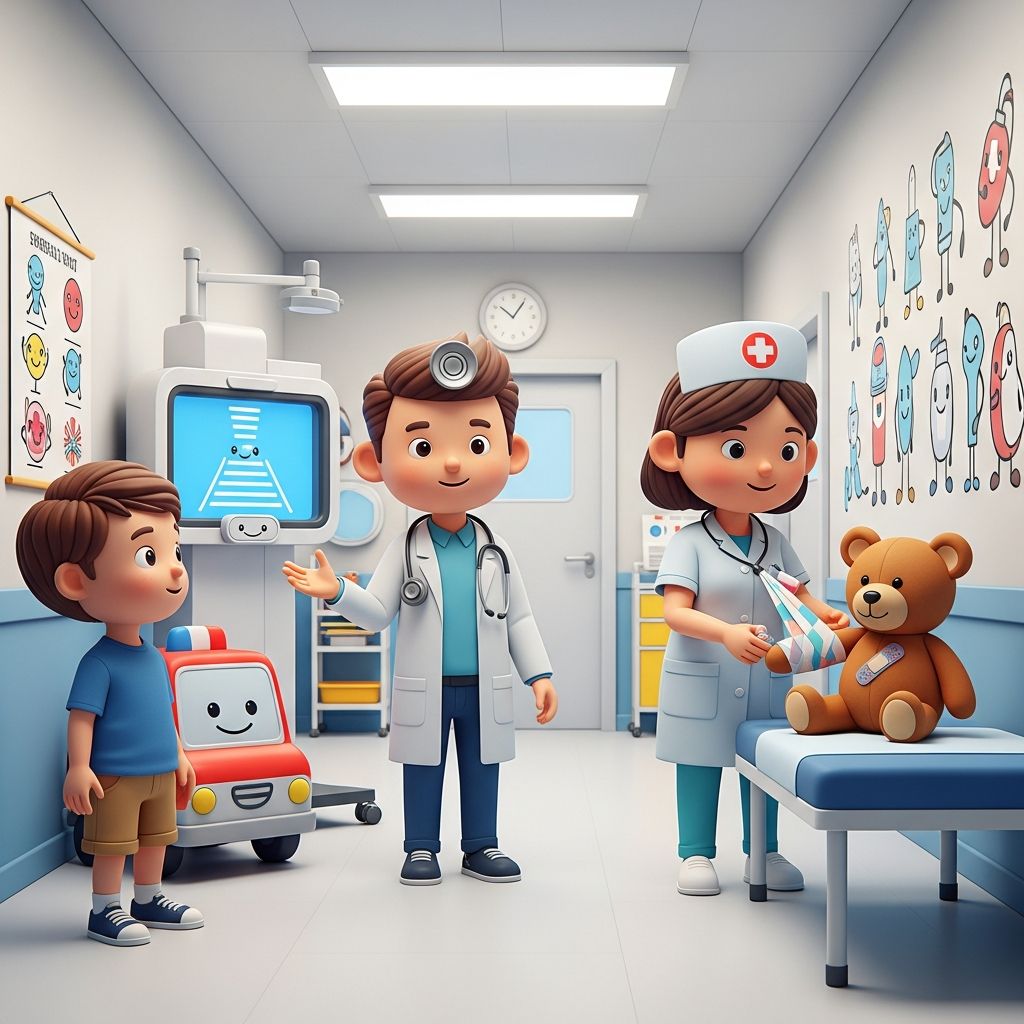
The words emergency room (often called the ER) can sound a little scary, especially if you have never been there before. This guide is here to explain, in kid-friendly language, what the ER is, why kids sometimes go there, and what happens once you arrive. Knowing what to expect can make everything feel a lot less frightening.
What Is the Emergency Room?
The emergency room is a special part of a hospital where doctors, nurses, and other helpers are ready all day and all night to take care of serious or sudden health problems. People go there when they need help right away, not for regular checkups or school physicals.
- Open 24/7: The ER never closes, even on weekends, holidays, and late at night.
- Helps all ages: Babies, kids, teens, and adults can all get care there.
- Handles emergencies: The ER is for problems that could be dangerous if you wait too long to get help, like very hard breathing, big injuries, or sudden strong pain.
In many hospitals, there is a pediatric emergency area, which is a section of the ER made especially for children. The staff there are trained to understand kids’ bodies and how kids feel when they are hurt or scared.
Why Would a Kid Need the ER?
Most of the time, kids see their regular doctor or go to an urgent care clinic for problems like sore throats, ear infections, or mild fevers. But some situations are more serious and need fast help from the ER.
Examples of Emergencies
Parents or caregivers might take a child to the ER, or call emergency services, if they notice:
- Serious trouble breathing (fast breathing, loud wheezing, using belly or neck muscles to breathe, or turning blue around the lips).
- Very bad injuries, such as a deep cut that will not stop bleeding, a possible broken bone, or a head injury after a fall or crash.
- High fever in a very young child or a fever that does not get better with medicine and is making the child look very ill.
- Seizures (shaking, not responding, or staring and not waking up normally).
- Poisoning or swallowing something dangerous, such as certain medicines, chemicals, or batteries.
- Severe allergic reactions with swelling of the face or tongue, hives, and difficulty breathing.
- Severe pain that is sudden and intense, like strong stomach, chest, or head pain.
These are only some examples. Grown-ups use their best judgment, and doctors encourage parents to seek emergency care if they are truly worried about a child’s safety.
What Happens When You First Arrive?
When you get to the ER, you do not usually see the doctor right away. First, you meet a nurse or other staff member who asks questions and checks how you are doing. This process is often called triage (say: tree-ahj), which means deciding who needs help first.
Check-In and Questions
At the front desk, a staff member will usually ask your parent or caregiver:
- Your name and age
- What problem you are having (for example, “She fell off her bike,” or “He has trouble breathing”)
- Any allergies you have to food or medicine
- What medicines you normally take or took that day
Quick Health Check
Next, a nurse may check your:
- Temperature (to see if you have a fever)
- Heart rate and breathing (how fast your heart and lungs are working)
- Blood pressure (how hard your blood is pushing against your blood vessels)
- Oxygen level (how much oxygen your blood is carrying)
This information helps the team decide if you need to be seen right away or if it is safe to wait a little while. Someone who is having trouble breathing or bleeding heavily will be seen before someone who has a small cut or mild headache.
Who Works in the ER?
The emergency room is full of different people with different jobs. They all work together to help you feel better and stay safe.
| Helper | What They Do |
|---|---|
| Doctors (emergency physicians, pediatricians) | Examine you, order tests, diagnose what is wrong, and decide on treatments like medicines or procedures. |
| Nurses | Check your vital signs, give medicines, talk with you and your family, and help keep you comfortable. |
| Paramedics / EMTs | Sometimes bring patients in an ambulance and tell the ER team what happened and what care was given on the way. |
| Technicians | Help with blood tests, X-rays, and other equipment. |
| Child life specialists | Teach kids what is happening, bring toys or games, and help you cope with fear or pain. |
| Registration and security staff | Handle paperwork and help keep everyone safe in the ER. |
What Kinds of Tests Might Be Done?
Not every ER visit needs tests. Sometimes the doctor can tell what is wrong just by talking to you and examining your body. But if more information is needed, the team may order tests that help them see inside your body or measure things in your blood.
Common Tests for Kids
- Blood tests: A small amount of blood is taken, usually from your arm or hand, to check for infection, anemia, or other problems.
- Urine tests: You pee into a cup so the lab can look for infection, dehydration, or other issues.
- X-rays: A quick picture that can show if a bone might be broken or if there is a chest problem, like pneumonia.
- Ultrasound: A test that uses sound waves (not radiation) to make pictures of organs like your belly or heart.
- CT or MRI scans: Special machines that take more detailed images of your head or body when doctors need lots of information.
Your parent or caregiver can usually stay nearby during many of these tests, and staff will explain what they are doing in simple words so you know what to expect.
How Doctors and Nurses Help You Feel Better
Once the ER team understands what is going on, they will begin treatment. This might be something very simple or something more involved, depending on what you need.
- Medicines: You might get pain medicine, fever medicine, antibiotics (to fight bacterial infections), or other medicines to help you breathe more easily or stop an allergic reaction.
- Stitches or bandages: If you have a deep cut, the doctor may clean it and use stitches, glue, or special strips to help it heal.
- Splints or casts: If a bone might be broken, you may get a splint or cast to keep it still while it heals.
- IV fluids: If you are very dehydrated from vomiting or diarrhea, you might get fluids through a tiny tube in your vein to help your body catch up on liquids.
- Breathing treatments: In some emergencies, kids get oxygen, inhalers, or nebulizer treatments (a cool mist medicine you breathe in) to help their lungs work better.
While all of this is happening, the staff should also be checking how you feel—both in your body and your emotions. It is okay to say you are scared, nervous, or in pain. The ER team wants to know so they can help.
Going Home or Staying in the Hospital
After the tests and treatments are done, the ER doctor decides what should happen next.
- Going home: Many kids feel well enough to go home after treatment. The doctor will explain what to do at home, what medicine to take, and when to see your regular doctor. They may also tell your parents what signs mean “come back to the ER.”
- Staying in the hospital: Some kids need more care than the ER can give in a short visit. In that case, they might be moved to a hospital room or a special intensive care unit so doctors can watch them more closely.
- Follow-up care: Even if you feel much better, you might need to visit a specialist—such as a lung doctor (pulmonologist) or heart doctor (cardiologist)—after your ER visit.
How Kids Can Cope with an ER Visit
Feeling worried about going to the ER is very normal. Here are some simple ways kids can manage fear and stress during a visit.
- Ask questions: You have the right to know what is happening. You can ask, “What are you doing?” or “Will this hurt?” The staff can explain things in kid-friendly words.
- Use your voice: Tell the nurse if something hurts, if you are cold, or if you feel dizzy or sick to your stomach.
- Bring comfort items: If there is time, a favorite stuffed animal, blanket, or book can make the ER feel a little more familiar.
- Try calming tricks: Take slow, deep breaths, count to ten, or imagine a favorite place, like the beach or a playground.
- Stay close to a grown-up: A parent or caregiver often can stay by your bed, hold your hand, or sit in a nearby chair so you are not alone.
ER vs. Urgent Care: What’s the Difference?
Kids sometimes hear about urgent care and wonder how it is different from the ER. Both places help sick or injured people, but they are used in different situations.
| Urgent Care | Emergency Room (ER) |
|---|---|
| Helps with problems that need quick care but are not life-threatening, like minor cuts, earaches, or mild sprains. | Helps with problems that could be very dangerous if not treated right away, like trouble breathing, serious injuries, or severe allergic reactions. |
| Usually open late, but not always 24/7. | Open all day, every day. |
| Often has fewer machines and tests than a hospital. | Has more advanced equipment for X-rays, blood tests, and emergency surgeries. |
Parents and caregivers try to choose the right place based on how serious the problem seems. If there is any chance the situation is life-threatening, going to the ER or calling emergency services is the safest option.
Tips for Parents and Caregivers (Kid-Friendly Summary)
Your grown-ups make the final decisions about when to visit the ER, but it can still help you to know some of the things doctors suggest they look out for.
- Get emergency help for breathing trouble, severe pain, or sudden confusion.
- Do not wait for a regular appointment if your child might have a serious head injury, poisoning, or severe allergic reaction.
- Follow the after-care instructions carefully once you go home from the ER.
Even though this section is written for adults, kids can read it too. It can help you understand why your grown-ups might rush you to the hospital or call an ambulance, even if you feel confused at the time.
Frequently Asked Questions (FAQs)
Q1: Will I get a shot in the ER?
Sometimes kids do get shots in the ER, such as for pain medicine, vaccines like tetanus, or numbing medicine before stitches. But you will not get a shot unless it is needed, and the staff should explain what it is for and how they will help you stay as comfortable as possible.
Q2: Can my parents stay with me?
In most cases, yes. Hospitals know that kids feel safer when a parent or caregiver is nearby, so they usually let an adult stay with you in the room, except during certain tests or procedures where it is not safe for extra people to be present.
Q3: Why do some people get seen before others?
The ER team helps the most seriously ill or injured people first, even if they arrived later. This is called triage. Someone who cannot breathe well or is badly hurt needs to be treated before someone with a minor cut or a mild cough.
Q4: How long will I have to stay?
The time you spend in the ER depends on how busy it is, what tests you need, and how sick or hurt you are. Some kids leave in an hour or two; others need to stay longer or be admitted to the hospital for more care.
Q5: Is the ER safe?
Yes. Hospitals work hard to keep the ER clean and safe. The people who work there are trained to handle emergencies, prevent infections, and protect patients and families. If something worries you, you can always tell a nurse or doctor.
References
- When to use the emergency room – child — MedlinePlus, U.S. National Library of Medicine. 2023-04-10. https://medlineplus.gov/ency/patientinstructions/000594.htm
- Is It a Medical Emergency, or Not? — HealthyChildren.org, American Academy of Pediatrics. 2022-08-16. https://www.healthychildren.org/English/family-life/health-management/Pages/Is-It-a-Medical-Emergency-or-Not.aspx
- Medical Conditions (A to Z) — Seattle Children’s Hospital. 2024-01-01. https://www.seattlechildrens.org/conditions/a-z/
- Urgent Care vs. Emergency Room — Children’s Health. 2023-06-20. https://www.childrens.com/health-wellness/urgent-care-vs-emergency-room
- What Constitutes a Pediatric Emergency? — Touchpoint Pediatrics. 2023-09-15. https://www.touchpointpediatrics.com/what-constitutes-a-pediatric-emergency.html/
- Top 10 Common Pediatric Emergencies and How to Handle Them — Premier Children’s Emergency Center. 2024-10-01. https://www.pcec247.com/blog/2024/october/top-10-common-pediatric-emergencies-and-how-to-h/
- The Most Common Pediatric Emergencies — Family First ER. 2022-05-05. https://familyfirster.com/the-most-common-pediatric-emergencies/