If you have ever laughed at a loud fart, felt embarrassed by a smelly one, or wondered why your tummy makes strange noises, you are not alone. Everyone has gas, and farting is one of the normal ways your body takes care of it. This guide explains what farts are, why they happen, and how kids can deal with gas in a healthy way.
What Is a Fart, Exactly?
A fart is gas that leaves your body through your bottom. The medical word for this is flatulence. This gas comes from your digestive system, the path food takes as it travels from your mouth all the way to your anus (the opening where poop comes out).
Gas is a mix of different gases, such as nitrogen, oxygen, carbon dioxide, hydrogen, and sometimes methane and sulfur. Most of the time, this gas has no smell at all. The small amount of sulfur in some farts is what can make them stink.
How Gas Gets Inside Your Body
There are two main ways gas ends up in your digestive system:
- You swallow air when you eat, drink, talk, or chew.
- Bacteria in your intestines make gas when they break down parts of food.
Swallowing Air
Every time you swallow, a tiny bit of air goes down into your stomach. You may swallow extra air when you:
- Eat or drink very quickly
- Chew gum or suck on hard candy
- Drink with a straw
- Drink fizzy drinks like soda
- Talk a lot while eating
Some of this air comes back up as a burp. The rest moves through your intestines and can later come out as a fart.
Bacteria at Work in Your Gut
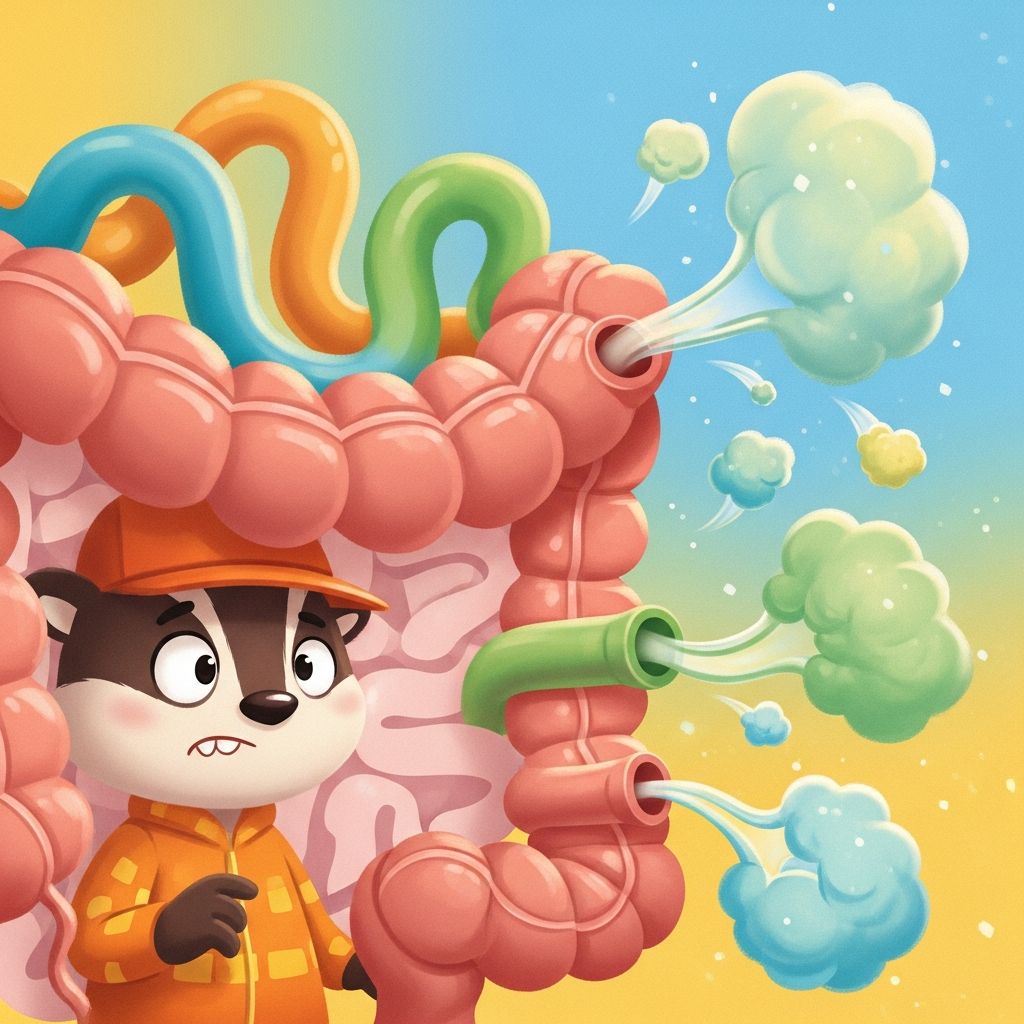
Your large intestine (colon) is home to millions of helpful bacteria. They help finish digesting foods your body cannot fully break down on its own. When they work on these foods, they produce gas as a normal by-product.
Certain foods are more likely to give bacteria extra work and create more gas, especially when they reach the large intestine without being fully digested.
Foods That Can Make You Gassy
Many foods that are very good for you can also make you fart more. That does not mean you should avoid them; it just helps to know what might cause extra gas.
| Food Type | Examples | Why It Can Cause Gas |
|---|---|---|
| Beans & lentils | Kidney beans, black beans, chickpeas | Contain complex carbohydrates and fiber that bacteria digest, making gas. |
| High-fiber veggies | Broccoli, cabbage, cauliflower, Brussels sprouts | Certain fibers reach the colon undigested and are broken down by bacteria. |
| Fruits | Apples, pears, peaches, prunes | Natural sugars and fiber can be gas-forming in some kids. |
| Dairy | Milk, ice cream, cheese, yogurt | Kids who have trouble digesting lactose (milk sugar) may get gas, bloating, or diarrhea. |
| Whole grains | Whole-wheat bread, brown rice, oats | Extra fiber can increase gas until your body gets used to it. |
| Fizzy drinks | Soda, sparkling water | Contain bubbles of carbon dioxide gas that can end up as burps or farts. |
How Often Do People Fart?
Passing gas several times a day is completely normal. Many health sources say that farting anywhere from about 6 to 20 times a day is typical, and some people may pass gas even more often. Doctors also note that people can produce about 1 to 4 pints of gas a day.
Some kids notice every single fart and think they are farting a lot. Others hardly notice. The total number is not as important as how you feel. If you feel fine, your gas is probably just normal digestion at work.
Why Some Farts Are Noisy or Smelly
Loud vs. Quiet Farts
The sound of a fart depends on:
- How much gas comes out
- How fast the gas is released
- The tightness of the muscles around your anus
When gas rushes out quickly through a small opening, it can make a louder noise. Slower gas or a more relaxed opening might make a quieter sound.
Why Some Farts Smell Bad
Most of the gas in your intestines has no odor. The smell comes from tiny amounts of sulfur-containing gases made when bacteria break down certain foods.
Smellier farts can happen after eating:
- Eggs
- Certain meats
- Garlic and onions
- Strong cheeses
- Some vegetables like cabbage
Even stinky farts are usually a normal part of digestion. If bad smells come with tummy pain, diarrhea, or weight loss, it is a good idea to tell an adult so they can talk with a doctor.
When Gas Can Feel Uncomfortable
Most of the time, passing gas does not hurt. Sometimes, though, gas gets trapped and can cause bloating or cramps.
Kids with gas problems might notice:
- A tight or swollen-feeling belly
- Crampy or sharp pains that come and go
- Lots of burping or farting
- Gurgling or rumbling sounds in the tummy
Gas pain can be strong enough to feel scary, but usually it is not from anything dangerous. Still, if it keeps happening or is very painful, a doctor should check what is going on.
Common Causes of Extra Gas in Kids
Having a bit more gas than usual is common and can be caused by many simple things.
- Eating quickly and swallowing more air
- Chewing gum or sucking on candies often
- Drinking lots of fizzy drinks
- Eating large portions of gas-forming foods like beans or cabbage
- Suddenly adding a lot of fiber to your diet
- Constipation, when poop stays in the intestines longer and bacteria have extra time to make gas
Sometimes, frequent gas can be related to other health issues, such as:
- Lactose intolerance – trouble digesting the sugar in milk, leading to gas, bloating, and diarrhea after eating dairy
- Celiac disease – a reaction to gluten that can cause gas, diarrhea, and poor growth
- Irritable bowel syndrome (IBS) – a condition that can cause pain, gas, and changes in bowel habits
- Gut infections – germs that upset the intestines and lead to gas and diarrhea
Only a doctor can tell whether gas is just normal or part of another condition.
What Kids Can Do to Reduce Uncomfortable Gas
You cannot (and should not) stop all farts. Your body needs to get rid of gas. But there are simple habits that can lower uncomfortable or painful gas.
Eat and Drink More Slowly
- Take small bites and chew your food well.
- Put your fork or spoon down between bites.
- Sip drinks instead of gulping them.
Eating slowly reduces how much air you swallow, so less gas ends up in your intestines.
Watch Fizzy Drinks and Gum
- Limit soda and other bubbly drinks.
- Cut down on chewing gum and sucking on hard candy.
This helps lower the amount of extra air and gas going into your stomach.
Move Your Body
- Gentle walking can help gas move along.
- Stretching or light activity after meals can reduce bloating.
Physical activity helps your intestines push gas through so it can leave your body more easily.
Talk About Troublesome Foods
If you notice that a particular food always makes your tummy hurt or gives you very bad gas, tell your parent or caregiver. They can:
- Keep a simple food and symptom diary
- Share this information with your doctor
- Help you balance healthy foods with comfort
A doctor may suggest changing certain foods or checking for lactose intolerance or other conditions if needed.
Do Not Hold in Gas All the Time
Trying to hold in every fart can make gas build up and cause more discomfort. When you can, excuse yourself politely or move to a restroom. It is healthier to let gas out than to keep it in.
When Farts Might Be a Sign to See a Doctor
Most gas is harmless and does not need medical treatment. But kids should talk to a trusted adult and see a doctor if they have:
- Very bad or frequent tummy pain with gas
- Gas plus diarrhea that lasts more than a few days
- Gas and constipation that will not go away
- Blood in their poop
- Vomiting along with gas and bloating
- Weight loss, poor appetite, or tiredness that will not improve
Doctors can look for causes like food intolerances, celiac disease, or infections and help create a plan so kids can feel better.
Helping Kids Handle Embarrassment
Even though everyone passes gas, many kids feel embarrassed when it happens around other people. Remember:
- Farting is a normal body function that happens to all humans.
- Laughing a little is okay, but making fun of someone can hurt their feelings.
- You can excuse yourself or quietly move away if you feel gas coming.
Parents and caregivers can help by staying calm, using correct words like “gas” and “flatulence,” and explaining that bodies need to get rid of gas to stay comfortable and healthy.
Quick Facts About Farts
- Everyone has gas in their digestive system every day.
- Most people pass gas many times a day, and that is normal.
- Gas comes from swallowed air and from bacteria digesting food in the intestines.
- Farts may be loud or quiet, smelly or almost odorless.
- Healthy foods like beans and vegetables often cause more gas.
- Gas is usually harmless, but strong pain, diarrhea, or other symptoms mean it is time to see a doctor.
Frequently Asked Questions (FAQs)
Q: Is it bad if I fart a lot every day?
A: Passing gas many times a day can still be normal if you feel well otherwise. Doctors say that most people pass gas several times a day, and this is usually just a sign that your digestion is working. If you also have pain, diarrhea, or other problems, tell an adult.
Q: Can I stop myself from farting completely?
A: No. Some gas will always be made in your intestines, and your body needs to get rid of it. You can reduce uncomfortable gas by eating slowly, drinking fewer fizzy drinks, and watching how certain foods affect you. But having no gas at all is not realistic or healthy.
Q: Why does my stomach make loud rumbling sounds?
A: Rumbling or gurgling sounds happen when gas and liquids move through your intestines. This can happen when you are hungry or after you eat and is usually completely normal. If the noise comes with pain or diarrhea, talk to an adult.
Q: Are farts dangerous or poisonous?
A: No. The gases in farts are in very small amounts and are not harmful in normal situations. They are just a mix of air and gases made by bacteria in your intestines. They might smell bad sometimes, but they are not dangerous.
Q: What should I tell my doctor if gas is bothering me?
A: If your gas is painful or happens with other symptoms, be ready to tell your doctor when it started, how often it happens, what foods seem to make it worse, and whether you also have diarrhea, constipation, or weight loss. This information helps the doctor figure out the cause.
References
- A to Z: Flatulence, Eructation, and Gas Pain — KidsHealth, Nemours Children’s Health. 2021-05-01. https://kidshealth.org/CHOC/en/parents/101538.html
- Gas in the Digestive Tract — National Institute of Diabetes and Digestive and Kidney Diseases (via CHOC summary). 2017-11-01. https://choc.org/conditions/gastroenterology/gas-in-the-digestive-tract/
- Gastrointestinal Gas – Digestive Topics — GiKids, North American Society for Pediatric Gastroenterology, Hepatology and Nutrition. 2020-06-15. https://gikids.org/digestive-topics/gastrointestinal-gas/
- Gas (flatulence) — AboutKidsHealth, The Hospital for Sick Children. 2019-09-30. https://www.aboutkidshealth.ca/gas-flatulence
- Flatulence or Passing Wind in Babies & Kids — Raising Children Network (Australia). 2022-03-10. https://raisingchildren.net.au/guides/a-z-health-reference/wind
- Gas and Bloating in Children: Care Instructions — Kaiser Permanente Health Encyclopedia. 2021-08-01. https://healthy.kaiserpermanente.org/health-wellness/health-encyclopedia/he.gas-and-bloating-in-children-care-instructions.bz1073
- Gas, Bloating, and Burping — Montefiore Medical Center Health Library. 2020-02-20. https://www.cham.org/health-library/article?id=gas