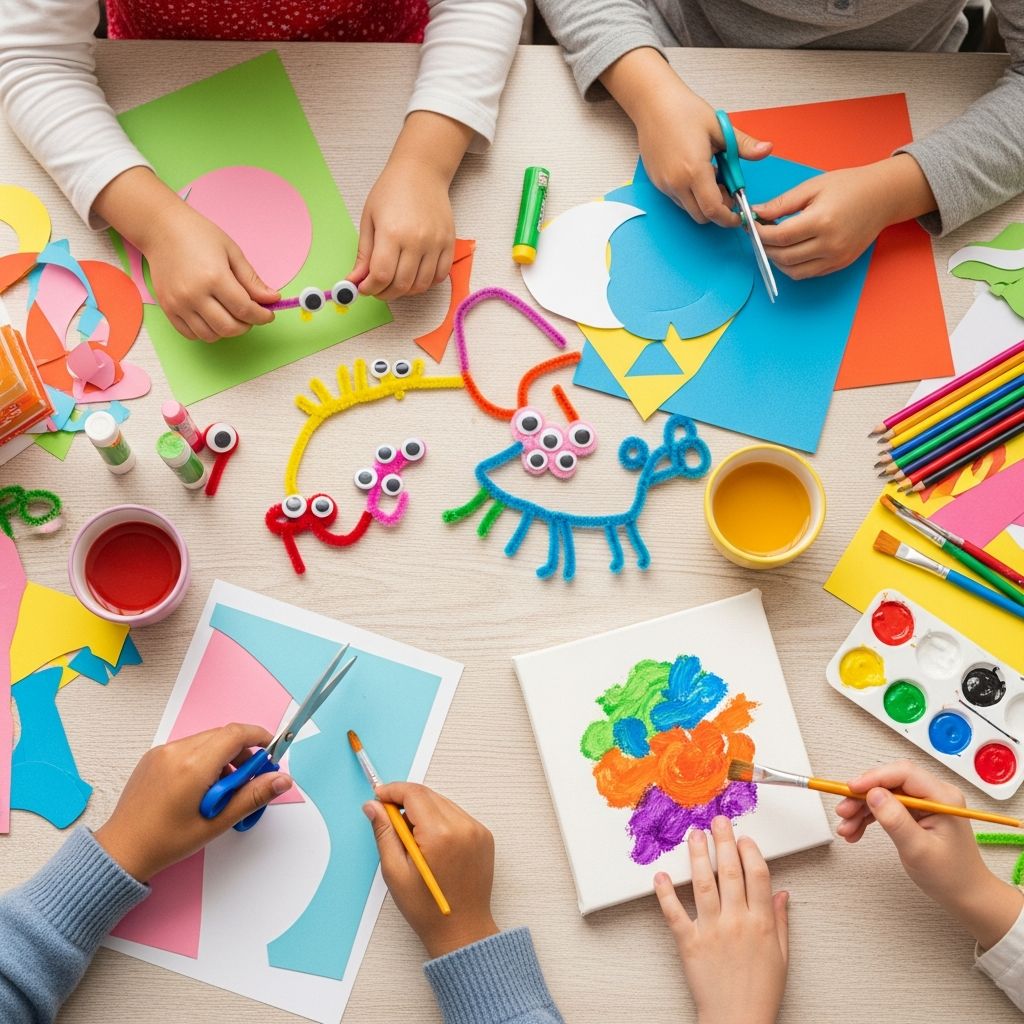
When kids are bored and energy is high, a simple craft project can feel like magic. It calms restless hands, sparks imagination, and often buys caregivers the most precious commodity of all: quiet, focused time. But with so many ideas scattered across the internet, it can be overwhelming to know where to start or which projects are realistic for your child’s age, attention span, and your actual supply cupboard.
This guide brings everything together in one place. You will find age-appropriate craft ideas, smart strategies for using online resources, and practical tips to turn crafts into easy, low-stress routines rather than last-minute panic activities.
Why Crafts Matter More Than Ever
Crafts are more than just a way to pass the time. They support fine motor skills, language development, emotional regulation, and problem-solving. When a child folds paper, threads beads, or squeezes glue, they are building brain pathways as well as memories. Creative activities also give kids a sense of control and achievement in a world that often feels big and unpredictable to them.
- Fine motor and coordination: Cutting, gluing, threading, and drawing strengthen the small muscles needed for writing and self-care tasks.
- Emotional expression: Art helps children explore feelings that might be difficult to express in words, such as frustration, excitement, or worry.
- Focus and patience: Craft projects encourage children to follow steps, tolerate mistakes, and see a task through to completion.
Planning Craft Time Without Stress
Many adults love the idea of kids’ crafts but dread the mess, the setup, and the fifty questions that start with “Where is the…?”. The key is planning simple systems rather than elaborate projects. A few minutes of preparation can turn crafts into a reliable everyday tool.
- Choose a consistent time of day for crafts, such as after school or after breakfast on weekends.
- Rotate a small set of favorite activities instead of constantly hunting for something brand new.
- Keep materials visible and accessible so kids can start without waiting on you for every step.
Basic Supply Kit Checklist
You do not need a fully stocked studio to keep kids happy. A small, well-chosen basket or bin of supplies can support dozens of different projects.
| Category | Suggested Supplies | Why They’re Useful |
|---|---|---|
| Paper | Printer paper, construction paper, paper plates, index cards | Cheap, versatile base for drawing, cutting, puppets, masks, cards, and collages. |
| Drawing & Coloring | Crayons, washable markers, colored pencils | Work for quick doodles, detailed coloring pages, and adding details to 3D projects. |
| Adhesives | Glue sticks, white school glue, tape | Essential for collages, simple sculptures, and cardboard constructions. |
| Cutting & Shaping | Child-safe scissors, hole punch, playdough or air-dry clay | Support fine motor skills and allow kids to explore shape, texture, and design. |
| Decorative Bits | Stickers, buttons, yarn, ribbon, pom-poms, googly eyes | Make even the simplest project feel special and invite imaginative storytelling. |
| Recyclables | Cardboard tubes, cereal boxes, bottle caps, egg cartons | Encourage upcycling and open-ended building at zero extra cost. |
Finding Craft Ideas Online Without Getting Overwhelmed
The internet is overflowing with children’s craft ideas. That is both a blessing and a curse. A quick search can offer thousands of projects, but many are either too complex, too perfect, or require specialty tools you do not own. Instead of scrolling endlessly, approach online resources with a plan.
- Decide on your constraint first: time, age range, or available materials, then search within that frame.
- Look for step-by-step photo or video instructions if your child prefers visual explanations.
- Save or bookmark 10–15 reliable, repeatable favorites so you are not reinventing the wheel every week.
What to Look for in a Good Kids’ Craft Resource
Not all websites and online resources are created equal. Focus on those that understand real-life children and real-life homes, not magazine photoshoots.
- Clear, simple instructions: Steps should be broken down and avoid jargon, so older kids can follow along independently.
- Multiple difficulty levels: Good resources show ways to simplify or extend a project to fit different ages.
- Common materials: Projects should use supplies most families already own or can easily substitute.
- Safety awareness: Suggestions should reflect age-appropriate tools and include notes on supervision when needed.
Craft Ideas by Age Group
Even within the same household, a toddler, a preschooler, and a school-age child will need very different kinds of activities. The following sections offer age-appropriate ideas that can be adapted based on your child’s interests and developmental level.
Toddlers (Approx. 1–3 Years)
At this stage, process is far more important than product. Toddlers explore with all their senses. Expect mess, repetition, and short attention spans, and keep supplies taste-safe and washable.
- Sticker play: Large, easy-peel stickers on scrap paper help develop pincer grasp and hand-eye coordination.
- Finger painting: Use homemade or washable paints on big sheets of paper taped to a table, floor, or highchair tray.
- Chunky collage: Offer torn tissue paper, fabric scraps, or cotton balls with a glue stick or pre-glued paper.
Preschoolers (Approx. 3–5 Years)
Preschoolers love pretending, storytelling, and making things they can use in play. They are ready for more purposeful projects but still benefit from open-ended choices.
- Paper plate masks: Cut eye holes, add yarn hair, markers, and stickers to create characters and animals.
- Nature collages: Combine leaves, small sticks, and flower petals with glue onto cardboard for seasonal art.
- Simple weaving: Cut slits in a paper plate or cardboard and show kids how to weave yarn or ribbon through the openings.
Early Elementary (Approx. 6–8 Years)
Children in early grades often enjoy slightly more complex, goal-oriented crafts that include steps, patterns, or instructions they can follow with minimal help. They also start to care more about the final appearance of their work.
- Paper roll characters: Transform cardboard tubes into robots, animals, or storybook characters using markers, paper, and tape.
- Friendship bracelets: Use basic braiding or simple knotting with embroidery thread or yarn.
- DIY board games: Draw a simple path on cardboard, decorate spaces with challenges or fun prompts, and use toy figures as playing pieces.
Older Kids (Approx. 9+ Years)
Older children can dive into longer projects that involve planning, measurement, or even beginner-level crafting techniques like sewing or simple woodworking. They may also enjoy documenting their process or sharing results online.
- Hand-sewn felt creations: Create small pillows, keychains, or plush toys with felt, needle, and thread (with appropriate supervision).
- Stop-motion crafts: Build characters from clay or paper and use a device to create simple stop-motion videos.
- Upcycled organizers: Decorate boxes and cans with paper, paint, or fabric to create desk or art caddies.
Using Printables and Templates Wisely
Printable activities and templates are a gift to busy adults. They provide structure without requiring artistic skill from the grown-up. However, overreliance on perfectly outlined shapes can limit imagination, so balance template-based projects with free drawing and building.
- Use coloring pages as a starting point, then encourage kids to add backgrounds, speech bubbles, or extra characters.
- Turn template pieces into movable puppets by adding brads or tape joints.
- Let kids design their own versions of a template once they have tried the guided project.
Crafts for Different Situations
The best craft for a rainy morning is not always the best craft for a quick pre-dinner distraction. Matching the project to the moment prevents frustration and half-finished messes. Think of crafts as tools in a toolbox: some are quick fixes, others are long repairs.
Quick, Low-Mess Activities
These projects are ideal when you have 10–20 minutes and do not want to scrub dried glue off the table later.
- Drawing prompts: Offer simple prompts like “design a new animal” or “draw a map of a secret island.”
- Sticker scenes: Provide a blank sheet of paper and a sheet of themed stickers to build a story scene.
- Folded mini-books: Fold a single sheet of paper into a small booklet and encourage kids to create a comic, recipe book, or mini journal.
Deep-Dive Weekend Projects
On weekends or holidays, kids often have the stamina for projects that stretch over several sessions. These larger undertakings can become family traditions or seasonal rituals.
- Seasonal decorations: Garlands, window art, or wreaths made from paper, recyclables, or natural materials.
- Cardboard city: Build houses, roads, and vehicles from boxes and tubes, then add toy figures.
- Family memory books: Create simple scrapbooks with photos, drawings, and captions dictated or written by the child.
Managing Mess and Setting Boundaries
One of the biggest reasons caregivers avoid crafts is the fear of chaos. A few thoughtful rules and routines can shrink the mess to a manageable size and teach kids responsibility at the same time.
- Protect surfaces with an old tablecloth, shower curtain liner, or flattened cardboard box.
- Keep a small basket of cleaning tools nearby: wipes, a damp cloth, and a trash or recycling bin.
- Use clear rules such as “paint stays at the table” or “we clean for five minutes before choosing a new activity.”
Encouraging Independence and Creativity
Resist the urge to correct, perfect, or “fix” your child’s craft projects. The goal is not to produce something worthy of a gift shop; it is to let children take creative risks, problem-solve, and develop confidence. When adults take over, kids quickly learn that the grown-up version is the “right” one and may become hesitant to try.
- Offer choices in materials and themes rather than dictating every step.
- Ask open questions like “Tell me about this part” instead of “What is that supposed to be?”
- Praise effort and experimentation, not just results. Comments like “You tried a lot of different colors” reinforce process-oriented thinking.
Adapting Crafts for Different Needs
Every child brings a unique mix of abilities, sensitivities, and preferences to the table. Some love messy finger painting, while others prefer crisp lines and tidy tools. Thoughtful adjustments allow more children to enjoy crafts comfortably.
- Offer sensory alternatives for kids who dislike certain textures, such as using brushes or sponges instead of fingers.
- Simplify multi-step instructions into two or three clear stages, or prepare some elements in advance for children who fatigue easily.
- Use visual schedules or picture steps for kids who benefit from visual cues rather than long verbal explanations.
Frequently Asked Questions About Kids’ Crafts
How often should I plan craft activities?
There is no single correct frequency. Some families enjoy a daily 15-minute art time, while others reserve crafts for weekends or special occasions. The best rhythm is one that fits your schedule and your child’s interest. Short, regular sessions are more sustainable than occasional, elaborate projects that leave everyone exhausted.
What if my child loses interest halfway through?
This is very common, especially with younger children. Treat unfinished projects as part of the process, not a failure. You can gently invite your child to return later, repurpose the materials, or simply move on and try a shorter or simpler activity next time. Over time, your child’s stamina and focus will likely increase.
How can I manage crafts with children of different ages?
Choose a common theme and adjust the difficulty. For example, all children might make “paper animals,” but a toddler sticks on eyes and ears while an older child designs a whole habitat. Sharing a table but working at different skill levels allows siblings to feel included while still challenged appropriately.
Do I need to follow tutorials exactly?
Not at all. Online tutorials are starting points, not strict recipes. Substitute materials, change colors, skip complicated steps, or ask your child how they would like to adapt the idea. Some of the most memorable projects are the ones that veer away from the original plan.
What should I do with all the finished crafts?
Display a rotating selection and store the rest selectively. You might keep one photo or a single project from each month instead of every item. Consider photographing crafts and creating a digital album, then recycling bulky items once they have been appreciated. Involving kids in these decisions teaches them to value memories without keeping every object.
Turning Craft Time Into Connection Time
At its heart, children’s crafting is about connection: between hand and mind, between imagination and reality, and between child and caregiver. When adults slow down enough to sit beside a child with paper, glue, and curiosity, they send a powerful message that creativity matters and that the child’s ideas are worth time and attention.
With a modest stash of supplies, thoughtful use of online inspiration, and a flexible attitude toward mess and outcomes, anyone can build a sustainable craft habit. The goal is not perfection but presence—and that is something even the tiniest pair of hands can help create.