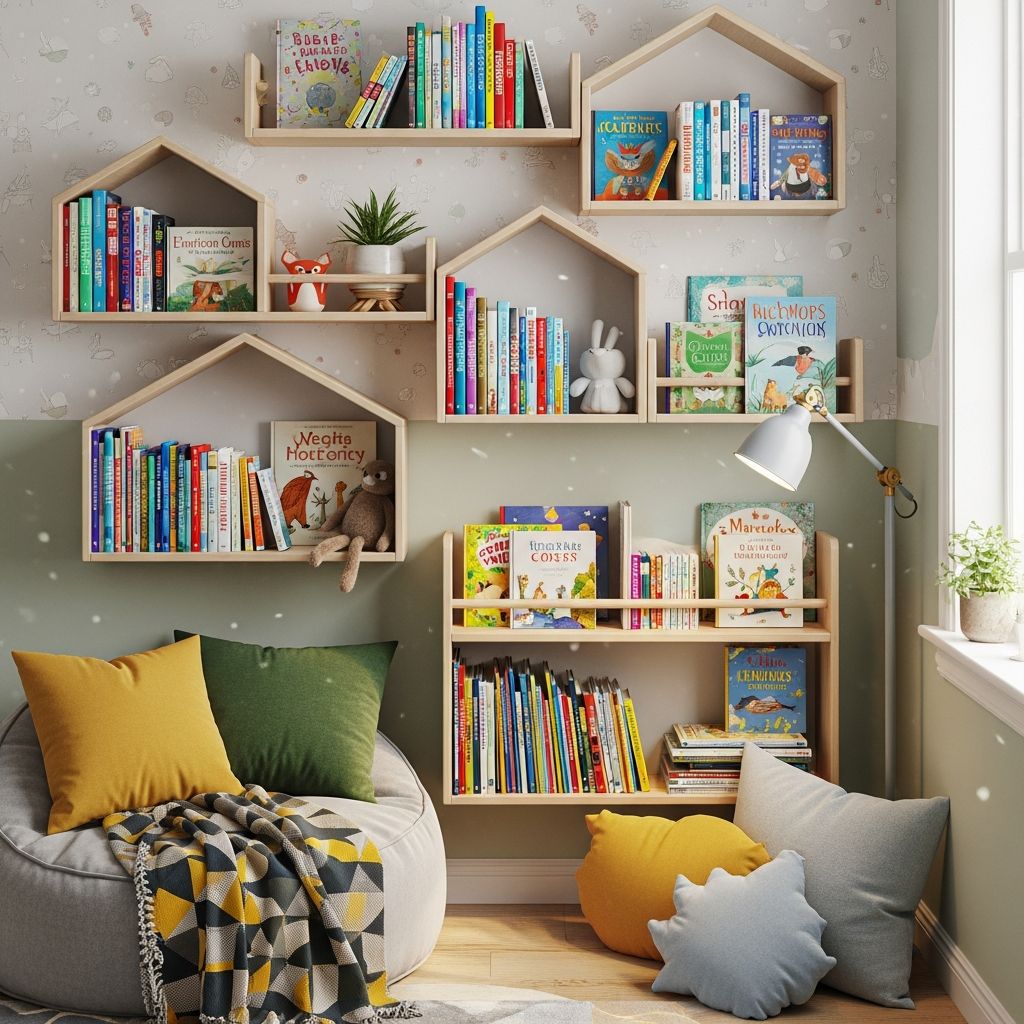
Children are drawn to pictures before they can decipher words. When book covers are clearly visible and within reach, kids are far more likely to pick up a book on their own and explore it. Research on early literacy shows that regular exposure to books at home, including simply seeing and handling them, helps build vocabulary, narrative skills, and a positive attitude toward reading.
This guide walks you through child-friendly ways to display kids’ books, how to choose the right shelves for your space, and practical tips for keeping everything safe, inviting, and organized.
Why Book Display Matters More Than You Think
For adults, titles and spines can be enough. For young children, the cover art is the real invitation. When covers face outward, kids can quickly recognize familiar characters and discover new stories on their own. Several studies on early literacy and shared book reading highlight that children who frequently handle and choose books independently develop stronger motivation to read and better emergent literacy skills.
- Visual appeal: Colorful covers double as decor and naturally attract children’s attention.
- Easy choice-making: Younger kids can’t read titles yet, but they can “read” images.
- Encourages autonomy: Low, open storage allows kids to choose and put away books themselves, consistent with child-led approaches like Montessori education.
- Everyday cues to read: Books in sight are more likely to be used during playtime, downtime, and bedtime.
Key Principles for Kid-Friendly Book Displays
Before picking a specific shelf style, keep these guiding principles in mind:
- Low height: Shelves at or below eye level invite kids to browse and reduce climbing risks.
- Forward-facing storage: Display picture-book covers whenever possible, especially for toddlers and preschoolers.
- Open access: Avoid heavy cabinet doors or latches that small hands struggle with.
- Sturdy and anchored: Wall anchors and stable bases are essential to prevent tip-overs; pediatric safety guidelines consistently recommend anchoring furniture with anti-tip devices.
- Rotating selection: Keep a small, curated set of books on display and store the rest elsewhere; new rotations keep interest high.
Comparing Popular Types of Kids’ Book Shelves
No single shelf works for every room or family. Here is a quick comparison of common options to help you decide what fits your needs best.
| Shelf Type | Best For | Main Benefits | Potential Drawbacks |
|---|---|---|---|
| Wall-mounted ledge shelves | Small rooms, over furniture, hallways | Use vertical space, show full covers, out of floor clutter | Require drilling; must be anchored very securely |
| Front-facing sling racks | Toddlers, nurseries, playrooms | Soft fabric, easy to flip through, portable | Hold fewer books; covers can overlap |
| Low cubby or cube shelves | Shared toy and book storage | Flexible bins or baskets, can grow with child | Usually show spines, not covers |
| Rail or gallery shelves | Feature walls, reading corners | Art-gallery look, strong visual impact | Less depth; mainly for thinner books |
| Rolling carts or book trolleys | Multi-use rooms, small apartments | Mobile, easy to tuck away, kid-friendly height | Can be tempting to ride or climb; need supervision |
Ideas for Tiny Spaces and Multifunctional Rooms
Even if you don’t have a dedicated playroom, you can still make room for books. Think vertically, use corners creatively, and let furniture do double duty.
1. Vertical Walls as Book Galleries
Walls are often underused in children’s rooms, especially above dressers or next to doors. Adding shallow ledge-style shelves can turn these spots into book galleries without taking up floor space.
- Install two to four rows of narrow ledges, spaced far enough apart to accommodate tall picture books.
- Keep the bottom row at child’s eye level, with higher rows for seasonal books or older kids’ titles.
- Use bookends or built-in lips to prevent books from sliding off.
2. Dual-Purpose Furniture
Some children’s furniture can store both clothes and books in one footprint. For example, wardrobes or dressers with open side shelves allow you to keep bedtime reads close to pajamas and blankets, simplifying routines.
- Choose pieces with adjustable shelves so storage can be reconfigured as kids grow.
- Reserve lower shelves for books and soft toys; keep heavier items up high.
- Label bins or shelves with simple icons for pre-readers.
3. Under-Window Reading Rail
The wall beneath a window is often just empty space. A simple rail or shallow ledge here can become a compact book display and a visual transition into a cozy reading corner.
- Mount one or two shelves low enough that kids can reach even when seated.
- Add cushions or a small rug to create an inviting reading perch.
- Hang lightweight curtains rather than long, heavy drapes to avoid tangles with shelves.
Best Shelf Styles for Different Ages
Book displays can evolve as your child grows. The needs of a board-book-loving toddler are different from those of a chapter-book enthusiast.
For Babies and Toddlers (0–3 Years)
- Floor-level baskets and bins: Soft baskets placed near a low shelf let toddlers dig through without climbing.
- Sling racks with fabric pockets: These allow board books to lean forward, making covers visible and easy to pull out.
- Super-stable storage: Any freestanding unit must be anchored to the wall; even light furniture can be dangerous if tipped.
For Preschoolers (3–5 Years)
- Front-facing wall shelves: Great for picture books; kids at this age are especially responsive to imagery.
- Low combination shelves: A mix of bins (for toys) and open cubbies (for books) supports independent cleanup, aligned with Montessori-style environments that emphasize accessibility and order.
- Theme rotations: Highlight a few books related to current interests—dinosaurs, space, or seasons—to encourage repeated reading.
For Early Readers and Up (5+ Years)
- Standard bookcases with adjustable shelves: As chapter books enter the mix, spine-out storage becomes more useful.
- Bedside shelves or small book tables: Keep a rotating stack of current reads within arm’s reach of the bed.
- Mixed display system: Use one or two forward-facing shelves for special titles and a deeper shelf or bookcase for the rest.
Designing an Inviting Kids’ Reading Nook
A few thoughtfully placed shelves can anchor a whole reading corner. You do not need a large space; a single wall, the side of a closet, or even an alcove will do.
Core Elements of a Cozy Nook
- Comfortable seating: A beanbag, floor cushions, or a small chair encourages longer reading sessions.
- Good lighting: Adequate task lighting reduces eye strain; children’s eye health guidelines stress the importance of proper lighting during near work.
- Focused book selection: Display 15–30 books at a time, rotated regularly. Too many options can feel overwhelming.
- Personal touches: Add a small reading lamp, a blanket, or a favorite stuffed animal to make the space feel special.
Simple Nook Layout Idea
- Place a narrow rug against the wall.
- Set a low book rack or two wall shelves within reach.
- Add a floor cushion and a small basket for overflow books.
- Use soft, warm light from a clip-on lamp or wall sconce with a covered bulb.
Practical Safety Tips for Kids’ Book Shelves
Any time you add furniture to a child’s environment, safety comes first. Children’s hospitals and safety organizations emphasize that most serious tip-over injuries are preventable with simple precautions.
- Anchor everything: Use manufacturer-recommended wall anchors for bookcases, tall shelving units, or anything a child might climb.
- Avoid glass doors: Opt for open shelves or solid doors instead of glass, especially in playrooms.
- Check weight distribution: Keep heavier books and items on lower shelves to increase stability.
- Mind the hardware: Ensure screws are tight, brackets are flush with the wall, and no sharp edges are exposed.
- Safe spacing: For wall shelves above beds or seating, install them high enough that children cannot bang their heads when standing up.
Organization Strategies That Kids Can Maintain
Storage systems work best when children can understand and manage them with minimal adult help. Consistent, simple organization helps kids know where books go and makes tidying up more likely.
Easy Sorting Methods
- By type: Keep board books, picture books, and early readers in separate shelves or bins.
- By size: Taller books in one area, small square books in another, to prevent everything from toppling over.
- By theme or interest: Create small zones like “animals,” “bedtime,” or “school stories” for kids who like to revisit similar topics.
Labels for Pre-Readers
- Use picture labels (for example, a moon for bedtime books, an animal for nature stories).
- Add simple word labels under the images to support early word recognition.
- Laminate labels or use sturdy stickers that won’t peel easily.
Rotating Books to Keep Interest High
Even the best shelves look stale if the same books stay in the same spot for months. Rotating books helps maintain curiosity, similar to how libraries and classrooms change displays to highlight different topics throughout the year.
- Store extras: Keep some books in a closet, storage box, or higher shelf.
- Plan mini “book reveals”: Every few weeks, swap out part of the display and introduce the new selection.
- Connect to real life: Feature books tied to upcoming holidays, trips, or life changes (first day of school, new sibling).
FAQs About Displaying Kids’ Books
Q: How many books should I put on a kids’ shelf at once?
A: Aim for a manageable selection rather than the entire library—often 15–40 books, depending on space and your child’s age. Too many options can make it hard for young children to choose and for you to keep shelves tidy.
Q: Is it better to show covers or spines?
A: For babies and preschoolers, cover-out displays are far more engaging because they rely on pictures, not text. As children learn to read titles on their own, add more spine-out storage while keeping a few special books facing forward.
Q: How do I keep books from constantly falling off wall shelves?
A: Choose shelves with a front lip or rail, avoid overloading them, and leave a little space on each end. Check mounting hardware regularly, especially in high-traffic play areas.
Q: What if I rent and can’t drill into the walls?
A: Use freestanding low racks, cube shelves, or book trolleys that can be anchored with removable wall straps where possible. You can also lean a ladder-style bookcase and secure it using non-damaging tension anchors designed for renters.
Q: How often should I rotate my child’s books?
A: There is no strict rule, but many families find that rotating every 3–6 weeks keeps interest high. You can adjust based on how quickly your child loses interest in current favorites or how often you bring in new books.
References
- Every Child Ready to Read® @ Your Library® — Association for Library Service to Children (ALSC) & Public Library Association (PLA). 2011. https://www.ala.org/alsc/publications-resources/ecrr
- Family Literacy — National Center on Improving Literacy, U.S. Department of Education. 2020-09-08. https://improvingliteracy.org/family/family-literacy
- Montessori in the Home: Creating a Montessori Environment — American Montessori Society. 2019. https://amshq.org/families/montessori-education/montessori-at-home
- Furniture and TV Tip-Over Prevention — U.S. Consumer Product Safety Commission (CPSC). 2023-02-09. https://www.cpsc.gov/safety-education/safety-guides/furniture-and-tv-tip-over-prevention
- Protecting Children’s Vision — American Academy of Ophthalmology. 2022-08-30. https://www.aao.org/eye-health/tips-prevention/children-eye-safety