Presidential inaugurations represent pivotal moments in American democracy, where the nation collectively pauses to witness the peaceful transfer of power. For families, these events offer unique opportunities to introduce children to civic responsibility and historical significance. Parents across the country bring their little ones to screens, parades, or even the Capitol steps, creating cherished memories that instill a sense of patriotism and wonder. This article delves into the profound impact of these shared experiences, drawing from heartwarming accounts and images that capture children’s unfiltered reactions.
The Emotional Power of Shared Civic Moments
When children watch an inauguration, they encounter history in real time. Toddlers glued to television screens, school groups on field trips, and families lining parade routes all contribute to a tapestry of generational witnessing. These moments transcend politics, focusing instead on the human element: wide-eyed curiosity, spontaneous cheers, and questions that reveal pure innocence. For instance, during Barack Obama’s 2009 inauguration, a toddler girl was photographed intently watching the ceremony, her expression a mix of awe and absorption, symbolizing how even the youngest minds grasp the gravity of such events.
Parents report that exposing kids to inaugurations fosters early civic awareness. Rather than abstract lessons in textbooks, live broadcasts provide tangible connections to governance. Children see diverse leaders taking oaths, hear stirring speeches, and observe national unity, planting seeds for lifelong engagement in democracy.
Generational Traditions: Families Through the Years
Inaugurations have long been family affairs. Historical records show presidential children participating, like Mollie Garfield at her father James A. Garfield’s 1881 swearing-in, where she observed both the ceremony and parade. Fast-forward to modern times, and Donald Trump’s 2025 inauguration saw his children—Ivanka, Donald Jr., Eric, Tiffany, and Barron—along with grandchildren, attending just as they did in 2017. This continuity underscores how inaugurations bridge personal family histories with national narratives.
- 1881: Mollie Garfield witnesses her father’s ceremony, blending family pride with public spectacle.
- 2017 & 2025: Trump family reunites at Capitol, with kids and grandkids embodying multi-generational involvement.
- 2009: Everyday families tune in, capturing toddlers’ reactions to Obama’s historic address.
These traditions evolve but remain rooted in teaching values like resilience, leadership, and community. Parents often recount how their own childhood memories of watching inaugurations inspire them to recreate the experience for their kids.
Capturing the Magic: Iconic Images of Kids at Inaugurations
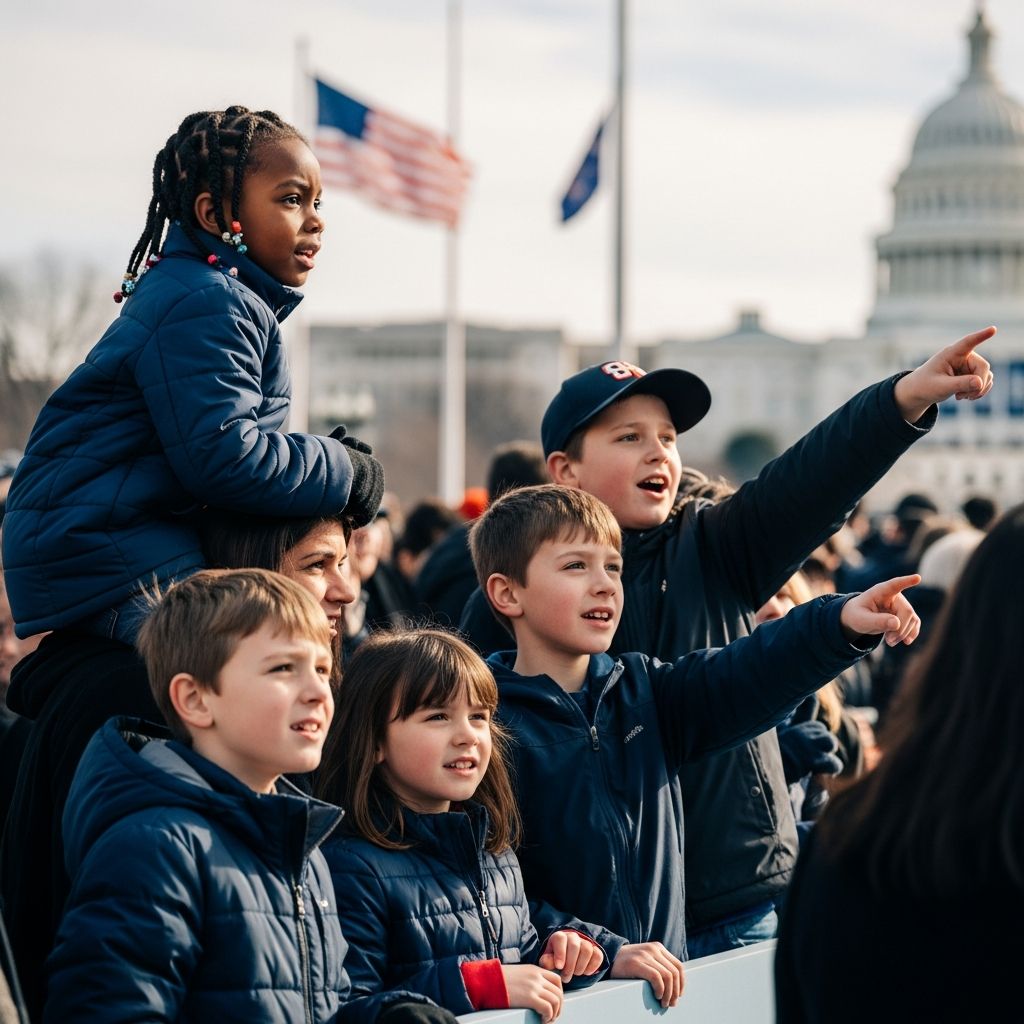
Photographs of children during these events evoke universal emotions. Stock images from Getty and Alamy depict thousands of scenes: kids perched on shoulders amid parades, bundled in winter gear cheering floats, or huddled around TVs with siblings. One poignant image shows a child fixated on a screen during a speech, highlighting undivided attention amid the excitement.
These visuals go viral, reminding adults of childhood wonder. Social media amplifies them, turning personal snapshots into cultural touchstones. During the Women’s March following Trump’s 2017 inauguration, mothers brought children to related events, framing participation as a lesson in advocacy and history.
| Era | Key Image Description | Emotional Impact |
|---|---|---|
| Obama Era (2009) | Toddler watching speech intently | Awe and curiosity |
| Trump 2017/2025 | Family members including grandkids at Capitol | Family unity and pride |
| Historical (1881) | Young daughter at ceremony | Generational legacy |
| Parades (Various) | Kids cheering along routes | Joy and excitement |
Why Parents Choose to Involve Their Children
Bringing kids into these moments isn’t just tradition; it’s intentional parenting. Surveys and anecdotes reveal motivations like building empathy, understanding diversity, and appreciating democracy’s fragility. One mother shared taking her daughters to a post-inauguration march to show ‘history in action,’ emphasizing empowerment.
Challenges exist—cold weather, crowds, late nights—but rewards outweigh them. Children return with stories, drawings of flags, and questions about presidents, sparking family discussions. Educators note that such exposure correlates with higher civic participation later in life.
Modern Twists: Virtual Viewing and Digital Engagement
Technology has democratized access. Livestreams allow families worldwide to participate without travel. During recent inaugurations, apps and social platforms enabled real-time sharing, with parents posting kids’ reactions to engage broader communities.
Interactive elements, like virtual reality tours of the Capitol or educational apps synced to speeches, enhance learning. This shift ensures inclusivity, reaching rural families or those with disabilities.
Lessons Learned: What Kids Take Away
Children’s takeaways vary by age. Infants absorb atmospheres subconsciously; preschoolers focus on visuals like bands and flags; older kids grasp speeches’ themes. Common threads include pride in country, respect for leaders, and awareness of change.
Long-term, these experiences shape views. Alumni of inauguration viewings often cite them as turning points for political interest. In a divided era, neutral exposure to process over partisanship promotes balanced perspectives.
Frequently Asked Questions (FAQs)
Is it appropriate to bring young children to inaugurations?
Yes, many families do, focusing on supervision and comfort. Virtual options make it accessible for all ages.
How do inaugurations differ for kids versus adults?
Kids emphasize spectacle—parades, music—while adults focus on policy. Both gain historical context.
What are safe ways for kids to watch parades?
Stay on sidewalks, hold hands, dress warmly. Livestreams offer risk-free alternatives.
Can homeschoolers tie this into curriculum?
Absolutely—pair with civics units, drawing activities, or essay prompts on leadership.
How has family involvement evolved historically?
From elite presidential kin to mass public participation via TV, inclusivity has grown.
Creating Your Own Inauguration Traditions
Start simple: host watch parties with American snacks, crafts like flag-making, or oath recitation games. Discuss what kids see, answering questions honestly. Document with photos to build family albums. These rituals ensure history lives on.
Ultimately, when children witness inaugurations, they don’t just see leaders sworn in—they internalize democracy’s vibrancy. These moments, frozen in images and memories, affirm that the future of the nation rests in young, hopeful hands.
References
- Donald Trump’s kids, grandkids attend inauguration, as they did 8 years ago — ABC News. 2025-01-20. https://abcnews.go.com/GMA/Family/trump-family-inauguration-then-and-now-2025/story?id=117892848
- Watching History — Dreamstime. N/A. https://www.dreamstime.com/royalty-free-stock-image-watching-history-image28886646
- These 13 Moms Took Their Kids to the Women’s March On Washington — Redbook. 2017-01-21. https://www.redbookmag.com/life/friends-family/a48219/mothers-and-kids-at-womens-march-2017/
- Child Watching Parade Images — Getty Images. N/A. https://www.gettyimages.com/photos/child-watching-parade
- Presidential Kids at the Inaugurations — Carl Anthony Online. 2013-01-21. https://carlanthonyonline.com/2013/01/21/presidential-kids-at-the-inaugurations/