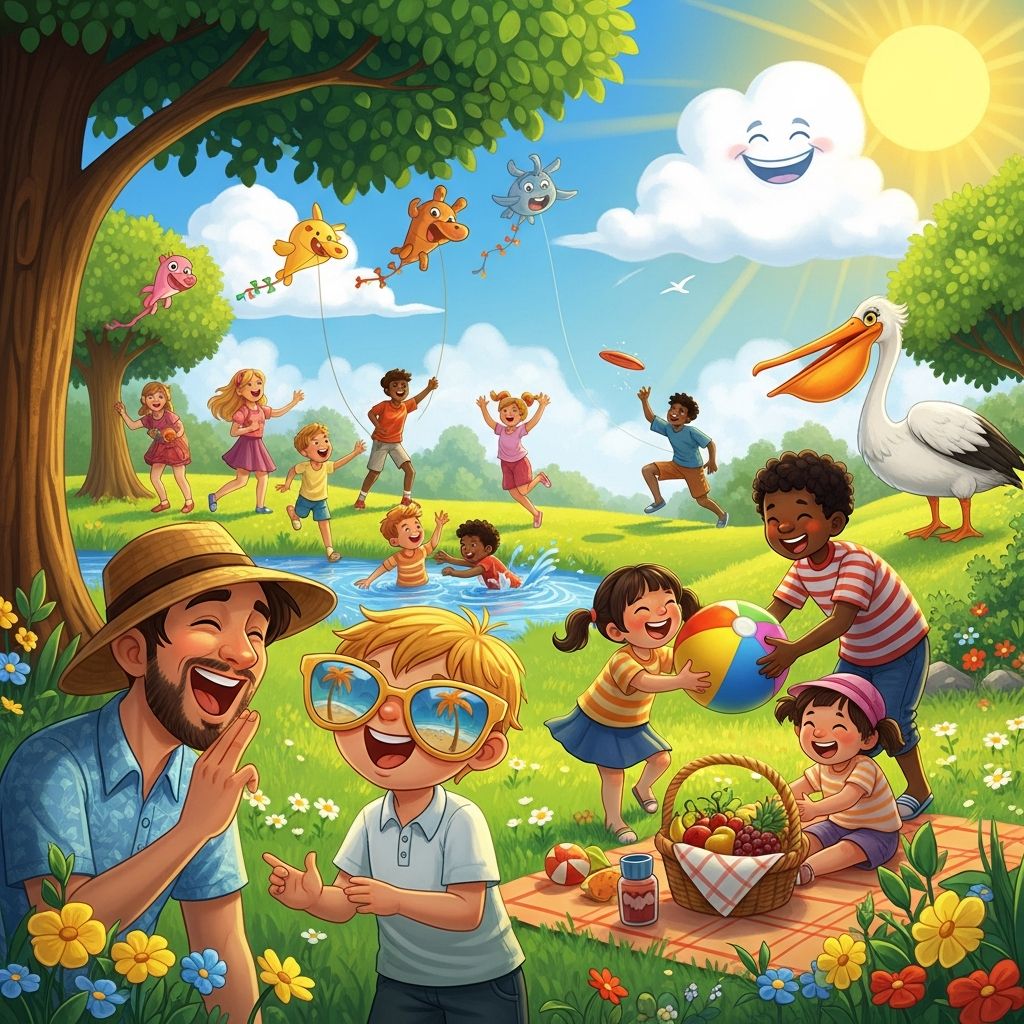
Summer offers long days, late bedtimes, sticky ice cream fingers, and endless chances to be a little ridiculous. A handful of light, groan-worthy jokes can turn a hot, cranky afternoon into something everyone will remember as fun instead of frustrating.
This guide gathers fresh kid-friendly summer jokes and simple ideas for using humor around the pool, in the car, and at bedtime. Every line is crafted to be clean, gentle, and easy for kids to retell to grandparents, friends, and camp counselors.
Why Summer Is the Perfect Time for Bad Jokes
Parents often reach for jokes in the same moments they reach for snacks or sunscreen: when kids are bored, tired, or about to melt down faster than a popsicle on hot pavement. There is a good reason. Research on family communication finds that shared laughter helps kids feel closer to adults and more supported, especially during stressful transitions and changes.
Jokes are also a simple way to build language skills. Many puns and riddles rely on wordplay, double meanings, and homophones (words that sound alike but have different meanings), which helps kids think flexibly about language.
| Summer Moment | How Jokes Help |
|---|---|
| Long car rides | Break up boredom and reduce complaints about “how much longer.” |
| Waiting in lines | Give kids something fun to focus on instead of the wait. |
| Before bed at camp or vacation | Ease nerves and end the day on a light note. |
| Hot, grumpy afternoons | Shift the mood from meltdown to giggles with a quick one-liner. |
Beach and Pool Jokes Kids Can Splash Around With
Water jokes are easy to remember and perfect for passing around towels, sunscreen, and goggles. Try slipping a few into your next beach-day chat.
- Q: Why did the sand bring a pencil to the beach?
A: It wanted to draw a line in the shore. - Q: What do waves say when they meet at the shore?
A: “Long tide, no sea!” - Q: Why did the beach umbrella get promoted?
A: It really knew how to throw some shade. - Q: What do you call a fish who loves the shallow end?
A: A little shell-fish. - Q: Why did the pool always know the latest news?
A: It had great current events.
For very young kids, keep the structure simple: one question, one silly answer. Older kids enjoy jokes they can build on, so invite them to invent their own beachy punchlines.
Sunshine, Heat, and Ice Cream Humor
From sunscreen to sticky cones, summer objects are easy targets for playful exaggeration. Use these while you lather on SPF or wait for the ice cream truck.
- Q: Why did the sun sit in the front row at school?
A: It wanted to be a little brighter. - Q: What do you call ice cream that studies really hard?
A: A straight-A sundae. - Q: Why did the popsicle bring a fan?
A: It didn’t want to lose its cool. - Q: How does sunscreen send messages?
A: In SPF texts. - Q: What did one flip-flop say to the other?
A: “Stop dragging your feet, we’re going to the beach!”
Heat jokes also give you a way to talk about hydration and sun safety without sounding like a lecture. A silly line can lead into a quick reminder to drink water or reapply sunscreen, which is important because children are more vulnerable to heat-related illness and sunburn than adults.
Road Trip Riddles and Backseat Banter
Long drives can feel endless to kids. Packing a list of jokes alongside snacks and audio books turns the car into a rolling comedy club. Invite kids to be the official “trip comedian.”
- Q: Why did the suitcase tell jokes?
A: It wanted to lighten the load. - Q: What do maps do for fun?
A: They go on little adventures between the lines. - Q: Why did the car bring a notebook?
A: It wanted to keep track of all its mileage jokes. - Q: How do seatbelts say hello?
A: They give you a big click-hug. - Q: Why was the GPS always calm?
A: It never lost its sense of direction.
Road trip humor can also include gentle observation. Encourage kids to create jokes about funny billboards, strange town names, or roadside statues you pass along the way.
Campfire Giggles and Nighttime Chuckles
Evenings at camp or in the backyard are ideal for spooky-but-not-too-spooky jokes. Aim for silly instead of scary, especially with younger children who might already be nervous about the dark or sleeping away from home.
- Q: Why did the marshmallow sit next to the shy kid?
A: It knew how it felt to freeze up before it got toasted. - Q: What do fireflies study in summer school?
A: Light reading. - Q: How do you know the campfire loves stories?
A: It always asks for s’more. - Q: Why did the tent get good grades?
A: It was great at covering all the subjects. - Q: What do stars say when they meet new constellations?
A: “I’m star-struck!”
Jokes around the fire encourage kids to speak up in a group, listen to others, and practice taking turns—all core pieces of early social skills.
Food, Picnics, and Backyard Barbecue Puns
Summer food is playful on its own: crunchy watermelon, smoky grilled corn, sandwiches packed for the park. Add a few puns, and you have instant dinner-table entertainment.
- Q: Why did the watermelon bring a towel?
A: It was about to have a melon-choly drip. - Q: What do hot dogs wear to look fancy?
A: Must-ard you really ask? - Q: Why did the lemonade stand apply for a job?
A: It wanted to make a little extra sweet income. - Q: What happens when corn goes to the beach?
A: It joins the sand-wich. - Q: Why did the picnic blanket blush?
A: It saw the salad dressing.
Invite kids to invent food-based puns of their own. Offer a word like “grill,” “fruit,” or “cooler” and see what jokes they can build around it. The point is not cleverness but participation.
Creating Your Own Family Joke Traditions
Some of the best summer laughs come from inside jokes that develop over time. A joke told at the start of vacation can become a running bit that shows up year after year.
Simple Ways to Build a Joke Tradition
- Start each road trip with the same silly opening joke, then let everyone add one new joke to the “trip collection.”
- Make a joke jar: Kids write or draw jokes on slips of paper, and you pull one whenever the mood starts to drag.
- Declare an “official pun day” where everyone tries to make as many groan-worthy puns as possible at the pool or beach.
- Record favorite jokes in a small notebook so kids can look back at previous summers and remember what made them laugh.
Over time, those tiny shared moments of playfulness help build fond memories of family time and vacation traditions.
Keeping Jokes Kind and Age-Appropriate
Kids take cues from adult humor. Keeping jokes light and kind teaches them that it is possible to be funny without putting others down. Family humor researchers note that positive, supportive joking is linked with better emotional well-being and closer relationships, while harsh or aggressive teasing can have the opposite effect.
Quick Guidelines for Kid-Friendly Summer Jokes
- Avoid jokes that focus on anyone’s body, appearance, or abilities.
- Skip anything that might be scary before bed, especially for younger kids.
- Make fun of situations or objects (like sand, sun, or snacks), not people.
- Encourage kids to stop a joke if the listener looks uncomfortable.
- Model saying “oops, that wasn’t so funny” and switching to something lighter.
Printable-Style Joke Sets You Can Reuse
You can easily turn these joke groups into DIY cards for lunchboxes, road-trip bags, or camp letters. Copy them onto colorful paper, cut them into strips, and let kids choose one at random.
Quick-Grab Summer Mini-Set
- Q: Why did the beach ball feel important?
A: Everything revolved around it. - Q: How does the ocean say goodbye?
A: It waves again and again. - Q: What do clouds do on vacation?
A: They take a little sky break. - Q: Why did the sandcastle study architecture?
A: It wanted a solid foundation… for about ten minutes.
Frequently Asked Questions (FAQs)
Q: What age are these summer jokes best for?
Most of the jokes here work well for kids roughly ages 4–12. Younger children enjoy the rhythm even if they do not fully understand every pun, while older kids often like to adapt and improve the punchlines.
Q: How can I help a shy child tell jokes?
Practice at home first. Let your child “perform” for stuffed animals or pets, then for a small, supportive audience like siblings or grandparents. Praise the effort, not just the perfect delivery.
Q: Are puns actually helpful for learning?
Yes. Puns rely on words with multiple meanings or similar sounds, which encourages kids to notice how language works and to play with vocabulary and pronunciation.
Q: What if my child’s joke accidentally hurts someone’s feelings?
Treat it as a chance to coach empathy. Help your child notice the other person’s reaction, apologize, and try a different kind of joke next time that targets things rather than people.
Q: Can jokes be used to teach safety, like sun or water safety?
They can be a gentle entry point. A silly one-liner about sunscreen or drinking water can lead into a short, age-appropriate conversation about staying safe in the sun or near water, which is especially important during hot months.
References
- Martin, R. A., & Ford, T. E., The Psychology of Humor — Academic Press. 2018-04-16. https://doi.org/10.1016/C2013-0-19194-9
- Baxter, L. A., & Braithwaite, D. O., Engaging Theories in Family Communication — Routledge. 2015-12-22. https://doi.org/10.4324/9781315665986
- Bell, N. D., Exploring L2 Language Play as an Aid to SLL — Applied Linguistics, Oxford University Press. 2012-09-01. https://doi.org/10.1093/applin/ams022
- Heat-Related Illnesses — Centers for Disease Control and Prevention (CDC). 2024-05-02. https://www.cdc.gov/disasters/extremeheat/heattips.html
- Sun Safety for Kids — American Academy of Dermatology Association. 2023-06-01. https://www.aad.org/public/everyday-care/sun-protection/children
- Social and Emotional Learning (SEL) Framework — Collaborative for Academic, Social, and Emotional Learning (CASEL). 2020-10-01. https://casel.org/fundamentals-of-sel/