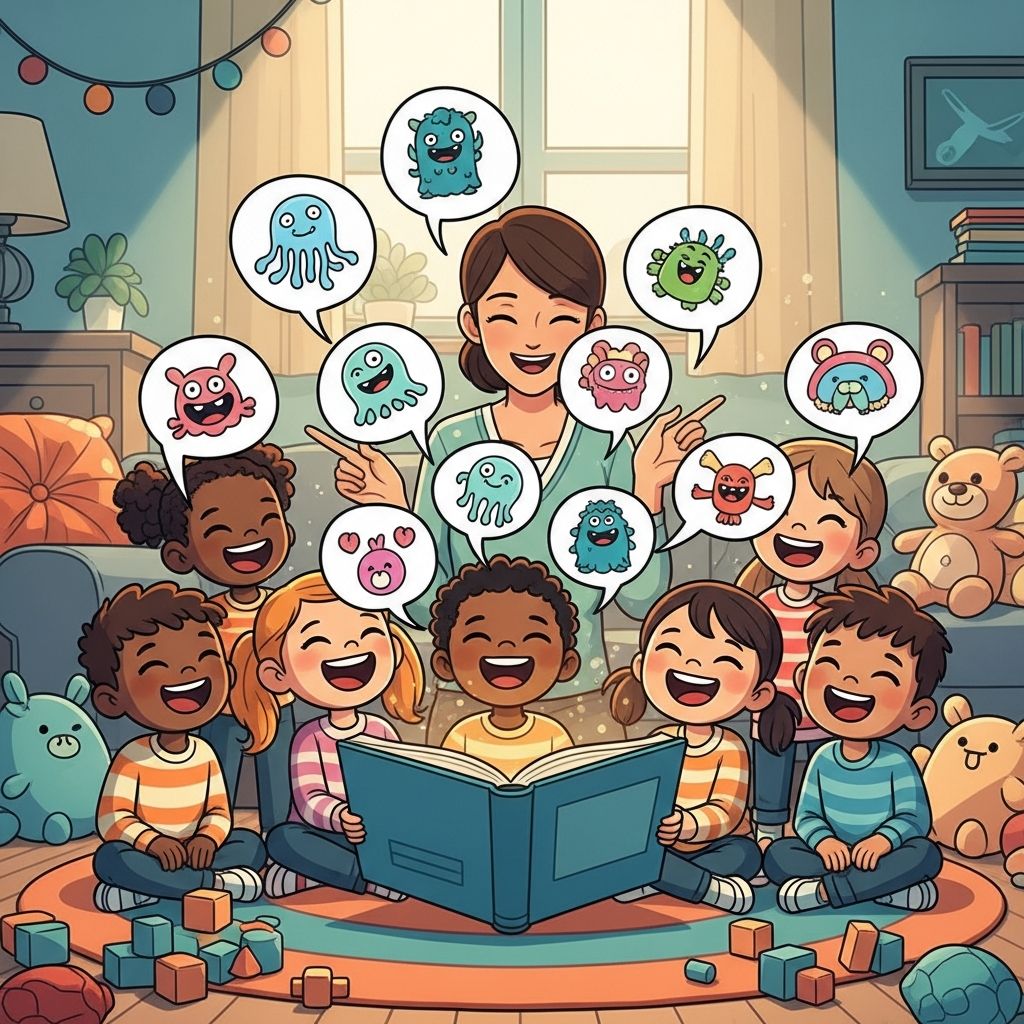
Nothing melts tension at home faster than a well-timed, kid-friendly joke. Done right, silly humor becomes a daily ritual that turns car rides, dinner, and bedtime into moments your children remember for years.
Why Laughter Matters in Childhood
Humor is more than entertainment; it is a powerful emotional skill. When children laugh, they learn to handle awkward situations, relieve stress, and see problems from a lighter angle. Jokes give them a safe way to play with language and ideas.
For parents, joking around is a simple way to build trust. A shared laugh tells kids, “You’re safe here. You can be silly, and I’m right there with you.” Over time, these repeated playful moments add up to a strong sense of connection.
What Makes a Joke Kid-Friendly?
“Clean” jokes for kids avoid insults, stereotypes, and anything that relies on embarrassment. A good children’s joke is often light, a bit absurd, and easy to understand after one or two explanations.
When choosing jokes, focus on playful surprise rather than meanness. If someone has to be the “butt” of the joke, let it be an inanimate object, an imaginary creature, or the joke teller themself rather than a specific group of people.
Core ingredients of a great kids’ joke
- Simplicity: Short questions and answers that kids can repeat without help.
- Wordplay: Puns, double meanings, and sound-alike words that make language feel like a toy.
- Visual silliness: Situations kids can picture, like animals doing human jobs or objects coming to life.
- Gentle twists: Endings that break expectations but never feel harsh or cruel.
Age-Appropriate Humor: Matching Jokes to Development
Children’s sense of humor grows as quickly as their shoe size. A joke that delights a preschooler might bore a tween, while a clever wordplay punchline can confuse a toddler. The key is to understand what each age finds funny.
| Age Range | Humor Style | What to Try |
|---|---|---|
| 3–5 years | Repetition, absurd images, mixed-up realities | Animal jokes, nonsense words, calling everyday objects by the “wrong” name on purpose. |
| 6–8 years | Simple puns, knock-knock jokes, gentle trick questions | Question-and-answer jokes with obvious setups and single-word punchlines. |
| 9–11 years | More complex wordplay, irony, playful sarcasm | Multi-step jokes, riddles, and humorous observations about school or family life. |
| 12+ years | Subtle references, self-aware humor, clever callbacks | Running family jokes, parody, and light self-deprecation that doesn’t harm self-esteem. |
Types of Clean Jokes Kids Love
Variety keeps laughter fresh. Think of children’s jokes as belonging to a few broad families. Rotating through these styles helps you avoid repeating the same pattern until everyone groans instead of giggles.
1. Animal and Nature Jokes
Animals are a comedy goldmine because kids already imagine them with personalities, voices, and secret lives. Turning a serious animal into a silly character feels both surprising and safe.
- Give animals jobs they would be terrible at, like a shy lion running a loud dance club.
- Imagine animals confused by human inventions, such as a squirrel trying to use a smartphone.
- Mix habitats and behaviors: a penguin getting sunburned at a desert water park.
2. School and Learning Jokes
So much of kids’ lives revolves around school that poking fun at homework, teachers, and tests feels instantly relatable. These jokes help children laugh about their daily stresses in a healthy way.
- Play with subject names: math “problems,” history “repeating,” science “experiments gone wrong.”
- Turn school supplies into characters who talk about their “jobs.”
- Make exaggerated versions of common situations, like a backpack so heavy it needs its own desk.
3. Food and Mealtime Jokes
Food jokes work for almost every age because everyone eats and kids adore silly exaggerations about snacks. A playful line can even diffuse picky-eating battles by shifting the mood from tense to goofy.
- Let fruits and vegetables argue about which one is “more super.”
- Imagine plates and forks gossiping about what gets served on them.
- Use funny sound effects or pretend voices for foods as they “introduce” themselves.
4. Everyday Object Jokes
Children love giving personalities to ordinary objects: doors that sigh, socks that complain about smelly feet, or lamps that want a day off. This kind of humor gently stretches imagination.
- Pick something boring (like a pencil) and list what it might secretly wish for.
- Ask, “If your backpack could talk, what would it say about your room?”
- Invent “interviews” with objects, where you ask them questions and your child answers in character.
5. Gentle Riddle Jokes
Riddles are mini-puzzles that give kids a satisfying sense of victory when they solve them. Choose ones with answers that make sense after a quick explanation, not obscure trivia.
- Focus on common items kids know well, like shoes, backpacks, and playground equipment.
- Keep clues short, and offer hints instead of revealing the answer right away.
- Encourage kids to invent their own riddles, even if the logic is delightfully shaky.
How to Deliver a Joke Like a Pro
The same joke can earn either confused silence or rolling laughter, depending on how it is told. Timing, voice, and your willingness to lean into the silliness matter more than the individual words.
Practical delivery tips for parents
- Pause before the punchline: A tiny moment of suspense lets kids lean in and makes the payoff feel bigger.
- Use your face and hands: Raised eyebrows, over-the-top shrugs, and wide eyes signal that something funny is coming.
- Slow down: Children need time to process; racing through the setup can leave them lost.
- Repeat favorites: Kids love hearing the same joke because the predictability is part of the fun.
- Invite participation: Let your child say the punchline once they know it by heart.
Building Your Family’s “Joke Culture”
A handful of jokes told once in a while is nice. A household where humor appears in small ways every day becomes a place where kids feel free to be themselves, mistakes and all.
Easy ways to weave jokes into daily life
- Breakfast chuckles: Start one morning a week with a “joke of the day” at the table.
- Car-ride comedy club: Use traffic lights or long drives as prompts to take turns telling jokes or riddles.
- Lunchbox laughs: Slip a handwritten joke into your child’s lunch or backpack as a midday smile.
- Bedtime giggles: After stories, let your child request one “last joke” before lights out.
- Celebration spotlights: At birthdays, invite each guest to share a favorite clean joke about anything but the birthday child’s appearance or flaws.
Signs a Joke Has Gone Too Far
Not every joke will land perfectly, and that is normal. What matters is how you respond when humor accidentally hurts feelings or crosses a boundary.
- If someone looks uncomfortable, confused, or suddenly quiet, pause the joking and check in.
- Explain that funny does not mean cruel. Make it clear that jokes never excuse teasing about bodies, abilities, or identities.
- Model repairing harm: a simple “That joke missed the mark, and I’m sorry” teaches kids empathy faster than any lecture.
Helping Kids Create Their Own Jokes
Teaching children to invent jokes turns them from passive listeners into active creators. At first, their attempts may barely resemble traditional punchlines, but the point is creative play, not perfection.
Simple frameworks for kid-made jokes
- “What if…?” game: Ask what would happen if serious things acted silly (for example, if a traffic light kept changing its mind).
- Two-word mashups: Combine an animal and an object, then invent a joke about the new “creature.”
- Backwards day: Invite your child to imagine everyday rules reversed and turn the silliest idea into a joke.
Frequently Asked Questions About Kid-Friendly Jokes
Are “potty jokes” always off-limits?
Many children find bathroom humor endlessly amusing, especially in the early elementary years. Rather than banning it completely, some parents set clear boundaries: certain topics are allowed at home but not at school, or allowed in private spaces but not at the dinner table. Creating a “silly zone” and “serious zone” can give kids an outlet while still teaching respect for context.
What if my child tells a joke that feels mean?
When kids copy jokes they heard elsewhere, they may not understand why certain ones feel hurtful. Instead of shaming them, calmly explain which part of the joke targets a group or a person, and why that is not okay in your family. Then, help them rework the joke so it points toward something neutral, like a talking sandwich or a grumpy cloud, rather than a real person.
How can I support a shy child who loves jokes?
For quieter kids, jokes can become a low-pressure way to practice speaking up. Start by letting them whisper punchlines to you, or tell jokes to stuffed animals during play. Gradually, invite them to share one favorite joke at family gatherings, always praising the effort rather than judging how “funny” it is.
Do I have to be naturally funny for my kids to enjoy my jokes?
Children rarely care whether a parent could succeed on a comedy stage. What they remember is that you tried, that you listened to their jokes, and that you laughed together even when the punchline came out wrong. Warm attention beats perfect timing every single time.
Can jokes help with tough conversations?
Light humor can make difficult topics feel less overwhelming, as long as it does not dismiss real feelings. A gentle joke about how “even grown-ups sometimes feel like their brains forgot the homework” can open the door to talking about stress, worry, or mistakes. Use laughter as a bridge to honesty, not a way to dodge important discussions.
Turning Everyday Life Into Shared Laughter
Clean, clever jokes are not just filler when screens are off or long lines drag on. They are tiny invitations that say, “Let’s enjoy this moment together, even if nothing special is happening.” Over months and years, those tiny invitations become part of your family’s story.
You do not need a perfect memory for punchlines or a rehearsed routine. You only need a willingness to be a little silly, to listen when your child wants to perform their fifteenth joke in a row, and to let laughter be one of the main languages your family speaks.