Anime has become a regular part of many children’s screen time, but not every colorful series is automatically suitable for young viewers. This guide walks parents through how to choose age-appropriate anime, what to watch out for, and which types of shows tend to be safest and most beneficial for kids.
Why Anime Appeals So Strongly to Kids
Anime often combines bright visuals, imaginative worlds, and emotional storytelling in a way that is especially captivating for children. Characters show big feelings, build strong friendships, and overcome challenges in ways that kids can easily understand and relate to. Many series also weave in gentle life lessons about perseverance, kindness, and cooperation without feeling like lectures.
Because anime covers every possible genre—from slice-of-life school stories to sci-fi adventures—kids can usually find something that speaks to their interests. For parents, this range is both an opportunity and a challenge: there is plenty of positive content, but also storylines with violence, horror, or adult themes that are not meant for children.
Understanding Anime Ratings and Labels
Unlike some Western children’s TV, anime is not produced solely for young audiences. Parents should pay attention to age ratings from streaming services and distributors, which often mirror film-style labels such as TV-Y, TV-G, TV-PG, TV-14, and TV-MA. These indicators give a first impression of whether a title is intended for children, preteens, or adults.
Ratings alone, however, are not enough. Two series with the same label can feel very different in tone and intensity. A TV-PG show might include only mild fantasy battles, while another TV-PG series could feature heavier emotional situations. Reading show descriptions, checking parental reviews, and sampling an episode personally will give a clearer picture of what your child will actually see.
Key Content Areas Parents Should Review
Before introducing a new anime to your child, it helps to scan for certain types of content that commonly appear in the medium. Focusing on a few core areas makes it easier to decide whether a series is a good fit for your family’s values and your child’s temperament.
The main factors most parents consider are violence, language, sexualized imagery, emotional intensity, and complex themes. Evaluating each of these separately can clarify why a show might feel appropriate for one age group but not another, even if the overall story seems lighthearted on the surface.
Violence and Scary Elements
Many anime series include some form of conflict, from slapstick pratfalls to large-scale fantasy battles. Cartoonish bopping between friends is very different from realistic injury, blood, or frightening monsters. Younger kids in particular may struggle with intense or suspenseful sequences, even when the rest of the series feels gentle.
When reviewing an anime, notice whether the violence is stylized and comedic, or serious and graphic. Consider how often it occurs, whether characters face lasting consequences, and if the overall message rewards problem-solving and empathy rather than cruelty or revenge.
Language, Humor, and Sexualization
Some shows aimed at older audiences include crude jokes, suggestive outfits, or flirtatious humor that parents might not want younger children to see. Even brief moments of fan-service or innuendo can feel jarring in an otherwise cute series.
Look not only at what characters say, but also at the type of humor and the way bodies are depicted. Plenty of anime meant for families focuses instead on physical comedy, misunderstandings, and gentle teasing without relying on adult themes.
Emotional Intensity and Complex Themes
Anime often explores grief, loneliness, bullying, and identity in a more direct way than some Western children’s programming. Older kids and teens may benefit from seeing characters work through difficult feelings, but some storylines can be overwhelming for sensitive viewers.
Ask yourself whether your child is ready to handle scenes involving separation from family, loss of a pet or loved one, or social rejection. If a series does touch on heavy topics, consider watching together so you can pause, comfort, and discuss what happens.
Common Types of Kid-Friendly Anime
Despite the potential for mature content, many anime series and films are designed to be encouraging, imaginative, and gentle enough for children. Grouping them by style can help you quickly identify which titles to explore first based on your child’s personality.
Below are some broad categories of anime that tend to work well for younger viewers, along with what makes each type appealing and generally safe.
Cute Creatures and Everyday Adventures
Series centered on friendly animals, magical companions, or non-threatening monsters are often ideal for early elementary ages. The stakes are usually small—finding lost items, helping neighbors, or exploring new places—and conflicts resolve quickly with cooperation and kindness.
- Focus on friendship, teamwork, and problem-solving.
- Visuals are bright, soft, and rarely frightening.
- Episodes can usually be watched out of order without confusion.
Gentle Slice-of-Life Stories
Slice-of-life anime follows characters through daily routines such as school, family meals, hobbies, and seasonal events. These series often highlight empathy, respect, and the joy of small moments, making them especially relaxing for family viewing.
- Low conflict and slow pacing reduce overstimulation.
- Good opportunities to talk about manners, gratitude, and social skills.
- Ideal for kids who prefer calm, cozy stories over intense action.
Magical Kids and Young Heroes
Another popular style involves children or tweens who discover special abilities or magical tools and use them to protect others. These shows tend to combine action with strong messages about responsibility, courage, and the importance of making good choices.
- Often centers on character growth and moral lessons.
- Conflicts are usually fantasy-based rather than realistic violence.
- Great for kids who enjoy adventure but can handle mild tension.
Wholesome Sports and Hobby Series
Sports and hobby-focused anime follow teams or clubs as they train, compete, and build friendships. Although some shows in this category are aimed at teens, many stay positive and highlight perseverance, fair play, and mutual support.
- Natural way to discuss practice, discipline, and handling failure.
- Can motivate kids to explore their own interests offline.
- Often feature large casts, helping children appreciate diverse personalities.
Age-Based Considerations for Anime
Every child is different, but age ranges can still provide guidance as you plan what to introduce and when. Think of these as flexible stages, not rigid rules, and always adjust based on your child’s sensitivity and maturity.
Preschool and Early Elementary (Approx. 4–7)
At this age, children benefit most from simple stories, short episodes, and gentle visuals. Avoid shows with intense battles, creepy creatures, or complicated plots. Look instead for anime where characters solve everyday problems, support one another, and show clear differences between kind and unkind behavior.
Parents may also want to use dubbed versions rather than subtitles for this age group. Young children often struggle to read quickly enough, and listening in their own language allows them to focus on emotions and social cues.
Older Elementary (Approx. 8–11)
As children grow, they can follow longer story arcs and handle slightly higher stakes. Light fantasy battles, school rivalries, and exploration stories can all be appropriate when themes remain hopeful and consequences are not too traumatic.
This stage is also a good time to explore shows that feature problem-solving, teamwork competitions, and early explorations of identity. Parents should still watch for repeated violence, dark humor, or romantic subplots that feel too mature.
Preteens and Young Teens (Approx. 12–14)
Preteens may gravitate toward anime with more sophisticated humor, complex characters, and ongoing mysteries. Some series in this range handle friendship drama, self-doubt, and family struggles in ways that resonate strongly with kids on the cusp of adolescence.
During this stage, co-viewing can be especially valuable. Storylines might introduce ethical dilemmas, gray areas, or bittersweet outcomes that invite deeper conversation about values, boundaries, and healthy relationships.
Sample Content Checklist for Parents
When deciding whether to approve a new anime, it can help to use a simple checklist. This encourages consistent decisions and makes it easier to explain your reasoning to your child.
| Aspect | Questions to Ask | Green Flag Indicators |
|---|---|---|
| Violence | Is any fighting mild, brief, and non-graphic? Are scary images limited? | Slapstick or fantasy scuffles with no blood and quick resolution. |
| Language & Humor | Are there insults, crude jokes, or repeated strong language? | Kind teasing at most, no sexual jokes, no swearing. |
| Sexualization | Are outfits, poses, or camera angles focused on bodies or discomforting? | Age-appropriate clothing and neutral framing during scenes. |
| Emotion & Themes | Does the story include trauma, loss, or heavy psychological stress? | Conflicts kids can understand, with reassuring outcomes and support. |
| Role Models | Do main characters grow, apologize, and make better choices over time? | Emphasis on empathy, teamwork, and responsibility. |
Using Anime as a Tool for Learning
Beyond entertainment, carefully chosen anime can support learning and personal growth. Many shows introduce elements of Japanese culture, such as seasonal festivals, school traditions, and foods, giving children a window into a different way of life.
Subtitled versions can also help older kids build reading speed and pick up basic foreign-language phrases. Even without focusing on vocabulary, children may absorb respectful forms of address, social customs, and nonverbal communication that broaden their understanding of the world.
Healthy Screen Habits Around Anime
As with any media, boundaries around duration and timing are crucial. Long-running series can tempt kids into “just one more episode,” especially when every installment ends on a gentle cliffhanger. Setting a clear limit—such as one or two episodes per day—keeps anime a treat rather than an all-day activity.
Pairing anime with offline activities also helps balance screen time. For example, children can draw their favorite characters, write their own short stories, or try simple crafts inspired by things they see on screen. This turns passive watching into creative engagement.
Co-Viewing and Conversation Tips
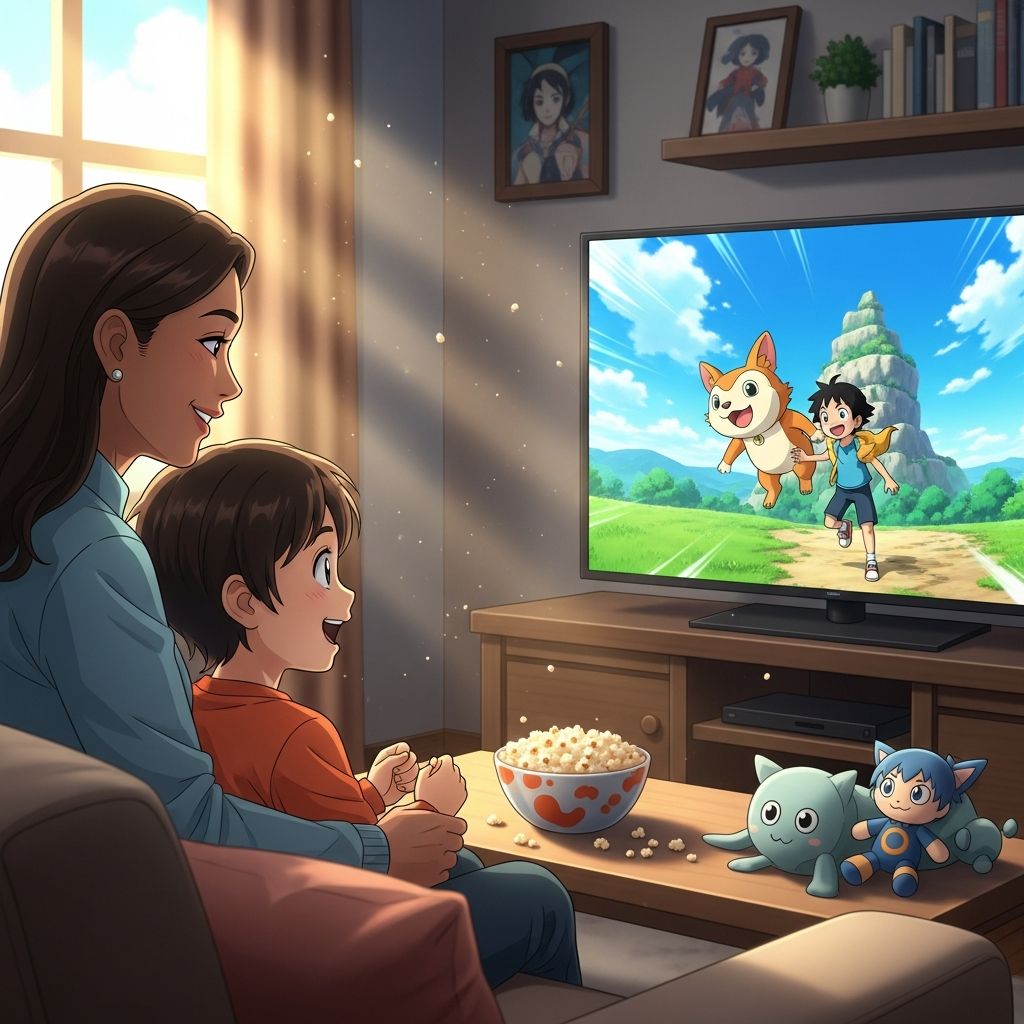
Watching anime together, at least occasionally, gives parents valuable insight into what their children enjoy and how they interpret what they see. It becomes easier to spot confusing scenes or jokes that need clarification. Kids also feel more comfortable asking questions when a caregiver is visibly interested.
After an episode, try a few open-ended questions rather than a mini-lecture. Asking who their favorite character is, what lesson they noticed, or how they would handle a similar situation connects the story to real life and encourages critical thinking.
Red Flags That a Show Might Not Be a Good Fit
Sometimes you will only realize a series is too intense or mature after watching an episode. It is perfectly reasonable to change your mind and stop the show, even if you initially approved it based on a description or rating.
- Your child appears anxious, has nightmares, or repeatedly reenacts violent scenes.
- Jokes and visuals feel heavily focused on bodies or make you uncomfortable.
- Characters are rewarded for bullying, cruelty, or humiliating others.
- The overall tone leaves your child more irritable, aggressive, or withdrawn.
If any of these occur, talk openly about why the show is ending and help your child choose an alternative that better matches the atmosphere you want in your home.
Practical Steps to Curate a Kid-Safe Anime Watchlist
Building a small, trusted library of titles saves time and reduces conflict over what to watch. Instead of scrolling endlessly through thumbnails each afternoon, your child can choose from a pre-approved list of series and movies that you already know are appropriate.
- Start by identifying a handful of shows that match your child’s age, interests, and sensitivity.
- Preview at least one full episode of each candidate, not just a trailer.
- Check parental reviews or community discussions that specifically mention content issues.
- Save or bookmark approved titles in your streaming profiles to separate them from teen and adult selections.
- Revisit the list regularly as your child grows and their needs change.
Frequently Asked Questions About Anime for Kids
Is all anime appropriate for children?
No. Anime is a broad medium that includes content for every age group, including adults. Parents should treat anime like live-action television and movies: some titles are perfect for preschoolers, others are tailored to teens, and many are not intended for kids at all.
Should my child watch anime dubbed or with subtitles?
For younger children, dubbed versions are often easier to follow and less frustrating, since they do not need to read quickly while watching the action. Older kids can benefit from subtitles if they enjoy hearing the original language or want to practice reading and listening skills.
How much anime is too much?
There is no single rule, but most health experts recommend limiting recreational screen time and ensuring it does not interfere with sleep, physical activity, homework, or in-person social time. A good approach is to set a daily or weekly episode limit and stick to it consistently.
What if my child wants to watch a show that seems too mature?
Consider watching a few episodes on your own first and honestly assessing whether it aligns with your family’s boundaries. If you decide against it, explain your reasoning, offer a more suitable alternative, and revisit the conversation when your child is older and better equipped to process the themes.
Can anime really teach positive values?
Yes, many kid-friendly series highlight empathy, teamwork, persistence, and the importance of making amends. When paired with conversation, these stories can reinforce the values you are already teaching at home and give children practical examples of those values in action.
Final Thoughts for Parents New to Anime
Anime can be a rich, creative part of your child’s entertainment diet when chosen thoughtfully. By paying attention to ratings, previewing episodes, and staying engaged through co-viewing and conversation, parents can encourage a love of imaginative storytelling while still protecting kids from content that is not meant for them.
With a bit of guidance, anime becomes more than just background noise. It turns into a shared experience that sparks curiosity, empathy, and creativity—qualities that serve children well far beyond the screen.