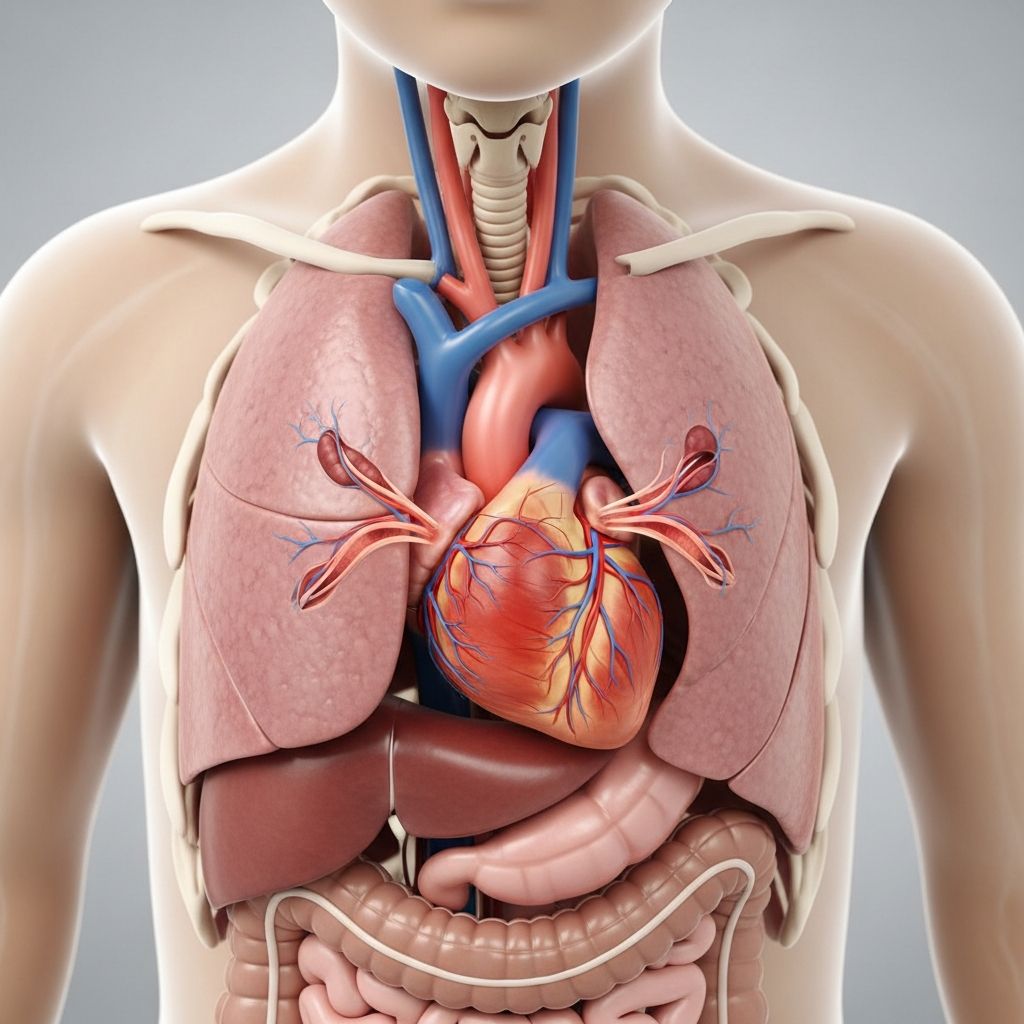
Kawasaki disease is a childhood illness that causes inflammation in blood vessels throughout the body, especially those that supply blood to the heart. Early recognition and prompt treatment dramatically lower the risk of serious heart complications and help most children make a full recovery.
What Is Kawasaki Disease?
Kawasaki disease is an acute inflammatory condition (a type of vasculitis) that mainly affects medium-sized arteries, including the coronary arteries that bring blood to the heart muscle. It almost always happens in children and is one of the leading causes of acquired heart disease in kids in high-income countries.
Key points for parents:
- Most often affects children younger than 5 years old.
- Boys are affected more often than girls.
- The illness is not contagious from child to child.
- With treatment, most children recover and live normal lives.
How Common Is It?
Kawasaki disease is considered rare, but it is the most frequent cause of acquired heart disease in children in some countries, including the United States and Japan. The exact number of cases varies by region and ethnicity, with higher rates in children of Asian or Pacific Island ancestry, though it can occur in any child.
What Causes Kawasaki Disease?
The exact cause remains unknown. Experts believe it is triggered by an abnormal immune response in a child who is genetically susceptible.
Current theories suggest:
- Immune overreaction to a common infection or environmental trigger in certain children.
- Genetic factors that increase risk in some families and populations.
- Seasonal patterns in some regions, hinting at a possible infectious contribution.
Despite the suspicion of an infectious trigger, no specific virus or bacteria has been proven to cause Kawasaki disease.
Who Is at Higher Risk?
Any child can develop Kawasaki disease, but some features are more common:
- Age: Most cases occur in children under 5 years, with a peak between 1 and 2 years.
- Sex: Boys are affected more frequently than girls.
- Ethnicity: Higher rates are seen in children of Asian and Pacific Island descent, especially Japanese children, though the disease is worldwide.
- Family history: Having a sibling with Kawasaki disease slightly increases risk, but it is still uncommon.
How Kawasaki Disease Affects the Body
Kawasaki disease causes widespread inflammation of blood vessels and the immune system. The most important concern is its effect on the heart.
| Body Area | What Happens | Possible Impact |
|---|---|---|
| Blood vessels (arteries) | Inflammation of medium-sized arteries throughout the body. | Pain, swelling, and in severe cases, damage to vessel walls. |
| Coronary arteries | Swelling and weakening of vessels supplying the heart. | Coronary artery aneurysms (balloon-like expansions) or narrowing. |
| Heart muscle | Inflammation of the heart muscle (myocarditis) or lining (pericarditis). | Fast heart rate, decreased heart pumping ability, heart failure in rare cases. |
| Skin, eyes, mouth | Rash, red eyes, cracked lips, and swollen tongue. | Visible signs that help doctors recognize the disease. |
Typical Phases and Symptoms
Symptoms of Kawasaki disease often unfold in stages over several weeks. Not every child has the same pattern, and some signs may be subtle or come and go.
Early Phase: Persistent Fever and Classic Signs
The first phase, sometimes called the acute phase, usually lasts about 1–2 weeks. The hallmark is a high fever plus several other characteristic symptoms.
- Fever: Lasts at least 5 days, often higher than 102–104°F (39–40°C), and does not respond well to typical fever medicines.
- Skin rash: Red or pink rash on the trunk and limbs, and sometimes in the diaper or groin area.
- Red eyes: Irritation and redness of the whites of the eyes without thick discharge (non-purulent conjunctivitis).
- Mouth changes:
- Red, dry, cracked lips.
- “Strawberry” tongue with visible red bumps.
- Redness in the mouth and throat.
- Extremity changes:
- Swollen, red hands and feet.
- Pain when walking or refusing to stand in some toddlers.
- Swollen lymph node(s) in the neck: Usually on one side.
- General unwellness: Extreme irritability, tiredness, decreased appetite, and sometimes vomiting or diarrhea.
Middle Phase: Peeling Skin and Lingering Irritability
As the fever and rash improve, a second phase begins, often in weeks 2–3.
- Peeling skin on the fingers and toes, especially around the nails.
- Joint pain or swelling in the knees, ankles, or hips.
- Continued irritability and low energy.
- Abdominal pain, vomiting, or diarrhea may still be present.
This stage is when coronary artery problems are most likely to appear, so heart monitoring is especially important.
Late Phase: Gradual Recovery
Over the following weeks, most children slowly regain their usual energy, appetite, and mood. Inflammation in the body and blood vessels usually decreases, and many heart changes, if present, begin to heal.
However, some children, especially those with coronary artery involvement, may need ongoing cardiology follow-up for months or years.
What Is “Incomplete” Kawasaki Disease?
Some children do not show all of the classic features but still have dangerous inflammation of the coronary arteries. This is called incomplete Kawasaki disease.
Clues that raise suspicion include:
- Fever for 5 or more days with only 2–3 typical signs (such as a rash and red eyes).
- Abnormal blood tests showing significant inflammation.
- Heart ultrasound (echocardiogram) that reveals early coronary artery changes.
Incomplete Kawasaki disease is treated just as aggressively because the risk to the heart can be similar.
How Is Kawasaki Disease Diagnosed?
There is no single test that confirms Kawasaki disease. Doctors make a diagnosis based on symptoms, examination, and supportive test results.
Clinical Evaluation
- Detailed history about fever duration and other symptoms.
- Full physical exam to look for rash, eye redness, mouth changes, swollen glands, and extremity changes.
- Checking for signs of other illnesses that can mimic Kawasaki disease (such as infections or other inflammatory conditions).
Laboratory Tests
Blood and urine tests help assess inflammation and rule out other causes:
- Markers of inflammation such as C-reactive protein (CRP) and erythrocyte sedimentation rate (ESR) are often high.
- Blood counts may show anemia, high white blood cell count, and later a high platelet count.
- Liver tests and urinalysis may show mild abnormalities.
Heart Imaging
Because heart complications are the most serious part of Kawasaki disease, heart imaging is essential:
- Echocardiogram (heart ultrasound): looks for coronary artery swelling or aneurysms, fluid around the heart, and heart pumping strength.
- Additional imaging (CT or MRI angiography) may be used in more complex cases or for ongoing follow-up of significant aneurysms.
Why Early Treatment Matters
Without treatment, a significant percentage of children develop coronary artery aneurysms or other heart problems. With timely therapy, that risk drops dramatically.
Best outcomes are seen when treatment starts within the first 10 days of illness, ideally as soon as Kawasaki disease is suspected.
Treatment: What to Expect in the Hospital
Most children with Kawasaki disease are treated in the hospital so doctors can give intravenous medications and closely monitor the heart.
Core Medications
- Intravenous immunoglobulin (IVIG):
- Given through a vein over several hours, usually as a single large dose.
- Reduces inflammation and sharply lowers the risk of coronary artery aneurysms.
- Most children show improvement in fever and irritability within 24–48 hours.
- Aspirin:
- Given in higher doses at first to help reduce inflammation and fever.
- Later switched to a lower, “antiplatelet” dose to help prevent blood clots in inflamed arteries.
Children who do not respond to the first IVIG dose may need another dose or additional medicines, such as corticosteroids or other immune-modulating treatments.
Supportive Care
- Fluids to maintain hydration.
- Fever and pain control under medical supervision.
- Monitoring of heart rate, blood pressure, and breathing.
- Repeat echocardiograms as advised.
Possible Complications
Many children experience only the acute illness and recover completely. However, some develop heart-related complications, especially if treatment is delayed.
Heart and Blood Vessel Problems
- Coronary artery aneurysms: ballooning or dilatation of coronary arteries; risk is highest without IVIG treatment.
- Coronary artery narrowing (stenosis) or clot formation within aneurysms, which can reduce blood flow to the heart muscle.
- Myocarditis: inflammation of the heart muscle, leading to decreased pumping ability.
- Heart rhythm problems and, rarely, heart attacks in severe cases.
Non-Cardiac Issues
- Joint pain or arthritis.
- Gallbladder swelling or liver test abnormalities.
- Hydrops of the gallbladder or abdominal pain.
Serious complications are much less common when children receive appropriate treatment early.
Recovering at Home and Long-Term Follow-Up
After hospital discharge, children usually continue to improve over several weeks, but follow-up is essential, especially for those with heart involvement.
Home Care Tips
- Give medicines exactly as prescribed, including low-dose aspirin if recommended.
- Watch for return of fever, breathing difficulties, or chest pain, and seek medical help immediately if they appear.
- Offer plenty of fluids and nutritious foods as appetite returns.
- Encourage rest; gradual return to normal activity is usually fine unless the cardiologist advises restrictions.
Heart Monitoring Schedule
Follow-up plans depend on whether the heart or coronary arteries were affected:
- If the heart appears normal: several echocardiograms in the months after illness, then discharge from cardiology if all remains normal.
- If coronary changes occurred: more frequent imaging and long-term cardiology follow-up, sometimes into adulthood.
Some children with significant coronary artery aneurysms may need additional medications (such as blood thinners) and lifestyle guidance to protect long-term heart health.
How Parents Can Help with Early Detection
Because there is no single test, parent observation and timely medical evaluation are critical. Contact a healthcare provider or seek urgent medical care if:
- Your child has a fever for 5 days or more, especially if it is high and not improving with fever-reducing medicine.
- The fever is accompanied by a combination of rash, red eyes, mouth changes, swollen lymph nodes, or swollen hands and feet.
- Your child seems unusually irritable, weak, or less responsive.
Early suspicion allows doctors to start treatment quickly, often before major heart damage occurs.
Frequently Asked Questions (FAQs)
Q1: Is Kawasaki disease contagious?
No. Kawasaki disease is not thought to spread directly from child to child like a typical infection. It may be triggered by an immune response to something in the environment, but it is not considered contagious.
Q2: Can my child get Kawasaki disease more than once?
Recurrent Kawasaki disease is uncommon but can occur. Most children have only a single episode. If a child with a history of Kawasaki disease develops a prolonged fever and similar symptoms again, they should be evaluated promptly.
Q3: Will my child have heart problems for life?
Most children who receive early treatment and do not develop coronary artery changes recover completely and do not have long-term heart problems. Children who develop significant coronary aneurysms may need ongoing heart care and monitoring into adulthood, but even many of these aneurysms improve or regress over time.
Q4: Are vaccines safe after Kawasaki disease?
Some live vaccines are delayed for a period after IVIG treatment because IVIG can interfere with how the immune system responds to certain vaccines. Your child’s doctor will give specific guidance on when to receive catch-up immunizations.
Q5: How is Kawasaki disease different from MIS-C related to COVID-19?
Multisystem inflammatory syndrome in children (MIS-C) is another inflammatory condition that can follow SARS-CoV-2 infection and shares some features with Kawasaki disease, such as fever, rash, and heart involvement. However, MIS-C tends to affect older children, more often involves low blood pressure and shock, and has different laboratory patterns. Doctors use clinical features, testing for recent COVID-19 infection, and lab results to distinguish between the two.
References
- About Kawasaki Disease — Centers for Disease Control and Prevention (CDC). 2024-01-18. https://www.cdc.gov/kawasaki/about/index.html
- Kawasaki Disease – Symptoms and causes — Mayo Clinic. 2023-08-19. https://www.mayoclinic.org/diseases-conditions/kawasaki-disease/symptoms-causes/syc-20354598
- What Is Kawasaki Disease? — UC San Diego Health, Kawasaki Disease Research Center. 2023-05-10. https://pediatrics.ucsd.edu/research/centers/kawasaki-disease/for-parents/index.html
- About Kawasaki Disease — Cleveland Clinic. 2023-11-14. https://my.clevelandclinic.org/health/diseases/13457-kawasaki-disease
- Kawasaki Disease — Nemours KidsHealth. 2023-09-01. https://kidshealth.org/en/parents/kawasaki.html