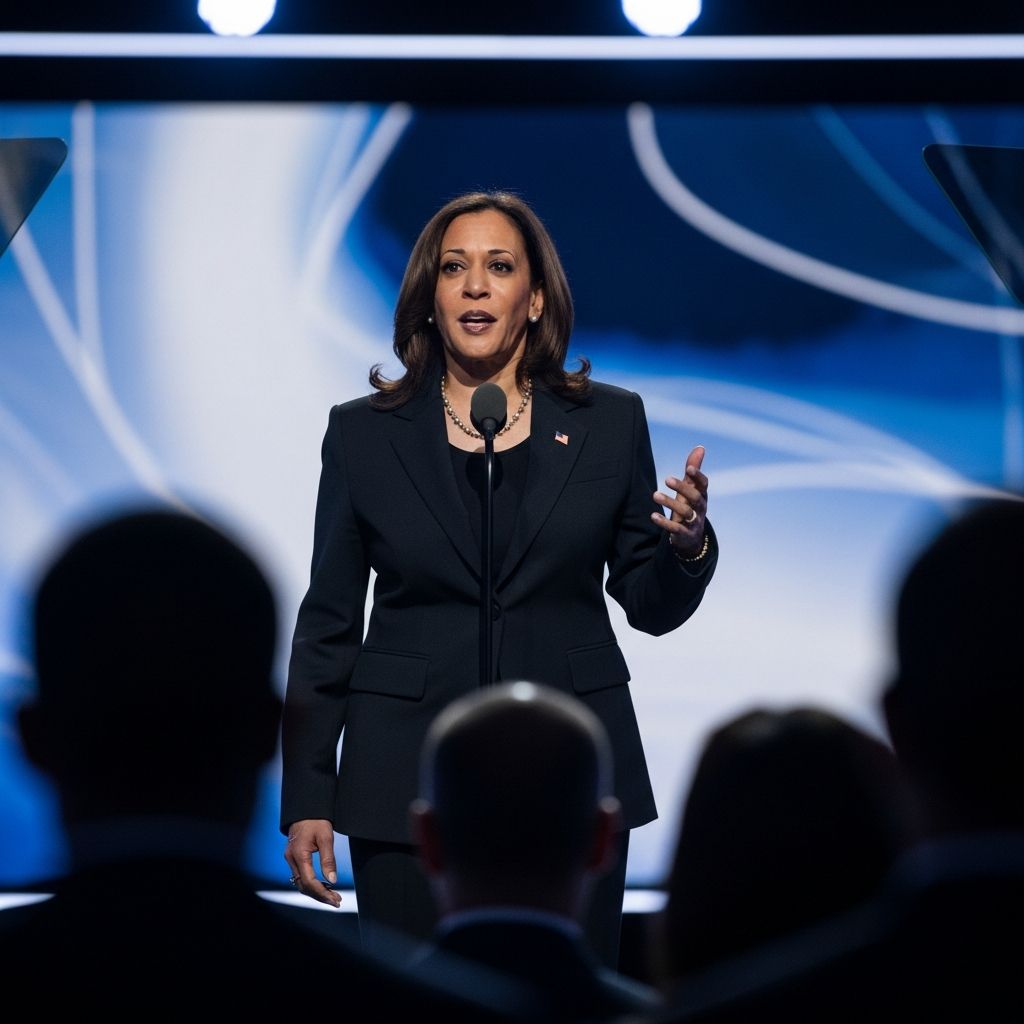
Vice President Kamala Harris’s acceptance speech at the Democratic National Convention marked a pivotal juncture in the 2024 presidential race. Delivered with poise and precision, it wove together her personal journey, a vision for America’s future, and a direct challenge to her opponent, positioning her as a unifying leader rooted in everyday American values.
Roots of Resilience: Harris’s Personal Narrative
Harris opened her speech by grounding her candidacy in a deeply personal story of family, sacrifice, and opportunity. Born to immigrant parents—a Jamaican father and Indian mother—she highlighted how her mother’s determination shaped her worldview. Her mother, a single parent who juggled work, education, and raising two daughters, embodied the grit of the working class. This narrative wasn’t just autobiographical; it served to mirror the struggles of millions of Americans, from single parents relying on public assistance to ambitious students chasing the American dream through scholarships and loans.
By drawing parallels to her grandfather’s service in World War II and his access to the GI Bill, Harris linked her story to broader themes of national gratitude and upward mobility. This approach echoed successful strategies of past presidents who humanized themselves through tales of adversity overcome, fostering a sense of shared identity with the audience.
- Key family influences: Mother’s perseverance amid financial hardship.
- Military ties: Grandfather’s WWII heroism and post-war opportunities.
- Educational pursuit: Access to quality schools via aid programs.
This section of the speech effectively dispelled perceptions of otherness, affirming Harris as a product of mainstream American values—hard work, family loyalty, and faith in the nation’s promise.
From Prosecutor to Commander: Professional Credentials
Harris leaned heavily on her extensive career as a prosecutor, district attorney, and attorney general to project strength and competence. She recounted taking on fraudsters, drug traffickers, and those exploiting vulnerable communities, framing these experiences as preparation for the Oval Office. As Vice President, her work on national security, alliance-building, and troop support underscored her readiness to serve as Commander in Chief.
In a crowded arena in Chicago, she pledged to maintain the world’s most formidable military while honoring veterans and their families. This prosecutorial lens extended to foreign policy, where she vowed accountability for autocrats—a pointed contrast to her rival’s alleged admiration for strongmen.
| Role | Key Achievements Highlighted | Relevance to Presidency |
|---|---|---|
| Prosecutor/DA/AG | Combated predatory lending, cartels | Demonstrates tough, law-enforcing leadership |
| Vice President | Security threats, foreign negotiations | Proves executive experience |
| Future President | Strongest military, veteran care | Ensures national defense priority |
Analysts noted this portrayal flipped Republican narratives, presenting her as a centrist enforcer rather than a radical.
Economic Vision: Building an Opportunity Economy
Central to Harris’s address was a commitment to revitalizing the middle class, which she described as the engine of America’s success. “This is personal for me,” she declared, tying her upbringing to a pledge for tax cuts benefiting working families, job creation through public-private partnerships, and relief on essentials like housing, healthcare, and groceries.
She envisioned uniting labor, small businesses, entrepreneurs, and corporations to drive growth—an inclusive approach aimed at undecided voters in swing states. Critics of her opponent accused him of favoring billionaires over the middle class, with Harris positioning Democrats as true economic warriors.
- Tax relief: Middle-class cuts to boost disposable income.
- Housing push: Increased construction to address affordability.
- Job focus: Collaborations for sustainable employment.
This economic populism addressed voter concerns head-on, blending aspiration with practicality.
Championing Rights and Freedoms
Harris delivered her most impassioned critique on reproductive rights, decrying the Supreme Court’s overturning of Roe v. Wade as an extreme overreach. She warned of further encroachments under her opponent’s influence, labeling such positions as out of touch with mainstream America. Her rhetoric was unequivocal: those seeking to restrict bodily autonomy were misguided.
Beyond abortion, she touched on broader freedoms—voting rights, LGBTQ+ protections, and democratic norms—framing the election as a battle for foundational principles. Her vow to uphold the rule of law and peaceful power transitions served as a subtle rebuke to January 6th events.
Contrast with the Opposition: A Prosecutor’s Takedown
Over a third of the speech targeted Donald Trump, portraying him as self-serving, legally compromised, and a threat to institutions. Harris detailed his civil and criminal cases, accusing him of seeking power for personal gain rather than public good. She contrasted her commitment to unity and strength with his divisiveness, noting how dictators reportedly favored his return.
At roughly 35 minutes—far shorter than Trump’s address—her delivery was disciplined and forceful, emphasizing patriotism through military respect and middle-class advocacy. This framing recast her as the steady, mainstream choice.
Strategic Mastery: Unifying and Persuading
Political experts praised the speech’s dual goals: rallying Democrats and wooing independents. By addressing immigration, the economy, and security proactively, Harris neutralized vulnerabilities. Her centrist tone, presidential demeanor, and optimistic close—“In unity, there is strength”—left audiences energized.
While light on granular policy, it excelled in emotional resonance, much like winning nominees before her who prioritized relatability over specifics.
Frequently Asked Questions (FAQs)
What was the main theme of Kamala Harris’s DNC speech?
The speech centered on her American roots, prosecutorial strength, middle-class economic plans, and a stark contrast with Donald Trump, aiming to humanize her and project leadership.
How did Harris address reproductive rights?
She forcefully condemned the Roe reversal as extreme, warning of worse under Trump, and positioned Democrats as defenders of personal freedoms.
Did the speech outline specific policies?
Yes, including middle-class tax cuts, housing expansion, job creation partnerships, and military strengthening, though broadly framed.
Why was the personal story important?
It connected Harris to everyday Americans, countering ‘otherness’ narratives and echoing successful past campaign strategies.
How did it perform politically?
Experts called it effective for unifying Democrats, appealing to swing voters, and presenting a presidential image.
Observers anticipate this speech will anchor her campaign narrative through Election Day, blending biography, promise, and prosecutorial edge.
References
- What Kamala Harris Was Really Saying in Her Convention Speech — POLITICO Magazine. 2024-08-23. https://www.politico.com/news/magazine/2024/08/23/kamala-harris-dnc-speech-theme-analysis-00175973
- Harris Speech Showed a Prosecutor Ready For Her Rival — TIME. 2024-08-23. https://time.com/7014214/kamala-harris-dnc-review/
- Dissecting Vice President Kamala Harris’ DNC speech — YouTube (NBC Bay Area). 2024-08-23. https://www.youtube.com/watch?v=tApsUSl8KTA