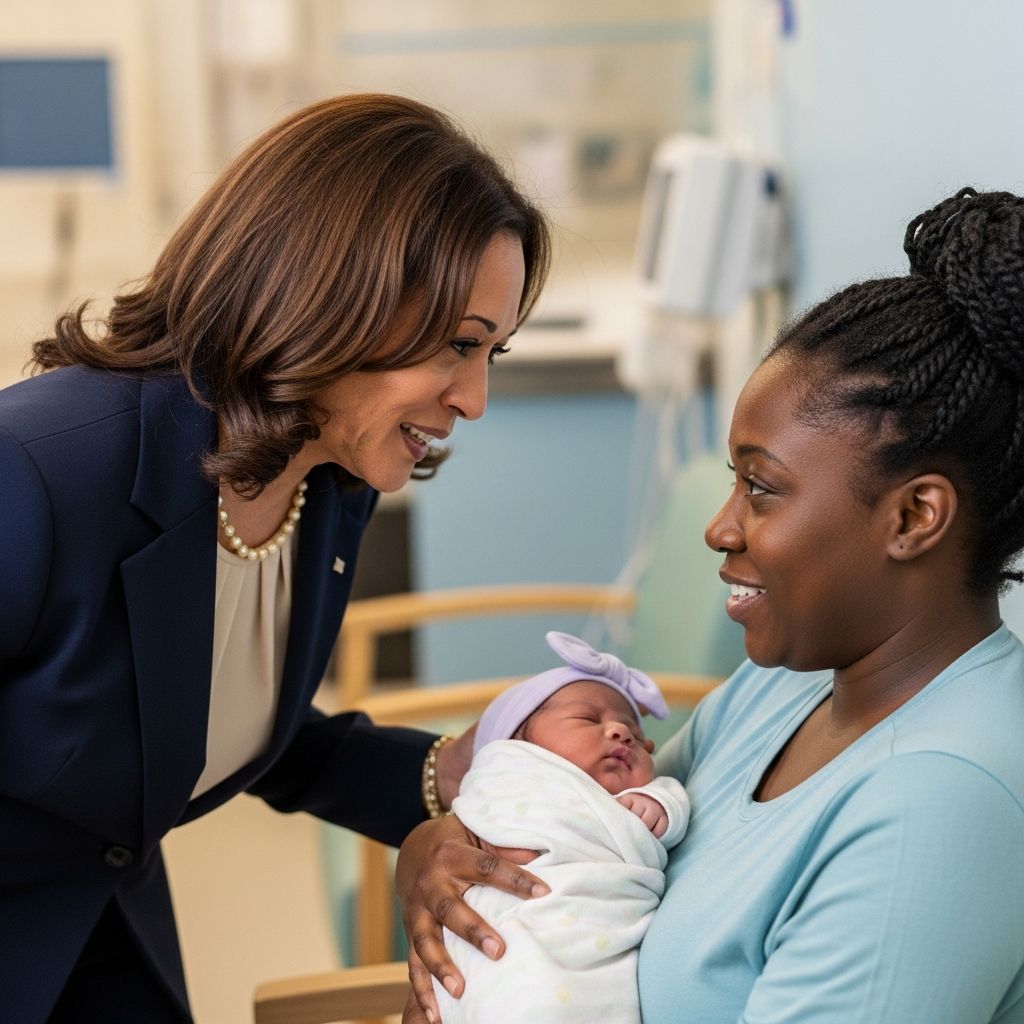
Vice President Kamala Harris has emerged as a powerful advocate for Black maternal health, addressing one of the most pressing public health crises in the United States. Black women face maternal mortality rates roughly three times higher than white women, a disparity that demands urgent, systemic intervention. Harris’s leadership combines legislative action, executive initiatives, and personal commitment to drive meaningful change.
The Stark Reality of Black Maternal Mortality
The United States grapples with alarmingly high maternal death rates compared to other developed nations, with Black women experiencing the most severe outcomes. In 2019, the maternal mortality rate for non-Hispanic Black women reached 44.0 deaths per 100,000 live births, starkly contrasting with 17.9 for white women. Approximately 60% of these deaths are preventable, highlighting failures in healthcare delivery, implicit biases, and access barriers.
Factors contributing to this crisis include chronic underinvestment in community health centers, limited postpartum care, and racial biases in medical treatment. The COVID-19 pandemic worsened these inequities, amplifying vulnerabilities for Black mothers. Harris has repeatedly described this as an “American crisis long ignored,” emphasizing the moral and public health imperative for reform.
- Key Statistics: Black women are 2.5 to 4 times more likely to die from pregnancy-related causes.
- Preventability: Up to 60% of maternal deaths could be avoided with better protocols and bias training.
- Pandemic Impact: Exacerbated disparities through strained healthcare systems and economic pressures.
Harris’s Legislative Legacy as a Senator
Before her vice presidency, Senator Kamala Harris laid the groundwork for maternal health reform through targeted bills. She introduced the Maternal CARE Act, aimed at ensuring women, particularly Black mothers, are heard and respected in healthcare settings. This legislation sought to mandate listening protocols and bias training for providers.
Harris also co-sponsored the Black Maternal Health Momnibus Act, a comprehensive package expanding resources for doula care, mental health support, and community-based programs. Modeled as a multifaceted response, it addressed everything from uterine fibroids research to extended Medicaid coverage for postpartum care. These efforts influenced broader Biden-Harris administration priorities, embedding maternal health investments in the Build Back Better Act.
Additionally, Harris championed the Uterine Fibroid Research and Education Act, recognizing fibroids’ disproportionate impact on Black women and the need for targeted education and treatment disparities reduction. Her reproductive health advocacy extended to protecting abortion access and challenging restrictive state laws.
White House Initiatives Under Harris’s Leadership
As Vice President, Harris elevated Black maternal health to a national priority. In April 2021, she hosted a White House roundtable, declaring, “Black women in our country are facing a maternal health crisis”. This event spotlighted personal stories and policy gaps, fostering collaboration among experts and advocates.
December 2021 marked the first-ever White House Maternal Health Day of Action, launched by Harris. She called for “systemic policies that provide comprehensive, holistic maternal health care free from bias and discrimination”. These efforts built on her senatorial work, integrating them into executive actions like Black Maternal Health Week proclamations and roundtables with affected families.
| Initiative | Key Focus | Impact |
|---|---|---|
| Maternal Health Day of Action (2021) | Reducing mortality via bias-free care | National call to action, policy momentum |
| Black Maternal Health Week Roundtable | Amplifying survivor voices | Highlighted inequities, spurred investments |
| Momnibus Act Integration | Doula support, Medicaid extension | Expanded access in Build Back Better |
Confronting Implicit Bias in Healthcare
Implicit bias profoundly affects Black maternal outcomes, with providers often dismissing pain or symptoms in Black patients. Harris has stressed training to combat this, noting, “Health care is profoundly affected by implicit bias”. Her advocacy pushes for mandatory education in medical schools and hospitals to foster equitable treatment.
Research underscores that biased care contributes to preventable deaths, from overlooked preeclampsia to inadequate pain management. Harris’s vision includes holistic reforms: investing in community midwives, telehealth for rural mothers, and data collection to track racial disparities.
“With every day that goes by and every woman who dies, the need for action grows more urgent.” – Vice President Kamala Harris
Broader Implications for Family and Society
Harris’s work extends beyond mortality rates to family stability and child health. Healthy mothers correlate with better infant outcomes, reducing long-term societal costs. By prioritizing Black maternal wellness, her policies aim to break cycles of poverty and health inequity.
As a stepmother herself, Harris brings a personal lens, advocating for working families through paid leave expansions and childcare investments tied to maternal health. This holistic approach recognizes motherhood’s intersection with economic justice.
Challenges and Paths Forward
Despite progress, barriers persist: political gridlock, funding shortfalls, and state-level restrictions. Harris continues urging Congress for Momnibus funding and Medicaid extensions up to 12 months postpartum. Emerging priorities include climate impacts on maternal health and AI-driven disparity tracking.
Stakeholder collaboration is key—partnerships with organizations like the Black Women’s Health Imperative amplify voices. Future success hinges on sustained bipartisan support and measurable outcomes.
Frequently Asked Questions (FAQs)
What is the Black Maternal Health Momnibus Act?
The Momnibus Act is a bundle of 13 bills addressing Black maternal mortality through expanded care, research, and doula services, championed by Harris.
Why do Black women face higher maternal mortality?
Factors include implicit bias, access barriers, and chronic conditions, with rates 3-4 times higher than white women.
How has Kamala Harris advanced maternal health as VP?
Through roundtables, Days of Action, and legislative pushes integrated into major acts.
Are these deaths preventable?
Yes, about 60% are preventable with better training and care protocols.
What role does bias play in this crisis?
Implicit bias leads to dismissed symptoms; Harris advocates mandatory training.
Personal Reflections: Harris as a Role Model
Harris’s ascent inspires Black mothers, symbolizing resilience amid systemic challenges. Her story—from prosecutor to VP—mirrors the tenacity needed in motherhood and advocacy. By centering Black women’s experiences, she redefines leadership in public health.
Expanding on her influence, Harris’s efforts have mobilized federal resources, with the Biden-Harris administration allocating billions for maternal programs. This includes grants for community health workers and research into conditions like hypertension, prevalent in Black pregnancies.
In state-level advocacy, her model encourages local adaptations, such as bias training mandates in hospitals. Data from CDC underscores the urgency: Black infant mortality also lags, tied to maternal health. Harris’s push for paid family leave further supports recovery, allowing bonding without financial strain.
Critics note implementation gaps, but Harris counters with evidence-based persistence. Her 2021 STAT interview reiterated responsibility: “to stand up for everyone, especially those historically left behind”. This ethos permeates her tenure.
Looking ahead, as of 2026, her legacy endures in ongoing White House task forces monitoring progress. Metrics show modest declines in disparities, crediting federal investments. Yet, full equity requires cultural shifts in medicine.
Educational campaigns, another pillar, target fibroid awareness—Black women suffer higher rates, often undiagnosed. Harris’s bills fund studies, promising breakthroughs in non-invasive treatments.
Intersectionality defines her approach: addressing race alongside poverty, geography, and immigration status. Native American women face similar crises, prompting inclusive policies.
For mothers navigating this landscape, resources abound: 211 for local support, March of Dimes for education. Harris amplifies these, urging personal and policy advocacy.
In sum, her blueprint offers hope—a nation where every birth is safe, celebrated equitably.
References
- In Q&A, VP Harris calls for urgent action on the Black maternal health crisis — STAT News. 2021-04-19. https://www.statnews.com/2021/04/19/kamala-harris-black-maternal-health-momnibus/
- Vice President Kamala Harris Continues to Lead on Maternal Mortality Issues — Democrats.org. 2021-12-07. https://democrats.org/news/vice-president-kamala-harris-continues-to-lead-on-maternal-mortality-issues/
- The Election Of Vice President Kamala Harris & What It Means for Black Women’s Health — Black Women’s Health Imperative. 2021-01-29. https://bwhi.org/2021/01/29/the-election-of-vice-president-kamala-harris-what-it-means-for-black-womens-health/
- For Black Women, Implicit Racial Bias in Medicine May Have Far-Reaching Effects — U.S. Department of Labor Blog. 2022-02-07. http://blog.dol.gov/2022/02/07/for-black-women-implicit-racial-bias-in-medicine-may-have-far-reaching-effects
- Kamala Harris Hosts Roundtable on Black Women’s Maternal Health Transcript — Rev.com. 2021 (approx.). https://www.rev.com/transcripts/kamala-harris-hosts-roundtable-on-black-womens-maternal-health-transcript-april-13