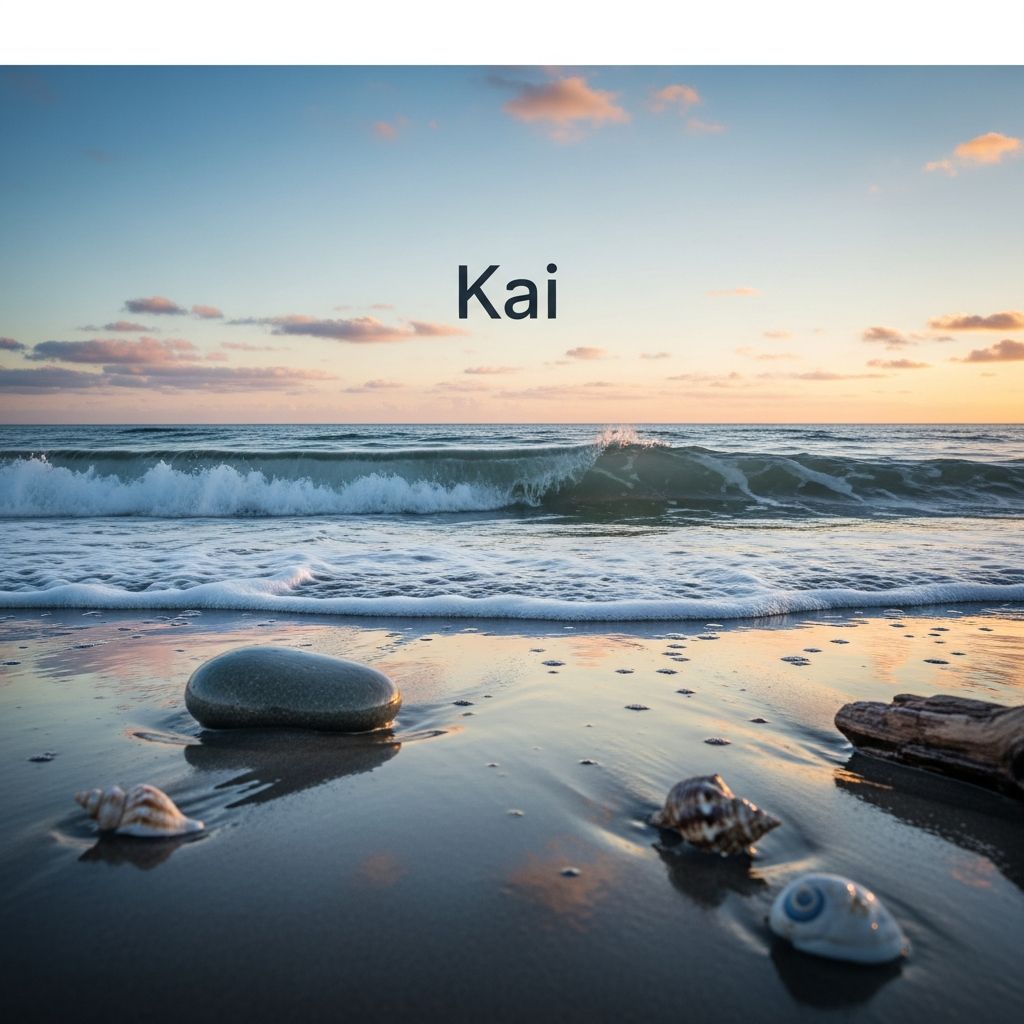
The name Kai stands out in the world of baby names for its simplicity and profound cultural resonance. Pronounced ‘kye,’ this two-letter powerhouse evokes images of vast oceans, ancient warriors, and triumphant leaders. Parents increasingly choose Kai for its unisex versatility, easy pronunciation across languages, and connections to nature and strength. As naming trends shift toward short, meaningful monikers with international flair, Kai has surged in popularity, ranking among the top choices for boys and gaining ground for girls.
Decoding the Essence of Kai Across Cultures
Kai’s meanings vary richly depending on its cultural origin, making it a name that bridges continents and histories. In Hawaiian tradition, Kai directly translates to ‘sea’ or ‘ocean,’ embodying the life-giving force central to island life. This aquatic association lends the name a sense of fluidity, adventure, and natural power.
Turning to East Asia, Japanese interpretations of Kai include ‘ocean’ (海), ‘shell’ (貝), or even ‘restoration’ and ‘recovery,’ reflecting themes of renewal and the sea’s enduring presence in Japanese folklore and geography. In Chinese, the character 凱 (Kǎi) signifies ‘victory’ or ‘triumph,’ evoking images of conquest and celebration, as seen in historical texts and modern usage.
European roots add layers of mythology and utility. In Scandinavian and Norse contexts, Kai derives from Kaj or Caj, meaning ‘keeper of the keys,’ a role symbolizing guardianship, wisdom, and access to sacred knowledge—think of a steward in ancient royal courts. Germanic influences link it to ‘quay’ or harbor, reinforcing maritime themes.
- Hawaiian: Sea or ocean – symbol of vastness and life.
- Japanese: Shell, ocean, recovery – tied to nature’s cycles.
- Chinese: Victory, triumph – a call to success.
- Scandinavian: Keeper of the keys – guardian of importance.
- Persian: King – regal authority from ancient lore.
Other nuances include Maori ‘food’ or nourishment, Greek ‘Kairos’ for ‘opportune moment,’ and even Navajo ‘willow tree,’ though the latter is more interpretive. This multiplicity allows parents to select a meaning that resonates personally, whether embracing heritage or seeking universality.
Historical Threads: From Knights to Modern Icons
Kai’s history weaves through legends and literature. In Arthurian tales, Sir Kay (variants: Cai, Keu, Kai) serves as King Arthur’s foster brother and seneschal, a figure of loyalty and sometimes brashness dating back to medieval texts around the 10th century. Latin roots via Caius connect to ‘rejoice’ (gaudeo), possibly echoing Gaius Julius Caesar.
In Persian mythology from the Shahnameh, Kai (or Kay) is a kingly figure, underscoring leadership. Frisian origins suggest ‘warrior’ from kaimbe, while Dutch and German nicknames shorten names like Nikolaus (victory of the people) or Cornelius (horn). These threads highlight Kai’s evolution from nickname to standalone name.
Native American ties, like Navajo ‘willow tree,’ appear in some sources but lack strong evidence as a traditional given name, serving more as a modern cross-cultural nod. In Estonia, it’s a feminine form from Katherine. This historical tapestry positions Kai as a name with depth, appealing to families valuing storytelling.
Popularity Surge: Charts, Trends, and Stats
Kai has rocketed up baby name charts, particularly in English-speaking countries. In the U.S., it ranked #76 for boys as of recent data, peaking at #59 in 2022, with steady unisex use. Its brevity aligns with trends favoring names like Theo, Leo, and Rio—short, punchy, and nature-inspired.
| Year | U.S. Boys Rank | U.S. Girls Rank | UK Boys Rank |
|---|---|---|---|
| 2022 | #59 | Top 1000 | Top 50 |
| 2024 est. | #76 | Top 1000 | Top 40 |
| Peak Growth | 2010s surge | Steady rise | Consistent |
In the UK and Australia, Kai thrives in top tiers, boosted by multicultural societies. Girls’ usage spiked post-2010, entering the U.S. Top 1000, thanks to Hawaiian unisex norms and names like Kaia. Globally, variants like Kái (Germany) and Kaj (Scandinavia) maintain regional popularity. Factors driving this include celebrity influence, pop culture, and a shift from traditional names to global, gender-fluid options.
Gender Flexibility: Kai for Boys, Girls, and Everyone
Kai defies binary norms, thriving as unisex. In Hawaii, it’s neutral, paired in names like Kailani (girls) or Kainoa (boys). Estonian Kai is female-derived, while Persian and Norse lean male. Modern parents appreciate this adaptability—over 10% of U.S. Kais are girls.
For boys, it conveys strength (warrior, king); for girls, grace (sea, shell). Siblings might share vibes with Kai and siblings like River, Ocean, or Skye. Variations include Kaia, Kaj, Kay, Kye, or Malakai for distinction.
Kai in Entertainment and Everyday Life
Pop culture amplifies Kai’s cool factor. Characters include Kai from Aphmau’s YouTube series, Blood+ anime, Harvest Moon games, and Kai Azer in Lauren Roberts’ Powerless trilogy. It evokes surfers, knights, and heroes—a modern edge with ancient roots.
In numerology, Kai’s soul urge (1) signals independence and leadership. Famous bearers span actors, athletes, and musicians, though specifics vary. This visibility cements Kai as fresh yet familiar.
Practical Considerations for Naming Your Kai
Choosing Kai means easy spelling, global pronunciation, and nickname potential (none needed—it’s perfect short). Middle names pair well: Kai Alexander (regal), Kai Ocean (thematic), Kai Willow (nature). Potential nicknames: Kai-Kai (playful), K (minimalist).
Personality traits associated: adventurous, wise, triumphant—like the sea’s power or a keyholder’s trust. In diverse families, it honors multiple heritages seamlessly.
Frequently Asked Questions About the Name Kai
Is Kai a rare name?
No, Kai is popular, ranking in the top 100 for boys in many countries, with growing girl usage.
What does Kai mean in Hawaiian?
In Hawaiian, Kai means ‘sea’ or ‘ocean,’ symbolizing strength and fluidity.
Can Kai be a girl’s name?
Yes, it’s unisex, especially in Hawaiian and Estonian contexts, entering girls’ Top 1000.
What are Kai name variations?
Variants include Kaj, Kay, Kye, Kaia, Kái, and Malakai.
Is Kai a biblical name?
Not directly, but links to Nicholas (victory of the people) give Greek Biblical ties.
Why Kai Captures Hearts Today
In an era craving connection to nature, history, and simplicity, Kai delivers. Its ocean whispers, victory cheers, and key-holding wisdom make it ideal for forward-thinking parents. Whether evoking Hawaiian waves or Arthurian halls, Kai promises a life of depth in just three letters. As popularity climbs without oversaturation, it’s poised for enduring legacy.
References
- Kai Baby Name Meaning, Origin, Popularity Insights — Momcozy. 2025. https://momcozy.com/blogs/baby-names/kai
- Kai (name) — Wikipedia. 2025. https://en.wikipedia.org/wiki/Kai_(name)
- Baby Name of the Day: Kai — Appellation Mountain. 2025. https://appellationmountain.net/kai-baby-name-day/
- Kai – Baby Name Meaning, Origin, and Popularity for a Boy — Nameberry. 2025-12-17. https://nameberry.com/b/boy-baby-name-kai
- Kai: Meaning and Origin of First Name — Ancestry.com. 2025. https://www.ancestry.com/first-name-meaning/Kai
- Kai – Baby Name, Origin, Meaning, And Popularity — Parenting Patch. 2025. https://parentingpatch.com/baby-names/Kai/