Colorful packaging, funny mascots, and big promises make some foods look very exciting. But many of these treats are what people call junk food — fun to eat sometimes, but not great to have all the time. This guide is written especially for kids (and their parents) to explain what junk food is, what it does to your body, and how you can make better choices without giving up tasty snacks.
What Does “Junk Food” Really Mean?
There is no single scientific definition of junk food, but many doctors and health experts use the term for foods that are:
- Very high in sugar, salt, or unhealthy fats
- Very low in vitamins, minerals, and fiber
- Heavily processed (changed a lot from the original ingredients)
- Easy to overeat because they are extra tasty and convenient
These foods are often called ultra-processed foods by scientists and doctors, because they usually contain many added ingredients like colorings, flavorings, and preservatives that you would not use at home.
Common Examples Kids See Every Day
- Packaged chips and cheese puffs
- Cookies, donuts, frosting-filled pastries, and candy
- Sugary breakfast cereals with cartoon characters
- Sodas and sweetened drinks (including energy drinks and many sports drinks)
- Fast food burgers, fried chicken, fries, and milkshakes
Having these foods once in a while is usually fine for most kids. The problem starts when junk food becomes an everyday habit instead of an occasional treat.
How Junk Food Affects a Kid’s Body
Your body is growing and changing quickly. The food you eat is the fuel and building blocks for everything you do — from running in gym class to thinking clearly during a test. A diet with lots of junk food can cause problems in both the short and long term.
Short-Term Effects You Might Notice
- Energy crashes: Eating lots of sugar can give you a quick burst of energy followed by tiredness and irritability.
- Stomach trouble: Many kids get tummy aches, constipation, or feel too full after large portions of fast food.
- Harder to focus: Diets heavy in processed snacks and fast food have been linked with poorer school performance and attention.
- Mood swings: Very sugary foods may be tied to more temper tantrums and behavior problems in some kids.
Long-Term Health Risks
Eating a lot of junk food over many months and years can increase the risk of serious health problems:
- Weight gain and obesity, when kids take in more calories than they burn
- Type 2 diabetes, a disease that affects how the body uses sugar
- Heart and blood vessel problems, including high blood pressure and high cholesterol
- Certain cancers and weak bones later in life
- Mental health concerns, like higher risks of depression and anxiety when diets are very high in junk foods
Doctors have noticed that kids who regularly eat ultra-processed foods are more likely to show early signs of conditions that used to mostly affect adults, such as high blood pressure and high blood sugar.
What Makes Junk Food So Hard to Resist?
Many junk foods are carefully designed to be almost impossible to ignore. Food companies use science to hit the “sweet spot” of taste and crunch that makes your brain want more.
Reasons Kids Reach for Junk Food
- Strong flavors: Lots of sugar, salt, and fat light up pleasure centers in the brain.
- Ads and cartoons: TV, online videos, and game apps often show exciting commercials for snacks and sugary drinks that especially target children.
- Friends and parties: Junk foods show up at birthdays, celebrations, and after-school hangouts.
- Busy schedules: When families are rushed, fast food and packaged snacks are easy choices.
Marketing and Kids
Studies show that when kids see more ads for unhealthy foods, they are more likely to:
- Ask for those products at the store
- Prefer them over healthier options
- Eat more of them when they are available
Knowing this can help you become a smarter shopper and eater. You can ask yourself, “Do I really want this, or did an ad convince me?”
Junk Food vs. Everyday Fuel: A Simple Comparison
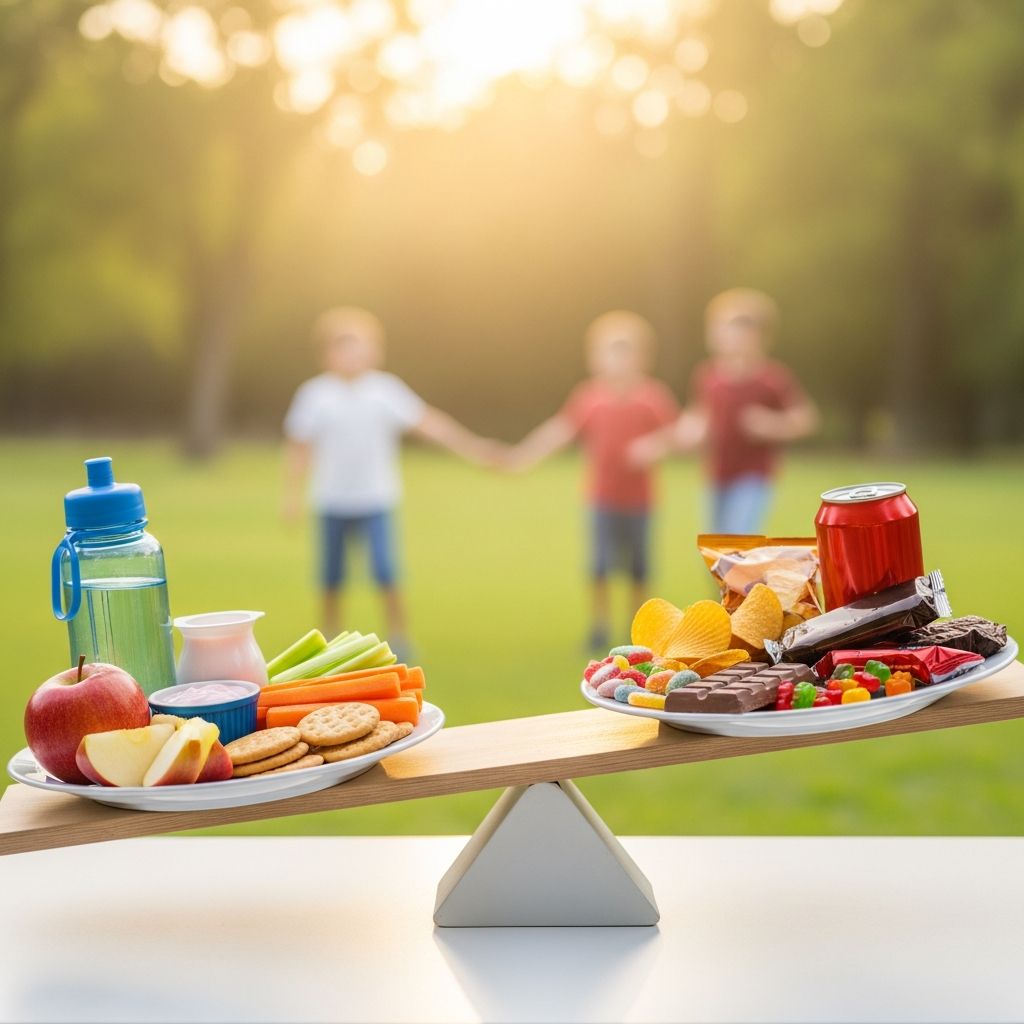
Think of food as fuel for a car. Some fuel helps the car run smoothly and last a long time. Other fuel might make the engine noisy and wear it out quicker. Your body works in a similar way.
| Mostly Junk Food | Mostly Nourishing Foods |
|---|---|
| Lots of added sugar, salt, and unhealthy fats | Rich in vitamins, minerals, and fiber |
| Quick bursts of energy, then crashes | More steady energy throughout the day |
| Higher chance of weight gain and health problems | Helps maintain a healthy weight and strong body |
| Often eaten while distracted (TV, gaming, scrolling) | More likely eaten at meals with family |
| Usually comes in packages, boxes, or drive-through bags | Often looks closer to how it grew (fruits, veggies, grains) |
Smart Ways for Kids to Cut Back on Junk Food
You do not have to be perfect, and you do not have to give up every chip or cookie. Small changes, repeated often, can make a big difference for your health.
Simple Swaps You Can Try
- Thirsty? Choose water or milk instead of soda or energy drinks.
- Want something crunchy? Try air-popped popcorn, nuts (if safe for you), or sliced veggies with hummus instead of chips.
- Craving something sweet? Have fresh fruit, frozen grapes, or yogurt with a little honey instead of candy.
- Need an after-school snack? Whole-grain toast with peanut butter or a cheese stick and fruit are great options.
Helpful Habits for Everyday Eating
- Eat regular meals so you do not get overly hungry and grab whatever is around.
- Fill half your plate with fruits and vegetables at lunch and dinner when possible.
- Pack snacks from home for school or activities so you are not stuck with only vending machine choices.
- Read labels together with a parent or caregiver to spot very sugary or salty foods.
How Parents and Caregivers Can Help
Kids are not the only ones responsible for their food choices. Adults play a big part in what foods are available at home and how meals feel.
Ideas for Grown-Ups
- Keep mostly healthy foods at home so kids do not have to fight temptation all the time.
- Offer, don’t force: Put fruits and vegetables on the table often, without pressure.
- Limit sugary drinks: Serve water as the main drink and save soda for special events.
- Cook together: Let kids help wash, stir, and choose ingredients so they feel excited about healthy foods.
- Be a role model: When adults enjoy balanced meals, kids are more likely to copy them.
Listening to Your Body
Your body sends you messages all day long. Learning to notice those signals can help you choose foods that are good for you.
Questions Kids Can Ask Themselves
- “Am I really hungry, or just bored?”
- “How do I feel after I eat this — energized or sleepy?”
- “Do I feel good running and playing, or do I get tired quickly?”
- “Did a commercial or a YouTube video make me suddenly want this snack?”
When you notice that some foods make you feel sluggish, grumpy, or too full, that is useful information. You can use it to choose foods that help you feel strong, focused, and ready to play.
Putting It All Together: A Balanced Approach
A healthy lifestyle is not about never eating pizza or birthday cake. It is about balance. Most of the time, you want your plate to be filled with foods that help your body grow and stay strong, and only sometimes with foods that are just for fun.
- Everyday foods: Fruits, vegetables, whole grains, beans, lean proteins, nuts, seeds, and plain dairy products.
- Sometimes foods: Candy, soda, chips, fried fast foods, sugary cereals, pastries, and ice cream.
When “sometimes foods” start showing up every single day, that is when health problems are more likely to appear.
Frequently Asked Questions (FAQs)
Is all fast food considered junk food?
Many fast foods are high in unhealthy fats, salt, and calories, so they count as junk food if you eat them often. Some restaurants now offer healthier choices like salads, fruit, or grilled items, which can fit better into a balanced diet when chosen carefully.
Can I ever have candy, chips, or soda?
Yes. Most health experts agree that occasional treats are fine for most kids. The key is how often and how much you have. Saving these foods for special occasions and keeping portions small helps protect your health over time.
Why do I feel tired after eating a lot of sugary snacks?
Very sugary foods can make your blood sugar rise quickly and then drop again. That drop can leave you feeling weak, sleepy, or cranky. Choosing snacks with some fiber and protein, like fruit with nuts or yogurt, helps keep your energy steadier.
How can I eat healthier if my family is really busy?
Planning ahead helps. Your family can keep simple, quick options at home, such as whole-grain bread, nut butter, fruit, baby carrots, and yogurt. Pre-packing snacks and choosing healthier items at restaurants — like grilled instead of fried foods and water instead of soda — can also make a big difference.
What should I do if I already eat a lot of junk food?
You do not need to change everything at once. Choose one or two small goals, such as drinking water at lunch instead of soda, or adding a piece of fruit to your breakfast. When those feel easy, add another goal. Over time, your tastes can change and healthier foods can become your favorites.
References
- Junk food and your health — Healthdirect Australia. 2023-05-31. https://www.healthdirect.gov.au/junk-food-and-your-health
- The hidden risks of processed foods in children’s diets — Loma Linda University Health. 2022-10-12. https://news.llu.edu/health-wellness/hidden-risks-processed-foods-childrens-diets
- Junk food-induced obesity: A growing threat to youngsters during the COVID-19 pandemic — S. Sahoo et al., Clinical Epidemiology and Global Health. 2021-09-07. https://www.ncbi.nlm.nih.gov/pmc/articles/PMC8459649/
- Junk food and your health — Australian Government, Healthdirect. 2022-11-15. https://www.healthdirect.gov.au/junk-food-and-your-health
- Effects of ultraprocessed foods on kids — Children’s Health. 2023-02-20. https://www.childrens.com/health-wellness/effects-of-ultraprocessed-foods-on-kids
- How fast food affects children’s health — News-Medical. 2020-08-18. https://www.news-medical.net/health/How-Fast-Food-Affects-Childrens-Health.aspx
- The impact of food marketing on children — Obesity Evidence Hub. 2021-06-10. https://www.obesityevidencehub.org.au/collections/prevention/the-impact-of-food-marketing-on-children