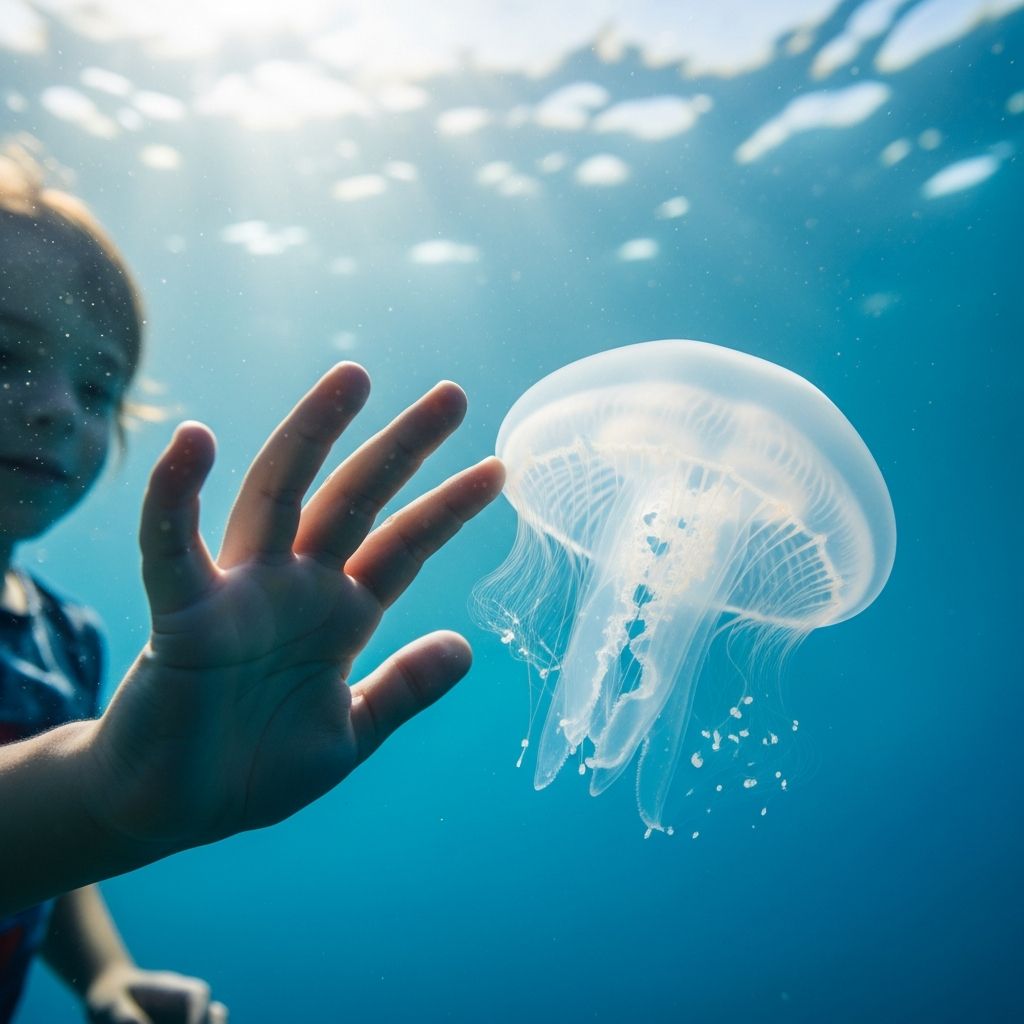
Family trips to the ocean can be exciting adventures, but jellyfish in the water or along the shoreline can quickly turn a fun day into a painful experience for a child. Understanding how jellyfish stings happen, what symptoms to watch for, and how to respond calmly gives parents the confidence to handle these situations safely.
What Exactly Is a Jellyfish Sting?
Jellyfish are soft-bodied sea creatures with tentacles that contain thousands of tiny stinging cells. When a child brushes against these tentacles in the water or steps on a washed-up jellyfish, some of those cells release venom into the skin, causing a sting. The pain can be intense but most stings from common beach species are not life-threatening and can be treated with basic first aid.
The severity of a sting depends on the type of jellyfish, how many tentacles made contact, how long they stayed on the skin, and the child’s individual sensitivity. Some children experience only a burning sensation and red marks, while others might develop more widespread symptoms.
Common Symptoms Children May Experience
Jellyfish stings usually cause immediate pain, but other signs can appear over the next minutes to hours. Paying close attention to your child’s skin and overall behavior helps you decide how urgently treatment is needed.
- Local symptoms on the skin: sudden burning or stinging pain, redness, raised welts, or track-like lines where the tentacles touched.
- General discomfort: crying, guarding the affected area, or refusing to walk or move the limb if the sting is on a leg or foot.
- Possible delayed reactions: itching, swelling, or rash that may develop or worsen over several hours.
- Less common whole-body symptoms: nausea, weakness, dizziness, headache, or trouble breathing, which suggest a more serious reaction and need immediate medical attention.
First Aid: Step-by-Step Care on the Beach
Acting calmly and methodically can greatly reduce pain and lower the chance of further venom release. Before starting, reassure your child that you know what to do and that many kids recover quickly from jellyfish stings.
1. Move the Child to Safety
- Help your child out of the water to prevent additional contact with tentacles or strong waves.
- Have them sit or lie down in a shaded area if possible, which keeps them still and more comfortable.
2. Rinse the Area the Right Way
- Use ocean water to gently rinse the sting site and wash away loose tentacles.
- Avoid rinsing with fresh water, as it can trigger remaining stinging cells on the skin.
- Do not rub the area with sand, towels, or clothing because friction can cause more venom release.
3. Remove Visible Tentacles Carefully
- If tentacles are still attached, protect your hands with gloves, a plastic bag, or a thick cloth.
- Use the edge of a credit card or a similar flat object to gently scrape off sticky tentacle pieces.
- Avoid using bare fingers to prevent stings to your own skin.
4. Prevent Further Stinging
After large tentacles are removed, some stinging cells may remain on the skin. In many settings, health professionals recommend solutions such as vinegar for certain jellyfish types, but recommendations can vary by region and species. Because the best choice may differ depending on where you swim, it is wise to check local beach safety guidance ahead of time so you know which rinse is recommended at that specific location.
5. Ease the Pain
- If available and safe for your child, over-the-counter pain relievers can be used according to age-appropriate dosing instructions from a healthcare professional or product label.
- Heat can sometimes provide relief. A warm shower or soaking the affected area in comfortably hot (not scalding) water may help reduce pain.
- Cold packs may be used for comfort after stinging cells are inactivated and removed, as long as they are wrapped in a cloth and not placed directly on bare skin.
Important: Do not apply unproven home remedies (such as urine, alcohol, or random household chemicals). These can irritate the skin further or activate stinging cells that have not yet fired.
When Is a Jellyfish Sting an Emergency?
Most stings in children are painful but manageable at home with careful observation. However, some signs point to a potentially dangerous reaction and require urgent medical care. If any of the following appear, seek emergency help right away:
- Difficulty breathing, noisy breathing, or shortness of breath.
- Swelling of the lips, tongue, face, or throat.
- Widespread hives or a rapidly spreading rash far from the sting area.
- Fainting, confusion, extreme drowsiness, or unresponsiveness.
- Severe, worsening pain that does not improve with first aid measures.
Even if life-threatening symptoms do not appear, contact a healthcare provider or poison information service quickly if your child has multiple stings, is very young, or has a history of serious allergic reactions to stings or bites.
Ongoing Care at Home
After initial first aid on the beach or at the pool, your child may still experience discomfort in the hours and days that follow. Gentle skin care and close monitoring can help prevent complications.
- Keep the area clean with mild soap and water once the child is comfortable and stinging cells are inactivated.
- Discourage scratching, which can lead to skin breakdown and infection.
- Cool compresses and over-the-counter anti-itch creams recommended by a healthcare professional may reduce itching.
- Watch the skin daily for increasing redness, warmth, pus, or tenderness that could indicate infection, and contact a healthcare professional if these appear.
How Long Do Jellyfish Sting Symptoms Last?
The timeline for recovery varies. Many children notice strong burning pain for the first hour or two, followed by milder discomfort. Red streaks or marks tend to fade over several days, though faint lines may remain longer in some cases.
Itching can persist even after the pain improves and may last up to a week or more. If irritation lingers, or if your child develops blisters, spreading redness, or new symptoms, checking in with a healthcare provider is a good idea.
| Time After Sting | Common Child Symptoms | Parent Actions |
|---|---|---|
| First 0–30 minutes | Intense burning pain, crying, visible red marks or lines on skin. | Move child out of water, rinse with ocean water, remove tentacles carefully, begin pain relief steps. |
| 30 minutes–2 hours | Pain gradually lessens, possible throbbing or tenderness at the site. | Continue warm water or other recommended comfort measures; watch for breathing or allergic symptoms. |
| First 24 hours | Redness remains; itching or mild swelling may develop. | Keep area clean, prevent scratching, use appropriate anti-itch care if approved by a healthcare professional. |
| Days 2–7 | Red lines fade; itching gradually improves. | Monitor for signs of infection or worsening rash; contact a healthcare provider if concerns arise. |
Preventing Jellyfish Stings on Family Beach Days
While no method completely eliminates the risk, smart planning and a few simple habits can significantly reduce the chance of a sting. Teaching children about ocean safety before they enter the water is just as important as sunscreen and swim lessons.
- Check local warnings: Look at beach safety flags, posted signs, or official websites for jellyfish alerts.
- Scan the shoreline: Avoid swimming in areas where many jellyfish are visible in the water or washed up on sand.
- Wear protective clothing: Rash guards, swim leggings, or full-coverage swimsuits can act as a physical barrier between tentacles and skin.
- Teach kids not to touch: Explain that even jellyfish that look dried out or dead can sometimes still sting.
- Choose lifeguarded beaches: Lifeguards often know local conditions and can warn families about current jellyfish activity.
Emotional Support: Helping Kids Cope with the Scare
Beyond the physical pain, a jellyfish sting can be frightening for a child, especially if it happens suddenly in the water. Calm, supportive responses from adults can prevent long-lasting fears of the ocean or swimming.
- Use a soothing tone and simple explanations about what happened and what you are doing to help.
- Encourage slow, deep breaths while applying first aid to reduce anxiety.
- Once your child feels better, talk about safe swimming rules and remind them that stings are usually treatable.
- Let your child decide when they feel ready to go back into the water on another day, instead of pushing them too quickly.
Myths and Misconceptions About Jellyfish Stings
Many beachgoers share well-intentioned but inaccurate home remedies for jellyfish stings. Relying on myths instead of evidence-informed guidance can make stings more painful or delay proper care.
- Myth: All jellyfish are deadly. Reality: A sting from most common coastal species is painful but rarely life-threatening, especially with prompt treatment.
- Myth: A sting means you can’t swim again. Reality: Once your child fully heals and feels emotionally ready, they can usually return to normal swimming with appropriate safety precautions.
- Myth: Any household liquid will help. Reality: Some substances can actually cause more venom release or skin irritation.
Talking to Your Child’s Doctor
Health professionals can provide treatment advice tailored to your child’s age, health conditions, and local jellyfish species. If you are unsure whether home care is enough, contacting a clinician or regional poison information center for guidance is always appropriate.
- Be ready to describe where you were swimming, what the jellyfish looked like if you saw it, and exactly how the sting happened.
- Note the time of the sting and all symptoms you have observed, including any change in behavior or breathing.
- Ask about which first-aid solutions and pain relievers are recommended in your area, so you can pack them in a beach first-aid kit.
FAQs About Jellyfish Stings in Children
1. Can a jellyfish sting through a swimsuit?
Thin fabric offers limited protection, and long tentacles can sometimes reach exposed skin. However, snug-fitting, thicker swimwear and rash guards can reduce the area of skin that is vulnerable to contact. Full-body suits are particularly helpful for children who spend long periods in the water.
2. Is it safe to handle a jellyfish that has washed up on the shore?
Even jellyfish that appear lifeless may still have active stinging cells on their tentacles. Children should be taught never to pick up or poke jellyfish, and adults should avoid handling them with bare hands. If removal from a busy area is necessary, use a shovel or similar tool rather than direct contact.
3. Will my child develop an allergy after being stung once?
Most children who experience a jellyfish sting do not go on to have severe allergic reactions in the future. However, any child can be at risk for a strong reaction, especially if stung multiple times or by a highly venomous species. A history of serious reactions to other stings or allergies should prompt a discussion with a healthcare professional about extra precautions.
4. Can jellyfish stings leave scars?
Mild stings usually heal without lasting marks, especially if the child avoids scratching and the skin is kept clean. More significant stings that cause blisters or deeper skin damage may leave faint discoloration or lines. Good wound care and follow-up with a healthcare provider reduce the risk of noticeable scarring.
5. How can I prepare for jellyfish season?
Check regional information about typical jellyfish seasons and high-risk areas before planning beach trips. Pack a family beach safety kit that includes protective swim clothing, supplies recommended by your healthcare provider for sting care, and contact numbers for local emergency services or poison information lines. Reviewing simple safety rules with children before each swim helps them know what to do if they see jellyfish in the water.
Key Takeaways for Parents
- Jellyfish stings can be very painful, but most are manageable with calm, step-by-step first aid.
- Rinsing with ocean water, removing tentacles carefully, and using appropriate pain relief are central parts of early care.
- Emergency symptoms such as trouble breathing, facial swelling, or loss of consciousness require immediate medical attention.
- Prevention strategies like checking local warnings and using protective swimwear help reduce the chances of a sting.
- Emotional support and clear communication help children feel safe and confident returning to the water when they are ready.