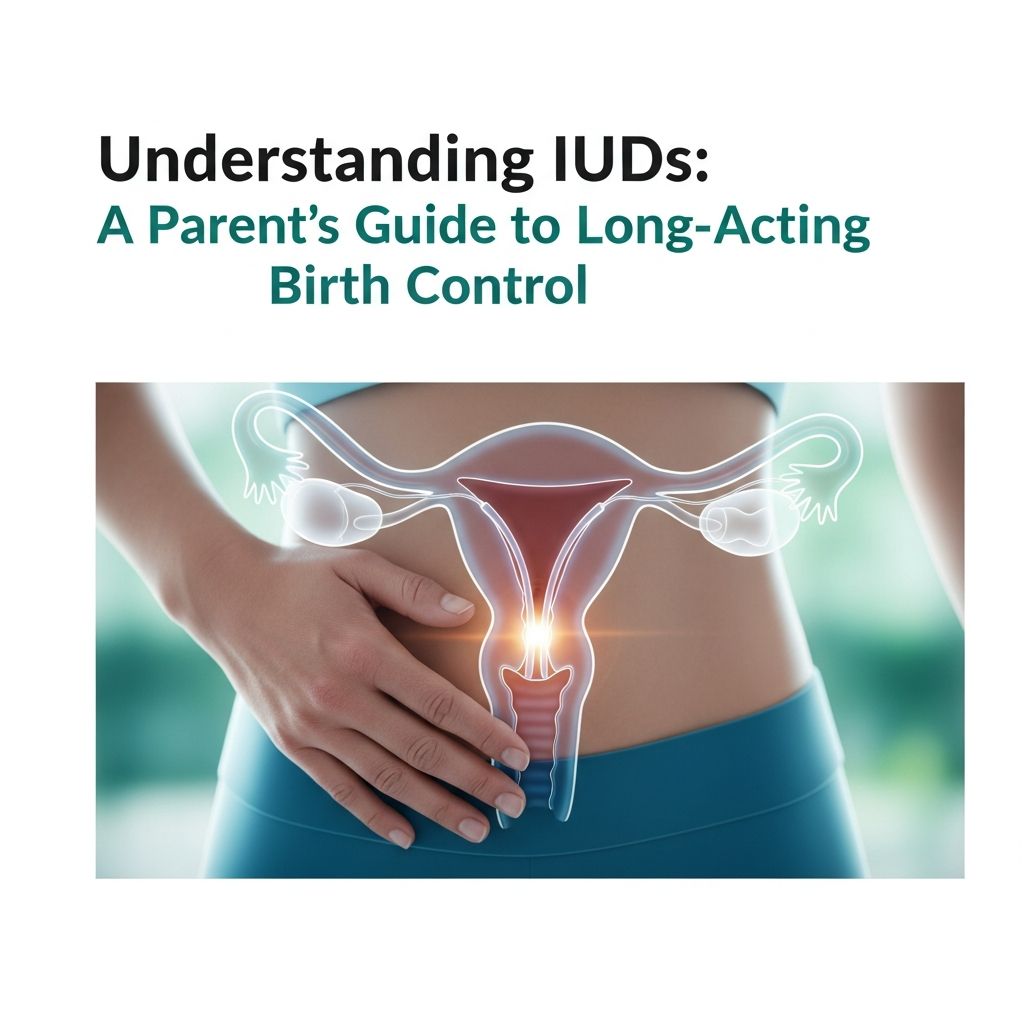
Many parents want reliable, factual information about birth control so they can support their child’s health and decisions. One option that doctors often recommend for teens and young adults is the intrauterine device (IUD), a small device placed in the uterus to prevent pregnancy for several years. This guide explains what IUDs are, how they work, and how parents can talk about them with their children.
What Is an IUD?
An intrauterine device is a tiny, flexible, usually T-shaped device made of plastic, sometimes with copper, that a health care professional places inside the uterus. Once in place, it provides long-term, reversible birth control without requiring daily action like taking a pill.
| Feature | Hormonal IUD | Copper IUD |
|---|---|---|
| Main ingredient | Low-dose hormone (progestin) | Copper wire, no hormones |
| How long it lasts | About 3–8 years, depending on brand | Up to about 10 years |
| Key effects | Can lighten or stop periods, often reduces cramps | May make periods heavier or more crampy at first |
| Emergency contraception use | Not typically used for emergency contraception | Can be used up to 5 days after unprotected sex |
How IUDs Prevent Pregnancy
IUDs work mainly by making it very hard for sperm to reach and fertilize an egg. They do not end an existing pregnancy; they prevent one from starting.
Hormonal IUD: How It Works
- Releases a small, steady amount of progestin into the uterus.
- Thickens cervical mucus so sperm have difficulty passing into the uterus.
- Thins the lining of the uterus, making it less likely that an egg could implant.
- Sometimes suppresses ovulation (the release of an egg) in some users.
Copper IUD: How It Works
- Releases tiny amounts of copper into the uterine fluid.
- Copper is toxic to sperm; it makes them move less effectively and reduces their ability to fertilize an egg.
- Also changes the uterine environment so fertilization and implantation are very unlikely.
Both types are considered forms of long-acting reversible contraception (LARC), among the most effective non-surgical birth control methods available.
Why Doctors Often Recommend IUDs for Teens
Major medical organizations, including the American College of Obstetricians and Gynecologists (ACOG), consider IUDs safe and appropriate for many adolescents. They highlight several advantages that can be especially helpful for teens.
High Effectiveness
- IUDs are more than 99% effective at preventing pregnancy in typical use.
- Because there is no daily pill or frequent shot, there is little room for user error.
- Once placed, the protection continues for years unless the device is removed or replaced.
Low Maintenance
- No daily reminders, pharmacy refills, or frequent clinic visits are needed.
- This can be especially helpful for teens with busy schedules or difficulty remembering medications.
- Parents and teens do not have to manage birth control in the moment before sex, which can reduce stress.
Reversibility and Fertility
- IUDs are fully reversible. A clinician can remove them in a simple office visit.
- Most people return to their usual level of fertility very quickly after removal.
- Using an IUD does not cause permanent infertility in otherwise healthy users.
Non-contraceptive Benefits
Hormonal IUDs can also help with certain menstrual concerns:
- Lighten menstrual bleeding; some users eventually have little or no bleeding.
- Often reduce menstrual cramps.
- May be used to treat heavy menstrual bleeding and protect the uterine lining in people at risk of endometrial overgrowth.
The IUD Placement Process
IUD placement is done by a trained health care professional in a clinic or office setting. Parents often want to know what their child might experience.
Before the Visit
- The clinician reviews medical history, allergies, medications, and prior pregnancies or pelvic infections.
- A pelvic exam is usually performed to assess the size and position of the uterus and check for infection.
- Pregnancy is ruled out, often with a urine pregnancy test.
- In some settings, tests for sexually transmitted infections (STIs) may be done before or at the time of insertion.
During Insertion
Insertion typically takes just a few minutes:
- The cervix and vagina are cleaned with an antiseptic solution.
- A speculum (like the one used during a Pap test) is used to see the cervix.
- The clinician may measure the uterus with a thin instrument.
- The IUD, loaded in a thin tube, is gently passed through the cervix into the uterus, then released.
- The tube is removed, leaving the IUD in place with two thin strings extending slightly into the vagina.
Some people feel cramping, pressure, or brief sharp pain when the IUD is placed, especially when the uterus is measured or the IUD passes through the cervix.
Immediately Afterward
- Mild cramps and light bleeding or spotting are common for a few days.
- Over-the-counter pain relievers, if appropriate for the individual, often help with discomfort (always confirm with the clinician).
- The teen may rest at home and resume normal activities as they feel comfortable.
Living With an IUD: What to Expect
Most people adapt to an IUD quickly. Still, it is helpful for families to know what is typical and what is not.
Normal Changes
- Spotting or irregular bleeding during the first 3–6 months, especially with hormonal IUDs.
- Cramping or mild discomfort in the first days to weeks.
- With hormonal IUDs: gradually lighter periods, sometimes no bleeding at all after the first year.
- With copper IUDs: periods may become heavier, longer, or more crampy at first, often improving over time.
Checking the Strings
- Two thin strings hang from the IUD through the cervix into the upper vagina.
- Clinicians may teach the user how to gently feel for the strings high in the vagina to confirm the IUD is still in place.
- Strings should not be pulled; they are there so a clinician can remove the IUD when needed.
Follow-Up Visits
- Some clinicians schedule a check-up a few weeks after insertion; others check at regular annual visits unless there are problems.
- At each visit, the clinician may ask about bleeding, pain, and any concerns, and may check the strings or IUD position if needed.
Risks and Possible Side Effects
IUDs are very safe for most users, including adolescents, but like any medical device or medication, they have potential risks and side effects.
Common Side Effects
- Cramping and backache around the time of insertion.
- Irregular bleeding or spotting in the first months.
- Heavier or more painful periods with copper IUDs, especially at first.
- Lighter or absent periods with hormonal IUDs after a period of adjustment.
Less Common but Important Risks
- Expulsion: The IUD can partially or completely slip out of the uterus, especially in the first year or in younger users, though this is still uncommon.
- Perforation: Rarely, the IUD can go through the uterine wall during insertion.
- Infection: There is a small increased risk of pelvic infection in the first few weeks after insertion, especially if an untreated STI is present.
- Pregnancy with an IUD: Very uncommon, but if it occurs, there is a higher chance that it could be in the fallopian tube (ectopic pregnancy), which is a medical emergency.
Any severe pain, heavy bleeding, fever, unusual vaginal discharge, or symptoms of pregnancy should prompt a call to a health care professional right away.
Who Might Not Be a Good Candidate?
Only a clinician can decide whether an IUD is appropriate for a specific person, but they will usually be cautious or avoid IUDs in people who:
- Are known to be pregnant.
- Have unexplained vaginal or uterine bleeding that has not been evaluated.
- Have certain cancers of the cervix or uterus.
- Have current pelvic inflammatory disease (PID) or certain untreated STIs.
- Have an allergy to copper (for copper IUD) or to a component of the device.
Teens with chronic medical conditions (such as bleeding disorders, certain heart conditions, or immune problems) should have a careful, individualized discussion with their health team about whether an IUD is a good option.
IUDs and Protection Against STIs
An IUD does not protect against sexually transmitted infections. For teens who might be at risk of STIs, clinicians usually recommend combining an IUD with condom use to reduce infection risk.
- Condoms help protect against HIV, chlamydia, gonorrhea, and other STIs when used correctly every time.
- Routine STI screening is recommended for sexually active adolescents, even if they use an IUD.
Supporting Your Teen’s Decision-Making
Parents play a key role in helping teens think through their choices about sex, relationships, and contraception. Respectful, open communication can make your child more likely to seek your guidance.
Having the Conversation
- Ask what your child already knows about birth control and fill in factual gaps.
- Use clear, non-judgmental language; avoid shaming or scare tactics.
- Emphasize that no method is 100% effective and that abstinence is the only way to completely avoid pregnancy and STIs.
- Encourage your teen to ask questions at medical visits and to speak privately with the clinician if they wish.
Respecting Privacy and Consent
- In many places, adolescents have the right to confidential reproductive health care; laws vary by region.
- Even when you disagree, it is important to recognize your teen’s growing ability to make health decisions.
- Work with your teen and their clinician to ensure decisions are informed, safe, and aligned with your teen’s values and health needs.
Questions to Ask the Health Care Provider
Parents and teens can go into an appointment prepared with questions, such as:
- Which type of IUD (hormonal or copper) would you recommend and why?
- How much will insertion hurt, and what can be done to reduce discomfort?
- What side effects are most common in someone my child’s age?
- How will we know if the IUD is still in the right place?
- In what situations should we call the office or come back urgently?
- What other birth control options might fit my child’s health and lifestyle?
Frequently Asked Questions (FAQs)
Is my teen too young to use an IUD?
Major professional groups such as ACOG state that IUDs are safe and appropriate for many adolescents, including those who have never been pregnant. The decision depends on the teen’s health history, preferences, and ability to attend follow-up care.
Will an IUD affect my child’s ability to have children later?
IUDs are designed to be reversible. Once removed, most people return to their usual fertility quickly. Long-term infertility is not expected solely from IUD use in otherwise healthy individuals.
Can you feel the IUD during everyday activities or sports?
The IUD sits entirely inside the uterus. Users and their partners generally cannot feel the device itself. Some people may occasionally feel the strings, but they are very thin and soft.
What if my teen changes their mind and wants the IUD removed?
A health care professional can remove the IUD during a short office visit by gently pulling on the strings. After removal, pregnancy can occur as soon as ovulation happens again.
Is the copper IUD only for emergency contraception?
No. While a copper IUD can be inserted within 5 days after unprotected sex to greatly reduce the chance of pregnancy, it also works as ongoing birth control for up to about 10 years once in place.
Should my teen still use condoms if they have an IUD?
Yes. IUDs are excellent at preventing pregnancy but do not protect against STIs. Condoms are still recommended to reduce the risk of infections like chlamydia, gonorrhea, and HIV.
References
- Intrauterine Device (IUD) — Yale Medicine. 2023-03-15. https://www.yalemedicine.org/clinical-keywords/intrauterine-device
- Intrauterine devices (IUD) — MedlinePlus, U.S. National Library of Medicine. 2023-06-28. https://medlineplus.gov/ency/article/007635.htm
- Intrauterine Device (IUD): Birth Control, Use & Side Effects — Cleveland Clinic. 2024-01-05. https://my.clevelandclinic.org/health/treatments/24441-intrauterine-device-iud
- Contraception – intrauterine devices (IUD) — Better Health Channel, Victorian Department of Health. 2022-10-01. https://www.betterhealth.vic.gov.au/health/healthyliving/contraception-intrauterine-devices-iud
- Long-Acting Reversible Contraception (LARC): Intrauterine Device (IUD) and Implant — American College of Obstetricians and Gynecologists (ACOG) FAQ. 2024-02-01. https://www.acog.org/womens-health/faqs/long-acting-reversible-contraception-iud-and-implant
- Intrauterine Device Placement and Removal — Curtis KM et al., StatPearls, NCBI Bookshelf. 2023-08-07. https://www.ncbi.nlm.nih.gov/books/NBK557403/
- Intrauterine Device (IUD) — NewYork-Presbyterian Health Library. 2022-09-10. https://www.nyp.org/healthlibrary/definitions/intrauterine-device-iud