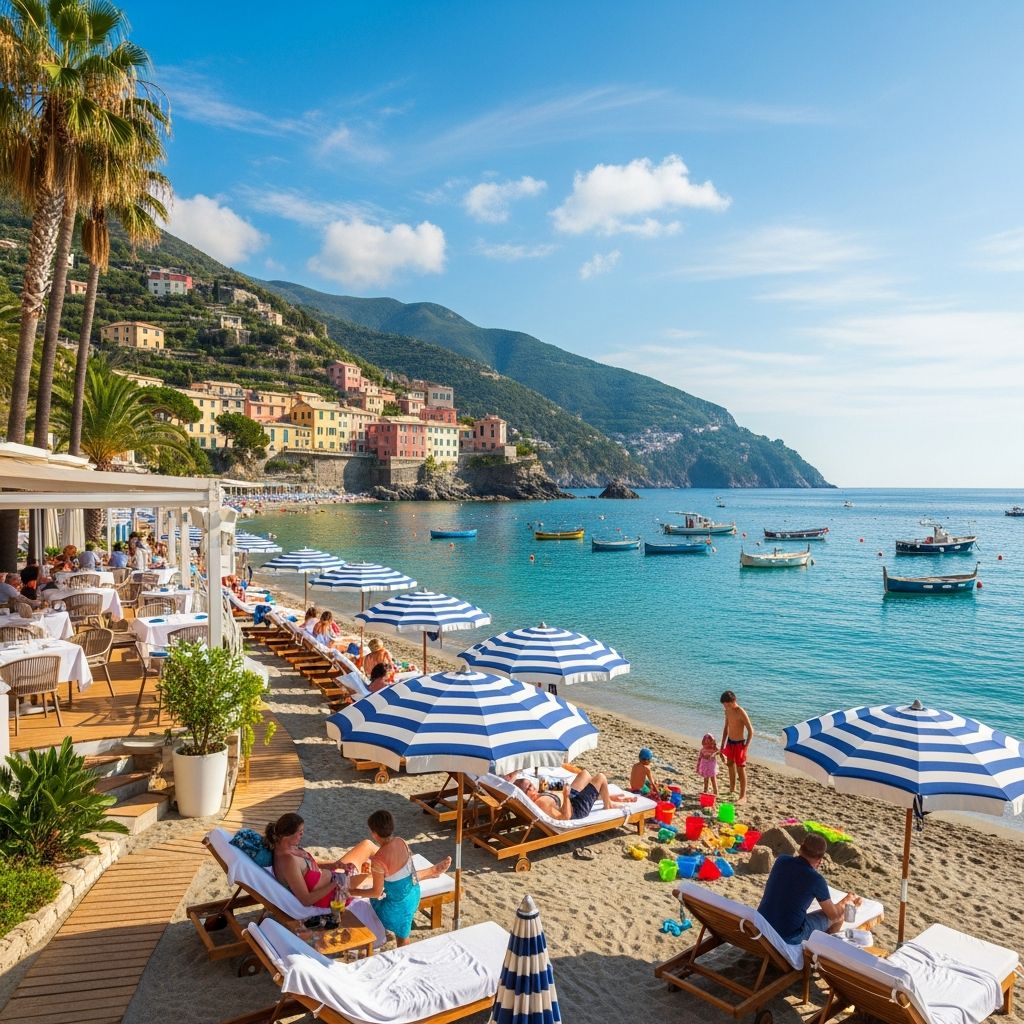
The Italian Riviera on the Ligurian coast offers a version of family travel that feels unhurried, elegant, and surprisingly practical for parents. Instead of wrestling with gear on crowded public beaches, many families adopt the local approach: spending their days at privately run stabilimenti balneari, or beach clubs, that provide shade, loungers, food, and a built-in community right by the sea.
This guide explains how those beach clubs work, why they are so well suited to children, and which towns along the coast are especially welcoming to families.
Why the Italian Riviera Works So Well for Families
On this stretch of coast between the French border and Tuscany, beach culture revolves around comfort and routine rather than constant novelty. That rhythm can be a gift for kids and parents alike.
- Predictable structure: Families can return to the same spot each day, easing transitions for younger children.
- Compact towns: Historic centers are dense and walkable, making it easier to move with strollers and small kids.
- Evening social life for all ages: Piazzas become safe, semi-supervised playgrounds after dark while adults linger over dinner nearby.
- Accessible rail network: Many Riviera towns sit directly on a regional rail line, simplifying day trips without a car.
Italy’s emphasis on family togetherness—where children are expected to join rather than be parked apart—means restaurants, cafes, and public spaces are generally welcoming to young guests.
Understanding Beach Clubs: How “Bagni” Work
Along much of the Ligurian shoreline you will see long rows of umbrellas and sun loungers, often separated by painted fences or simple walkways. Each section is typically managed by a bagno (beach club), which charges a daily or half-day fee for access to its space and facilities.
What You Usually Get at a Beach Club
Offerings vary from simple to luxurious, but most family-friendly clubs include some combination of:
- Reserved sun loungers and umbrellas on sand or platforms
- Changing cabins and fresh-water showers
- Toilets and often a small playground or ball area
- A bar or cafe serving drinks, snacks, and light meals
- Lifeguards during daytime hours on many beaches
Some more upscale clubs may add extras such as towel service, table service under your umbrella, or roped-off swimming zones.
Costs and Booking Basics
Prices depend on the town, location on the beach, and the level of service. A typical range for two loungers and one umbrella for a half or full day might fall between modest family budgets and mid-range holiday spending, with a premium for front-row spots closest to the water during peak summer weeks.
Key points to keep in mind:
- High season (roughly July–August) often requires advance reservations, especially on weekends.
- Shoulder seasons (late spring and early autumn) are more relaxed; same-day walk-ups are often possible.
- You can usually choose between half-day or full-day rentals.
- Many clubs offer discounts for multi-day stays or seasonal passes for local families.
Beach Clubs vs. Public Beaches
| Feature | Beach Club (Bagno) | Public Beach (Spiaggia libera) |
|---|---|---|
| Cost | Daily fee for loungers, umbrella, facilities | Free access |
| Comfort | Chairs, shade, toilets, showers, often a bar | Bring your own gear; facilities may be limited |
| Logistics with kids | Minimal setup, easy naps in shade, predictable base | More hauling of equipment; harder for very young children |
| Atmosphere | Organized, social, often multi-generational | More varied; can be quieter or very crowded |
For families—especially those traveling with a stroller or multiple kids—the convenience of a beach club often outweighs the cost, as it dramatically reduces the gear and planning required for a full beach day.
Riviera di Ponente: The Quieter Western Coast
The Ligurian coast is often loosely divided into two stretches: the western Riviera di Ponente (toward France) and the eastern Riviera di Levante (toward Tuscany). Many Italian families favor Ponente’s more relaxed atmosphere and broader sandy sections, making it an excellent option with children.
What Makes the Western Riviera Appealing for Kids
- Sandy bays: While much of Liguria is rocky, several Ponente towns have wide sandy beaches where toddlers can safely wade.
- Less overtly touristy: You are more likely to encounter Italian holidaymakers than large tour groups.
- Family-oriented amenities: Promenades, playgrounds, and evening activities in the main squares make it easy to fill time off the beach.
Family-Friendly Western Riviera Towns
Below are examples of the kinds of destinations families often choose on the western side, illustrating what to look for when picking a base.
- Finale Ligure: A lively town with a long seafront promenade, packed summer evenings, and numerous beach clubs. Parents can stroll or sit at a cafe while kids scoot, bike, or play on the sand.
- Alassio: Known for one of the area’s longer sandy beaches and a very gradual slope into the sea, which can help young children paddle without immediately entering deep water.
- Smaller villages between: Many lesser-known stops also host modest bagni, a playground, and a gelateria, which is all most families truly need for a few days.
Because many of these towns are linked by coastal rail, it is realistic to base yourself in one and take short train journeys to explore nearby beaches without repeatedly packing and unpacking.
Riviera di Levante: Classic Scenery, Compact Towns
The Riviera di Levante, stretching east from Genoa toward La Spezia, is the more photographed side of Liguria, with cliff-hugging villages and coves in shades of blue and emerald. Holidaymakers often combine beach days at clubs with short coastal hikes or boat trips.
Santa Margherita Ligure and Surroundings
Santa Margherita Ligure is frequently recommended as a base for families because it combines resort amenities with an easy-to-navigate town center.
- The waterfront promenade is flat and stroller-friendly, lined with benches, playgrounds, and shaded spots.
- Several beach clubs front the town, with ladders or small sandy sections for swimming.
- Local restaurants are accustomed to serving multi-generational families, and early seatings are often relaxed and accommodating.
From here, day trips to nearby coastal highlights are straightforward:
- Portofino: A short boat or bus ride away, this tiny harbor town is famous for its pastel buildings and high-end boutiques. Families often enjoy the gentle walk up to the castle for views, or strolling toward a nearby sandy bay.
- San Fruttuoso: A secluded medieval abbey cove reachable by boat or hiking trail, offering clear water that appeals particularly to strong swimmers and older children.
Choosing Between East and West
| Consideration | Riviera di Ponente (West) | Riviera di Levante (East) |
|---|---|---|
| Overall feel | Quieter, more low-key, frequented by Italian families | More iconic scenery, slightly busier in peak season |
| Beaches | More sandy stretches, gentle entry in some towns | Mix of small beaches, coves, and rocky shores |
| Activities | Promenades, simple beach days, relaxed evenings | Boat trips, coastal walks, more varied sightseeing |
| Without a car | Rail access, especially between larger towns | Excellent rail and ferry links among major stops |
Planning a Kid-Friendly Beach Club Day
Once you understand the rhythm of local beach life, organizing a day at a bagno becomes simple.
Before You Go
- Reserve ahead in July and August, especially for weekends or if you need a front-row setup near the water.
- Check layout: some clubs have sandy zones, while others rely on jetties or platforms with ladders into deeper water.
- Confirm family amenities such as high chairs at the cafe, shaded play areas, or a shallow pool.
- Ask about nap-friendly spots, like cabanas or quieter back rows away from music speakers.
What to Pack (Even with a Beach Club)
Even when a club provides chairs and shade, a few items make life easier with kids:
- Lightweight swim shirts and hats for sun protection
- Reef-safe sunscreen reapplied regularly; strong sun and reflections off the water intensity UV exposure
- Water shoes for rocky entries or pebbled sections
- A compact travel towel and a spare outfit per child
- Simple toys like a ball, bucket, and shovel; many children end up sharing and playing together
Typical Daily Rhythm
Italian seaside days often follow a relaxed yet predictable pattern:
- Morning: Swimming and sand play before the sun peaks, with a snack break at the bar.
- Midday: Long lunch in the shade and quiet time; some families head back to their lodgings for naps.
- Late afternoon: Return to the water as temperatures ease; social time among kids on the sand.
- Evening: Showers, then a passeggiata (evening stroll) and dinner in town, often with children playing nearby as adults linger over coffee.
This rhythm aligns naturally with recommendations to avoid the strongest midday sun while maximizing time outdoors in gentler morning and late-afternoon light.
Eating Well with Children on the Riviera
One of the joys of Liguria is that eating out can be both memorable for adults and straightforward for kids. The region’s cuisine leans heavily on fresh vegetables, seafood, olive oil, and the famous basil pesto, and many dishes are easily adapted for younger palates.
Kid-Friendly Ligurian Staples
- Focaccia: Soft, oily flatbread that works as breakfast, snack, or side dish.
- Pasta al pesto: Basil, pine nuts, cheese, and olive oil blended into a bright green sauce; portions can be split or served plain if necessary.
- Simple grilled fish with potatoes or vegetables.
- Gelato: An almost daily ritual for many Italian families, usually in the late afternoon or evening.
Parents benefit from the Mediterranean eating pattern common in Italy, which emphasizes fresh, minimally processed foods and shared meals, a style associated with better long-term health outcomes in multiple cohort studies.
Safety and Well-Being by the Sea
Beach clubs reduce some common stressors by providing enclosed spaces, nearby bathrooms, and staff who know the area well. Nevertheless, standard water and sun safety practices remain important.
Water Safety Considerations
- Ensure at least one adult is always directly supervising children in or near the water, even in shallow areas.
- Use appropriate flotation devices for weak swimmers, while remembering these are not substitutes for supervision.
- Take note of local flags or signage indicating sea conditions such as strong currents or jellyfish.
Organizations such as the Royal Life Saving Society and similar bodies stress that constant, close adult supervision is the single most effective measure for preventing childhood drowning.
Sun and Heat Management
- Spend the brightest hours of the day in the shade or indoors, particularly for very young children.
- Encourage frequent water breaks, even when kids are playing in the sea and do not feel thirsty.
- Dress children in light, long-sleeved clothing and wide-brimmed hats when not swimming.
According to international public health guidance, a combination of shade, clothing, and broad-spectrum sunscreen is recommended to limit children’s lifetime UV exposure.
Practical Tips for a Smooth Riviera Stay
A few logistical decisions can significantly improve comfort and reduce friction during your trip.
Where to Stay
- Near the promenade: Being able to walk to both the beach and the evening piazza minimizes transport hassles.
- Apartment vs. hotel: Apartments with washing machines and small kitchens can simplify life with younger kids; hotels often add perks like included breakfast and access to affiliated beach clubs.
- Noise level: Central streets may stay lively late into the evening in high season; families with early sleepers might prefer side streets a block or two inland.
Getting Around
- The regional train network is often the most efficient way to move between coastal towns, avoiding parking challenges.
- Ferries link some ports, allowing kids to experience the coastline from the water.
- Compact travel strollers and baby carriers are useful, as older town centers have stone paving and occasional steps.
Frequently Asked Questions About Italian Riviera Beach Clubs with Kids
Do I need to book a beach club in advance?
In peak summer, it is wise to reserve at least a day or two ahead, especially for weekends or popular clubs. In late spring and early fall, many families manage without reservations, particularly in less crowded towns.
Are beach clubs appropriate for toddlers?
Yes, many are. Look for sandy entries, calm water, and shaded areas where toddlers can play or nap. Bringing a small inflatable or water shoes can help when the shoreline is pebbly.
Can we still use public beaches if we don’t want to pay for a club?
Most towns have at least one free public beach. They are perfectly usable, but you will need to bring your own umbrella, towels, and snacks, and may be without toilets or showers nearby, depending on the location.
What is the best time of year to visit with kids?
Late May, June, and September often provide warm weather and swimmable water with fewer crowds than July and August. Families tied to school holidays can still enjoy midsummer, but should book accommodations and beach clubs well in advance.
Is a car necessary on the Italian Riviera?
A car can be helpful for exploring inland villages, but many coastal towns are well connected by train and ferry. For families who prefer not to drive abroad, it is entirely feasible to base in a single town and explore by public transport.
References
- Understanding Mediterranean Diet, Transportation, and Family Lifestyles in Italy — OECD / WHO Europe (multiple briefs synthesizing Mediterranean lifestyle, transport, and health). 2019–2023. https://www.who.int/europe/news-room/fact-sheets/item/a-healthy-lifestyle—who-recommendations
- Drowning — World Health Organization. 2023-06-27. https://www.who.int/news-room/fact-sheets/detail/drowning
- Sun protection and children — U.S. Food and Drug Administration. 2022-05-25. https://www.fda.gov/drugs/understanding-over-counter-medicines/sun-protection-and-sunscreen
- Italy – Railways and Transport Overview — Italian Ministry of Infrastructure and Transport (MIT). 2021-10-15. https://www.mit.gov.it/mit/site.php?p=cm&o=vd&id=1
- Travel Advice: Health and Safety at the Beach — UK National Health Service (NHS). 2023-07-10. https://www.nhs.uk/live-well/seasonal-health/summer-health/
- Rapallo with kids: why you’ll love this family-friendly town — Mama Loves Italy. 2024-03-05. https://mamalovesitaly.com/rapallo-with-kids/
- Family-Friendly Italy: Santa Margherita Ligure — Fora Travel. 2024-09-01. https://www.foratravel.com/guides/GPM66E/family-friendly-italy-santa-margherita-ligure-megan-freedman