Why Twitch Captivates Young Audiences Today
Streaming platforms have fundamentally transformed how young people consume entertainment and interact with content creators. Twitch, in particular, has become a cultural phenomenon among children and teenagers, drawing millions of viewers daily. Unlike traditional television, which offers predetermined schedules and passive viewing experiences, Twitch provides real-time interaction, community engagement, and the ability to watch gameplay and commentary simultaneously. This interactive dimension creates a sense of connection between viewers and streamers that traditional media cannot replicate.
According to research, 33% of teenagers between 13 and 17 years old regularly watch content on Twitch, making it the largest streaming platform in its category. The appeal extends beyond simple entertainment; young viewers are drawn to the authenticity, unpredictability, and parasocial relationships they develop with their favorite creators. Many teens report that watching streams helps them learn gaming strategies, discover new titles, and build social connections with peers who share similar interests. For some, the platform serves educational purposes, offering insights into digital communication, content creation, and online community dynamics.
The Platform’s Accessibility and Age Verification Challenges
While Twitch officially maintains a policy restricting users to age 13 and above, significant gaps exist in enforcement mechanisms. The platform lacks mandatory identity verification processes, meaning users can easily misrepresent their age when creating accounts. This absence of verification creates a troubling situation where children considerably younger than 13 routinely access the platform without detection.
Similar challenges plague alternative streaming services like Kick, which operates with equivalent age restrictions but faces identical verification shortcomings. The ease with which minors can bypass age restrictions raises fundamental questions about platform accountability and parental oversight capacity. Parents often discover their children using these services only after extended periods of engagement, making prevention extraordinarily difficult.
The lack of identity verification also means that streamers themselves cannot effectively determine their audience demographics. Some creators deliberately target younger audiences, while others remain unaware that substantial portions of their viewership include children who shouldn’t have access according to platform policies.
Behavioral Concerns Among High-Profile Content Creators
Several of the most popular streamers commanding millions of followers have demonstrated patterns of behavior that raise significant concerns for parents and child development experts. These individuals wield considerable influence over impressionable young audiences, yet frequently model problematic conduct that contradicts responsible mentorship.
High-visibility creators have been documented engaging in microaggressions, trolling, and harmful language directed at other users, including children. Some have faced multiple platform bans for violating community guidelines and broadcasting inappropriate content. Beyond individual incidents, certain streamers actively promote activities with known risks to youth development, including gambling and betting behaviors presented as entertainment.
The concentration of viewers around problematic personalities creates an environment where harmful behavior becomes normalized within youth communities. When millions of young people watch their favorite creators model disrespect, toxicity, and misconduct, children may internalize these behaviors as acceptable social norms.
Exploitation Vulnerabilities and Content Safety Issues
Investigation into Twitch’s infrastructure has revealed disturbing exploitation patterns that should alarm any parent. The platform’s “Clips” feature, which allows users to extract short segments from livestreams and share them broadly, has been weaponized by predators to distribute child exploitation material. A 2024 investigation documented at least 83 clips containing sexualized content involving minors, with some clips showing children as young as 5 to 12 years old exposing themselves on camera in response to viewer prompts.
The real-time nature of livestreaming creates unique vulnerabilities absent from traditional social media. Unlike pre-recorded content that undergoes review and editing, live broadcasts happen instantaneously with no moderation buffer and no opportunity for correction. Young streamers often lack the developmental maturity to recognize grooming behavior or understand the permanence of digital content.
Research examining 100 minor Twitch streamers collectively commanding 1.75 million followers revealed alarming patterns of personal information disclosure. Nearly half provided their full names, 50% stated their locations, 38% shared detailed schedules indicating when they would broadcast, and 64% linked their other public social media accounts. These details create roadmaps for bad actors to locate, identify, and contact vulnerable young people.
The Objectification Problem and Content Categories
Beyond individual creator behavior, entire content categories on Twitch prioritize appearance and physical attractiveness over substantive engagement. Streams categorized under “Pools, Hot Tubs, and Beaches” or specialized ASMR content often emphasize body parts and viewer-paid interactions rather than meaningful content creation. This ecosystem teaches young viewers that women exist as objects for consumption rather than as complete human beings deserving respect.
When viewers can purchase requests and direct performers’ actions through monetary donations, the line between entertainment and commodification blurs dangerously. Young audiences internalize messages that physical appearance and willingness to fulfill viewer requests constitute legitimate business models worthy of emulation.
Mental Health and Addiction Risks Associated with Streaming Consumption
Extended Twitch engagement produces several measurable negative effects on adolescent wellbeing. Excessive streaming consumption correlates with increased screen time, sleep disruption, academic performance decline, and reduced physical activity. Beyond these behavioral impacts, young people may develop unhealthy parasocial relationships where they invest emotional energy in distant streamers, believing in intimacy that fundamentally remains one-directional.
Indicators of problematic Twitch usage include inability to stop viewing despite wanting to, persistent feelings of guilt about consumption levels, neglecting responsibilities to watch streams, loss of interest in offline activities, abandoning personal hygiene, and experiencing withdrawal-like symptoms when reducing use. Vulnerable adolescents may display these patterns without recognizing they indicate developing behavioral addiction.
The platform’s design intentionally leverages psychological principles encouraging continued engagement. Recommendation algorithms, notification systems, and community features all conspire to maximize viewing duration rather than optimize user wellbeing.
Grooming Dynamics and Direct Predator Access
Twitch’s messaging features, including direct “Whispers” between users, provide predators with private communication channels to children. Grooming often occurs invisibly to parents and moderators, with bad actors using incremental relationship-building to lower children’s defenses over time. The fact that such predatory contact frequently happens without the child verbally engaging directly with perpetrators means parents monitoring conversation content alone will miss warning signs.
Children watching livestreams may receive instructions from viewers to engage in sexual or self-harming behaviors through comments and chat interactions. Some young streamers respond by divulging sensitive personal information including school names, phone numbers, and home addresses—details that extend risk beyond the individual child to their entire family.
Cyberbullying and Psychological Impact from Live Feedback
The unfiltered, real-time nature of livestream chat creates opportunities for instantaneous psychological harm. Unlike edited social media posts, live comments cannot be reviewed before publication or softened through curation. Young streamers receive unmediated feedback about their appearance, behavior, and worth, often from strangers with hostile intentions.
Cyberbullying perpetrated through livestream comments and subsequent clip sharing can severely damage developing self-image and mental health. Comments attacking physical appearance, intelligence, or social competence reach audiences numbering in thousands instantaneously. The permanence of clipped content means hurtful moments circulate indefinitely across multiple platforms.
Practical Strategies for Responsible Parental Oversight
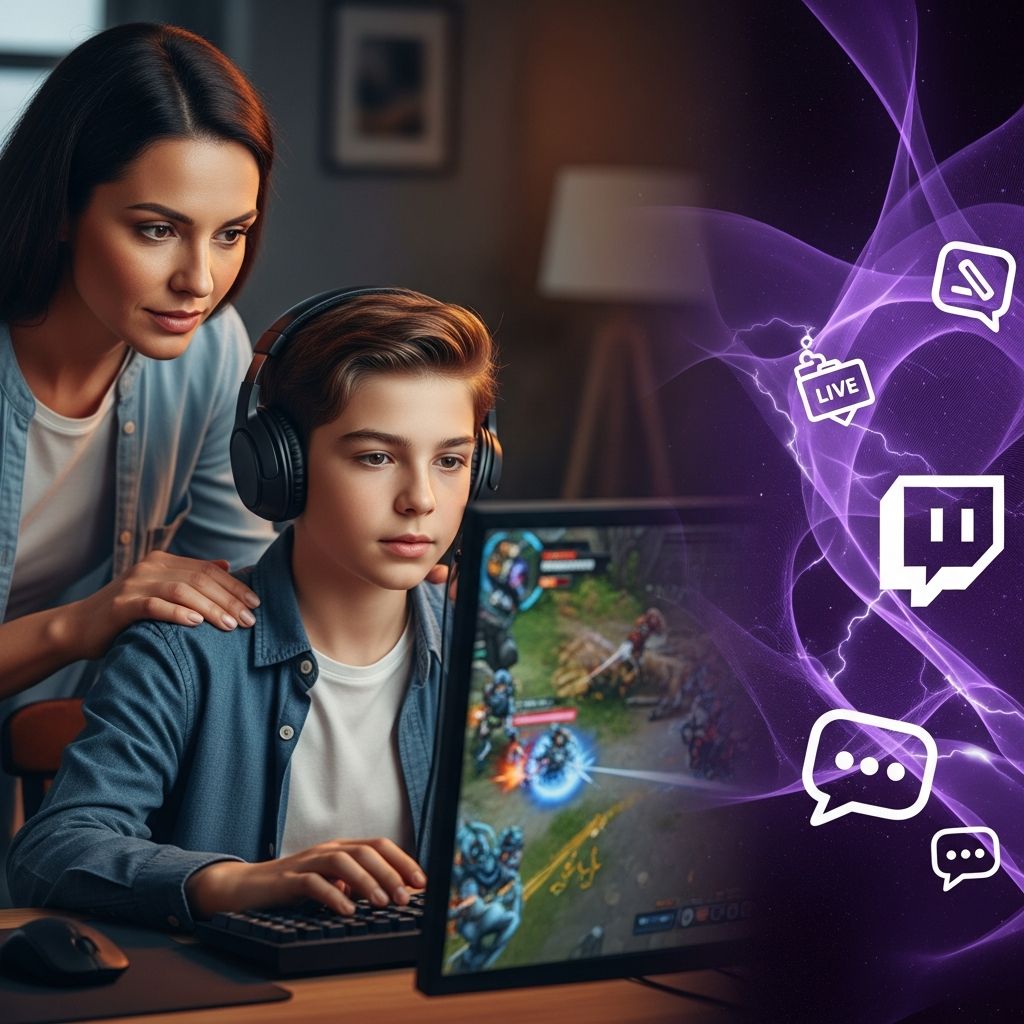
Given these substantial risks, parents require concrete approaches to navigate their children’s Twitch engagement:
- Establish clear boundaries regarding daily viewing limits, appropriate content categories, and streaming times. Implement technology-based restrictions through parental control software when necessary.
- Maintain open conversations about why children enjoy specific streamers, what behaviors they observe, and how these interactions make them feel. Regular non-judgmental discussions build trust and provide insight into potential problems.
- Research popular creators your children follow, watching sample streams to evaluate content quality and creator behavior firsthand rather than relying on assumptions.
- Discuss online safety fundamentals including never sharing personal information, recognizing grooming behavior, and understanding that parasocial relationships with streamers remain fundamentally one-directional.
- Monitor account privacy settings and ensure children understand public versus private sharing. Disable donation features when possible.
- Create alternatives to streaming consumption by facilitating offline gaming, real-world social activities, and hobby exploration.
- Report concerning content directly to Twitch through official channels, contributing to gradual platform improvement.
Understanding the Positive Elements While Mitigating Harm
It would be incomplete to discuss Twitch exclusively through a risk lens. The platform genuinely offers educational benefits when accessed thoughtfully. Young viewers can develop gaming competency, learn problem-solving approaches, observe technical skill development, and build authentic community connections around shared interests. Some streamers exemplify positive mentorship, discuss mental health openly, and create inclusive environments.
The challenge for parents involves identifying content that balances engagement with safety, supporting children’s autonomy while maintaining appropriate oversight, and helping young people develop critical media literacy. Not all Twitch content endangers children, but the platform’s structure and enforcement mechanisms create environments where harm can flourish largely undetected.
The Broader Context of Digital Parenting in Modern Environments
Navigating Twitch represents merely one dimension of contemporary digital parenting. Young people inhabit online ecosystems where they encounter content creators simultaneously, instantaneous global communication, algorithmic content selection, and monetized attention-capture. Twitch exemplifies these broader dynamics: real-time interaction, algorithm-driven recommendations, and economic incentives favoring engagement over wellbeing.
Parents benefit from understanding that individual platform concerns interconnect with larger questions about technology design, corporate accountability, and societal choices regarding youth digital experiences. Effective oversight requires both immediate precautions and engagement with larger conversations about technology policy and platform responsibility.
Frequently Asked Questions About Twitch and Youth Safety
Is Twitch appropriate for children under 13?
No. While Twitch claims a 13-year-old minimum age requirement, the platform lacks identity verification mechanisms, meaning younger children routinely access it. Even with proper age compliance, Twitch contains content including violence, sexual material, and adult language that makes it unsuitable for very young viewers.
How can I tell if my child is spending too much time on Twitch?
Warning signs include neglecting schoolwork or responsibilities, reduced sleep, isolation from friends and offline activities, mood changes related to streaming availability, and continued use despite your expressed concerns. These patterns suggest potentially problematic consumption requiring intervention.
What should I do if I discover my child has experienced grooming on Twitch?
Document all evidence of inappropriate contact without confronting the perpetrator directly. Report the situation to the National Center for Missing & Exploited Children (NCMEC) through their CyberTipline, contact local law enforcement, and report the account to Twitch. Seek professional counseling support for your child to process the experience.
Can I completely prevent my child from accessing Twitch?
Complete prevention becomes increasingly difficult as children age and gain technological sophistication. Instead of attempting total prohibition, establish clear expectations, maintain oversight appropriate to your child’s maturity level, and build media literacy skills that empower them to make safer choices independently.
Which streamers are safest for young viewers?
Research creators individually by watching streams, reading community feedback, and assessing whether their content and behavior align with your family values. Some streamers deliberately create youth-friendly content with positive messaging, but no single recommendation list suits all families. Your own evaluation remains essential.
References
- Dangerous “Speed” Ahead: Streamers Harm Our Youth — Baylor Lariat. 2024-10-24. https://baylorlariat.com/2024/10/24/dangerous-speed-ahead-streamers-harm-our-youth/
- Is Twitch Safe for Kids? Risks and Dangers of Online Streaming — Gabb. 2024. https://gabb.com/blog/is-twitch-safe-for-kids/
- LiveStreaming and Children — DeAngelis Center Foundation. https://deangeliscenter.org/safetyprepared-livestreaming-and-children/
- Twitch & Children’s Mental Health — PsychChild. https://www.psychchild.com/post/twitch-children-s-mental-health
- Twitch Addiction: Are Kids Addicted to Streaming Platforms? — Birches Health. https://bircheshealth.com/resources/twitch-addiction
- Video Game Streaming in Young People and Teenagers — National Institutes of Health. 2021. https://pmc.ncbi.nlm.nih.gov/articles/PMC7916337/