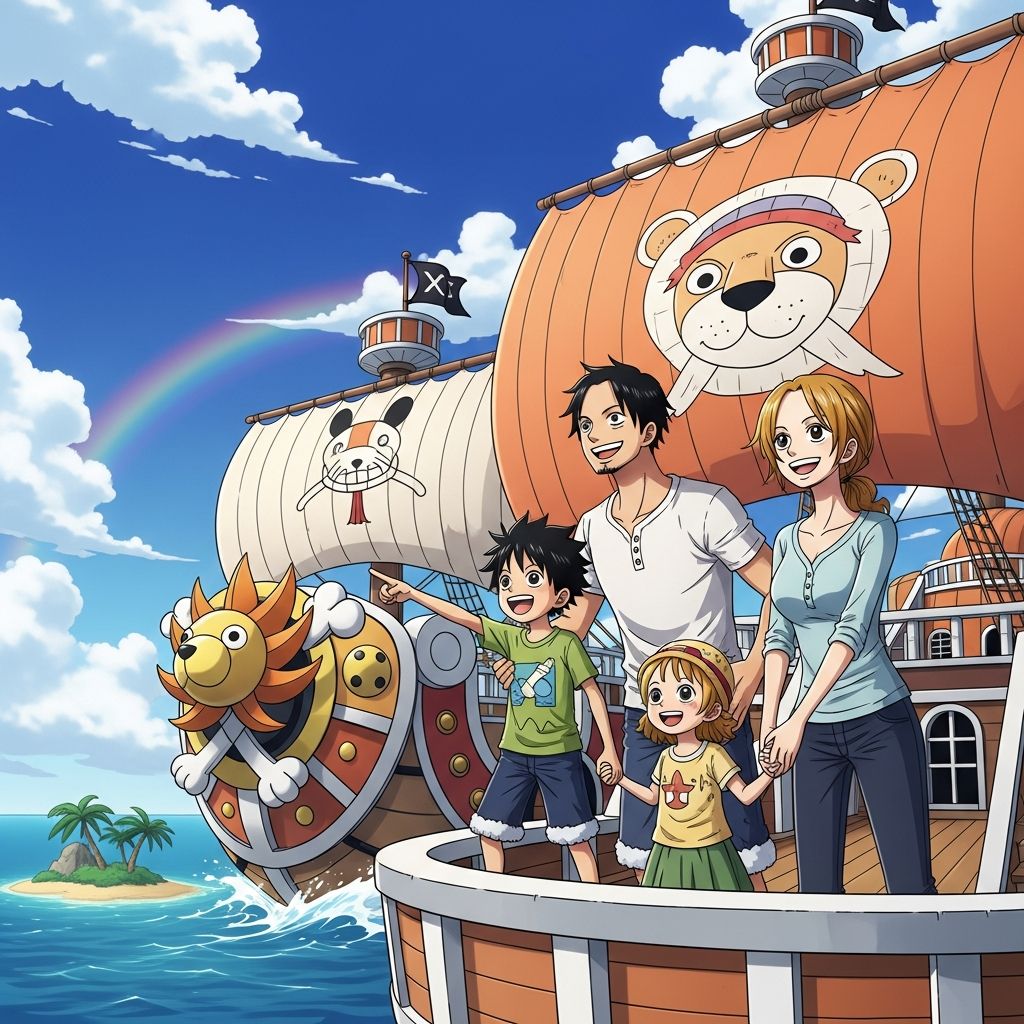
For many families, watching a long-running series together becomes more than just screen time; it turns into an ongoing conversation and a shared world that parents and kids can explore side by side.
One of the most popular candidates for that kind of shared adventure is the anime One Piece, whose massive story and colorful characters have now reached a new generation through streaming platforms like Netflix.
What Is “One Piece” About?
One Piece follows Monkey D. Luffy, a relentlessly optimistic teenager who dreams of becoming the Pirate King by finding a legendary treasure known as the “One Piece.”
Along the way, Luffy gathers a crew of misfits—each with their own painful past and big dreams—who sail together, battle villains, and challenge corrupt authorities across a vast fantasy world of islands and seas.
- Luffy is a rubber-bodied hero due to eating a magical “Devil Fruit,” which gives him unusual powers but prevents him from swimming.
- The crew, known as the Straw Hat Pirates, includes a swordsman, a navigator, a cook, a doctor, and others, each representing a different skill and personality type.
- The tone blends slapstick humor, heartfelt backstories, and over-the-top action in a world that looks playful but can address surprisingly heavy themes.
Anime vs. Live-Action: Which Version Are We Talking About?
There are two major ways families encounter One Piece on Netflix: the long-running anime and the newer live-action adaptation.
Both tell the same broad story but present it in different visual styles and with slightly different levels of intensity, which matters when deciding what’s right for your child.
| Version | Format | Typical Rating / Guidance | General Tone for Kids |
|---|---|---|---|
| Anime series | Animated episodes (ongoing) | Often considered suitable around pre-teen and up, though official ratings vary by region. | Violent but stylized, emotionally heavy at times, usually lighter in how violence is presented compared to live action. |
| Netflix live-action | Live-action season adapting early story arcs | Commonly rated around 14+ with warnings for language, nudity, self-harm, smoking, and violence. | Feels more intense because real actors and on-screen blood make danger and pain more concrete. |
Age Considerations: When Is “One Piece” Appropriate?
There is no single magic age when One Piece becomes “safe”; instead, parents decide based on a child’s maturity, sensitivity, and prior exposure to action-heavy stories.
That said, both the anime and the live-action adaptation are usually recommended for older kids or young teens because of frequent combat, emotional intensity, and occasional mature content.
- Pre-teens (around 11–12): Many families feel comfortable introducing selected anime episodes at this stage, especially if kids already enjoy shonen-style action series.
- Young teens: Both versions may be appropriate, with the live-action more suitable once your child can handle stronger language and more realistic violence.
- Highly sensitive kids: Children who react strongly to on-screen cruelty, emotional trauma, or intense peril may need to wait, watch edited clips, or co-view closely with a parent.
Content Parents Should Know About
Despite the cartoonish style and goofy humor, One Piece routinely includes material that deserves a closer look: violence, occasional crude language, suggestive elements, and heavy emotional themes.
Parents who understand these elements ahead of time can decide whether to skip certain arcs, save the show for later, or use it as a springboard for thoughtful conversations.
Violence and Peril
Both the anime and live-action versions revolve around pirates, bandits, and corrupt forces, so combat is part of almost every major conflict.
Characters fight with swords, guns, fists, and fantastical powers; battles are often intense, though the animated series tends to cushion events with exaggerated visuals and less graphic detail than realistic live-action scenes.
- Frequent brawls, duels, and large-scale clashes with blood shown at times, especially in serious story arcs.
- Implied or on-screen deaths, executions, and injuries, though the anime is more likely to cut away from explicit gore.
- Occasional themes of self-sacrifice and self-harm–related danger, which can feel intense for younger viewers.
Language and Attitude
Coarse language appears, including common mild swear words and insults, especially in dubbed versions and the live-action series.
Some characters also model aggressive or mocking behavior, such as name-calling or disrespect toward authority, though the story usually frames cruelty as a trait of villains rather than heroes.
Sexual and Suggestive Elements
Compared with some other anime aimed at teens, One Piece is not primarily focused on romance or sexuality, but there are still moments to be aware of.
The anime in particular is known for stylized character designs that sometimes emphasize women’s bodies and occasional scenes with partial nudity that avoid explicit detail.
- Flirtatious behavior and innuendo appear at times but are rarely the central point of a scene.
- Some outfits are revealing and may prompt conversations about body image and how characters—especially women—are depicted.
Alcohol, Smoking, and Other Mature Themes
Because the story takes place in a pirate world, taverns, drinking, and smoking are part of the atmosphere in both anime and live-action versions.
Kids may see characters drinking alcohol, smoking, or behaving recklessly, although the narrative generally doesn’t glorify addiction or self-destruction.
- Recurring scenes in bars or party environments, where alcohol is casually present.
- Episodes that explore themes like trauma, abandonment, injustice, and systemic corruption, which can be emotionally heavy but also rich for older viewers.
What “One Piece” Gets Right for Kids
Despite its rough edges, One Piece has endured for decades partly because it offers powerful, kid-friendly messages about loyalty, resilience, and staying true to your dreams.
Families who embrace the show often find that the positive themes outweigh the concerns, especially when adults are available to contextualize the darker elements.
- Friendship and found family: The Straw Hat crew is built on deep loyalty; members routinely risk their lives for each other and accept new teammates with empathy and respect.
- Chasing big dreams: Every main character has an ambition—becoming the best swordsman, mapping the world, finding a cure—that encourages kids to think big and work hard.
- Standing up to injustice: Villains often represent oppressive systems, and the heroes fight for people who are exploited or powerless, reinforcing moral courage.
How to Decide if “One Piece” Fits Your Family
Deciding whether to introduce One Piece is less about strict age rules and more about knowing your child’s temperament, fears, and current media diet.
Parents who prefer to avoid fast-paced combat, on-screen blood, or emotionally intense backstories may decide to hold off, while others may welcome the chance to explore these themes in a guided way.
Questions to Ask Yourself
- Does your child already watch action shows or superhero movies with similar levels of fighting and peril?
- How do they react to scenes of bullying, death, or characters in pain—do they shake it off or carry those feelings for days?
- Are you willing to co-watch and pause to answer questions or skip episodes that feel like too much?
Practical Tips for Co-Viewing with Kids
Co-viewing—watching the series together with your child—is often the safest and most meaningful way to experience One Piece as a family.
It allows parents to monitor content in real time, support kids during intense moments, and build shared traditions around episodes and story arcs.
Step-by-Step Viewing Strategy
- Preview a few episodes on your own. Watching the first episode or two by yourself can help you understand the show’s tone and decide which version (anime or live action) better fits your child.
- Start with short sessions. Instead of binging, watch one episode at a time and see how your child responds emotionally and behaviorally afterward.
- Use built-in parental controls. Streaming services often allow profiles with content restrictions, helping you keep younger kids from wandering into episodes or series meant for older teens.
- Pause and talk. When a complicated scene comes up—like a character facing a moral dilemma or remembering a painful past—pause and ask what your child thinks is happening.
- Skip or stop when needed. There is no rule that you must finish an arc; if an episode is too intense, you can skip ahead, pick a lighter storyline, or stop the series entirely.
Conversation Starters After an Episode
- “Why do you think Luffy helped that person, even when it put him in danger?”
- “How would you feel if someone treated you the way the villain treated their crew?”
- “What do you think this episode says about friendship or loyalty?”
- “Was there anything in this episode that made you uncomfortable or confused?”
Managing Screen Time and a Very Long Series
One challenge with One Piece is its sheer length; the anime alone spans hundreds of episodes, and that scale can easily encourage marathon viewing.
Setting clear expectations around when and how much your family watches can prevent the show from overwhelming homework, sleep, and other activities.
- Establish specific “One Piece nights” instead of allowing daily, open-ended streaming sessions.
- Pair viewing with offline activities—drawing favorite characters, mapping the islands, or reading related (age-appropriate) adventure books.
- Consider pausing between major story arcs to give your child emotional and cognitive space before diving into the next big conflict.
When to Say “Not Yet”
- If your child has nightmares after other action shows, heed those signs and delay this one.
- If they are currently dealing with grief or trauma, you may want to avoid arcs that heavily focus on death and abandonment until they are more emotionally secure.
- If constant fighting and shouting leave your home feeling tense, consider lighter alternatives for now.
Frequently Asked Questions
Is “One Piece” suitable for younger kids under 10?
For most families, One Piece is better suited to older kids and teens, because of regular combat, on-screen blood, emotionally intense backstories, and occasional mature content.
Very young viewers may find the violence, shouting, and heavier themes confusing or frightening, and they are less able to process the moral complexity that makes the series meaningful for older audiences.
Is the anime or live-action version more kid-friendly?
The animated series, while still violent and often intense, typically presents action in a more stylized and less realistic way than the live-action version.
The live-action adaptation is usually rated for older teens due to more realistic depictions of injury, stronger language, and more grounded portrayals of danger, making it better suited for mature viewers.
Can “One Piece” be educational?
Although One Piece is not educational in a traditional academic sense, parents can use it to spark conversations about justice, friendship, courage, and the impact of prejudice and corruption.
The show’s diverse cast, complex world-building, and moral dilemmas can also encourage media literacy by prompting kids to question who holds power in a story and how protagonists respond to unfair systems.
How can I minimize exposure to the most intense content?
Parents can watch episode guides and brief content summaries ahead of time, skip arcs known for their emotional heaviness, and use parental controls to limit unsupervised access.
Co-viewing, pausing during distressing scenes, and having post-episode discussions can also significantly reduce the emotional impact of the show’s toughest moments.
What if my child wants to watch it alone?
If a teen is eager to watch independently, you can negotiate boundaries—such as no watching late at night—and agree that they will come to you if something in an episode unsettles them.
Checking in regularly, asking what they think of current arcs, and staying informed about upcoming storylines can help you stay involved even when you are not in the room.
Helping Your Family Chart Its Own Course
One Piece offers a sprawling, imaginative world where kids and adults can cheer for underdogs, wrestle with questions of right and wrong, and follow a group of misfits who build a family at sea.
Handled thoughtfully—with attention to your child’s temperament, clear boundaries around screen time, and open conversations about what they see—it can become more than just a show, serving as a shared adventure that your family navigates together.