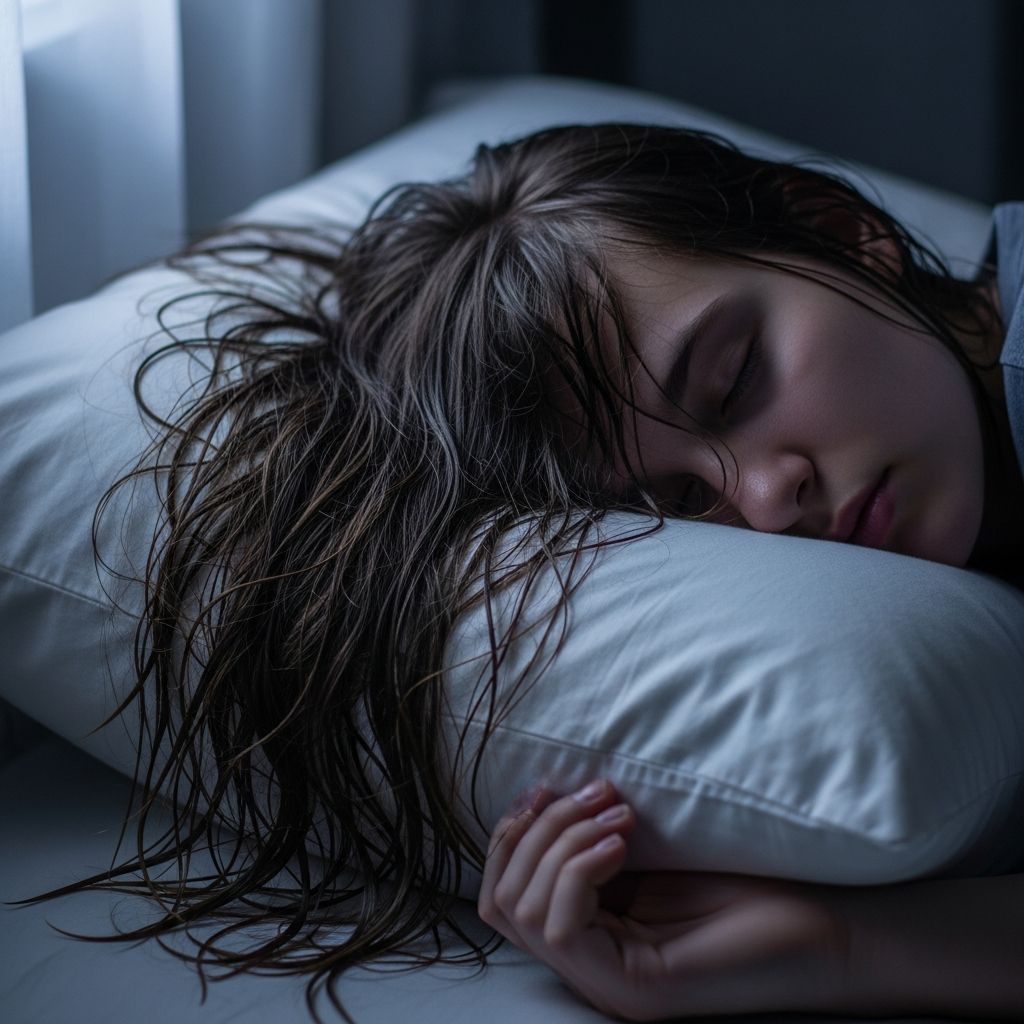
For many people, washing hair at night is a non-negotiable: evenings are quieter, the shower is finally free, and there’s no time to deal with a blow-dryer before work in the morning. Then comes the inevitable question: is it actually okay to fall asleep with wet hair, or is that how breakage, frizz, and scalp drama begin?
This guide walks through what really happens when you sleep with damp strands, how it affects your hair, scalp, and even your skin, and how to design a nighttime routine that works with your schedule without wrecking your mane.
What Happens to Hair While You Sleep
Hair doesn’t simply pause overnight. As you toss, turn, and press your head into the pillow, your strands experience friction, tension, and repeated bending. When hair is wet, it is more flexible but also more vulnerable, so the mechanical stress of sleep can have a bigger impact.
- Increased friction: Movement against cotton or textured pillowcases can roughen the cuticle and create tangles.
- Pressure points: The same sections of hair get squashed against the pillow for hours, weakening those areas over time.
- Moisture transfer: Water from your hair moves into your pillowcase and pillow, leaving a damp environment near your scalp and face.
On dry hair, this friction is still present but less damaging. On wet hair, the same forces can translate to stretched fibers, broken strands, and stubborn bedhead that requires extra styling in the morning.
Why Wet Hair Is More Delicate
To understand why “wet plus pillow” is not an ideal combo, it helps to think about what happens to a hair strand when it absorbs water. The outer cuticle layer lifts slightly, the inner structures swell, and the fiber becomes more elastic—great for temporary styling, not so great for physical stress.
- Weakened structure: Swollen hair fibers don’t bounce back from pulling and twisting as effectively, making them more likely to snap.
- Raised cuticle: A lifted cuticle is like a rougher surface; it snags more easily on pillowcases, hair ties, and other strands.
- Hygral fatigue risk: Repeated cycles of swelling and shrinking from staying wet for long periods may gradually weaken hair over time.
This doesn’t mean one night with wet hair will destroy your ends, but making it a regular habit can add up—especially if your hair is already fragile from color, heat styling, or chemical treatments.
Common Issues Linked to Sleeping With Wet Hair
Not everyone who sleeps with damp hair wakes up with disaster, but there are recurring complaints that show up again and again. Understanding the patterns can help you decide how cautious you want to be.
| Potential Issue | What It Looks/Feels Like | Why Wet Hair Makes It Worse |
|---|---|---|
| Breakage and split ends | Short, snapped pieces, frayed tips, thinning at the ends | Wet fibers stretch and snap more easily when rubbed against a pillow |
| Frizz and stubborn bedhead | Poofy crown, uneven waves, unpredictable bends or kinks | Disorganized drying pattern as hair reshapes itself against the pillow |
| Scalp discomfort | Itching, flaking, or a generally “stuffy” feeling on the scalp | Lingering dampness can make the scalp feel humid or congested |
| Skin irritation | Blemishes near the hairline, temples, or sides of the face | Wet hair plus styling product residue transfers to a damp pillow |
Is It Ever Truly Dangerous?
Many people grew up hearing that going to bed with wet hair would cause serious illness. Modern understanding of health doesn’t support the idea that damp hair alone gives you a cold; viruses, not temperature or moisture, are the culprit. However, an overly damp environment near your scalp and pillow can be less than ideal.
- A consistently moist pillow surface can be friendlier to microbes than a dry one, especially if wash frequency is low.
- If you already deal with scalp conditions or sensitive skin, constant overnight dampness may aggravate those issues.
If your hair is only slightly damp, your bedding is frequently washed, and your scalp is otherwise healthy, the health risk is generally more about comfort and minor irritation than serious disease.
Hair Types: Who Is Most Affected?
Not all hair reacts the same way to overnight dampness. Texture, thickness, and chemical history all influence how risky sleeping with wet hair might be for you personally.
Fine and Medium Hair
- Pros: Often dries faster, which reduces how long it stays saturated against the pillow.
- Cons: Individual strands are thinner and can snap more easily from friction and tugging.
Fine hair tends to show damage quickly as wispy flyaways or thinning at the ends, so consistent overnight dampness might be more noticeable over time.
Thick or Coarse Hair
- Pros: May tolerate more mechanical stress before obvious breakage appears.
- Cons: Takes longer to dry, so it can stay wet near the scalp for hours in bed.
Because thick and coarse hair holds water longer, the scalp and pillow remain damp deeper into the night, which may be uncomfortable or aggravating for some scalps.
Curly and Coily Hair
- Pros: Many curly routines already include protective styles, which can help control friction.
- Cons: The curl pattern can easily be distorted by random pillow pressure, leading to frizz and misshapen curls.
Curls that dry in a compressed position may need significant refreshing or re-wetting in the morning, which partially defeats the time-saving benefit of going to bed with wet hair in the first place.
Scalp and Skin: The Often-Forgotten Side Effects
While hair gets most of the attention, the skin under and around your hair matters just as much. Damp hair pressed into a pillow can change what’s happening on your scalp and face overnight.
- Scalp micro-environment: Warmth from your head plus lingering moisture from your hair can feel stuffy, especially if your hair is very dense.
- Product transfer: Leave-in conditioners, serums, and oils on wet hair can easily migrate onto your pillowcase and then onto your cheeks or jawline.
- Sensitive skin flare-ups: Those prone to irritation or breakouts may notice that a damp, product-coated pillow doesn’t do their complexion any favors.
Regularly washing pillowcases and avoiding heavy, pore-clogging products near the roots can reduce some of these concerns, but avoiding very wet hair at bedtime is still a helpful strategy for sensitive skin.
Signs Your Nighttime Hair Routine Needs an Upgrade
If you routinely fall asleep with damp or dripping hair, watch for these clues that your routine might be causing more harm than convenience.
- Your hair feels rougher or drier over time, even if you’re using conditioner.
- You notice new frizz or short “baby hairs” concentrated along the sides where your head rests on the pillow.
- Your scalp often feels itchy or uncomfortable after nights with wet hair.
- Breakouts along the hairline seem to coincide with heavily product-laden wet hair at bedtime.
None of these symptoms prove wet hair is the only cause, but they are strong hints that adjusting your nighttime habits could help.
Safer Strategies If You Must Sleep With Wet Hair
Sometimes life simply doesn’t allow for a full blow-dry session at night. In that case, the goal is to minimize the mechanical and moisture-related stress on your hair and scalp while you sleep.
1. Start Drying Before You Lie Down
- Gently squeeze—never wring—water out of your hair with a soft microfiber towel or an old cotton T-shirt.
- Let hair air-dry for at least 20–30 minutes before bed if possible, even if it doesn’t reach 100% dryness.
- If you use a blow-dryer, keep it on a low or medium setting and focus on the roots so the scalp area is less damp.
2. Choose the Right Pillowcase
- Silk or satin pillowcases create less friction, which is especially helpful for curls and fragile hair.
- Have a dedicated pillowcase for “wet hair nights” that you wash more frequently.
- If hair is still very wet, consider layering a towel over your pillow—but make sure it’s smooth so hair doesn’t snag.
3. Use Gentle Overnight Hairstyles
The way you secure your hair at night can make the difference between protected strands and extra breakage.
- Opt for a loose, low braid or soft twist instead of tight ponytails or top knots.
- Use scrunchies or spiral ties instead of thin elastics that dig into wet hair.
- For curls, try a loose pineapple (high, soft ponytail) with a satin scarf to reduce pillow contact.
4. Be Strategic With Products
- Avoid heavy oils or thick creams near the scalp if you know your pillow will get damp.
- Stick to lightweight, leave-in conditioners that absorb quickly and leave less residue on bedding.
- Apply styling products more heavily from mid-lengths to ends, keeping the root area cleaner.
A Simple Nighttime Hair Routine (When You’re Short on Time)
If evenings are hectic and blow-drying feels unrealistic most nights, a streamlined routine can ease the pressure. The idea is to remove excess water, protect the hair’s cuticle, and keep the scalp from staying soaked until morning.
- Rinse and condition wisely: Finish your shower with cool or lukewarm water to help the cuticle lie flatter.
- Blot, don’t rub: Wrap hair in a microfiber towel for 10–15 minutes while you finish skincare or other tasks.
- Apply a light leave-in: Focus mid-lengths and ends; avoid saturating roots.
- Partial dry at the roots: Use a dryer on low around the scalp for a few minutes if you can.
- Secure gently: Put hair into a loose braid or protected ponytail and sleep on a smooth pillowcase.
This routine won’t leave your hair salon-dry, but it will dramatically reduce the time it spends at its most vulnerable state: dripping and compressed against your pillow.
Morning After: Fixing Overnight Bedhead Without More Damage
Even with the best intentions, some mornings you wake up with inexplicable bends and halo frizz. The key is to reshape and smooth without piling on more stress.
- Mist hair lightly with water or a leave-in spray and gently scrunch or brush it back into place.
- Use a wide-tooth comb instead of a fine brush, especially if hair is still slightly damp.
- Reach for low-heat tools or air-dry styling rather than max-heat straighteners whenever possible.
Think “refresh” rather than “restart”: small adjustments to texture and shape are less damaging than fully re-styling from scratch every morning.
Frequently Asked Questions About Sleeping With Wet Hair
Does sleeping with wet hair make you sick?
Going to bed with wet hair does not directly cause colds or flu; those are triggered by viruses, not temperature or moisture. However, a consistently damp pillow can be uncomfortable and may aggravate existing scalp or skin issues for some people.
Is it okay if my hair is just a little damp?
Hair that is 70–80% dry is generally at less risk than hair that is soaking wet. If your roots are mostly dry and your ends are only slightly damp, the potential for damage and discomfort is significantly lower, especially if you use a smooth pillowcase and gentle nighttime hairstyle.
Can I protect my hair by sleeping in a bun?
A very tight bun on wet hair can concentrate tension in one area and may even cause breakage or headaches. If you prefer your hair up, opt for a loose, low bun or braid secured with a soft scrunchie rather than a tight elastic or high top knot.
Is air-drying overnight better than using a blow-dryer?
There’s a trade-off: excessive, very hot blow-drying can damage hair, but going to bed with completely saturated hair can also be hard on strands and scalp. A balanced approach is to air-dry partway, then use a low or medium heat setting to finish drying the roots before sleep.
How often is too often to sleep with wet hair?
The more frequently you do it, the more the small effects can add up. If you notice frizz, breakage, or scalp discomfort, try limiting “wet hair nights” to occasional emergencies and aim for mostly dry hair before bed on other days.
Putting It All Together
Sleeping with wet hair is not a catastrophic, one-time mistake, but it is a habit that can quietly wear down your hair’s strength and comfort over the long term. The real issue is the combination of moisture, friction, and pressure that your hair and scalp experience for hours at a time while you sleep.
If your schedule pushes you toward nighttime showers, focus on simple safeguards: blot water thoroughly, dry the roots as much as you can, choose smooth pillowcases, and use loose protective styles. With a few small adjustments, you can keep the convenience of evening hair-washing without sacrificing the health and appearance of your strands.