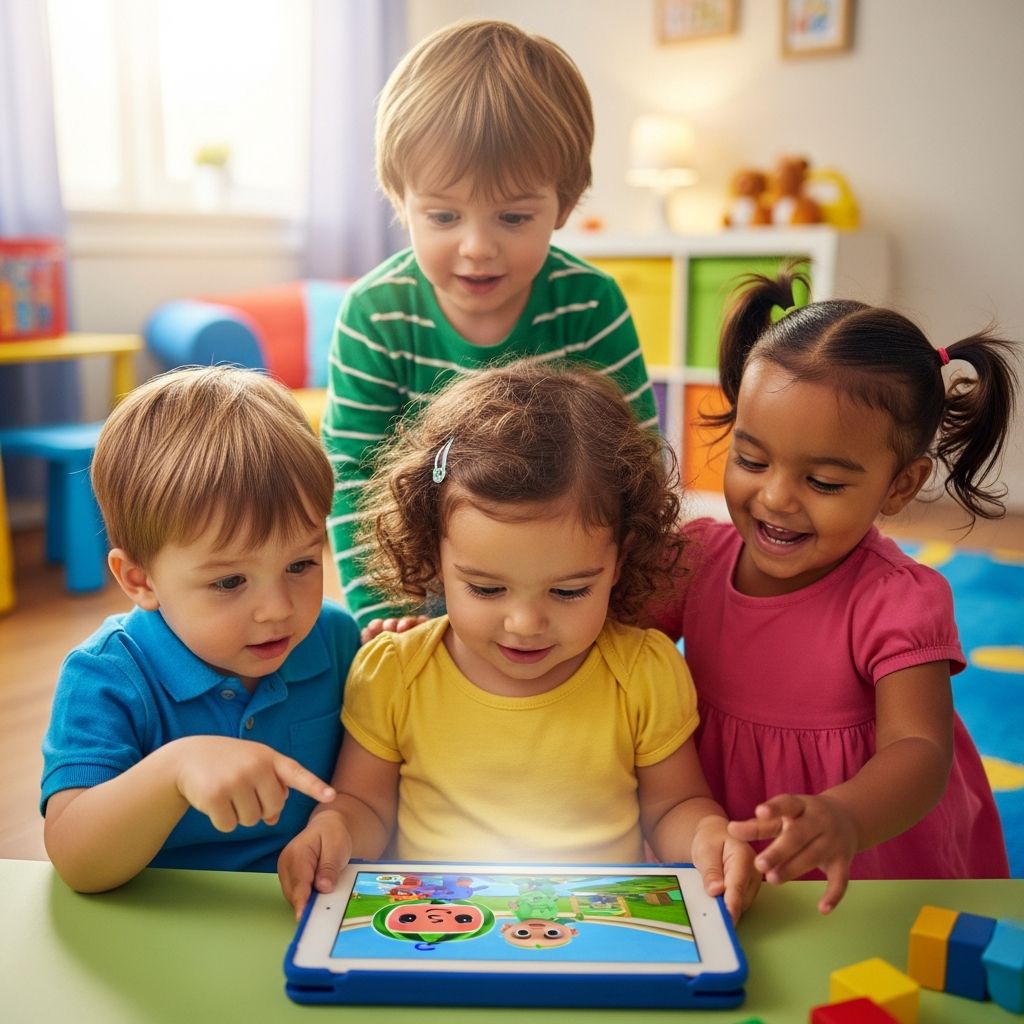
CoComelon has captivated millions of toddlers worldwide with its vibrant animations, repetitive songs, and depictions of everyday routines. This popular YouTube channel and streaming series promises educational value through music and visuals, but parents often wonder if it’s truly beneficial or potentially harmful for young minds. This guide examines the appeal, scientific concerns, expert recommendations, and practical strategies for integrating it thoughtfully into your child’s day.
Why Toddlers Can’t Get Enough of CoComelon
The secret to CoComelon’s massive popularity lies in its deliberate design tailored to the youngest viewers. Filmed from a child’s eye level, the show features soft, rounded characters in a conflict-free world where problems resolve quickly with songs and hugs. Everyday scenarios like brushing teeth, sharing toys, or getting dressed become catchy tunes that toddlers eagerly mimic.
Parents report remarkable engagement: children rush to screens at the sound of its marimba intro, with some uttering ‘CoCo’ as an early word. Nielsen data highlights unprecedented streaming viewership among under-2s, surpassing traditional children’s programming. The show’s universal themes—potty training, mealtime manners, and sibling dynamics—mirror real-life toddler experiences, making it feel relatable and reassuring.
- Bright, toddler-friendly visuals: No sharp edges, soothing colors stimulate without overwhelming.
- Repetitive structure: Songs reinforce concepts like colors, numbers, and emotions through rhyme and rhythm.
- Positive modeling: Characters demonstrate kindness, cooperation, and healthy habits consistently.
These elements create instant appeal, turning passive viewing into memorized routines that parents leverage for teachable moments.
Developmental Science Behind the Screen Glow
Early childhood, especially ages 1-3, marks a critical window for brain wiring. Synapses form rapidly based on sensory inputs, shaping attention spans, emotional regulation, and language skills. Interactive, hands-on experiences build robust neural pathways, while passive media consumption offers limited benefits.
CoComelon’s fast-paced edits—switching visuals every 2-3 seconds—paired with loud music and exaggerated expressions trigger dopamine rewards similar to video games. This ‘screen high’ provides quick gratification but conditions young brains to expect constant novelty, potentially shortening attention for slower real-world tasks like block-building or storytime.
| Aspect | CoComelon Style | Impact on Toddler Brain |
|---|---|---|
| Pacing | Rapid scene changes | Overstimulates reward circuits, risks attention deficits |
| Interaction | One-way broadcast | Misses feedback loops needed for Vygotsky’s Zone of Proximal Development |
| Emotional Depth | Instant resolutions | Limits resilience-building through frustration tolerance |
| Learning Style | Observational songs | Simulates but doesn’t replace sensorimotor exploration (Piaget) |
Experts like pediatrician Dimitri Christakis note that while it appears educational with on-screen words, core concepts may not penetrate pre-verbal toddlers effectively.
Expert Warnings: AAP and Pediatric Insights
The American Academy of Pediatrics (AAP) lacks specific studies on CoComelon but emphasizes caution with all screen media under 18 months, recommending none except video chats. For 18-24 months, high-quality programming is okay in very limited doses with co-viewing.
AAP contrasts shows like Ms. Rachel—which use slow pacing, call-and-response, and parent-child sing-alongs—with faster content. CoComelon’s overstimulation risks include screen dependency for soothing, hindering self-regulation skills essential for Erikson’s autonomy stage.
Pediatricians recommend play as the #1 promoter of language, social-emotional skills, and learning—far surpassing any video.
Author Susan Linn warns that addictive web designs, including CoComelon’s, foster reliance on screens for amusement, sidelining independent play. Commercial ties amplify concerns: toys, books, and snacks extend the brand into consumerism.
Balancing Screen Time: Moderation Strategies
CoComelon isn’t inherently ‘bad’—context matters. Used sparingly as a bridge to real activities, it can spark discussions. Pause videos to mimic actions, like hand-washing during a hygiene song, transforming observation into participation.
- Limit duration: Cap at 15-20 minutes daily for 2+ year-olds, avoiding under 18 months.
- Co-view actively: Narrate, question (‘What comes next?’), and relate to life (‘Let’s try that now!’).
- Set routines: Use as transition tools (e.g., pre-nap wind-down), not default soothers.
- Monitor reactions: Watch for post-viewing meltdowns or demands for more—signs of overstimulation.
Combine with media-free zones: meals, bedtime, playtime. Track total screen time via apps to stay under AAP guidelines (1 hour max for 2-5 year-olds).
Power of Play: Top Alternatives to Boost Development
Replace or supplement videos with joyful, brain-building play. Toddlers thrive on movement, imagination, and interaction—no batteries required.
Physical and Motor Skills Builders
- Dance parties to favorite tunes (screen-free music).
- Neighborhood walks spotting shapes/colors.
- Playground adventures for climbing/balancing.
Cognitive and Problem-Solving Activities
- Blocks, shape sorters, simple puzzles for spatial reasoning.
- Pretend play with dolls/figurines (chef, doctor roles).
- Stacking cups or nesting toys for cause-effect learning.
Language and Social Boosters
- Daily book reading with pointing/discussing pictures.
- Sing-alongs and rhymes during diaper changes/baths.
- Turn-taking games like rolling balls back-and-forth.
These foster flexibility, confidence, and emotional organization that screens can’t match.
Real Parent Wins: Making CoComelon Work
Many families harness CoComelon’s strengths strategically. One parent uses cleanup songs to motivate tidying, following with actual toy sorting. Another pairs sharing episodes with playdates, reinforcing lessons live. During transitions like potty training, videos normalize the process without replacing hands-on practice.
Success hinges on intentionality: treat it as a tool, not a babysitter. Track progress—improved vocabulary or manners signal positives; fixation or tantrums prompt cuts.
Frequently Asked Questions (FAQs)
Is CoComelon educational for 2-year-olds?
It introduces routines via songs, but benefits peak with parent interaction. AAP prioritizes play over videos for core skills.
How much CoComelon is too much?
Under 18 months: avoid. 18-24 months: <20 min/day with co-viewing. 2-5 years: <1 hour total screens.
Does it cause attention problems?
Fast pacing may condition craving for stimulation, per neuroscience on dopamine hits. Moderation mitigates risks.
What if my toddler is obsessed?
Gradually introduce alternatives like outdoor play. Use as rare treats to rebuild independent engagement.
Are there better video alternatives?
Slower-paced options with interaction (e.g., call-response shows) align better with toddler development.
Final Thoughts for Mindful Parenting
CoComelon’s charm endures for its joyful familiarity, but toddlers need balanced nourishment: play, relationships, and unhurried exploration. Empower your child’s growth by curating media as one small piece of a rich, real-world puzzle. With AAP-guided limits and creative pivots, you can enjoy the tunes while safeguarding development.
References
- Too Fast, Too Loud, Too Soon? An Educationist’s Take on the Hidden Impacts of CoComelon on Toddlers’ Minds — Countercurrents.org. 2025-05-01. https://countercurrents.org/2025/05/too-fast-too-loud-too-soon-an-educationists-take-on-the-hidden-impacts-of-cocomelon-on-toddlers-minds/
- Watching CoComelon and Guidance on Early Childhood Development — American Academy of Pediatrics (AAP). Accessed 2026. https://www.aap.org/en/patient-care/media-and-children/center-of-excellence-on-social-media-and-youth-mental-health/qa-portal/qa-portal-library/qa-portal-library-questions/watching-cocomelon-and-guidance-on-early-childhood-development/
- Meltdown to MOMent: CoComelon Can Help Parenting Struggles — LA Magazine. Accessed 2026. https://lamag.com/contributor-content/meltdown-to-moment-cocomelon-can-help-parenting-struggles/
- How CoComelon Became a Children’s Entertainment Juggernaut — TIME. 2022-10-21. https://time.com/6157797/cocomelon-success-children-entertainment/