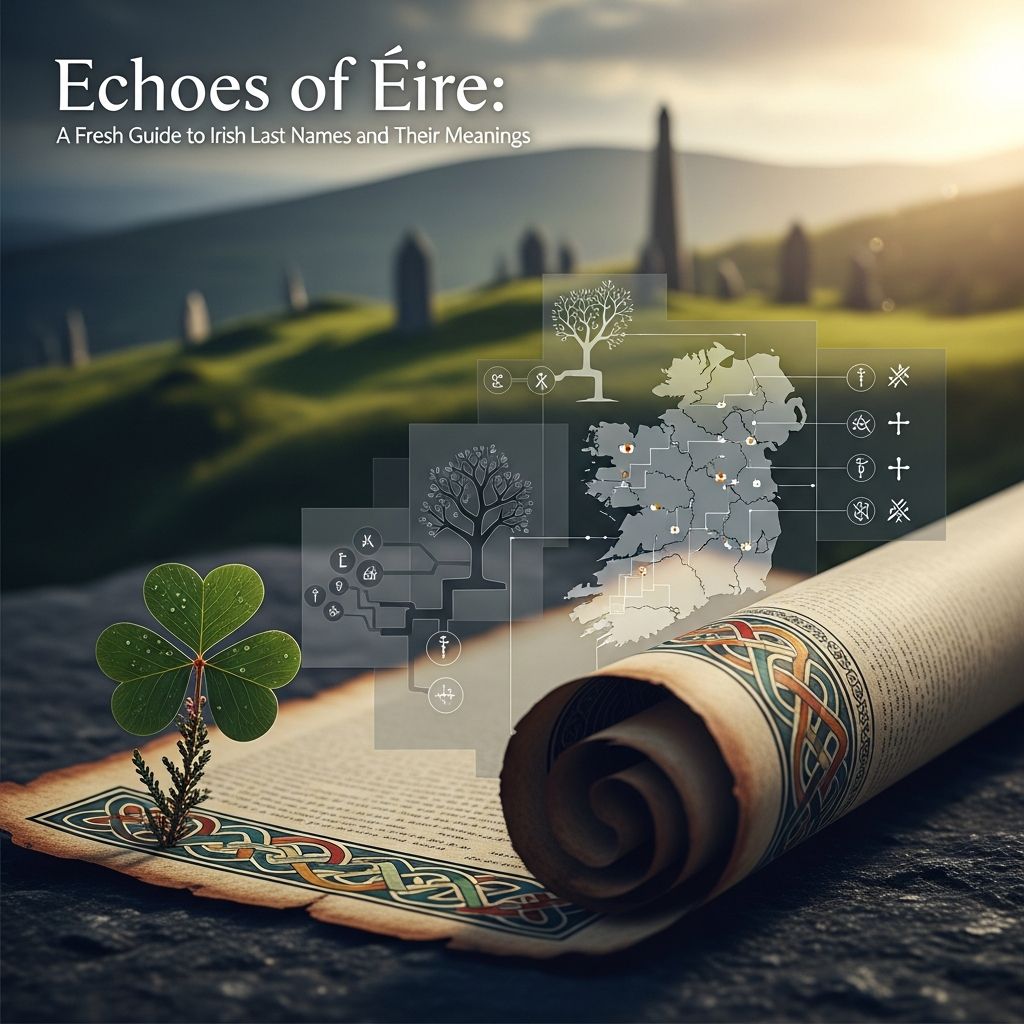
Irish last names are more than labels; they are compact family stories that carry clues about ancestors, places, and long-ago ways of life. This guide offers an original, family-friendly look at Irish surnames so you can better understand your own name or simply enjoy the history behind some familiar favorites.
From the famous O’ and Mac prefixes to regional clan names and modern spelling twists, Irish surnames weave together language, migration, and legend. Whether you are naming a baby, exploring family history, or just love Irish culture, you will find practical insights and fun facts throughout this article.
Why Irish Last Names Feel So Distinctive
Irish surnames stand out because they combine poetic meanings with very old naming traditions. Many of them developed in a Gaelic culture where family ties, local leaders, and saints were powerful influences on identity.
- They often describe ancestry, such as being the son or descendant of a notable person.
- They can preserve nicknames, physical traits, or personal qualities from centuries ago.
- They sometimes reflect devotion to saints or link families to particular regions or clans.
Over time, English rule, migration, and modern spelling reforms reshaped how these names look and sound, but the older meanings still shine through once you know what to look for.
Decoding Common Irish Prefixes
One of the most recognizable features of Irish surnames is the use of prefixes that signal family relationships. Understanding these little words is often the first step in understanding an Irish last name.
The O’ prefix
The prefix O’ comes from an Irish word that means “descendant of” or “grandchild of.” In practice, it usually marks a family line that traces back to a particular ancestor, sometimes a clan leader or local hero.
- O’ generally points to a deeper ancestor, not just a father.
- Many O’ surnames were temporarily written without the prefix in historical records, then restored later.
The Mac and Mc prefixes
Mac, often shortened to Mc in modern spellings, has a more direct meaning: “son of.” Historically, a name like this showed who your immediate male ancestor was, before it settled into a hereditary surname.
- Mac or Mc can appear with or without a space, and both versions usually refer to the same family line.
- Over generations, some branches dropped the Mac/Mc prefix, while others kept or later revived it.
Other relationship markers you may see
Less familiar but still important are feminine or variant forms that appeared in Irish naming traditions. These forms help show how flexible surnames once were.
- Some historical records show forms that indicate “daughter of” or “wife of,” especially in older Gaelic documents.
- As surnames became fixed and English became dominant, most of these varied forms were reduced to a single family name for all members.
Key Types of Irish Surname Meanings
At their core, many Irish last names fall into several broad meaning categories. Knowing these categories can help you make sense of a surname even if you do not speak Irish (also known as Gaelic).
Names from ancestors and leaders
A large group of Irish surnames come from a personal name, often belonging to an ancestor who was respected for leadership, bravery, or local influence. The surname then marked later generations as belonging to that individual’s line.
- These names often preserve old first names no longer used today.
- They can connect modern families to medieval dynasties or regional chiefs.
Names from physical traits or personality
Another set of Irish surnames grew out of descriptive nicknames. An ancestor might have been known for dark hair, fair skin, or a personality trait that everyone recognized.
- Words meaning “black,” “red,” or “fair” are common roots in such surnames.
- What began as a casual nickname eventually became a permanent family name.
Names from occupations and skills
Although occupational surnames are more famously associated with English (such as Smith or Baker), Irish last names also preserve references to skills and crafts. These can hint at the traditional roles of a family in local society.
- Surnames linked to metalwork, healing, religious service, or farming occur throughout Irish history.
- In some cases, the original job-based meaning is now hidden by anglicized spellings.
Names with religious or saintly connections
Devotion to saints and the influence of the early church also left a mark on Irish family names. Certain name elements can indicate a family tradition of service, pilgrimage, or special dedication.
- Some names include parts that mean “servant of” or “devoted to” a particular saint.
- These surnames can reflect how spirituality shaped identity in Irish communities.
Gaelic, Norman, Norse, and Beyond: Cultural Layers in Irish Surnames
Although many people think of Irish surnames as purely Gaelic, the full story is more complex. Across centuries, different waves of settlers and invaders left their own surnames on the island, many of which later blended into Irish life.
- Native Gaelic names: The oldest layer, rooted in the Irish language and clan structures.
- Norman surnames: Arrived with medieval nobles and soldiers, later becoming “Irish” over time.
- Norse influences: Linked to seafaring traders and raiders who settled along the coasts.
- Later English and European names: Came with merchants, soldiers, and religious refugees.
The result is a rich mix in which a person with a very “Irish-sounding” name might have ancestors from several cultural backgrounds, all of whom gradually joined the fabric of Irish society.
Regional Flavors: Irish Last Names by Province
Certain Irish surnames cluster strongly in particular regions. While people now live all over the world, looking at traditional home areas can still give clues about where a family line may have begun.
| Province | General Surname Traits | What This May Suggest |
|---|---|---|
| Leinster | Blend of old Gaelic surnames and long-established Norman or English lines. | Families here often reflect early political and trading centers near Dublin and the east coast. |
| Munster | Strong presence of traditional Gaelic clan names, with later European influences from trading ports. | Names may tie to coastal trade, rural farming communities, or famous medieval dynasties. |
| Connacht | Many classic Gaelic surnames tied to old kingdoms and rugged rural landscapes. | Families often trace roots to long-lasting local lineages and tight-knit communities. |
| Ulster | Mixture of Gaelic surnames and later arrivals from Scotland and England. | Names can point to both native Irish clans and families who came during historic plantation periods. |
This regional lens is only a starting point, but it can be helpful when paired with maps, parish records, or DNA results in deeper research.
How Irish Surnames Changed Over Time
The version of an Irish surname you see today is often the result of centuries of change. Shifts in language, government, and migration all left fingerprints on how names are spelled and pronounced.
Anglicization and spelling shifts
As English became the dominant language of administration and education, many Gaelic surnames were adapted to fit English spelling and sound patterns. Sometimes the new version tried to imitate the original pronunciation; other times it adopted a rough translation of the meaning.
- Letters like “bh,” “dh,” or “gh” often disappeared or changed in anglicized forms.
- Different branches of the same family might settle on different spellings in civil and church records.
Dropping and reviving prefixes
In some historical periods, bearing an obviously Irish name could be a social or economic disadvantage. As a result, families sometimes dropped the O’ or Mac/Mc from their surnames in official documents.
- Later generations, especially during cultural revivals, sometimes chose to restore these prefixes.
- This means that a name with or without its prefix can refer to the very same family line.
Tips for Exploring Your Irish Last Name
If you are curious about your own Irish surname, you do not need to be a professional genealogist to start. A few simple steps can give you a clearer picture of your family’s possible roots.
1. Start with what your family knows
Conversations with older relatives can be more revealing than any website. Ask about grandparents’ birthplaces, traditional first names that repeat in each generation, and any old documents or family stories.
- Write down variant spellings you see on certificates, letters, or headstones.
- Pay attention to recurring place names, such as counties or parishes, that keep appearing in stories.
2. Look for meaning and language roots
Once you know the main spelling of your surname, you can check reputable name dictionaries or genealogy resources to learn the original Gaelic form and meaning. This will help you see whether it came from a personal name, an occupation, or a descriptive word.
- Compare different explanations and focus on sources that clearly separate legend from evidence.
- Remember that some surnames have multiple origins in different regions, so there may not be a single story.
3. Combine maps, records, and DNA (if desired)
For deeper research, surname distribution maps and historical censuses can show where a name was most common, while DNA testing can sometimes reveal broader regional connections. Used together, these tools can turn your surname into a starting point for a fuller family tree.
- Match clusters of your surname on old maps with the places your ancestors are known to have lived.
- Join online forums or surname study groups focused on your particular last name.
Irish Last Names Families Love for Babies
In recent years, many parents have started using Irish surnames as first names. This trend reflects a desire for names that feel modern yet carry deep roots and strong sounds.
- Parents of Irish descent may choose a family surname as a child’s first or middle name to honor heritage.
- Even without Irish ancestry, many families are drawn to the lyrical rhythm and history of these names.
If you are considering this option, think about whether you want a name that is clearly a surname or one that has already crossed over into common first-name use. Also consider how easily teachers and friends are likely to pronounce and spell it in your community.
Quick FAQ About Irish Last Names
Are all Irish last names spelled with O’ or Mac/Mc?
No. Those prefixes are very common, but many Irish surnames do not use them. Some have roots in other languages, such as Norman French or Norse, while others preserve Gaelic descriptive words or occupations without any prefix at all.
Why do some relatives have slightly different spellings of the same Irish surname?
Small spelling differences often arose when names were written down by clerks, priests, or officials who were not fluent in Irish. Over time, each branch of a family might stick with the version that appeared on key documents like land records or immigration papers.
Can two families with the same Irish last name be unrelated?
Yes. Some surnames are so widespread that they developed independently in different areas. Sharing a surname can hint at a shared origin, but only detailed records or DNA evidence can confirm an actual genealogical link.
Is it possible to “re-Gaelicize” my Irish surname?
Some people choose to adopt older Gaelic spellings or restore dropped prefixes as a cultural choice. This may be meaningful on a personal level, but it is wise to keep consistent spellings on legal documents and to understand that historical records will still use earlier forms.
How far back can Irish surnames be traced?
In some cases, Irish surnames can be linked to medieval figures or early clans that appear in chronicles and genealogical tracts. However, the accuracy of such long lines varies, so it is best to treat very distant connections as possibilities rather than guarantees.
Bringing It All Together
Irish last names combine language, landscape, and legend in a way that few other naming traditions can match. Whether your surname is clearly Gaelic, Norman-inspired, or a more modern import that settled in Ireland, it carries hints about where your family once stood in the story of the island.
By learning what prefixes like O’ and Mac mean, exploring regional patterns, and tracing how spellings changed through history, you can turn a single word—your surname—into a doorway to a much larger tale. That deeper understanding is a gift you can pass on to children and future generations, keeping the echoes of Éire alive in every signature and family story.