Insect stings are common during outdoor activities, especially in warmer months, and most cause only temporary discomfort in children. Understanding how to respond quickly can prevent complications and ease your child’s pain.
Common Culprits Behind Stings and Bites
Bees, wasps, hornets, and fire ants top the list of stinging insects that target kids. Bees often leave a stinger embedded in the skin, while wasps may sting repeatedly without doing so. Mosquitoes and ticks bite rather than sting but can lead to similar swelling and itching. Recognizing the source helps in initial treatment.
- Bees and wasps: Deliver venom causing sharp pain and localized swelling.
- Fire ants: Create burning pustules that itch intensely.
- Mosquitoes: Produce itchy welts; risk of disease transmission in some areas.
These encounters happen frequently in parks, backyards, or during sports, making awareness key for parents.
Spotting the Signs: Normal vs. Serious Reactions
A typical reaction involves pain at the site, redness, and swelling limited to a few inches around the sting. This peaks within hours and fades in days. Watch for large swelling (over 4-6 inches), hives spreading beyond the area, or breathing issues—these signal a possible allergy.
| Symptom | Normal Reaction | Serious Reaction |
|---|---|---|
| Pain/Swelling | Local, mild, resolves quickly | Widespread, intense, worsening |
| Itching/Hives | At site only | Body-wide rash |
| Other | Minor fever possible | Difficulty breathing, nausea, dizziness |
Severe allergies, or anaphylaxis, require immediate action as they can progress rapidly in children.
Step-by-Step First Aid for Stings
Act fast to minimize venom spread and discomfort. Start by moving your child away from the insect area.
- Remove the stinger: For bees, gently scrape it out with a credit card edge or fingernail—avoid squeezing, as this releases more venom.
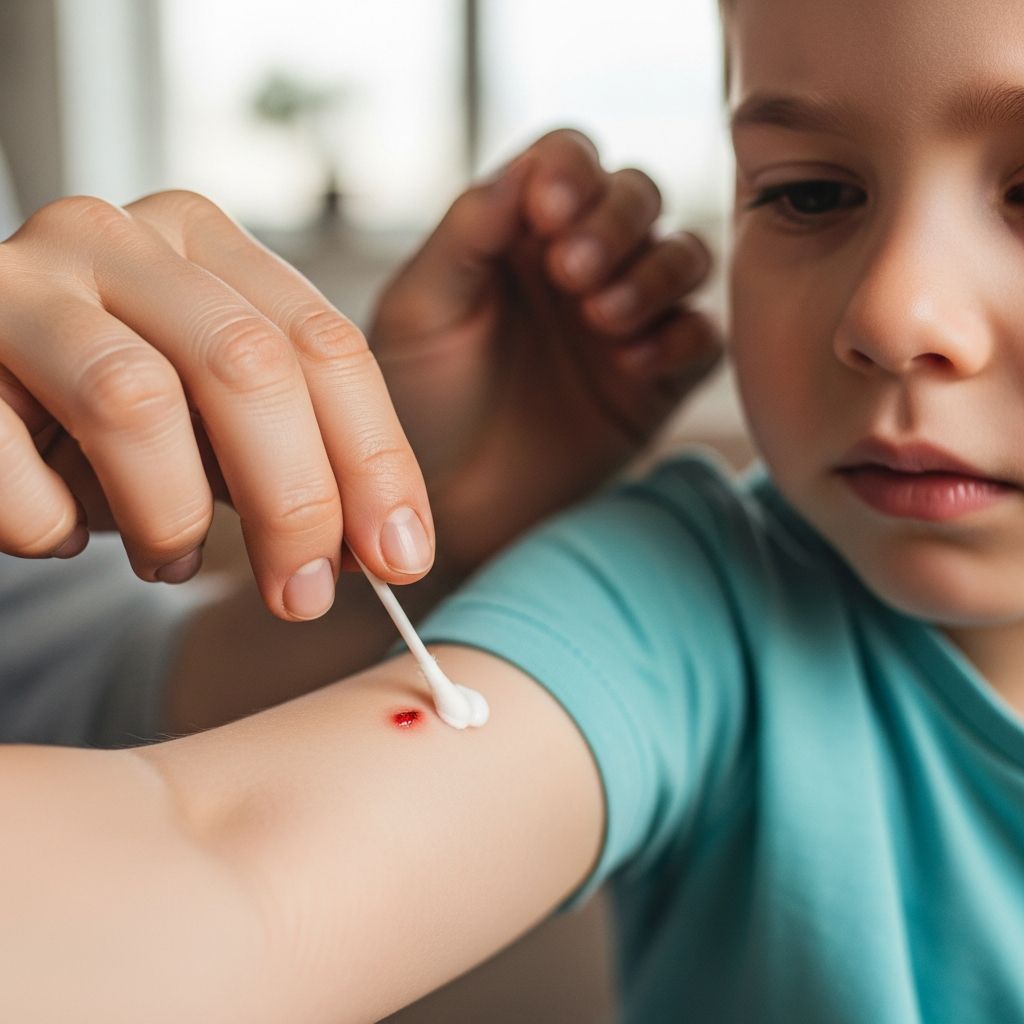
- Clean the area: Wash with soap and cool water to prevent infection.
- Reduce swelling: Apply ice wrapped in cloth for 10-20 minutes; elevate the limb if on arm or leg.
- Relieve pain/itch: Use hydrocortisone cream (1%), calamine lotion, or baking soda paste. Oral antihistamines like diphenhydramine (Benadryl) help for ages 1+; follow dosing carefully.
- Pain relief: Age-appropriate acetaminophen or ibuprofen.
Reapply treatments as needed, but monitor for infection signs like pus or increasing redness.
Handling Allergic Responses and Emergencies
If hives appear away from the sting, breathing becomes labored, or your child feels faint, use epinephrine if prescribed and call emergency services immediately. For known allergies, ensure kids carry an auto-injector and wear medical alerts.
Post-reaction, consult an allergist for testing and possible venom immunotherapy, which prevents future severe episodes effectively.
Emergency signs: Swelling of face/lips, wheezing, vomiting, rapid pulse—seek help now.
Everyday Care and When to See a Doctor
Most stings heal at home, but visit a pediatrician if symptoms persist beyond 48 hours, fever develops, or infection spreads (red streaks, warmth).
- Multiple stings increase risks—get checked.
- Infected sites need antibiotic ointment like Polysporin; cover with bandages.
- Diseases from ticks/mosquitoes (e.g., Lyme) require prompt testing if flu-like symptoms follow.
Track symptoms in a journal for allergy patterns.
Smart Prevention Tactics for Outdoor Fun
Proactive steps keep bugs at bay without limiting playtime.
- Use DEET repellents: 10% for under 2s, up to 30% for older kids; apply sparingly, avoid hands.
- Dress defensively: Long sleeves, pants, light colors; shoes always.
- Avoid scents: Skip sweet lotions, perfumes.
- Yard maintenance: Eliminate standing water, treat nests safely.
- Teach kids: Walk away calmly from buzzing insects; avoid nests/mounds.
Picaridin or natural options like oil of lemon eucalyptus work for some, but DEET is most reliable.
Age-Specific Advice for Young Children
Infants under 6 months need doctor consultation for any sting. Toddlers may scratch, worsening irritation—keep nails short and distract with play. School-age kids can learn self-aid basics.
For swimmers or hikers, pack a sting kit: tweezers, antihistamines, ice pack.
Long-Term Strategies for Allergy-Prone Kids
After a severe reaction, create an action plan with your doctor, including school notifications. Immunotherapy builds tolerance over time.
Annual check-ins ensure preparedness as kids grow.
Frequently Asked Questions (FAQs)
What if my child gets stung multiple times?
Monitor closely for widespread symptoms; seek medical advice promptly, as venom load increases risks.
Is baking soda effective for relief?
Yes, a paste soothes pain and itch—apply for 15-20 minutes.
Can I use essential oils as repellents?
They offer mild protection; prioritize DEET or picaridin for better efficacy.
How long do symptoms typically last?
1-3 days for normal reactions; longer warrants a check-up.
What about tick bites?
Remove promptly with tweezers; watch for bullseye rash indicating Lyme.
References
- Treating Bug Bites and Stings in Children — Children’s Health. 2023. https://www.childrens.com/health-wellness/treating-bug-bites-and-stings-in-children
- Insect Stings and Allergic Reactions in Children — Stanford Children’s Health. 2023. https://www.stanfordchildrens.org/en/topic/default?id=insect-stings-and-allergic-reactions-in-children-90-P01691
- Insect Bite — Seattle Children’s Hospital. 2024. https://www.seattlechildrens.org/conditions/a-z/insect-bite/
- Insect bites and stings — Royal Children’s Hospital Melbourne. 2023. https://www.rch.org.au/kidsinfo/fact_sheets/insect_bites_and_stings/
- Insect bites and stings: First aid — Mayo Clinic. 2024-01-15. https://www.mayoclinic.org/first-aid/first-aid-insect-bites/basics/art-20056593