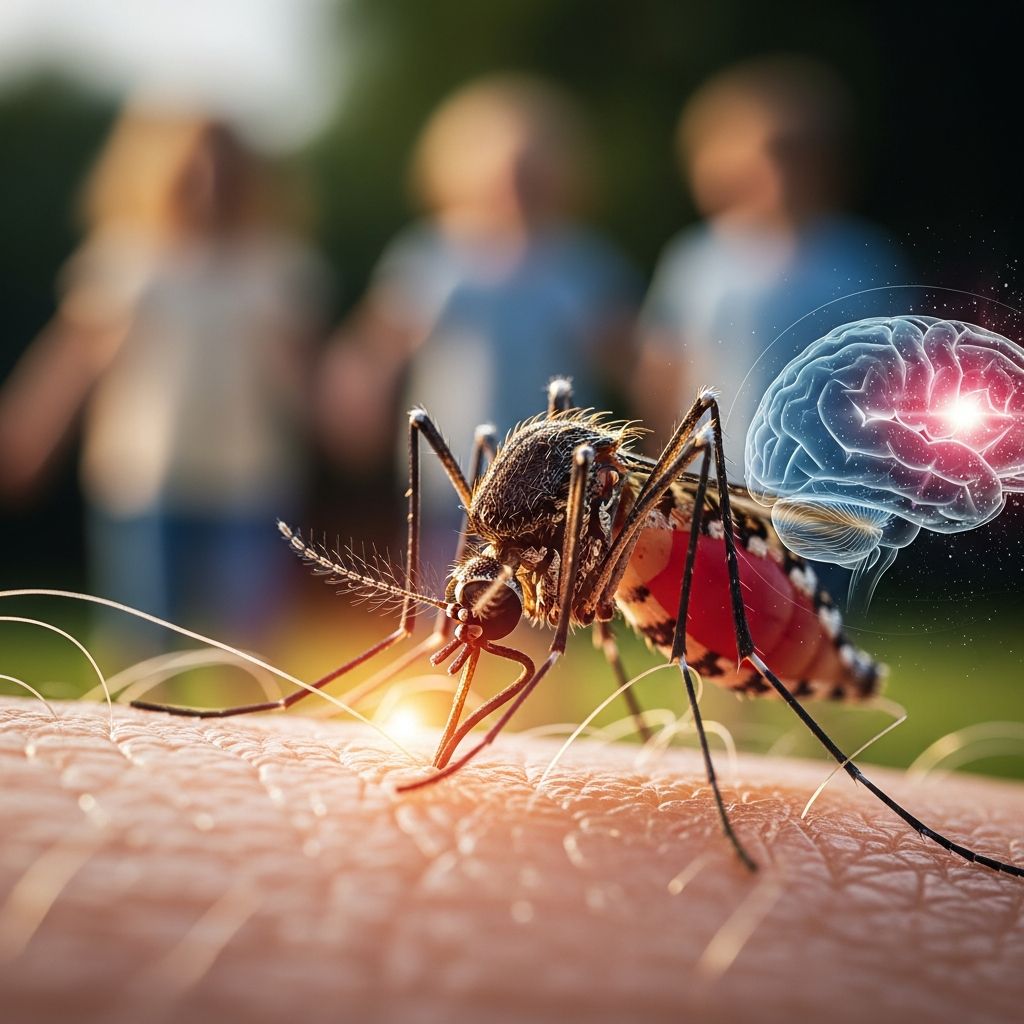
Insect bites from mosquitoes and ticks can transmit viruses leading to encephalitis, a potentially serious inflammation of the brain that affects children and adults alike. Early recognition and prevention are crucial for family safety, as many cases start asymptomatically but can progress to severe neurological issues.
Understanding Encephalitis Linked to Insect Vectors
Encephalitis involves swelling in brain tissue, often triggered by viral infections carried by insects. Mosquito-borne viruses like West Nile, St. Louis encephalitis, La Crosse, eastern equine, and western equine can infiltrate the central nervous system after a bite. Tick-related threats include tick-borne encephalitis virus and Powassan virus, prevalent in certain regions.
These pathogens enter through the skin during feeding, incubating for days to weeks before manifesting. Children may experience milder initial signs, but vulnerability increases with age or immune status, emphasizing family-wide vigilance.
Common Insects and Their Hidden Dangers
- Mosquitoes: Primary carriers of St. Louis encephalitis and West Nile viruses, active especially at dusk and dawn in warm climates.
- Ticks: Transmit tick-borne encephalitis and Powassan virus; black-legged ticks are key vectors in wooded or grassy areas.
Families hiking, camping, or playing outdoors face heightened exposure. Standing water breeds mosquitoes, while tall grass harbors ticks, making seasonal awareness vital.
Recognizing Early Warning Signs in Children
Symptoms emerge 4-28 days post-bite, often biphasic: first flu-like with fever, headache, fatigue, nausea, and weakness, resolving briefly before severe phases hit.
| Phase | Symptoms | Common in Kids? |
|---|---|---|
| Initial (Mild) | Fever, headache, dizziness, vomiting, muscle weakness | Yes, often mistaken for common cold |
| Severe (Neurologic) | Confusion, seizures, stiff neck, paralysis, speech issues, coma | Possible; requires immediate care |
In kids, watch for irritability, poor coordination, or sudden personality shifts. Older adults face graver risks, but pediatric cases demand prompt action.
When to Seek Urgent Medical Help
Rush to a doctor if post-outdoor activity symptoms like persistent fever over 101°F, neck stiffness, confusion, or tremors appear. Travel history to endemic areas or tick/mosquito exposure guides diagnosis via blood, spinal fluid tests, and symptom review.
Delays can escalate to meningitis or full encephalitis; early intervention improves outcomes significantly.
Diagnosis: Confirming the Insect-Bite Connection
Healthcare providers assess travel, bite history, and run lab tests for specific viruses. No single test confirms all types, so broad screening rules out mimics like bacterial infections.
- Blood tests detect antibodies.
- Lumbar puncture analyzes spinal fluid.
- Imaging like MRI spots brain swelling.
Accurate pinpointing is tough early on, so empirical treatment often starts.
Treatment Approaches for Affected Family Members
No cure-all antiviral exists for most insect-borne encephalitis; management focuses on support.
Supportive Measures:
- Rest, hydration, OTC pain relievers like acetaminophen for fever/headache.
- Hospitalization for severe cases: IV fluids, breathing support, anti-seizure meds.
- Corticosteroids reduce brain swelling; antivirals like acyclovir tried if herpes suspected, though less effective for arboviruses.
Recovery varies: mild cases resolve in weeks, severe ones may need rehab for paralysis or cognitive deficits.
Proven Prevention Tactics for Outdoor Family Fun
Shielding from bites prevents 90%+ of cases. Key strategies from health authorities:
| Method | How to Implement | Best For |
|---|---|---|
| Repellents | DEET (20-30%) on skin; permethrin on clothes/gear (not skin) | Mosquitoes & ticks; avoid infants <2mo for DEET |
| Clothing | Long sleeves, pants, tuck pants into socks | Treks in brush |
| Timing | Avoid dusk/dawn outdoors | Mosquito peaks |
| Habitat Control | Eliminate standing water, mow grass, check gear | Backyard safety |
Tick checks post-outdoors: bathe kids, inspect scalp, armpits, groin. Remove ticks promptly with tweezers.
Vaccines exist for tick-borne encephalitis in high-risk areas (e.g., Europe/Asia); consult providers for travel.
Long-Term Effects and Family Recovery
Survivors may face fatigue, memory issues, or motor problems months later. Pediatric rehab includes physical/speech therapy; monitor development closely.
Families should track milestones post-illness and seek neuropsych evals if needed.
Regional Risks and Seasonal Alerts
U.S. sees St. Louis and West Nile in Midwest/South; Powassan in Northeast. Europe/Asia report tick-borne spikes. Check CDC maps yearly; summer-fall peaks demand prep.
Frequently Asked Questions About Insect Bites and Encephalitis
What if my child has a fever after a picnic?
Monitor for worsening; see doctor if fever persists >3 days or neuro signs appear. Hydrate and rest first.
Are encephalitis vaccines routine for kids?
No, only for tick-borne in endemic travel zones. Discuss with pediatrician.
How effective is DEET against these viruses?
Highly; repels vectors, slashing bite risk when used right.
Can pets spread these diseases indoors?
Rarely; focus on pet tick preventives and home checks.
What’s the fatality rate for kids?
Low (<1%) for most; rises with age/severity. Prompt care key.
References
- Symptoms, Diagnosis, and Treatment | Tick-borne Encephalitis Virus — CDC. 2023. https://www.cdc.gov/tick-borne-encephalitis/symptoms-diagnosis-treatment/index.html
- Encephalitis – Symptoms and causes — Mayo Clinic. 2023-10-10. https://www.mayoclinic.org/diseases-conditions/encephalitis/symptoms-causes/syc-20356136
- Encephalitis: MedlinePlus Medical Encyclopedia — MedlinePlus. 2023. https://medlineplus.gov/ency/article/001415.htm
- Encephalitis – Diagnosis and treatment — Mayo Clinic. 2023-10-10. https://www.mayoclinic.org/diseases-conditions/encephalitis/diagnosis-treatment/drc-20356142
- Encephalitis – NHS — NHS. 2023. https://www.nhs.uk/conditions/encephalitis/
- Symptoms, Diagnosis, and Treatment | St. Louis Encephalitis Virus — CDC. 2023. https://www.cdc.gov/sle/symptoms-diagnosis-treatment/index.html