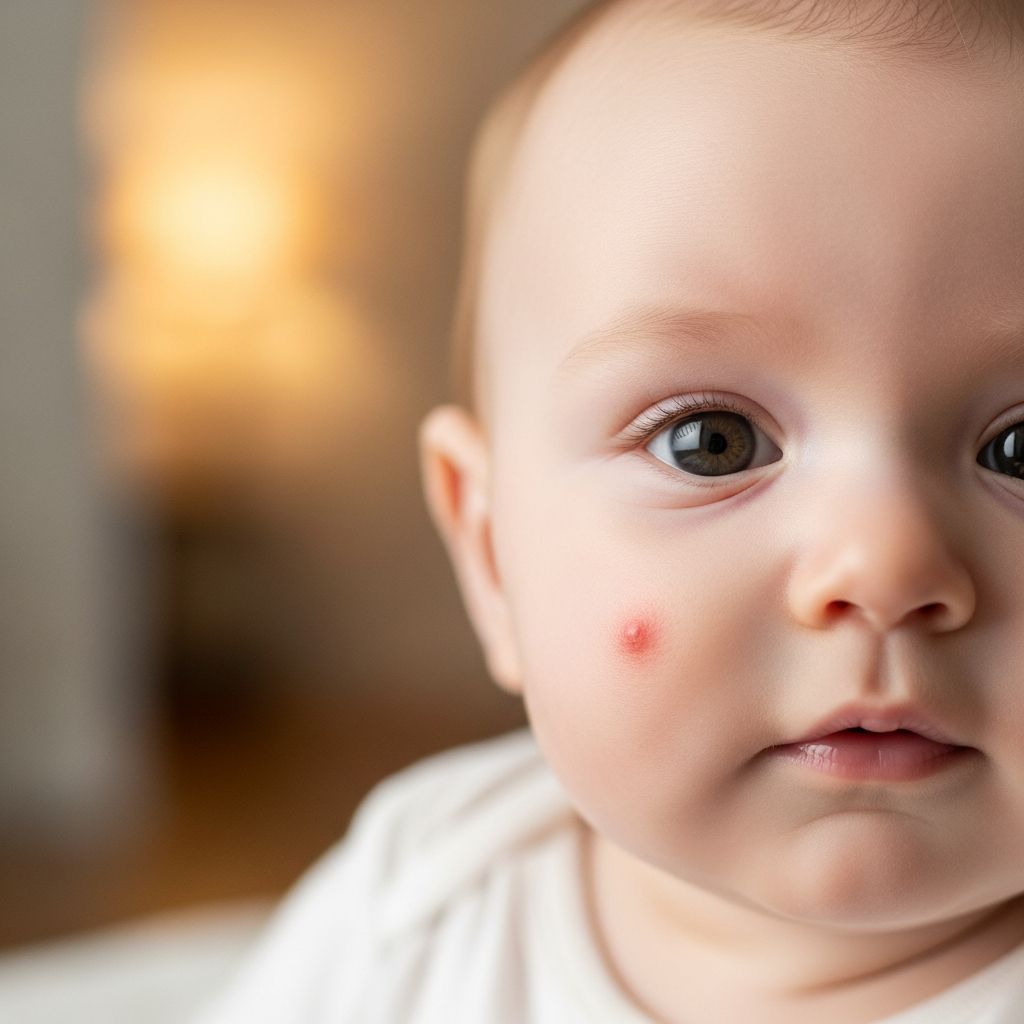
Seeing a bright red or bluish bump appear on a baby’s soft skin can be alarming, especially when it grows quickly in the first weeks of life. Infantile hemangiomas are common vascular birthmarks, and most are harmless and disappear on their own. This guide explains them step by step so parents can feel informed and prepared rather than frightened.
What Exactly Is an Infantile Hemangioma?
An infantile hemangioma is a cluster of extra blood vessels that forms a benign (non-cancerous) growth, usually on a baby’s skin. It is often called a “strawberry mark” because many appear bright red and slightly raised, resembling the surface of a strawberry. Some sit deeper under the skin and can look bluish or skin-colored instead of bright red.
Key points about infantile hemangiomas:
- They are not cancer and do not spread to other organs like cancer does.
- They are among the most common growths seen in infancy.
- They usually go through a phase of rapid growth followed by a long, slow period of shrinking and fading.
How Infantile Hemangiomas Are Different from Other Birthmarks
Parents often hear the word “birthmark” and assume it simply means a colored patch that is present at birth and never changes. Infantile hemangiomas behave differently. Many are not visible at birth or may only appear as a faint, pale or pink area that parents barely notice in the first days.
Within weeks, however, the area may become raised, red, and more obvious. This active phase can continue for several months. Other common birthmarks, like flat brown spots or some types of vascular patches, typically do not go through the same fast growth and shrinkage pattern.
Where on the Body Do Hemangiomas Appear?
Infantile hemangiomas can develop almost anywhere on the body. Some tend to appear in more visible locations, while others may be hidden by clothing or hair. They can be isolated or one of several spots on the same baby.
| Body area | Common appearance | Special concerns |
|---|---|---|
| Head and face | Bright red patch or raised bump on cheeks, eyelids, nose, lips, or scalp | Possible impact on vision, feeding, breathing, or future scarring |
| Trunk (chest, back, abdomen) | Single or multiple red or bluish growths | Usually cosmetic only; large or numerous lesions may need evaluation |
| Arms and legs | Small raised “strawberry” spots | Low risk unless very large, ulcerated, or interfering with movement |
| Diaper and genital area | Red plaques that may become sore from friction or moisture | Higher risk of breakdown, pain, and infection |
| Internal organs (most often liver) | Not visible on the skin | Usually found only if symptoms or multiple skin lesions prompt imaging |
Why Do Some Babies Get Hemangiomas?
Experts know that infantile hemangiomas come from blood vessels that grow in an unusual way, but the exact trigger for this growth is still being studied. Parents do not cause hemangiomas by anything they did or did not do during pregnancy.
Research has found that certain babies are more likely to develop these lesions, including those who:
- Were born prematurely or had a low birth weight.
- Are female (girls are affected more often than boys).
- Have fair skin or certain ethnic backgrounds.
- Are part of a multiple pregnancy, such as twins or triplets.
Even with these patterns, it is impossible to predict with certainty which baby will develop a hemangioma, and most affected families have no prior history of the condition.
The Natural Life Cycle: From Growth to Fading
One of the most important features of infantile hemangiomas is their natural timeline. Understanding the usual stages helps parents know what to expect and when to seek help.
Early appearance (first weeks)
Many hemangiomas begin as a faint blemish, light patch, or slightly red area in the first days or weeks after birth. Some parents notice a subtle change in color but no bump yet. Others may see a tiny red dot that seems to enlarge week by week.
Rapid growth phase
During the first three to six months of life, hemangiomas typically grow the fastest. The growth may be upward (becoming thicker and more raised), outward (spreading wider), or both. Some lesions finish most of their growth by around six months, while a few continue to enlarge for several more months.
Resting period
After the most active growth slows, the lesion often stays relatively stable in size for a while. The color may remain bright red, or it may start to appear patchy and duller as the shrinking phase begins.
Involution (shrinking and fading)
Over several years, most infantile hemangiomas gradually soften, become less raised, and fade in color. Some leave behind a slightly lighter or darker patch of skin, extra loose skin, or small visible blood vessels. Others disappear so completely that only the parents remember where they once were.
Different Types of Infantile Hemangiomas
Not all hemangiomas look or behave the same way. Doctors may describe them based on location within the skin and how much of the skin surface they cover.
- Superficial hemangiomas: These sit close to the surface of the skin and often look bright red and bumpy.
- Deep hemangiomas: These are located deeper under the skin and may appear as a bluish or skin-colored swelling.
- Mixed hemangiomas: These have both superficial and deep components.
- Localized lesions: Confined to a small, well-defined area.
- Segmental lesions: Spread over a larger region or follow a pattern on the face or body; these can carry a higher risk of complications.
When Is a Hemangioma Just a Cosmetic Issue?
Many infantile hemangiomas are considered low risk. They are small, do not interfere with daily functions, and are located in areas commonly covered by clothing. For these lesions, doctors often recommend simple observation, also known as “watchful waiting.”
In low-risk situations, parents and healthcare providers typically:
- Monitor the size, color, and shape over time.
- Take occasional photographs to compare growth or shrinking.
- Check the skin surface for signs of breakdown or bleeding.
Warning Signs That Need Prompt Medical Attention
Although most hemangiomas remain harmless, some can cause problems that require early treatment. Parents should contact a pediatrician or specialist if they notice any of the following:
- Location near vital structures: Lesions close to the eye, nose, mouth, or airway can interfere with vision, breathing, or feeding.
- Ulceration: The surface becomes broken, crusted, or open, which can be painful and prone to infection.
- Very rapid growth: Sudden enlargement that stretches the skin, changes color dramatically, or causes discomfort.
- Multiple skin lesions: Numerous hemangiomas on the skin may signal the need to look for internal lesions.
- Associated symptoms: Problems such as poor feeding, breathing difficulty, persistent bleeding from the lesion, or signs of infection like fever and increasing redness.
Possible Health Complications
Complications are not the norm, but parents should be aware of them. Some of the more significant issues include:
- Vision problems if a hemangioma blocks part of the eye or pushes on the eyelid, potentially leading to lazy eye or distortion of the visual axis.
- Breathing or feeding difficulties from lesions near the nose, mouth, or throat.
- Ulceration and scarring when the skin over the hemangioma breaks down, which can be painful and leave permanent marks.
- Functional issues if a lesion lies over joints or in areas that rub against diapers or clothing, causing pain and limiting movement.
How Doctors Diagnose Infantile Hemangiomas
Most of the time, a trained clinician can diagnose an infantile hemangioma just by looking at it and asking questions about when it appeared and how it has changed. The typical history of delayed appearance followed by rapid growth and slow fading is very helpful.
Additional tests may be considered when:
- The lesion has an unusual appearance.
- There are multiple hemangiomas on the skin.
- There is concern about internal involvement or associated conditions.
In these situations, imaging studies such as ultrasound or MRI might be ordered. Rarely, a small tissue sample is taken, but this is not usually needed for classic cases.
Modern Treatment Options
Treatment is tailored to the individual child and the specific lesion. Many hemangiomas never need active treatment, but when intervention is required, there are several evidence-based options.
Observation and supportive care
For small, uncomplicated lesions, doctors often recommend monitoring. Gentle skin care, protection from sunburn, and preventing irritation from clothing or diapers are simple but important steps.
Medications
Today, medications are the mainstay of treatment for problematic infantile hemangiomas. The most commonly used are:
- Oral beta-blockers: These medicines, often given as a liquid, help slow growth and encourage shrinking. Babies taking them need regular check-ups to monitor heart rate, blood pressure, and overall health.
- Topical beta-blockers: For smaller, more superficial lesions, medicated gel or solution applied directly to the skin may be an option.
- Other systemic medicines: In special situations, alternative drugs may be used when first-line treatments are not suitable or effective.
Procedures and surgery
Surgical removal or laser treatment is far less common than in the past but may be considered for specific reasons, such as:
- Persistent scarring or extra tissue after the lesion has finished shrinking.
- Ulcerated or bleeding lesions that do not respond to medical therapy.
- Lesions in locations where even minor remaining changes cause functional or serious cosmetic problems.
What to Expect If Your Baby Starts Medication
Parents whose children are prescribed medication often have many questions. Common aspects of treatment include:
- Dosing schedule: Medicines are often given one to three times per day, depending on the specific drug and the child’s needs.
- Monitoring: Regular visits help the healthcare team adjust the dose as the baby grows and watch for side effects.
- Length of therapy: Many children stay on medication for several months or longer to cover the main growth period of the hemangioma.
Parents should always discuss potential side effects and warning signs with their child’s doctor and should not stop or change treatment without medical advice.
Emotional Impact and Coping Strategies
Beyond medical facts, infantile hemangiomas can carry emotional weight for families. Concerns about appearance, comments from strangers, and anxiety about the baby’s health are all common experiences.
Helpful coping strategies include:
- Asking the healthcare team for clear explanations and realistic expectations.
- Taking photos over time to track changes and remind yourself of progress.
- Connecting with other parents who have children with hemangiomas through reputable support groups or hospital programs.
- Practicing age-appropriate, positive language when older siblings or the child eventually ask questions about the mark.
Practical Home Care Tips
Day-to-day care focuses on keeping the area comfortable and preventing unnecessary irritation. These small steps can make a meaningful difference in the baby’s comfort level.
- Use soft, breathable fabrics and avoid tight elastics over the lesion.
- Change diapers frequently if the area is near the diaper region to reduce moisture and friction.
- Apply any prescribed ointments or medicines exactly as directed.
- Protect exposed lesions from sunburn with shade and appropriate clothing; for older infants, discuss sun protection with your pediatrician.
- Watch for early signs of skin breakdown, such as crusting, open areas, or your baby reacting to pain when the area is touched.
Questions to Ask Your Child’s Doctor
Preparing questions before appointments helps parents feel more confident and ensures that important topics are addressed. Consider asking:
- What type of hemangioma does my baby have, and where is it located in the skin?
- Is this lesion considered low, moderate, or high risk?
- What signs should prompt me to call the office or seek urgent care?
- Do you recommend treatment now, or is observation appropriate?
- If treatment is advised, what are the benefits, risks, and alternatives?
Frequently Asked Questions (FAQs)
Will my baby’s hemangioma go away completely?
Many infantile hemangiomas fade significantly or almost entirely over several years. Some leave mild skin changes such as slight discoloration, a small amount of wrinkled skin, or fine veins under the surface. The final outcome can depend on the size, depth, and location of the lesion.
Is it safe to wait and watch instead of treating right away?
For small, uncomplicated lesions that do not affect vision, breathing, feeding, or comfort, careful observation is often a safe and reasonable plan. Regular check-ups allow the healthcare provider to detect any unexpected changes and begin treatment if needed.
Can a hemangioma come back after it has gone away?
Once a typical infantile hemangioma has fully gone through its growth and shrinking phases, it usually does not grow back. However, the remaining skin may still change slowly over time, just like any other area of skin as a child grows.
Should I be worried that a hemangioma means my child has another health problem?
Most infantile hemangiomas occur in otherwise healthy babies and are not linked to serious underlying diseases. In certain cases with very large or patterned lesions, or many lesions at once, doctors may recommend extra tests to check for associated conditions. Your child’s healthcare team will guide you if further evaluation is appropriate.
Can I prevent hemangiomas in future pregnancies?
Because the exact cause is not fully understood, there are no proven steps that reliably prevent hemangiomas. Standard healthy pregnancy habits are still important for many reasons, but parents should not blame themselves if one child develops a hemangioma.
Key Takeaways for Parents
- Infantile hemangiomas are common, benign growths of blood vessels that often appear in the first weeks of life and tend to grow quickly before gradually fading.
- Most are harmless and can be safely watched, but certain locations, rapid growth, ulceration, or multiple lesions require prompt medical review.
- Effective treatments are available when needed, including medications that slow growth and encourage shrinking.
- With appropriate monitoring and support, most children with infantile hemangiomas enjoy normal development and healthy, active lives.