Understanding Infant Water Safety and Survival Training
The debate surrounding infant water exposure has intensified as parents seek effective methods to protect their children from one of the most significant threats young children face. Drowning represents a leading cause of unintentional injury death among children, making water safety education increasingly important for families. While traditional swimming lessons have long been the standard approach, specialized infant water survival programs have emerged as an evidence-based alternative that emphasizes self-rescue skills and water comfort from an early age.
The viral circulation of infant swimming instruction videos has sparked considerable discussion among parents, caregivers, and child safety professionals. These discussions often reveal fundamental misconceptions about what these programs actually entail and the protective mechanisms they establish. Understanding the science and methodology behind these approaches is essential for parents evaluating water safety options for their own children.
The Critical Nature of Childhood Drowning Prevention
Water-related injuries represent a substantial public health concern for families with young children. The statistics are sobering: children in certain age groups face significantly elevated risks when near bodies of water, whether swimming pools, lakes, or even bathtubs. This reality has driven pediatricians, safety organizations, and swimming professionals to develop comprehensive strategies that begin during infancy.
The urgency of drowning prevention cannot be overstated. Many drowning incidents occur silently and rapidly, often without the dramatic signs depicted in media. Children can lose consciousness in seconds and sustain permanent brain damage within minutes of water submersion. This biological reality underscores why water safety professionals advocate for early exposure to aquatic environments paired with specific survival techniques.
Infant Swimming Instruction Programs and Their Mechanisms
Specialized infant swimming programs operate on principles distinct from recreational swim lessons. Rather than focusing primarily on stroke technique or swimming distance, these programs emphasize fundamental survival reflexes and water confidence. Instructors are trained to work with infants’ natural responses to water, gradually building comfort and introducing specific behavioral patterns that can assist in emergency situations.
The instructional approach typically involves controlled water exposure in safe environments with trained professionals present. Parents observe their infants’ responses and participate in the learning process. The goal extends beyond entertainment or basic water familiarity—it targets the development of specific behaviors that increase survival likelihood if a child accidentally enters water.
What Infants Learn During Water Survival Training
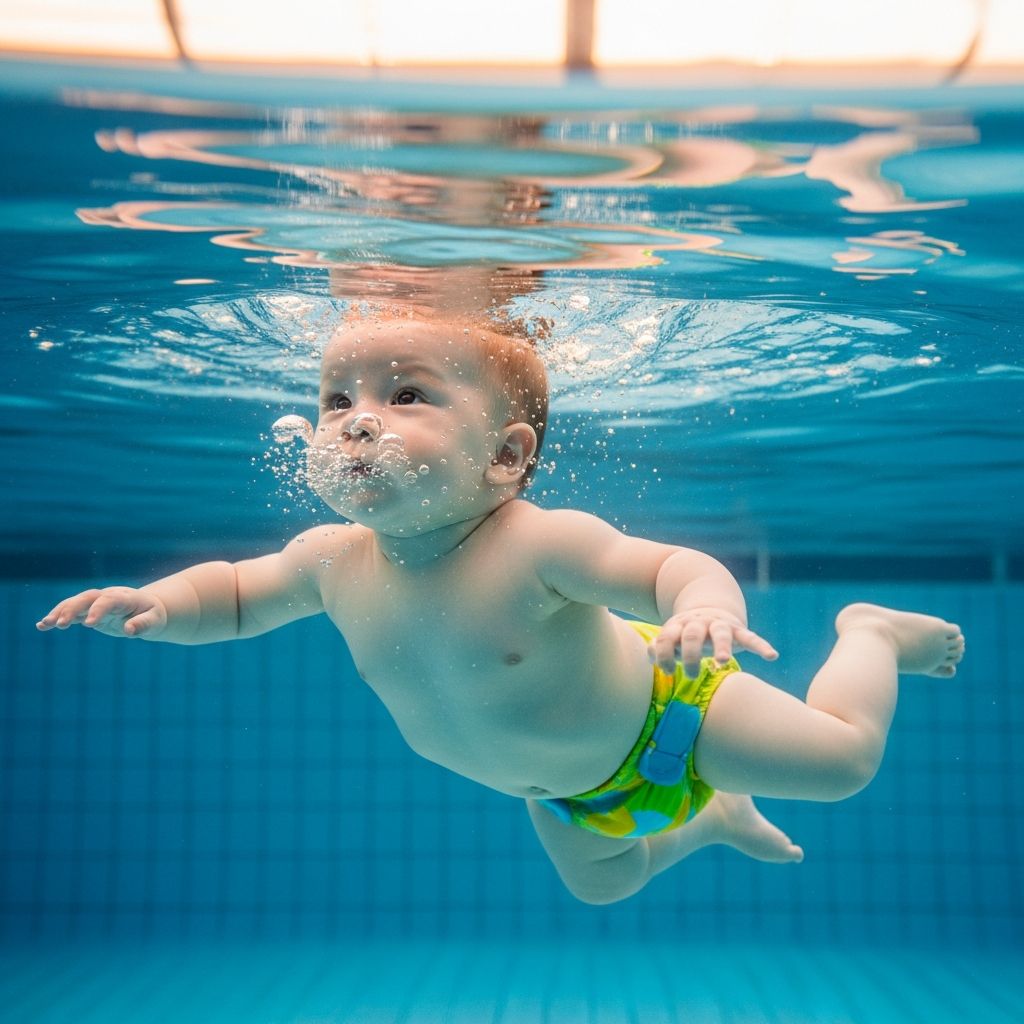
The curriculum for infants aged six months to one year emphasizes foundational skills that establish comfort and introduce survival mechanisms:
- Development of breath-holding capacity in response to water contact
- Learning to position the body horizontally on the water’s surface
- Practicing back-floating techniques to maintain airway above water
- Building familiarity with water sensations and movement patterns
- Establishing calm responses to water immersion rather than panic responses
As children progress beyond infancy into the toddler years, the instruction evolves to incorporate more complex skills. Children who can walk participate in advanced programming that builds upon foundational knowledge and introduces additional survival techniques.
Advanced Skills for Mobile Toddlers
Once children reach walking age, typically between one and six years, instructors introduce more sophisticated water survival techniques. These expanded skills recognize the increased mobility and cognitive development of older toddlers and young children.
The progressive curriculum for this age group typically includes:
- Maintaining proper body position with head placement for breathing
- Sustained floating capability on the back combined with breathing techniques
- Transition skills that allow children to move between floating and swimming
- Distance concepts related to reaching pool edges or rescue points
- Recognition of water boundaries and safe zones
Instructors emphasize that these skills develop progressively and require consistent practice. The goal remains focused on building emergency response capabilities rather than competitive swimming proficiency.
The Biological Foundation of Water Survival Reflexes
The effectiveness of early water survival training rests on understanding innate human reflexes and responses to water. Infants possess natural buoyancy and involuntary responses to water contact that, when properly channeled through training, can provide protective benefits.
One key reflex involves the body’s natural tendency to right itself in water. When properly conditioned, this reflex can help children position themselves face-up, a critical position for breathing and maintaining consciousness. Training leverages these biological responses rather than fighting against them, making the instruction methods align with natural infant physiology.
Another important consideration involves the development of breath-holding capacity. Young children can develop the ability to instinctively hold their breath when water contacts their face, a response that becomes more sophisticated through trained practice. This capacity provides valuable protection during accidental water exposure.
Addressing Common Misconceptions About Infant Water Programs
Public perception of infant water survival training often diverges significantly from actual practice. Videos circulating on social media frequently generate alarm among viewers unfamiliar with the training context, supervision protocols, and scientific rationale behind specific techniques.
A primary misconception involves the belief that these programs involve unsupervised or dangerous water exposure. In reality, certified instructors maintain continuous visual contact and physical proximity to children. The programs operate within carefully controlled parameters with established safety protocols. Professional instructors receive extensive training in child development, water safety, emergency response, and age-appropriate instruction methods.
Another misunderstanding concerns the program’s purpose. Critics sometimes assume these methods aim to create competitive swimmers, but the actual focus remains narrowly on survival capability in emergency situations. The distinction is crucial—survival training emphasizes specific protective responses rather than recreational swimming skills.
Some parents worry that early water exposure creates fear responses in children. Evidence from instructors and participating families suggests the opposite: structured, positive water experiences tend to reduce water anxiety and build confidence. Children who participate in professional programs often demonstrate greater comfort around water than peers without formal instruction.
Research and Professional Endorsement
Water safety organizations and pediatric professionals have examined the evidence surrounding early water instruction. Many recognize that properly conducted infant water survival programs offer protective benefits, particularly when combined with other safety measures including supervision, barriers, and rescue training for caregivers.
The consensus among child safety experts emphasizes that water survival instruction represents one component of comprehensive drowning prevention strategies. No single intervention prevents all water-related injuries; rather, effective protection requires multiple overlapping safeguards including constant supervision, appropriate barriers, CPR knowledge among caregivers, and age-appropriate swimming skills.
Research into childhood drowning prevention indicates that early comfort with water, combined with specific survival techniques, contributes meaningfully to emergency response capability. When children accidentally enter water, the ability to remain calm, position the body appropriately, and maintain breathing capacity significantly improves outcomes.
Parental Considerations When Evaluating Water Programs
Parents interested in infant water instruction should evaluate programs based on specific criteria that indicate professional standards and safety commitment.
Key factors to assess include:
- Instructor certification and training credentials in pediatric water safety
- Clearly defined safety protocols and emergency response procedures
- Age-appropriate grouping and individualized attention
- Parent participation options and educational components
- Clean water facilities with appropriate temperature controls
- Clear communication about program goals and realistic outcome expectations
- References and testimonials from participating families
- Insurance coverage and liability protections
Parents should feel comfortable asking detailed questions about instructional methods, safety measures, and the philosophical approach to infant water exposure. Reputable programs welcome inquiries and provide transparent information about their practices.
Integrating Water Safety Into Broader Child Protection
Water survival instruction represents one element within a comprehensive approach to protecting children from drowning. Effective protection requires simultaneous attention to multiple protective factors.
Supervision remains the single most important factor in drowning prevention. Constant, attentive adult supervision near water significantly reduces drowning risk. This supervision must be active and focused, without distractions from devices or other activities that might divert attention from children.
Physical barriers around water sources provide additional protection, particularly for young children. Properly maintained fencing, gates, and covers create obstacles that delay water access and provide time for intervention. These barriers complement but do not replace supervision.
CPR training for parents, caregivers, and household members provides crucial capability if a water emergency occurs despite preventive measures. Rapid, effective CPR significantly improves outcomes for children who experience water-related accidents. This skill should be considered as essential as infant water instruction.
Age-appropriate swimming and water safety education builds progressively as children develop. Formal swimming instruction in traditional programs provides benefits distinct from survival training, including stroke technique and water comfort for recreational activities.
Understanding the Debate and Moving Forward
The discussion surrounding infant water programs often reflects broader cultural attitudes about risk, childhood development, and parental decision-making. Different families weigh potential benefits and concerns differently based on personal values, available resources, and individual circumstances.
Public health professionals generally agree that conversations about water safety should focus on evidence rather than emotional reactions to unfamiliar techniques. Videos of infant water instruction techniques, viewed out of context, can appear alarming to those unfamiliar with the training framework. Education about the actual content, rationale, and safety protocols of these programs helps parents make informed decisions.
Ultimately, families should evaluate water safety options based on comprehensive information about available approaches, professional recommendations, and their own circumstances and preferences. Multiple valid pathways exist for building water safety in children, and different families may rightfully choose different combinations of protective strategies.
Frequently Asked Questions About Infant Water Safety
Q: At what age can infants safely participate in water survival instruction?
A: Most programs accept infants starting around six months of age, when they have sufficient physical development and can participate meaningfully in training activities. Individual readiness varies, so consultation with instructors is recommended.
Q: Is water survival training a substitute for adult supervision?
A: No. Water survival training complements but absolutely does not replace constant, attentive adult supervision. Supervision remains the most critical factor in preventing childhood drowning.
Q: Can water survival training cause psychological trauma in infants?
A: Evidence suggests that structured, professional water instruction in positive contexts does not create lasting trauma. Infants typically respond positively to consistent, supportive instruction from trained professionals.
Q: How long does it take for infants to develop meaningful water survival skills?
A: Skill development is gradual and progressive. Meaningful responses typically emerge over weeks and months of consistent training. Parents should maintain realistic expectations about timeline and outcomes.
Q: What should I do if I’m interested in exploring water survival programs for my child?
A: Research local instructors and programs, verify credentials and safety protocols, observe classes if possible, and consult your pediatrician about appropriateness for your specific child’s development.
References
- Prevention of Drowning — Centers for Disease Control and Prevention (CDC). 2024. https://www.cdc.gov/drowning/index.html
- Drowning Prevention: A Leading Killer of Children Ages 1-4 — World Health Organization (WHO). 2024. https://www.who.int/news-room/fact-sheets/detail/drowning
- Infant and Toddler Swimming: A Position Statement — American Academy of Pediatrics (AAP). 2023. https://publications.aap.org/pediatrics
- Water Safety and Young Children: Evidence and Recommendations — U.S. Consumer Product Safety Commission (CPSC). 2024. https://www.cpsc.gov/