Navigating infant nutrition involves understanding how to provide balanced formula feedings while preparing for the exciting shift to solid foods. This guide draws from authoritative health recommendations to help parents support their baby’s growth through each developmental stage.
Understanding Formula Feeding Basics
Formula feeding offers a reliable alternative to breastfeeding, delivering essential nutrients for healthy development. Newborns typically require small, frequent feedings due to their tiny stomachs, gradually increasing in volume as they grow. Always consult your pediatrician to tailor amounts to your baby’s unique needs.
Key principles include responding to hunger cues like lip smacking, rooting, or hand sucking, and respecting fullness signals such as turning away or closing the mouth. Overfeeding can lead to discomfort, while underfeeding may cause inadequate weight gain.
Age-Specific Feeding Guidelines
Feeding needs evolve rapidly in the first year. Below is a breakdown based on expert sources, showing approximate ounces per feeding, frequency, and daily totals.
| Age | Ounces per Feeding | Feedings per 24 Hours | Total Daily Ounces |
|---|---|---|---|
| Birth to 1 Week | 1-2 oz | 8-12 | 16-24 oz |
| 1-4 Weeks | 2-4 oz | 6-8 | 24-32 oz |
| 1-3 Months | 4-6 oz | 5-7 | 24-32 oz |
| 3-6 Months | 6-8 oz | 4-5 | 24-32 oz |
| 6-9 Months | 4-7 oz | 4-5 | 20-30 oz (decreasing with solids) |
| 9-12 Months | 4-6 oz | 3-4 | 16-24 oz (transitioning) |
These figures align with guidelines from the CDC and American Academy of Pediatrics, emphasizing that babies self-regulate intake. By 2-4 months, many drop nighttime feedings as daytime consumption rises.
Recognizing and Responding to Hunger and Fullness
- Hunger signs: Rooting toward touch, sucking motions, fussing, or fist clenching.
- Fullness signs: Slowing suck, releasing nipple, falling asleep, or averting gaze.
- Tips: Feed on demand initially, then establish routines. Avoid forcing bottles; a content baby will signal satisfaction.
Daily totals average 2.5 oz per pound of body weight, capped at about 32 oz to prevent overload. Pacifiers can satisfy non-nutritive sucking needs.
Preparing and Safely Handling Formula
Proper preparation is crucial to avoid contamination. Use boiled and cooled water for mixing powder, following package ratios precisely. Sterilize bottles and nipples until 3 months or per doctor advice. Store ready-to-feed formula in the fridge up to 48 hours; discard leftovers after use.
Avoid homemade formulas or dilutions, as they lack balanced nutrition and pose risks.
Signs Your Baby is Ready for Solid Foods
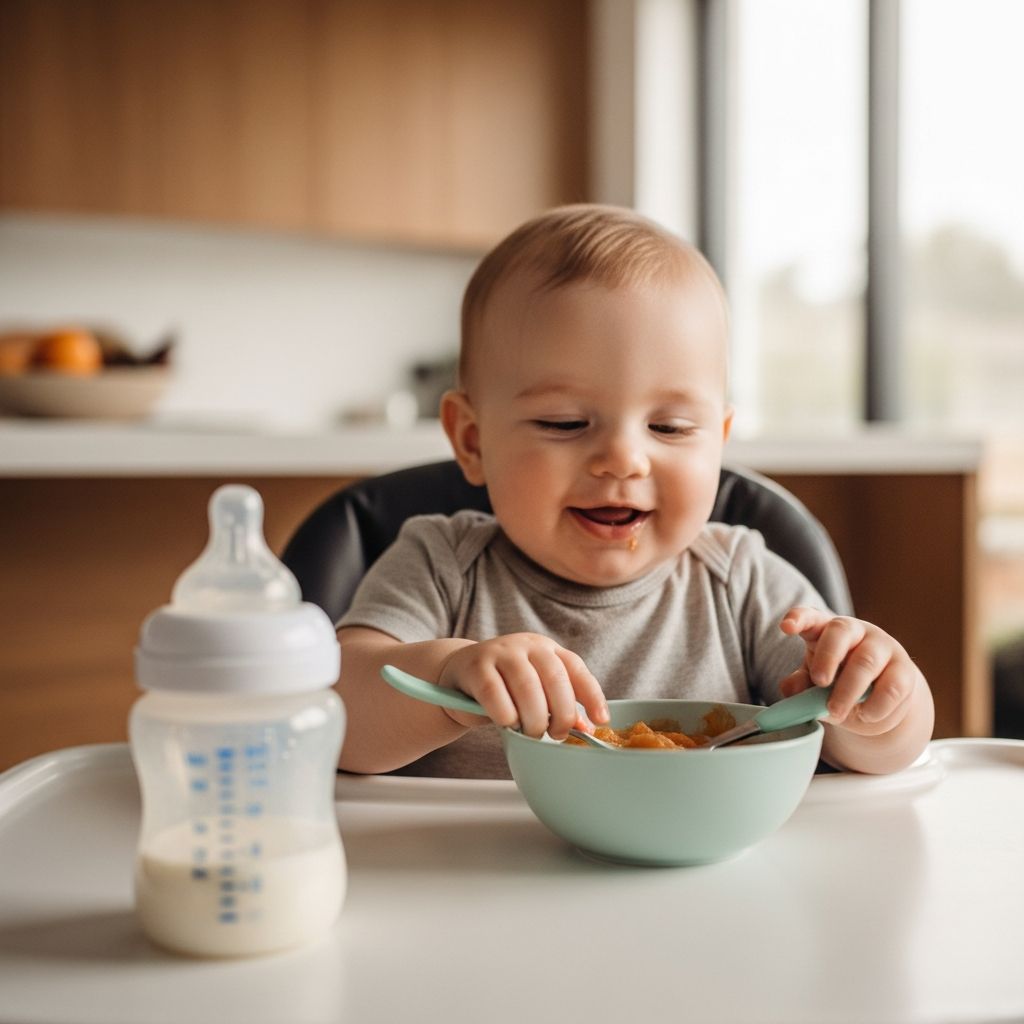
Around 6 months, babies show readiness for complementary foods while continuing formula. Look for these developmental milestones:
- Good head and neck control.
- Sitting with minimal support.
- Interest in others’ food, reaching for utensils.
- Diminishing tongue-thrust reflex.
- Doubling birth weight.
Starting too early risks allergies or choking; delaying past 6 months may miss nutrient windows, especially iron.
Step-by-Step Introduction of First Foods
Begin with single-ingredient, iron-fortified foods to monitor tolerances. Offer one new item every 3-5 days.
- Weeks 1-2 (6 months): Iron-fortified single-grain cereal (oatmeal or rice), mixed thin with formula. Start with 1-2 tsp, 1-2 times daily.
- Weeks 3-4: Pureed vegetables (carrots, sweet potatoes) or fruits (apples, pears). 2-4 tbsp per meal.
- Month 2: Pureed meats (chicken, turkey) for iron, yogurt, or soft cheeses.
- 7-8 Months: Mashed foods, finger foods like soft banana pieces or puffs.
Feed solids before formula to build appetite for new textures. Aim for 2-3 meals daily, progressing to family foods by 9-12 months.
Sample Daily Feeding Schedules
| Time | 6 Months | 9 Months | 12 Months |
|---|---|---|---|
| 7 AM | 6 oz formula | 6 oz formula | 4 oz milk + cereal |
| 9 AM | 2 tbsp cereal | pureed veggies + meat | yogurt + fruit |
| 11 AM | 6 oz formula | 6 oz formula | 6 oz milk |
| 1 PM | fruit puree | finger foods + cheese | lunch solids |
| 3 PM | 6 oz formula | 5 oz formula | snack |
| 5 PM | veggie puree | table foods | dinner solids |
| 7 PM | 6 oz formula | 6 oz formula | 4 oz milk |
Adjust based on your baby’s cues; totals maintain 24-32 oz liquid nutrition until 12 months.
Common Feeding Challenges and Solutions
Refusal of solids: Keep offerings bland, thin, and pressure-free. Try cold spoons or fun spoons.
Constipation: Increase fruits/veggies; prunes help. Ensure adequate formula intake.
Allergies: Watch for rash, vomiting, or diarrhea. Introduce allergens like peanut products early under guidance.
Over-reliance on bottle: Transition to cups by 9 months; wean fully by 18 months.
Transitioning from Formula to Whole Milk
At 12 months, switch to pasteurized whole cow’s milk or fortified soy (16-24 oz daily), not as primary nutrition but alongside solids. Gradual shift prevents digestive upset: replace one feeding weekly. Limit to 16-24 oz to avoid iron deficiency.
After 12 months, formula is unnecessary for most healthy toddlers.
Nutritional Milestones and Vitamin Needs
Formula provides complete nutrition for the first year, including iron-fortified options. Supplement vitamin D (400 IU daily) if recommended. Solids supply iron, zinc, and textures for oral development.
Frequently Asked Questions (FAQs)
Q: How often should I wake a newborn for formula feedings?
A: Every 2-3 hours, including nights, to support growth. By 2 months, follow cues more flexibly.
Q: Can I mix cereal into the bottle?
A: No, this risks choking and overfeeding. Spoon-feed solids separately.
Q: What if my 6-month-old refuses solids?
A: Persist patiently; offer variety and model eating. Consult pediatrician if persistent.
Q: When to stop nighttime feedings?
A: Around 3-4 months for most, when daytime intake suffices and sleep consolidates.
Q: Is it okay to switch to milk before 12 months?
A: No, cow’s milk before 12 months can cause iron deficiency and gut issues.
Monitoring Growth and When to Seek Help
Track weight gain (5-7 oz weekly first months), wet diapers (6+ daily), and stools. Contact your doctor for poor gain, excessive spit-up, or feeding aversion.
References
- How Much and How Often to Feed Infant Formula — Centers for Disease Control and Prevention (CDC). 2023. https://www.cdc.gov/infant-toddler-nutrition/formula-feeding/how-much-and-how-often.html
- Amount and Schedule of Baby Formula Feedings — American Academy of Pediatrics (HealthyChildren.org). 2023. https://www.healthychildren.org/English/ages-stages/baby/formula-feeding/Pages/amount-and-schedule-of-formula-feedings.aspx
- How Much Infant Formula to Prepare for Baby — Alberta Health Services. 2022. https://www.albertahealthservices.ca/assets/info/nutrition/if-nfs-how-much-infant-formula-to-prepare-for-baby.pdf
- The First 12 Months: What and When to Feed Your Baby — UC Davis Health. 2023. https://health.ucdavis.edu/media-resources/children/documents/general/First%2012%20Months_rev.pdf
- Feeding Guide for the First Year — Stanford Medicine Children’s Health. 2024. https://www.stanfordchildrens.org/en/topic/default?id=feeding-guide-for-the-first-year-90-P02209
- Infant Formula — USDA Food and Nutrition Service. 2023. https://www.fns.usda.gov/fs/infant-formula