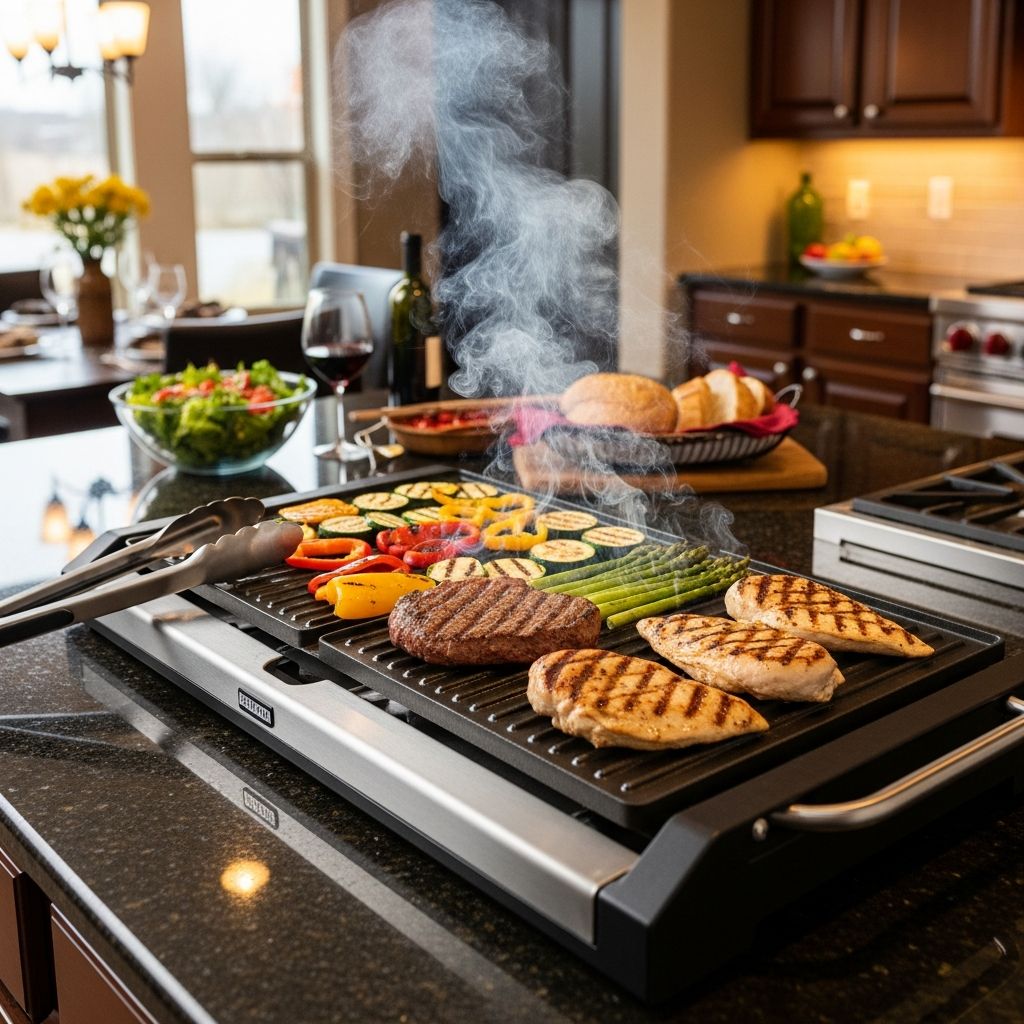
Indoor grills bring the flavor and texture of outdoor cooking into your kitchen, even if you live in a small apartment with strict building rules. They are designed to reduce smoke, control grease, and plug into a standard outlet, giving you a practical way to sear steaks, char vegetables, and cook weeknight dinners fast.
Why Indoor Grilling Is Worth Your Counter Space
For many households, traditional outdoor grills are not an option because of limited space, weather extremes, or building restrictions. Indoor grilling solves those problems while still delivering a satisfying sear and caramelized flavor. With the right grill and a bit of attention to technique, you can turn your counter into a mini backyard cookout any night of the week.
- Perfect for renters and condo dwellers who cannot use gas or charcoal outside.
- Lets you grill year-round, regardless of rain, snow, or extreme heat.
- Reduces smoke and flare-ups compared with open-flame grills.
- Often doubles as a griddle, panini press, or air fryer, saving space.
Major Types of Indoor Grills
Not all indoor grills work the same way. Understanding the main categories will help you match a model to your cooking style and kitchen layout. Below is a breakdown of the most common types you will see when shopping.
Open Electric Grill
An open electric grill looks like a compact version of a traditional outdoor grill with a single, flat or ridged surface and, often, a hinged lid. Food cooks primarily from below, and you flip it halfway through, just like on a backyard grill.
- Best for: Steaks, burgers, chicken breasts, skewers, and vegetables.
- Pros: Familiar grilling experience; easy to arrange food; good for larger cuts.
- Cons: Requires flipping; more exposed cooking surface can release more steam and aroma.
Contact (Clamshell) Grill
Contact grills use heated plates on the top and bottom to press food as it cooks, reducing the overall cook time and delivering grill marks on both sides at once. This style is very popular for quick sandwiches and weeknight proteins.
- Best for: Panini, thin steaks, burgers, boneless chicken, and fish fillets.
- Pros: Fast cooking; compact footprint; often features removable plates.
- Cons: Can flatten delicate foods; less ideal for very thick cuts or bone-in meats.
Smokeless Countertop Grill
So-called “smokeless” indoor grills use a combination of enclosed heating elements, drip-tray water basins, and internal fans to reduce visible smoke and cooking odors. They usually feature a grate over a concealed element and a lid that captures heat.
- Best for: Apartment kitchens with limited ventilation and shared living spaces.
- Pros: Noticeably less smoke; better for high-heat searing in tight quarters.
- Cons: More parts to clean; fans add noise; larger footprint on the counter.
Multi-Function Indoor Grill Stations
Some countertop appliances combine indoor grilling with air frying, roasting, baking, or dehydrating. These units cost more, but they can replace several single-purpose gadgets and are popular in small kitchens.
- Best for: Cooks who want versatility and are willing to navigate more controls.
- Pros: Multiple cooking modes; great for experimenting; often include presets.
- Cons: Higher price; steeper learning curve; may be bulkier to store.
Stovetop Grill Pans
Cast iron or heavy-duty aluminum grill pans sit directly on your stove burners and mimic the ridged surface of an outdoor grill. They do not plug in but rely on your existing cooktop for heat.
- Best for: Home cooks who already use cast iron and want an affordable grill option.
- Pros: High heat potential; durable; can also be used in the oven.
- Cons: Can smoke more than electric grills; requires good ventilation; needs seasoning and maintenance.
Quick Comparison of Indoor Grill Styles
Use this comparison table to decide which style of indoor grill matches your priorities in heat, smoke control, and versatility.
| Grill Type | Heat Level | Smoke Control | Best Use Case | Typical Footprint |
|---|---|---|---|---|
| Open Electric Grill | Medium to high | Moderate | Classic grill flavor for everyday meals | Medium countertop space |
| Contact / Clamshell Grill | Medium | Moderate to good | Fast cooking for thin cuts and sandwiches | Compact |
| Smokeless Countertop Grill | Medium to high | High | Apartment-friendly searing with minimal smoke | Medium to large |
| Multi-Function Grill Station | Variable, often high | Good | One-appliance solution for grilling and more | Large |
| Stovetop Grill Pan | High (with strong burner) | Low to moderate | High-heat searing with simple hardware | Small; hangs or stacks easily |
Key Features to Look For When Buying
Once you choose a style, focus on features that affect performance, ease of use, and cleanup. The right combination can turn a rarely used gadget into a daily driver in your kitchen.
- Temperature range and control: Look for a grill that reaches at least 425–450°F for good browning and allows you to dial back heat for delicate foods.
- Nonstick or cast iron surface: Nonstick plates are convenient for cleanup, while cast iron excels at heat retention and deep searing.
- Removable plates or grate: Detachable components that can go into the sink or dishwasher make post-dinner cleanup far easier.
- Grease management: A well-designed drip tray or built-in slope moves rendered fat away from the food and reduces smoke.
- Lid design: A glass or vented lid helps trap heat and splatter while letting you monitor your food without constant lifting.
- Size and capacity: Consider how many people you typically cook for and how much counter or cabinet space you can spare.
- Safety and stability: Cool-touch handles, nonslip feet, and a secure locking mechanism are essential in a busy kitchen.
Setting Up for Low-Smoke Indoor Grilling
Even the most advanced “smokeless” grill can create some steam and aroma, especially when you cook fatty foods at high heat. The way you set up your space has a big impact on how comfortable your indoor grilling experience will be.
- Place the grill directly under a vent hood or near an open window when possible.
- Keep the drip tray properly filled with water if your model uses it to catch hot fat.
- Trim excess surface fat from meats to prevent excessive splatter on hot surfaces.
- Preheat fully before adding food to reduce the time fats spend rendering and smoking.
- Avoid sugary marinades on the grill surface; brush them on near the end of cooking instead.
Indoor Grilling Techniques for Great Results
Once your grill is set up, a few simple techniques will help you unlock flavor and texture that rivals outdoor cooking. Think of these as foundational habits you can adapt to almost any recipe.
Preheating Properly
Most indoor grills need several minutes to reach their target temperature. If you skip preheating, food can stick and steam rather than brown. Aim to preheat until indicator lights or built-in thermometers confirm the surface is hot.
- Give contact grills extra time so both plates heat evenly.
- For stovetop pans, wait until a drop of water skitters across the surface before adding food.
Managing Moisture and Marinades
Excess moisture on the surface of your food interferes with browning. Pat meats and vegetables dry with paper towels before seasoning or brushing with oil. Use marinades to add flavor and tenderness, but let the food drain briefly so it does not drip onto heating elements.
- Reserve sugary sauces and glazes for the last few minutes of cooking.
- Lightly oil the food rather than the grill to reduce smoking and buildup.
Timing and Turning
Indoor grills often cook faster than you expect, especially in contact models where heat comes from both sides. Resist the urge to constantly peek or press on food; let it sit undisturbed long enough to develop color.
- Flip steaks and chops once on open grills for clear grill marks and even doneness.
- Use a meat thermometer rather than cutting into food to check if it is done.
What You Can Cook on an Indoor Grill
Indoor grills excel at more than burgers. With a bit of creativity, you can plan a full week of meals that never see a frying pan or oven. Here are practical ideas to add variety to your indoor grilling routine.
- Classic proteins: Burgers, chicken breasts, pork chops, sausages, shrimp skewers, firm fish like salmon or swordfish.
- Vegetables: Zucchini planks, bell peppers, onions, asparagus, mushrooms, and halved romaine for grilled salad.
- Sandwiches and melts: Pressed panini, quesadillas, grilled cheese, breakfast wraps with crisped tortillas.
- Plant-based options: Veggie burgers, marinated tofu, seitan steaks, and thick slices of cauliflower or eggplant.
- Unexpected treats: Grilled fruit like pineapple rings or peach halves for dessert, served with yogurt or ice cream.
Safety Tips for Indoor Grilling
Any appliance that generates high heat needs to be treated carefully. Indoor grills reduce open flames, but they still involve hot surfaces, fat, and electricity. A few simple habits can prevent accidents and extend the life of your grill.
- Always read the manufacturer’s instructions before the first use and follow recommended operating times.
- Keep flammable items like towels, paper, and plastic away from the appliance during and after cooking.
- Place the grill on a level, heat-resistant surface with plenty of clearance for ventilation.
- Use silicone or heat-resistant tools to avoid burns when turning food or removing plates.
- Unplug the unit and allow it to cool fully before moving or cleaning it.
Cleaning and Maintenance: Make It Easy on Yourself
The less painful it is to clean your indoor grill, the more often you will reach for it. Building a quick, consistent cleaning routine is the secret to avoiding stubborn residue and lingering odors.
- While the grill is still warm (not hot), wipe down plates with a damp cloth or paper towel to remove loose debris.
- For removable plates, follow the manufacturer’s guidance on dishwashing versus handwashing.
- Empty and wash the drip tray after each use; leftover fat can solidify and smell over time.
- Never immerse the main electrical body of the grill in water; instead, wipe it carefully with a slightly damp cloth.
- Occasionally deep-clean around the hinges, knobs, and fan vents to prevent grease buildup.
Simple Indoor Grilling Meal Ideas
You do not need complicated recipes to get the most from an indoor grill. A few basic flavor formulas can cover busy weeknights and low-effort weekends while still feeling special.
- Weeknight chicken platter: Grill lightly marinated chicken breasts alongside sliced zucchini and red onion, serve over rice or salad greens.
- Indoor burger bar: Cook patties on the grill, toast buns on the residual heat, and set out a variety of toppings and sauces.
- Grilled veggie bowl: Char a mix of vegetables, add chickpeas or tofu, and finish with a lemony yogurt or tahini sauce.
- Steak and charred greens: Sear a steak to your liking, then toss halved romaine or kale onto the warm grill for a minute or two.
- Sweet finish: Grill fruit and serve with a drizzle of honey, chopped nuts, or a scoop of vanilla ice cream.
Frequently Asked Questions About Indoor Grills
Do indoor grills really taste like outdoor grilling?
Indoor grills can deliver similar browning, grill marks, and caramelization, but they will not create the same level of smoky flavor you get from burning charcoal or wood. You can bridge the gap by using spice rubs that mimic barbecue flavors or finishing grilled foods with a small amount of smoked salt or smoked paprika.
Are smokeless grills completely free of smoke?
No indoor grill is truly smoke-free, especially when cooking fatty meats at high temperatures. However, smokeless designs significantly reduce visible smoke by keeping grease away from exposed heating elements and using fans or lids to control vapor.
Can I use an indoor grill in a dorm or office?
Rules vary, so always check local or building policies first. Many dorms and offices restrict heating appliances with open elements or that produce strong odors, but compact contact grills may be allowed if used safely in designated areas.
Is cast iron better than nonstick for indoor grilling?
Cast iron excels at high-heat searing and durability but requires seasoning and more attentive care. Nonstick plates are easier to clean and more forgiving for beginners, though they may not reach quite the same level of crust on certain foods.
How do I prevent food from sticking?
Preheating the grill, patting food dry, lightly oiling the food instead of drowning the surface, and avoiding moving it too soon all help prevent sticking. For stubborn cases, use a thin, flexible spatula to gently release edges rather than prying aggressively.
Bringing It All Together
An indoor grill is one of the most versatile pieces of equipment you can add to a modern kitchen. By choosing the right style for your space, learning basic techniques, and building simple cleaning habits, you can enjoy grilled meals any day of the week without worrying about the weather or hunting for a backyard.