When winter weather traps you indoors with energetic children, the challenge is turning potential chaos into memorable moments. This guide offers fresh, practical ideas to maintain sanity, foster creativity, and strengthen family ties without relying on screens.
Understanding the Indoor Challenge
Snowy or rainy days force families into close quarters, amplifying the need for structure amid boundless kid energy. Parents often face mounting frustration as routines disrupt, but viewing these days as opportunities for bonding can shift the experience positively. Research from child development experts highlights how unstructured indoor time boosts imagination and emotional resilience when guided thoughtfully.
Maintaining a positive mindset starts with preparation. Stock up on supplies like art materials, board games, and healthy snacks in advance. Establish a loose daily rhythm—morning active play, midday creative pursuits, afternoon quiet time—to provide predictability without rigidity.
High-Energy Indoor Games to Burn Off Steam
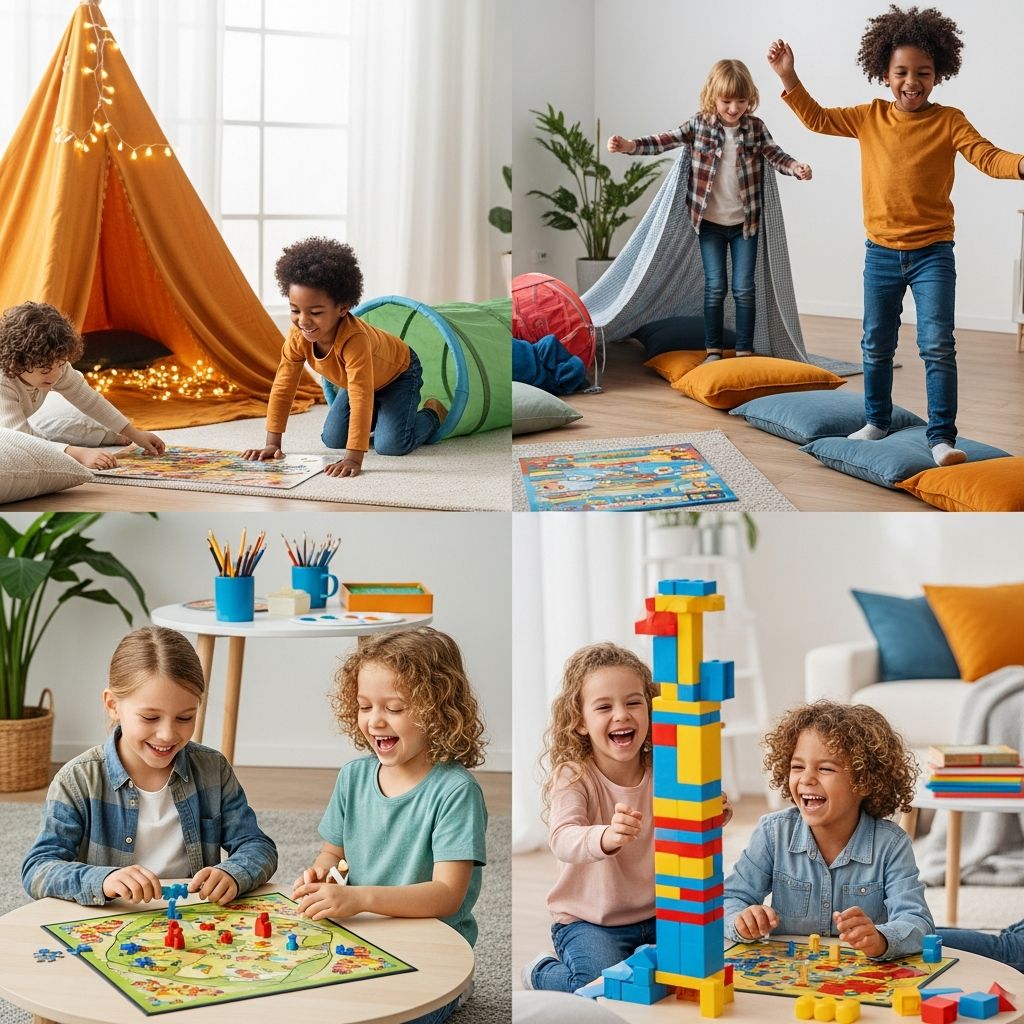
Keep little ones moving to prevent meltdowns. Transform your living space into a playground with these zero-cost ideas:
- Obstacle Courses: Use pillows, chairs, and blankets to create tunnels and hurdles. Time each run for friendly competition, adapting for different ages.
- Indoor Scavenger Hunts: Hide household items with clues leading to the next. Themes like ‘kitchen treasures’ or ‘color quest’ add variety.
- Freeze Dance Parties: Play upbeat music; freeze when it stops. Incorporate silly poses to spark laughter.
- Balloon Volleyball: Blow up balloons and use hands or pool noodles over a couch ‘net’ for safe, giggling matches.
These activities promote physical health, aligning with guidelines from the American Academy of Pediatrics recommending at least 60 minutes of daily active play for children. Rotate games every 20-30 minutes to sustain engagement.
Creative Crafts Using Household Items
Tap into kids’ artistic sides with DIY projects that repurpose everyday materials, encouraging resourcefulness and fine motor skills.
| Project | Materials | Age Range | Benefits |
|---|---|---|---|
| Paper Plate Masks | Paper plates, markers, string, scissors | 3+ | Imagination, storytelling |
| Cardboard Box Forts | Boxes, tape, fabric scraps | 4+ | Building skills, teamwork |
| Vegetable Stamp Art | Potatoes/carrots, paint, paper | 2+ | Sensory exploration |
| Leaf Rubbings (indoor version) | Crayons, textured items like coins/lace | All ages | Observation, patterns |
Display creations on walls to build pride. For toddlers, focus on mess-free options like finger painting on trays. These crafts support cognitive growth, as noted in studies from the National Association for the Education of Young Children.
Storytelling and Imaginative Play
Fuel narratives to expand worlds beyond walls. Gather in a ‘story circle’ where each family member adds a sentence to a collaborative tale. Props like stuffed animals or dress-up clothes from closets enhance immersion.
- Puppet shows using socks and paper bags.
- ‘Pretend restaurant’ with play food or real veggies.
- Superhero missions saving household ‘villains’ like laundry piles.
Such play develops language and empathy, key for social-emotional learning per Harvard’s Center on the Developing Child. Limit sessions to 15-20 minutes for short attention spans.
Learning Moments Disguised as Fun
Integrate education seamlessly. Bake together to teach measurements—double a cookie recipe for math practice. Sort toys by color/shape for sorting skills. Science experiments like vinegar-baking soda volcanoes use pantry staples.
For older kids, indoor nature journals: draw observed patterns in frost on windows or invent animal habitats from recyclables. These align with STEM education recommendations from the U.S. Department of Education.
Relaxation Techniques for Downtime
Balance action with calm. Introduce yoga poses mimicking animals (downward dog, tree pose) via free online guides. Reading marathons with cozy blankets foster literacy.
Mindful breathing: ‘balloon breaths’ where kids inflate/deflate imaginary balloons in their bellies. Essential oils or soft music enhance ambiance, promoting calm as supported by child psychology research.
Meal and Snack Ideas to Keep Everyone Fueled
Nutritious eats prevent hangry outbursts. Involve kids in prep:
- Build-Your-Own Pizzas: Tortillas, sauce, toppings—customization delights.
- Fruit Skewers: Thread grapes, berries; counts as veggie practice.
- Popcorn Bar: Plain popcorn with seasonings like nutritional yeast.
Hydrate with infused water (lemon/cucumber). Per CDC guidelines, balanced snacks sustain energy during active indoor days.
Self-Care for Parents: You Matter Too
Recharge to parent effectively. While kids nap or play independently, sip tea or journal. Tag-team with partners if possible. Remind yourself: it’s temporary. Positive self-talk like ‘We’re making memories’ reframes stress.
Studies from the American Psychological Association show parental well-being directly impacts child mood. Short breaks restore patience.
Customizing for Different Ages
Tailor activities:
- Infants (0-2): Sensory bins with safe items like pom-poms in bowls.
- Toddlers (2-4): Simple stacking, music movement.
- Preschoolers (4-6): Themed role-play, basic crafts.
- School-age (6+): Board games, experiments, reading challenges.
Frequently Asked Questions (FAQs)
What if my kids just want screens?
Set gentle limits with timers and alternatives ready. Lead by example; join non-screen fun first to entice them.
How do I handle fights breaking out?
Redirect to cooperative games. Use ‘peace tables’ for cooling off with drawing prompts.
Any tips for single parents?
Prep activity stations in advance. Use voice-activated music/ timers for independence. Online parent communities offer virtual support.
Can these work for non-snow days?
Absolutely—rainy days, illnesses, or travel delays benefit equally from these versatile ideas.
How long should structured play last?
Aim for 45-60 minutes per session, with flexibility for natural flow.
Turning Cabin Fever into Family Joy
Embrace indoor days as chances for unhurried connection. With planning and variety, you’ll emerge with stronger bonds and happy kids. Experiment, adapt, and enjoy the magic of homebound adventures.
References
- Active Play and Child Development — American Academy of Pediatrics. 2023-10-15. https://publications.aap.org/pediatrics/article/152/6/e2023062644/194052
- Physical Activity Guidelines for Children — Centers for Disease Control and Prevention. 2024-05-01. https://www.cdc.gov/physicalactivity/basics/children/index.htm
- Creativity in Early Childhood — National Association for the Education of Young Children. 2023-01-20. https://www.naeyc.org/resources/pubs/yc/jan2018/why-play
- Social-Emotional Learning through Play — Harvard Center on the Developing Child. 2022-11-10. https://developingchild.harvard.edu/resources/inbrief-series-executive-function/
- STEM at Home — U.S. Department of Education. 2024-02-28. https://www.ed.gov/news/press-releases/fact-sheet-biden-harris-administration-announces-over-125-million-support-stem-education-through-grants
- Mindfulness for Children — American Psychological Association. 2023-07-12. https://www.apa.org/monitor/2020/07/mindfulness-kids-teens
- Nutrition for Active Kids — Centers for Disease Control and Prevention. 2024-03-05. https://www.cdc.gov/nutrition/php/resources/healthy-eating-tips-for-families.html
- Parental Stress and Child Outcomes — American Psychological Association. 2023-09-18. https://www.apa.org/topics/parenting/stress