Independent play, often called solo or unstructured play, allows children to engage with toys, objects, or their imagination without adult intervention. This natural activity is fundamental to early childhood development, promoting cognitive, emotional, and social growth.
Defining Independent Play and Its Core Elements
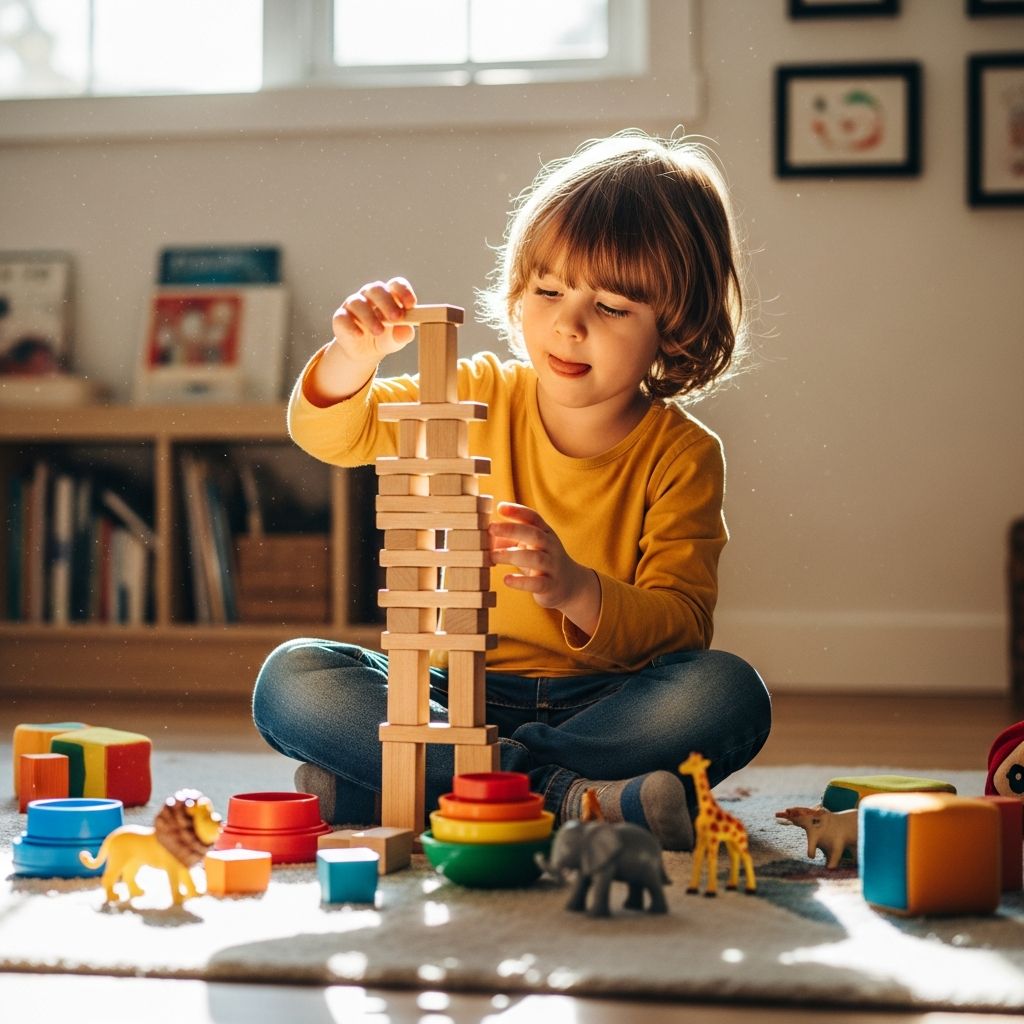
Solo play occurs when a child explores activities alone, directing their own actions and narratives. Unlike structured group games, it emphasizes child-led discovery, free from predefined rules or prompts. From stacking blocks to daydreaming, these moments build intrinsic motivation and joy in self-entertainment.
Key characteristics include open-ended toys like blocks or fabric scraps, minimal adult involvement, and a safe environment. Even brief sessions, starting at 5-10 minutes for infants, evolve into longer periods as children age.
Key Developmental Advantages of Solo Playtime
Research highlights multiple benefits, making independent play a cornerstone of healthy growth. Children who regularly engage in solo activities show marked improvements across several domains.
Boosting Creativity and Divergent Thinking
When left to their devices, children invent scenarios, characters, and rules, unleashing imagination unhindered by external input. This fosters divergent thinking—generating novel ideas and solutions—which is linked to long-term innovative capacities.
For instance, a child might transform a cardboard box into a spaceship, castle, or racecar, adapting it endlessly. Such play counters the creativity limits often seen in rule-bound group activities.
Enhancing Problem-Solving and Persistence
Solo play compels children to tackle challenges independently, like fitting puzzle pieces or balancing structures. Without immediate help, they experiment, fail, and iterate, building resilience and determination.
This process sharpens executive function skills, as kids persist through frustration. Studies indicate that unstructured play correlates with stronger problem-solving in later years.
Building Confidence and Self-Awareness
Mastering tasks alone instills a sense of competence and autonomy. Children discover personal strengths—artistic flair, building prowess, or storytelling—without comparison or judgment, nurturing a positive self-image.
Improving Focus, Attention, and Self-Regulation
Free from distractions, solo play trains sustained attention. Toddlers gradually extend play durations from minutes to half-hours, honing concentration. It also teaches emotional regulation, as children manage boredom, excitement, or setbacks solo.
Early unstructured play (ages 2-5) predicts better self-control into school age, per developmental research.
How Solo Play Evolves Across Early Childhood Stages
Independent play adapts to developmental milestones, with expectations varying by age.
| Age Group | Typical Duration | Common Activities | Skills Developed |
|---|---|---|---|
| 0-12 months | 5-15 minutes | Exploring textures, banging objects, floor time | Sensory-motor skills, cause-effect understanding |
| 1-2 years | 10-20 minutes | Stacking blocks, simple sorting, peek-a-boo with toys | Fine motor control, basic problem-solving |
| 2-3 years | 20-30 minutes | Pretend scenarios, drawing, nesting toys | Imagination, language narratives |
| 3-5 years | 30-60 minutes | Complex builds, role-play stories, art projects | Planning, emotional expression, persistence |
These progressions align with brain maturation, where attention spans lengthen and symbolic thinking emerges.
Practical Strategies for Parents to Foster Solo Play
Encouraging independent play requires intentional setup, patience, and modeling. Start small and build gradually.
- Create a Safe Play Zone: Designate a childproof area with soft mats, accessible shelves, and natural light. Rotate items to maintain novelty without overwhelming.
- Choose Open-Ended Toys: Opt for wooden blocks, scarves, baskets, dolls, or vehicles over battery-operated gadgets. These invite endless invention.
- Set the Stage Subtly: Introduce activities casually, then step back: “Here are some blocks—have fun! I’ll be nearby.” Avoid hovering.
- Establish Routines: Schedule daily “quiet play” post-nap or snack, signaling transition to solo time. Use timers for gentle boundaries.
- Model Independence: Engage in your own focused task visibly, like reading, to normalize solo occupation.
- Limit Screens: Reduce digital media to prevent disengagement, steering kids toward active exploration.
- Observe Without Intervening: Watch from afar, intervening only for safety. Narrate internally to resist rescuing.
Integrate chores playfully: folding laundry or sorting silverware mimics adult tasks, blending responsibility with fun.
Addressing Common Hurdles in Introducing Solo Play
Resistance is normal—children accustomed to constant engagement may protest initially. Here’s how to navigate:
- Whining or Boredom Claims: Validate feelings (“I hear you’re bored—let’s see what you create!”) then redirect gently. Boredom sparks innovation.
- Short Attention Spans: Begin with 5 minutes, praising efforts post-session: “You built a tall tower by yourself!” Gradually extend.
- Safety Worries: Baby-proof thoroughly and stay within earshot, building trust over time.
- Sibling Dynamics: Alternate solo and parallel play to ease transitions.
Consistency yields results; most children adapt within weeks.
The Parental Payoff: Self-Care Through Child Independence
Beyond child benefits, solo play grants parents breathing room—a form of self-care. Use these windows for coffee, chores, or rest, reducing burnout from perpetual interaction.
Experts note constant engagement isn’t developmentally superior; brief separations foster secure attachments. Parents report less stress and more family harmony.
Balancing Solo Play with Other Play Types
Independent play complements, not replaces, other forms:
- Sensory Play: Sand, water, playdough for tactile learning.
- Pretend Play: Dress-up for social-emotional practice (solo or with peers).
- Physical Play: Climbing, running for motor skills.
- Cooperative Play: Group games for teamwork.
A mix ensures holistic development, with solo time comprising 20-30% of daily play.
Frequently Asked Questions About Independent Play
Is independent play safe for babies?
Yes, short supervised floor time from 3 months builds strength and exploration. Always ensure a safe, soft surface.
How long should a 3-year-old play alone?
Aim for 30-45 minutes, adjusting based on temperament. Quality trumps quantity.
What if my child refuses solo play?
Start tiny, use engaging setups, and stay patient. Most adapt with routine.
Does solo play reduce social skills?
No—counterintuitively, it builds confidence for better peer interactions later.
Can independent play help with ADHD traits?
It strengthens focus and regulation, potentially mitigating attention challenges.
References
- The Power of Independent Play — Alabama Waldorf School. 2023-05-15. https://www.alabamawaldorf.org/post/power-of-independent-play
- Independent Play can Boost Confidence, Creativity, and So Much… — Pathways.org. 2024-02-10. https://pathways.org/independent-play
- Independent Play: What it is and why it’s important — Lovevery Blog. 2023-11-20. https://blog.lovevery.com/skills-stages/independent-play/
- The Benefits of Independent Play in Early Childhood Education — McCaedu.org. 2024-01-08. https://mccaedu.org/blog/the-importance-of-independent-play-why-independent-play-is-critical-for-young-children/
- Why teaching your kids independent play is actually self-care — Mother.ly. 2023-07-12. https://www.mother.ly/life/independent-play-kids-is-healthy/
- Encouraging Independent Play: Why Unstructured Play Matters — Momwell.com. 2024-03-05. https://www.momwell.com/blog/encouraging-independent-play