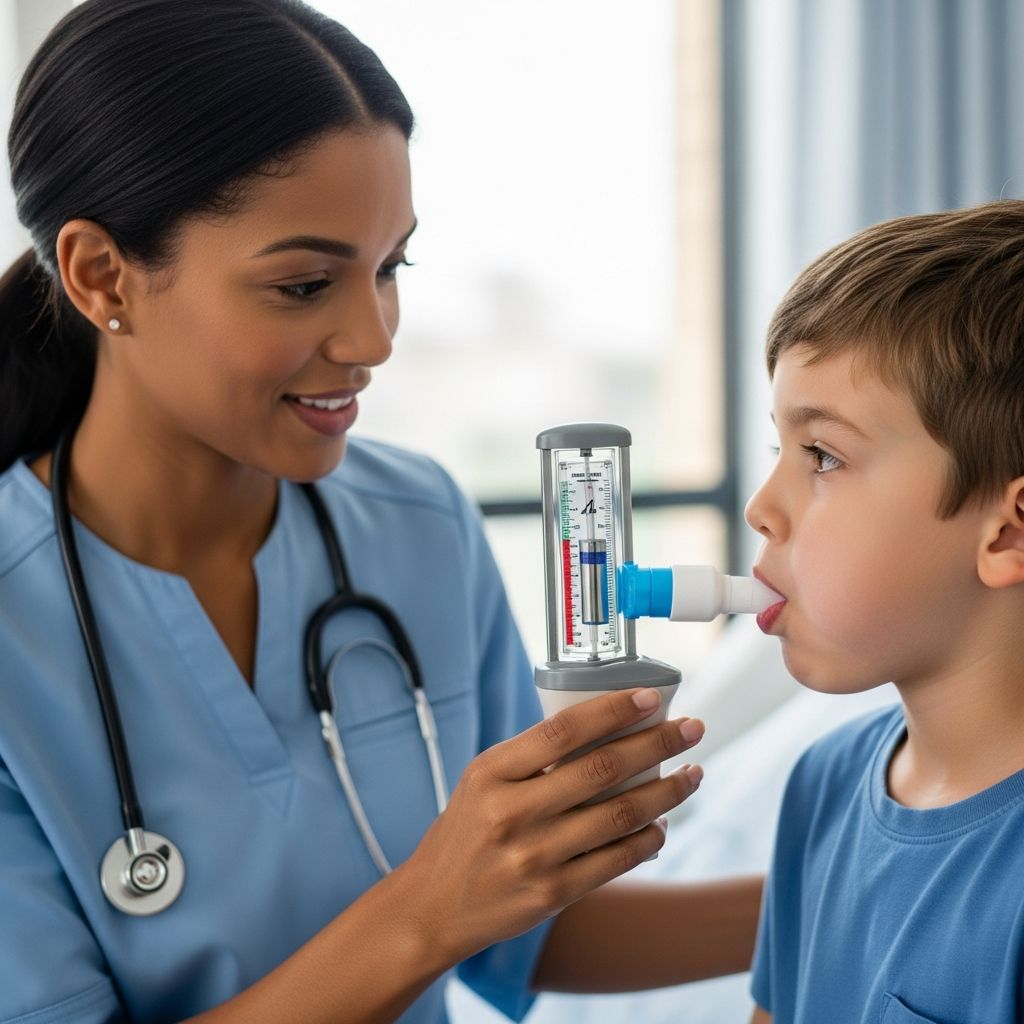
An incentive spirometer is a simple handheld tool designed to encourage deep, controlled breathing, helping children maintain lung health during recovery from surgery, illness, or conditions that limit mobility. By mimicking natural deep sighs, it expands the lungs, clears secretions, and prevents complications like collapsed lung tissue.
Understanding Lung Challenges in Children
Children facing surgery on the chest, abdomen, or extended bed rest often struggle with shallow breathing due to pain or fatigue. This can lead to atelectasis, where small air sacs in the lungs collapse, trapping mucus and increasing infection risk such as pneumonia. Incentive spirometry counters this by promoting full lung inflation, improving oxygen exchange, and bolstering respiratory muscle strength.
In pediatric cases, especially after thoracic or abdominal procedures, young patients may not instinctively take deep breaths. Devices like these provide visual motivation, turning recovery into an engaging activity that children can master with parental guidance.
Types of Incentive Spirometers Suitable for Kids
There are two primary designs, each offering unique feedback to suit different needs:
- Flow-Oriented Models: Featuring chambers with rising balls, these measure inhalation speed. Children aim to lift balls to specific levels, typically handling up to 1200ml volumes, making them fun for visual tracking.
- Volume-Oriented Models: These use pistons or indicators to show exact air volume inhaled, often up to 4000ml. They require less effort and better support diaphragmatic function, ideal for kids needing precise goals.
Healthcare providers select the type based on the child’s age, lung capacity, and condition, ensuring age-appropriate sizing for comfort.
When Is an Incentive Spirometer Recommended for Children?
Pediatric specialists prescribe these devices in scenarios including:
- Post-operative recovery from abdominal, thoracic, or cardiac surgeries.
- Conditions like pneumonia, COPD exacerbations, or neuromuscular disorders limiting breathing.
- Prolonged immobilization from injury or illness predisposing to atelectasis.
- Sickle cell acute chest syndrome or restrictive lung diseases.
| Condition | Risk Factor | Benefit of Spirometry |
|---|---|---|
| Abdominal Surgery | Pain-induced shallow breaths | Prevents atelectasis, clears mucus |
| Bed Rest | Reduced mobility | Maintains lung expansion |
| COPD in Children | Airway restriction | Strengthens breathing muscles |
| Neuromuscular Disease | Weak diaphragm | Improves inspiratory capacity |
Pre-operative use can establish baselines, reducing post-op declines, particularly in high-risk pediatric bariatric cases.
Step-by-Step Instructions for Safe Use
Teaching children proper technique maximizes effectiveness while minimizing discomfort. Follow these steps, adapted for young users:
- Position Comfortably: Sit upright or elevate the head of the bed to 45-90 degrees for optimal lung expansion.
- Prepare the Device: Exhale normally, then seal lips tightly around the mouthpiece. Avoid nose breathing.
- Inhale Slowly: Breathe in deeply and steadily over 3-5 seconds, watching the indicator rise to the goal mark. Keep a centering ball steady to control flow.
- Hold Breath: Maintain the peak inhalation for 3-5 seconds to fully open air sacs.
- Exhale Passively: Relax and breathe out normally without forcing.
- Repeat Sets: Perform 10 breaths hourly while awake, resting between to avoid fatigue or dizziness.
For kids needing oxygen, attach a nasal cannula alongside. Make it game-like: challenge them to ‘beat their best’ volume.
Setting Personalized Goals for Young Patients
Providers set initial targets based on age, height, and pre-op spirometry—often 80% of predicted inspiratory capacity. Children track progress on the device’s scale, gradually increasing as lungs strengthen. Daily logs help monitor improvements in forced vital capacity (FVC).
Parents note: Toddlers may need supervision; older kids can self-manage. Celebrate milestones to boost compliance.
Key Benefits Backed by Evidence
Regular use yields measurable gains:
- Lung Expansion: Counters shallow breathing, reversing atelectasis.
- Mucus Clearance: Facilitates expectoration, lowering pneumonia odds post-surgery.
- Muscle Conditioning: Enhances diaphragmatic and intercostal strength, vital for chronic conditions.
- Oxygenation: Normalizes levels, shortening hospital stays.
Studies affirm superiority of volume-oriented types for pulmonary function gains over flow types.
Common Hurdles and Practical Solutions
Children might resist due to pain or boredom. Tips include:
- Pain management: Use meds 30 minutes prior.
- Engagement: Incorporate timers, stickers, or family challenges.
- Dizziness: Pause, sit, and notify if persistent.
- Coughing: Normal; encourage gentle clearing post-breath.
If goals aren’t met, reassess positioning or device fit with providers.
Caring for the Device
Hygiene prevents infections:
- Rinse mouthpiece daily with soap/water; air dry.
- Disinfect weekly per manufacturer guidelines.
- Replace if damaged or as advised (often monthly).
Store upright in a clean, accessible spot.
Monitoring Progress and When to Seek Help
Track daily best volumes, sputum changes, and energy levels. Improvements signal success; plateaus or declines warrant medical review. Alert providers for chest pain, fever, bloody sputum, or breathing distress.
Frequently Asked Questions (FAQs)
Q: How often should my child use the incentive spirometer?
A: Aim for 10 deep breaths every hour while awake, adjusting per doctor’s advice for tolerance.
Q: Can young children under 5 use it?
A: Modified techniques work with supervision; providers may suggest alternatives for toddlers.
Q: What if my child feels dizzy?
A: Stop immediately, rest, and inform healthcare team—often from overexertion.
Q: Does it help with asthma or COPD in kids?
A: Yes, it exercises lungs, aiding control alongside standard therapies.
Q: How long post-surgery is it needed?
A: Typically until discharge goals met, often 1-2 weeks, or longer for complex cases.
Integrating into Family Recovery Routines
Turn spirometry into a positive ritual: pair with storytime or play. Educate siblings for support. Long-term, it builds healthy breathing habits, benefiting active kids.
For neuromuscular or spinal injury cases, combine with physical therapy for holistic gains.
References
- Incentive Spirometry — Physiopedia. 2023. https://www.physio-pedia.com/Incentive_Spirometry
- Incentive Spirometer: Purpose, Goals & How To Use — Cleveland Clinic. 2023-10-12. https://my.clevelandclinic.org/health/drugs/4302-incentive-spirometer
- Using an Incentive Spirometer — UMass Memorial Health. 2023. https://www.ummhealth.org/health-library/using-an-incentive-spirometer
- Using an incentive spirometer — MedlinePlus. 2023-11-01. https://medlineplus.gov/ency/patientinstructions/000451.htm
- Incentive Spirometers, Vaporizers and Intermittent Positive Pressure Breathing — Aetna Clinical Policy Bulletin. 2024-01-15. https://www.aetna.com/cpb/medical/data/400_499/0479.html