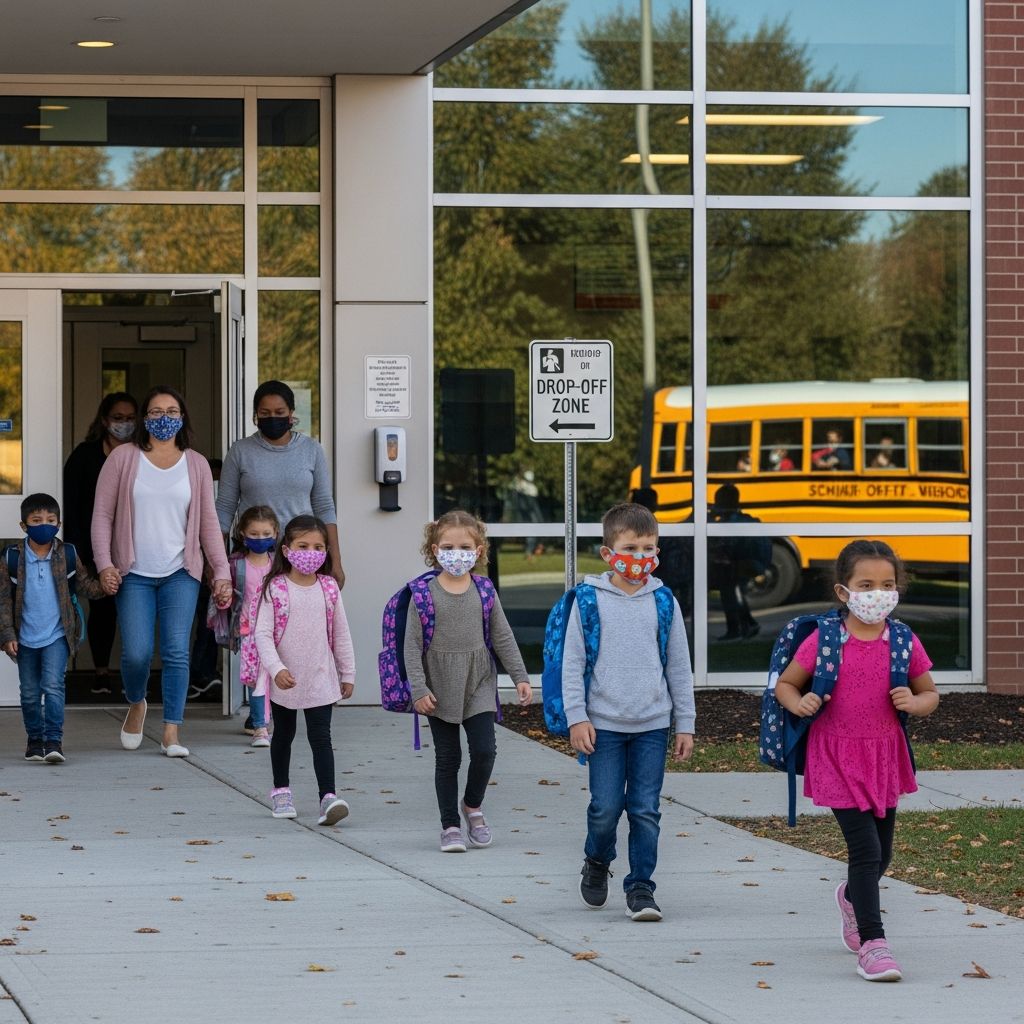
Resuming in-person education after widespread school closures presents families with a complex balance of health precautions, emotional readiness, and educational needs. Parents must weigh immediate virus transmission risks against the long-term benefits of structured learning environments.
Understanding Parental Decision-Making Processes
Parents evaluate multiple dimensions when deciding on school attendance during health crises. Core considerations often fall into personal and external categories, with learning quality emerging as a dominant driver for returning to classrooms.
Personal factors include expectations about academic progress, child health vulnerabilities, and overall effectiveness of remote alternatives. Environmental influences encompass school protocols, home support systems, and broader community transmission rates. Research shows that while safety fears restrain some, the shortcomings of home-based instruction propel many toward in-person options.
- Academic Prioritization: Inadequate online learning experiences rank highest in motivating returns to school, as virtual formats often fail to replicate interactive teaching.
- Health Apprehensions: Concerns over virus exposure create hesitation, particularly in high-transmission areas.
- Family Dynamics: Home supervision challenges and sibling interactions amplify desires for professional educational settings.
Health and Safety Implications of Reopenings
School reopenings correlate with modest increases in household infection risks, even absent classroom outbreaks. Studies indicate families with school-aged children face elevated COVID-19 rates compared to childless households, rising to 8.5% higher per 10,000 during community surges.
Preventive care disruptions compound these risks. Approximately 25% of households report children missing routine checkups or vaccinations due to pandemic restrictions, heightening vulnerability to other illnesses.
| Risk Factor | Impact Level | Mitigation Strategy |
|---|---|---|
| Community Transmission | High (up to 8.5% increase) | Monitor local case rates |
| Household Vulnerability | Moderate | Vaccination prioritization |
| School Protocols | Variable | Masking and ventilation |
Telemedicine adoption has surged but insufficiently compensates for overall service declines, especially in dental and specialty areas.
Mental Health Outcomes Linked to School Formats
Prolonged remote learning exacerbates youth mental health declines, with emergency visits rising significantly. Reopenings, however, associate with reduced depression diagnoses and lower related healthcare costs after six months of in-person attendance.
Children accustomed to home routines may encounter separation difficulties, while broader pandemic stressors like parental anxiety amplify adjustment challenges. Schools play a critical role in recovery by restoring socialization and routine.
- Depression diagnoses drop substantially post-reopening.
- Mental health expenditures decrease cumulatively over time.
- Younger students face heightened academic recovery needs.
Educational Recovery Challenges Post-Closure
Pandemic-induced learning gaps persist, particularly affecting early elementary students in reading and math proficiency. Remote instruction widened disparities, with low-income and younger learners experiencing the steepest declines.
As recovery funds diminish and enrollments drop, schools must target interventions for foundational skills. In-person settings facilitate catch-up through peer interaction and specialized support unavailable virtually.
Practical Strategies for Families
Families can proactively address transition hurdles through targeted preparations.
- Health Monitoring: Establish daily symptom checks and rapid testing access.
- Emotional Preparation: Use storybooks and role-playing to normalize school routines.
- Academic Bridging: Implement summer skill-building programs focused on weak areas.
- Communication Channels: Maintain open dialogues with teachers on progress and concerns.
Local policies, including expanded child tax credits and pre-K investments, aim to bolster family stability during these shifts.
School-Level Interventions for Smooth Transitions
Educators can foster safe environments by integrating mental health resources, trauma-informed practices, and hybrid flexibility. Prioritizing staff vaccination and air quality enhancements minimizes transmission while supporting vulnerable students.
Frequently Asked Questions
What drives most parents to resume in-person schooling?
Learning effectiveness tops the list, as home education often lacks structure and engagement.
Does reopening increase family COVID-19 risks?
Yes, by 3.2-8.5% per 10,000 in high-spread areas, underscoring community rate monitoring.
How does in-person school affect child mental health?
It reduces depression diagnoses and costs after sustained exposure, countering remote learning declines.
Which children face the biggest learning losses?
Younger elementary students in core subjects, requiring targeted recovery efforts.
What policies support pandemic-era education?
Acts like the American Rescue Plan expand care access and credits for families.
Long-Term Perspectives on Pandemic Education
Beyond immediate reopenings, sustained investments in mental health services and equitable learning opportunities will define recovery trajectories. Families, schools, and policies must collaborate to mitigate enduring disruptions from extended closures. While risks persist, evidence underscores in-person benefits for holistic child development.
(Word count: 1678)
References
- Back to School amidst the New Normal: Ongoing Effects of the Coronavirus Pandemic on Children’s Health and Well-Being — KFF. 2021-08-11. https://www.kff.org/covid-19/back-to-school-amidst-the-new-normal-ongoing-effects-of-the-coronavirus-pandemic-on-childrens-health-and-well-being/
- To Be or Not to Be: Parents’ Willingness to Send Their Children Back to School during COVID-19 — PMC/NCBI. 2021-07-28. https://pmc.ncbi.nlm.nih.gov/articles/PMC8340808/
- Effect of School Reopenings on Children’s Mental Health during COVID-19 — PMC/NCBI. 2024-06-15. https://pmc.ncbi.nlm.nih.gov/articles/PMC12824883/
- How Does Sending a Child to School Change a Family’s Risk of COVID-19? — Education Week. 2021-04-21. https://www.edweek.org/leadership/how-does-sending-a-child-to-school-change-a-familys-risk-of-covid-19/2021/04
- Pandemic Learning Loss and COVID-19: Education Impacts — Annie E. Casey Foundation. 2023-09-12. https://www.aecf.org/blog/pandemic-learning-loss-impacting-young-peoples-futures