Impulse control is a foundational skill for children’s emotional and social development, enabling them to pause, think, and make thoughtful choices rather than reacting instantly. Developing this ability helps kids navigate challenges, build relationships, and succeed academically. Parents and educators can foster it through targeted activities, modeling, and structured environments.
Understanding Impulse Control in Young Minds
Impulse control refers to the capacity to resist immediate urges in favor of long-term benefits, such as waiting for a turn instead of grabbing a toy. For children, especially those aged 3-10, the brain’s prefrontal cortex—which governs executive functions—is still maturing, making self-regulation challenging but trainable. Research shows that early interventions improve focus, reduce tantrums, and enhance problem-solving. Factors like ADHD can intensify impulsivity, but consistent strategies yield progress.
Key benefits include better classroom behavior, fewer conflicts, and improved emotional vocabulary. Start by recognizing triggers like frustration or excitement, then introduce tools to interrupt automatic responses.
Daily Routines That Strengthen Self-Discipline
Incorporate self-control into everyday life to make it habitual. Begin with clear expectations: specify behaviors like “wait quietly for your turn” rather than vague instructions. Use age-appropriate consequences, such as one minute of timeout per year of age, to reinforce accountability without overwhelming the child.
- Establish Predictable Schedules: Consistent mealtimes and bedtimes reduce uncertainty, teaching patience.
- Practice Waiting Intentionally: During meals, ask kids to wait 5-10 seconds before speaking, gradually increasing time.
- Model Calm Responses: When stressed, verbalize your process: “I’m taking a deep breath to stay patient”.
These routines build neural pathways for restraint, turning impulses into deliberate actions.
Engaging Games to Practice Restraint
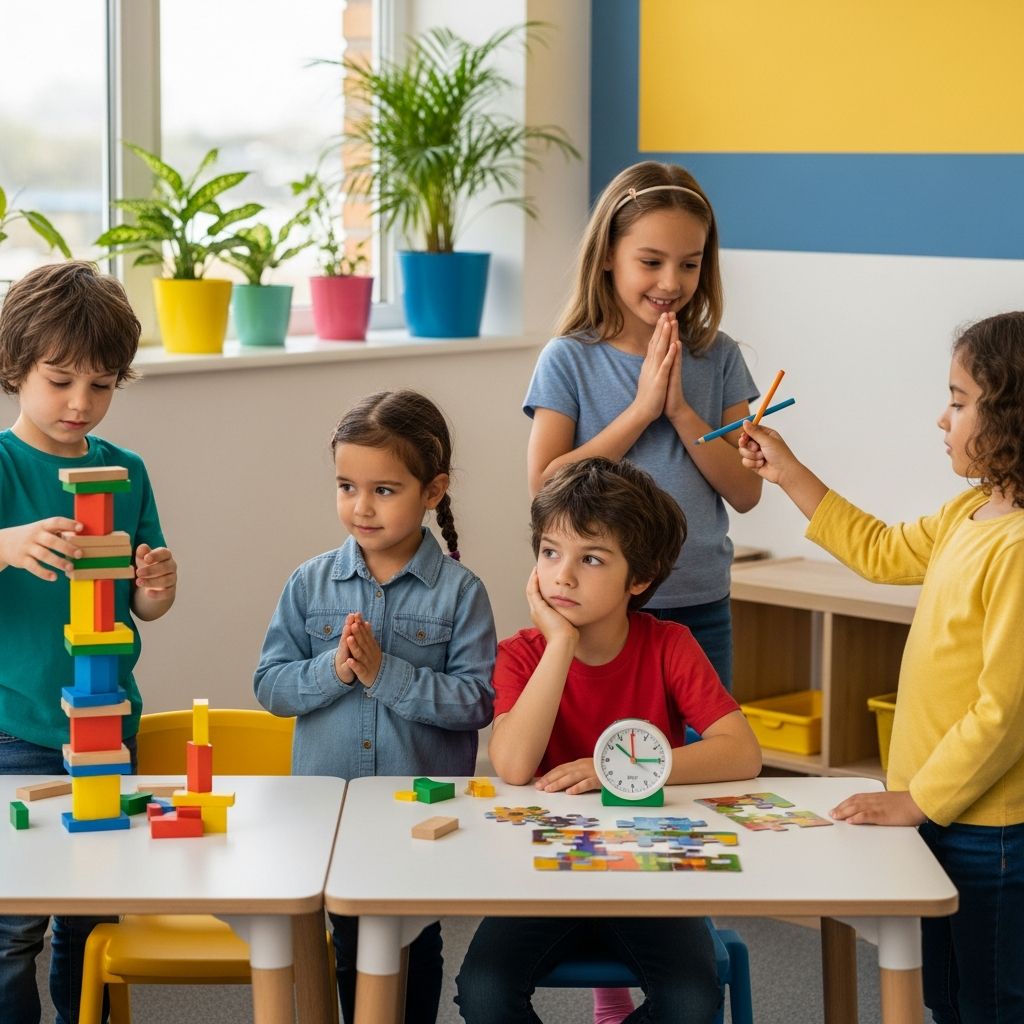
Games transform learning into play, making impulse control fun and memorable. They encourage body awareness, listening, and delayed gratification.
Freeze Dance Challenge
Play music and dance freely, then flash a red/green sign (or shout “freeze!”) to stop instantly. This hones listening and physical control. Variations: Hold poses from cards, building memory too.
Don’t Break the Tower
Like Jenga, kids carefully remove blocks from a structure using a tool, practicing precision to avoid collapse. Ideal for fine motor control and foresight.
Simon Says for Obedience
Only follow commands prefixed with “Simon says,” teaching selective response inhibition.
| Game | Age Group | Skills Targeted | Setup Time |
|---|---|---|---|
| Freeze Dance | 3-7 | Listening, Body Control | 2 minutes |
| Don’t Break the Tower | 4-8 | Precision, Patience | 5 minutes |
| Simon Says | 3-6 | Selective Attention | 1 minute |
| Waiting Game | 5-10 | Response Delay | 0 minutes |
Use these 10-15 minutes daily for noticeable improvements in group settings.
Mindfulness and Breathing Techniques
Mindfulness interrupts impulsive reactions by anchoring kids in the present. Simple exercises like deep breathing reset the nervous system.
- Buddy Breathing: Lie down, place a stuffed animal on the belly, and watch it rise/fall with slow breaths.
- Count to Ten: When upset, count aloud or silently to create a pause.
- Emotion Labeling: Name feelings (“I’m frustrated”) to reduce their intensity.
Practice in a designated “calm corner” with soft lighting and cushions, making it a safe space for regulation. Positive self-talk, like “I can wait,” reinforces resilience.
Role-Playing Real-Life Scenarios
Simulations prepare kids for social situations, exploring outcomes of impulsive vs. controlled choices. Act out playground disputes or sharing toys, discussing feelings afterward.
- Scenario: Friend has a ball. Impulsive: Grab it. Controlled: Ask politely.
- Praise thoughtful choices: “Great job waiting—that made your friend happy!”.
For anger, redirect: Stomp instead of kick, or squeeze fists to release energy. This builds empathy and alternative responses.
Emotional Expression Through Creative Play
Activities channeling emotions safely prevent outbursts. Emotion charades: Act out feelings wordlessly for others to guess, enhancing nonverbal cues.
Storytelling with pauses: Narrate a tale, stopping for kids to predict or shout controlled responses. Art therapy, like coloring mandalas, soothes impulsivity.
Age-Specific Approaches to Self-Regulation
| Age | Focus | Example Strategies |
|---|---|---|
| 2-4 Years | Basic Stops | Red Light/Green Light, Simple Commands |
| 5-7 Years | Games & Words | Simon Says, Name Emotions |
| 8-10 Years | Reflection | Role-Play, Journal Choices |
Tailor to developmental stages for optimal engagement.
Creating a Supportive Home and Classroom Environment
Consistency across settings amplifies growth. Set clear rules with explained reasons and consequences. Involve siblings or peers in activities for reinforcement. Limit screen time, which can hinder focus, and promote physical activity to burn excess energy.
Track progress with charts: Stickers for calm moments motivate without pressure.
Frequently Asked Questions (FAQs)
What if my child has ADHD and struggles more?
Extra visuals, shorter sessions, and professional input help. Skills like STOP-THINK work well.
How long until I see results?
Weeks of daily practice yield changes; consistency is key.
Are games enough, or do I need consequences?
Combine both: Games teach, consequences reinforce.
Can too much structure harm independence?
Balance with choice-making opportunities to build autonomy.
What about teens?
Shift to discussions on real consequences, like social media impulses.
Long-Term Impact of Early Self-Control Training
Children mastering these skills show higher academic achievement, stronger friendships, and better mental health into adulthood. Invest now for their future success.
References
- 10 Engaging Impulse Control Activities for Kids – Good Health Psych — Good Health Psych. 2023. https://goodhealthpsych.com/blog/10-fun-impulse-control-activities-for-kids-building-self-regulation-skills/
- Self Control for Kids | Elementary and Middle School Students — YouTube (Mental Health Center Kids). 2023. https://www.youtube.com/watch?v=0AFRnZEkqq4
- Effective Strategies for Teaching Impulse Control to Children — ChildCare Education Institute (CCEI). 2024. https://www.cceionline.com/effective-strategies-for-teaching-impulse-control-to-children/
- Impulse Control and ADHD: Teaching Good Behavior — ADDitude Magazine. 2023. https://www.additudemag.com/keeping-kids-accountable/
- Children’s Impulse Control Strategies — Center for Children and Youth (JFCS). 2023. https://ccy.jfcs.org/what-to-do-before-impulse-controls-kick-in/
- Helping Children Develop “Impulse Control” — Illinois Early Learning Project (.edu). 2022. https://illinoisearlylearning.org/tipsheets/impulsecontrol/
- Why Impulse Control Is Harder Than Ever — Scholastic. 2023. https://www.scholastic.com/parents/family-life/parent-child/why-impulse-control-harder-ever.html