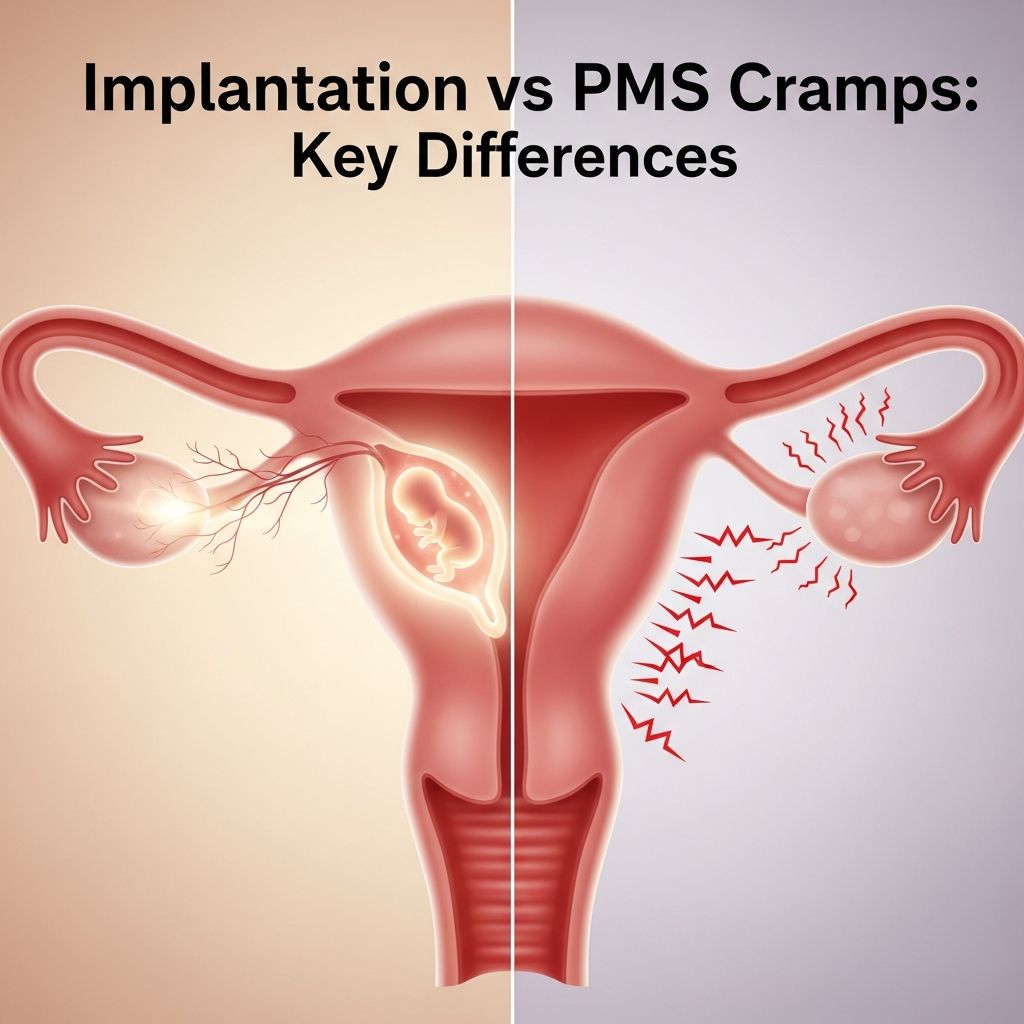
Distinguishing between **implantation cramps** and **PMS cramps** is crucial for women trying to conceive or monitor their menstrual cycles. Implantation cramps occur when a fertilized egg attaches to the uterine lining, typically signaling early pregnancy, while PMS cramps precede menstruation due to hormonal shifts and uterine contractions. These sensations can mimic each other, but key differences in timing, intensity, location, and associated symptoms provide clarity.
Understanding the Biological Basis of Cramps
Cramps in the lower abdomen arise from uterine activity. During PMS, prostaglandins—hormone-like substances—trigger muscle contractions to shed the uterine lining, causing dull aches that intensify before bleeding. In contrast, implantation involves a fertilized egg burrowing into the endometrium around 6-12 days post-ovulation, prompting mild contractions without heavy bleeding. This process, part of early pregnancy, affects only some women, with studies noting about 25-28% experiencing related discomfort.
Not all cramp-like feelings indicate pregnancy or PMS; ovulation cramps, occurring mid-cycle, can also confuse matters. These stem from follicular rupture and feel sharper, often one-sided. Recognizing these origins helps in accurate self-assessment.
Timing: When Do These Cramps Happen?
Timing is the primary differentiator. Implantation cramps emerge 6-12 days after ovulation, roughly a week before your expected period, aligning with when a pregnancy test might first detect hCG. PMS cramps, however, start 1-2 days prior to menstruation and peak as bleeding begins, lasting through the first few days of the cycle.
- Implantation: Days 20-26 of a 28-day cycle (post-ovulation).
- PMS/Period: Days 26-28 onward, coinciding with flow.
Tracking your cycle via apps or basal body temperature enhances precision, as ovulation shifts can alter these windows.
Sensation and Intensity Compared
Implantation cramps are generally milder and briefer, described as tingling, pulling, pricking, or fluttering sensations lasting hours to 2 days. They feel like light pressure above the pubic bone, intermittent rather than constant. PMS cramps, driven by stronger prostaglandin release, manifest as dull throbs, sharp stabs, or persistent aches radiating to the back or thighs, building in severity.
| Aspect | Implantation Cramps | PMS Cramps |
|---|---|---|
| Intensity | Mild, moderate at most | Moderate to severe |
| Sensation | Tingling, pulling, brief twinges | Dull ache, sharp pains |
| Duration | Few hours to 2 days | Days, worsening with flow |
| Location | Centered low abdomen | Abdomen, back, thighs |
This table summarizes sensory profiles based on common reports; individual experiences vary.
Bleeding Patterns: Spotting vs Full Flow
Accompanying discharge offers another clue. Implantation bleeding is light spotting—pink, brown, or scant red—lasting 1-2 days, not requiring pads. PMS often precedes or coincides with heavier red flow lasting 3-7 days. Ovulation spotting, if present, is minimal and mid-cycle. Absence of bleeding doesn’t rule out implantation, as not everyone spots.
Accompanying Symptoms to Watch For
Beyond cramps, holistic symptoms aid differentiation:
- Implantation/Early Pregnancy: Breast tenderness, mild nausea, fatigue, frequent urination, heightened smell sensitivity. These arise from rising hCG and progesterone.
- PMS: Mood swings, bloating, headaches, food cravings, back pain. Symptoms resolve post-period.
Implantation may include positive pregnancy test results soon after, while PMS aligns with negative tests and cycle restart.
Other Similar Sensations: Ovulation and Beyond
Ovulation cramps (mittelschmerz) occur mid-cycle (days 10-16), feeling sharp and localized to one side, with increased cervical mucus or libido. They differ from implantation by timing and lack pregnancy hormones. Gas, constipation, or ligament stretching in early pregnancy can also mimic cramps but feel more diffuse.
When to Seek Medical Advice
Mild cramps fitting these patterns rarely need intervention. Consult a doctor for:
- Severe, persistent pain.
- Heavy bleeding or clots.
- Cramps with fever, dizziness, or shoulder pain (ectopic risk).
- Unusual timing post-conception attempts.
Avoid NSAIDs like aspirin during potential implantation, as they may raise miscarriage risk; opt for acetaminophen if needed.
Tracking and Confirming Pregnancy
Use ovulation predictor kits, cycle apps, or BBT charting for patterns. Home pregnancy tests are reliable 10-14 days post-ovulation or after missed period. Blood tests or ultrasounds provide confirmation.
Frequently Asked Questions
Can implantation cramps be as painful as period cramps?
No, implantation cramps are typically much milder and shorter, unlike the intensifying pain of period cramps.
How long after ovulation do implantation cramps start?
They begin 6-12 days post-ovulation, around expected period time.
Is spotting always a sign of implantation?
Not necessarily; it could be ovulation or other causes, but light pink/brown spotting with mild cramps suggests implantation.
Do all pregnant women get implantation cramps?
No, many do not; absence doesn’t indicate non-pregnancy.
Can ovulation cramps be mistaken for implantation?
Yes, due to similar mild pain, but ovulation is mid-cycle while implantation is later.
Lifestyle Tips for Managing Early Cycle Discomfort
Stay hydrated, apply heat packs, practice gentle yoga, or try magnesium-rich foods to ease cramps regardless of cause. Rest and balanced nutrition support hormonal balance. For conception efforts, maintain a fertile window log.
Empowering yourself with this knowledge reduces anxiety around cycle irregularities. While self-tracking is valuable, professional prenatal care is essential for confirmation and health.
References
- Implantation Cramps and Bleeding — 1stChoice. 2023. https://1stchoice.org/implantation-cramps-and-bleeding/
- Ovulation Cramps vs. Implantation Cramps: Key Differences Explained — MiraCare. 2024. https://shop.miracare.com/blogs/blog/ovulation-cramps-vs-implantation-cramps
- Implantation vs. period cramps: differences and similarities — Medical News Today. 2024-10-22. https://www.medicalnewstoday.com/articles/321456
- Implantation vs Period Cramps: Differences, & What They Feel Like — Natural Cycles. 2023. https://www.naturalcycles.com/cyclematters/implantation-cramps
- What does implantation cramping feel like? — Flo Health. 2024. https://flo.health/getting-pregnant/trying-to-conceive/signs-of-pregnancy/implantation-cramps
- Cramp Confusion: Early Pregnancy or Period? — Hackensack Meridian Health. 2024-10-22. https://www.hackensackmeridianhealth.org/en/healthu/2024/10/22/cramp-confusion-early-pregnancy-or-period-understanding-the-difference