Light spotting in the days before an expected period can be confusing, especially if you are trying to conceive or worried you might be pregnant. Understanding what implantation bleeding is – and what it is not – helps you interpret early signs more calmly and make informed choices about testing and medical care.
What Is Implantation Bleeding?
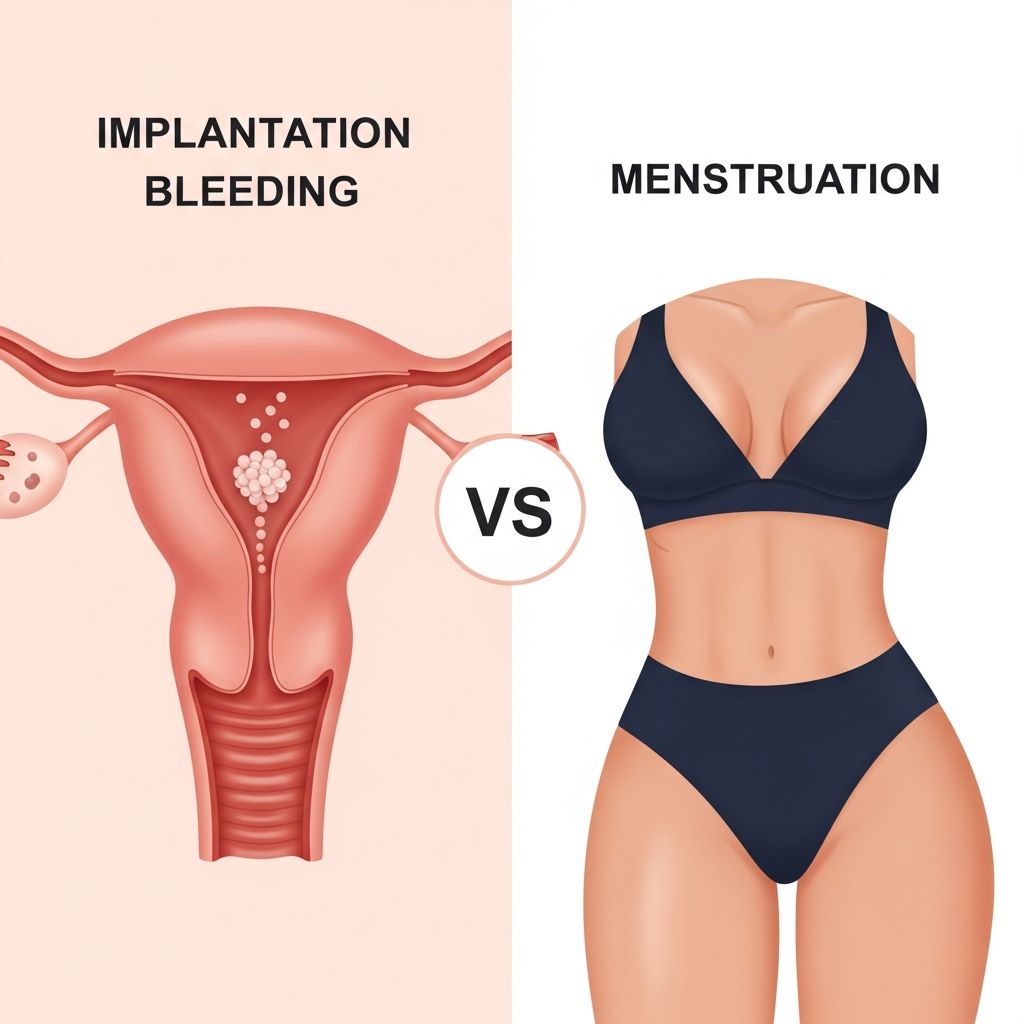
Implantation bleeding is typically defined as very light spotting that may occur when a fertilized egg attaches itself to the lining of the uterus. Some clinicians accept the term, while others point out that research has not firmly proven that implantation itself routinely causes visible bleeding. In practice, the phrase is used to describe mild spotting in very early pregnancy that is lighter and shorter than a usual menstrual period.
When implantation occurs, the embryo burrows into a uterine lining that is rich in tiny blood vessels. This process can in theory disrupt superficial vessels and release a small amount of blood that mixes with cervical mucus and vaginal discharge. The result may appear as a few spots or light smears of pink, red, or brown on your underwear, toilet paper, or a panty liner.
- Bleeding is usually light – more like spotting than a flow.
- It tends to last from a few hours up to a couple of days.
- Many pregnant people never notice any spotting at all.
When Does Implantation Bleeding Happen?
After ovulation, a fertilized egg travels down the fallopian tube and takes several days to reach the uterus. Implantation typically occurs about 6–12 days after ovulation, often around days 8–10 in a standard cycle. Because this window overlaps with the week before an expected period, any spotting around this time can be easily mistaken for premenstrual spotting.
In a typical 28-day cycle, ovulation may occur near day 14. In that scenario, implantation could happen between about day 20 and day 26 of the cycle. Some people with longer or shorter cycles will notice possible implantation spotting earlier or later relative to their next expected period date.
- Implantation usually happens one to two weeks after conception.
- Spotting that starts on or after the day of a missed period is more likely to be early pregnancy bleeding or menstruation than implantation itself.
- Cycle tracking and ovulation testing can help narrow down the likely implantation window.
Common Myths About Implantation Bleeding
Because implantation bleeding is widely discussed online and in fertility forums, several myths and misunderstandings have grown around it. Clearing up these myths can prevent false hope, unnecessary panic, and misinterpretation of symptoms.
Myth 1: Everyone Gets Implantation Bleeding
A common assumption is that spotting before a missed period is a guaranteed sign that implantation has happened and pregnancy is underway. In reality, many pregnancies progress normally with no visible spotting at all, and some people never experience mid-luteal spotting in any cycle, pregnant or not.
Light spotting can occur in both pregnant and non-pregnant cycles due to natural hormonal fluctuations, local cervical irritation, or other benign causes. This means the absence of spotting does not signal a problem with implantation, and the presence of spotting does not automatically mean a pregnancy has implanted.
Myth 2: Implantation Bleeding Proves a Strong, Healthy Pregnancy
Another widespread belief is that having implantation bleeding means the embryo is implanting especially deeply or robustly, predicting a healthier pregnancy or a better chance of success in fertility treatments. There is no evidence that the presence or absence of light spotting during the implantation window reliably predicts the outcome of the pregnancy.
Pregnancy health depends on many factors, including chromosomal normality, hormone levels, uterine environment, and overall maternal health. Spotting alone – whether called implantation bleeding or not – is not a meaningful indicator of pregnancy strength.
Myth 3: Any Early Bleeding Is Implantation
Not all early-cycle bleeding should be labeled as implantation bleeding. Bleeding around the time a period is due can have many explanations. For some, it is simply a lighter-than-usual menstrual cycle. For others, it may represent hormonal spotting, a chemical pregnancy, or an unrelated gynecologic issue.
Because of this, it is important not to rely solely on bleeding patterns to diagnose pregnancy. Home pregnancy testing, follow-up with a health professional, and sometimes blood tests or ultrasound are needed to clarify the cause of early bleeding.
Myth 4: Heavy Bleeding Can Still Be Normal Implantation
Implantation bleeding, by definition, is light. If bleeding resembles or exceeds your normal period flow, lasts several days with clots, or soaks through pads or tampons quickly, it is unlikely to be due to implantation alone. Heavy bleeding deserves prompt medical attention, especially if pregnancy is possible.
Although some people report heavier bleeding and still go on to have healthy pregnancies, this would generally be classified as early pregnancy bleeding rather than implantation bleeding. It can sometimes signal miscarriage, ectopic pregnancy, or other conditions that require evaluation.
Typical Features of Implantation Bleeding
Because implantation bleeding is a descriptive term rather than a laboratory diagnosis, health professionals focus on patterns: timing, color, amount, and accompanying symptoms. Comparing these features with your usual periods can help you gauge what you may be experiencing.
| Feature | Implantation Bleeding | Typical Period |
|---|---|---|
| Timing | Usually 6–12 days after ovulation, often a few days before the expected period. | Occurs on or after the expected cycle day, often predictably each month. |
| Flow | Very light spotting; may be a few drops or streaks, not enough to soak a pad. | Moderate to heavy bleeding that may soak pads or tampons over several days. |
| Duration | A few hours up to about two days, often intermittent. | Generally 3–7 days of continuous bleeding. |
| Color | Pink, light red, or brown; sometimes darker due to slower flow. | Bright to dark red throughout most of the period. |
| Cramping | Mild or no cramping; some people feel light twinges. | Mild to strong cramps, backache, and pelvic pressure are common. |
| Clots | Generally no clots. | Small clots can be normal during heavier flow days. |
These differences are general guidelines. Some people have naturally light periods that mimic spotting, while others experience strong cramping even with very early pregnancy. Because of this overlap, it is impossible to know for certain based on bleeding alone whether implantation has occurred.
Other Causes of Early-Cycle Spotting
When spotting occurs in the luteal phase – the days after ovulation and before a period – implantation is only one possible explanation. Several other benign or serious causes may be involved. Understanding these possibilities can prevent assumptions and encourage timely care when needed.
- Hormonal fluctuations: Shifts in progesterone or estrogen can cause mid-luteal spotting in both pregnant and non-pregnant cycles.
- Cervical irritation: Recent pelvic exams, Pap tests, or intercourse can irritate the cervix and cause light spotting, especially if the cervix is more vascular in early pregnancy.
- Breakthrough bleeding on contraception: Hormonal birth control can lead to irregular spotting, particularly in the first few months of use or after missed pills.
- Infections: Some vaginal or cervical infections can produce light bleeding along with discharge, odor, or discomfort.
- Chemical pregnancy or early miscarriage: Very early loss can look like a slightly late or slightly heavier period with additional cramping.
- Ectopic pregnancy: Pregnancy developing outside the uterus can cause spotting or bleeding with pelvic or abdominal pain and is a medical emergency.
When to Take a Pregnancy Test
Because implantation and early hormonal changes govern when a pregnancy test will be accurate, timing matters. Home pregnancy tests measure human chorionic gonadotropin (hCG), a hormone that rises rapidly after implantation. Testing too early, even if spotting is present, can produce a false negative simply because hCG has not reached detectable levels yet.
For many people, the most reliable time to test is on the day a period is due or after a missed period. Highly sensitive tests may detect pregnancy a few days earlier, but negative results at that stage should be repeated if the period does not arrive. If spotting continues or is accompanied by pain, dizziness, or shoulder tip pain, seek medical advice regardless of test results.
- Wait until at least the day of the expected period for the most accurate home test result.
- Use first-morning urine, which is more concentrated and may contain higher hCG levels.
- If a test is negative but pregnancy is still suspected, retest after 48–72 hours.
Red-Flag Symptoms: When to Call a Doctor
Light, short-lived spotting without pain is often harmless, whether or not pregnancy is present. However, certain symptoms should never be dismissed as normal implantation bleeding. Acting quickly in these situations can be lifesaving and may protect fertility.
- Heavy bleeding that soaks through pads or tampons within an hour.
- Large clots or tissue passage, especially with strong cramps.
- Sharp or one-sided pelvic pain, or pain that worsens over time.
- Dizziness, fainting, or feeling light-headed.
- Shoulder tip pain, which can indicate internal bleeding in ectopic pregnancy.
- Fever, foul-smelling discharge, or severe discomfort.
Anyone with a positive pregnancy test who experiences heavier-than-spotting bleeding or significant pain should contact a health professional promptly or seek urgent care. Early evaluation can identify miscarriage, ectopic pregnancy, or treatable infections.
Practical Tips if You Suspect Implantation Bleeding
If you notice light spotting in the second half of your cycle, you can take several practical steps to track what is happening while you wait for a clear test result or for your period to arrive. These behaviors can also give your doctor valuable information if you end up seeking care.
- Note the timing of spotting in relation to ovulation (if known) and expected period date.
- Record the color, amount, and duration of bleeding each day.
- Pay attention to other symptoms such as breast tenderness, fatigue, nausea, or cramping.
- Avoid inserting anything into the vagina (such as tampons or intercourse) if you suspect early pregnancy until you have clarity.
- Have home pregnancy tests available, but resist the urge to test too early to avoid confusion.
Frequently Asked Questions About Implantation Bleeding
How long does implantation bleeding usually last?
Most descriptions of implantation bleeding involve spotting that lasts from a few hours up to about two days. It is usually lighter and shorter than a regular period. If bleeding continues beyond several days or becomes heavier, it is less likely to be implantation and should be discussed with a health professional.
Can implantation bleeding have clots?
Implantation bleeding is typically so light that clots are not present. The appearance of clots usually indicates a heavier flow, more typical of a menstrual period or miscarriage. Any clotting with suspected early pregnancy warrants monitoring and, if heavy or painful, medical advice.
Does every pregnant person get implantation bleeding?
No. Many people have completely symptom-free implantation with no spotting at all. Others may experience mild cramps or twinges without any visible blood. The absence of implantation bleeding is not a sign that something is wrong with a pregnancy.
Can implantation bleeding be bright red?
Some light bleeding may appear pink or light red, especially if the blood is fresh and mixed with cervical mucus. However, bright red bleeding that increases in amount or requires full pads or tampons is more consistent with a period or another source of bleeding rather than implantation alone.
Is it safe to use tampons if I think I have implantation bleeding?
If pregnancy is possible, many clinicians recommend using pads or liners instead of tampons during early bleeding. This approach reduces the risk of irritating the vagina or cervix and allows you to better monitor the amount and appearance of blood. Once pregnancy status is clarified and infection or complications are ruled out, your provider can advise you about ongoing period management.
Can stress cause spotting that looks like implantation bleeding?
Significant stress can affect hormone levels and disrupt the menstrual cycle, sometimes leading to irregular ovulation, delayed periods, or mid-cycle spotting. This stress-related spotting can resemble what people think of as implantation bleeding but is not directly related to embryo implantation.
Key Takeaways
- Implantation bleeding is a term used for very light spotting that may occur around the time a fertilized egg implants in the uterus, but not everyone experiences it.
- It is usually lighter, shorter, and earlier than a typical menstrual period and often does not include clots or strong cramps.
- Many other factors – from hormonal shifts to infections or early pregnancy complications – can also cause spotting.
- Home pregnancy tests are most reliable on or after the expected period date; testing too early can give misleading results.
- Heavy bleeding, severe pain, dizziness, or other red-flag symptoms always require prompt medical evaluation, whether or not you think implantation is involved.