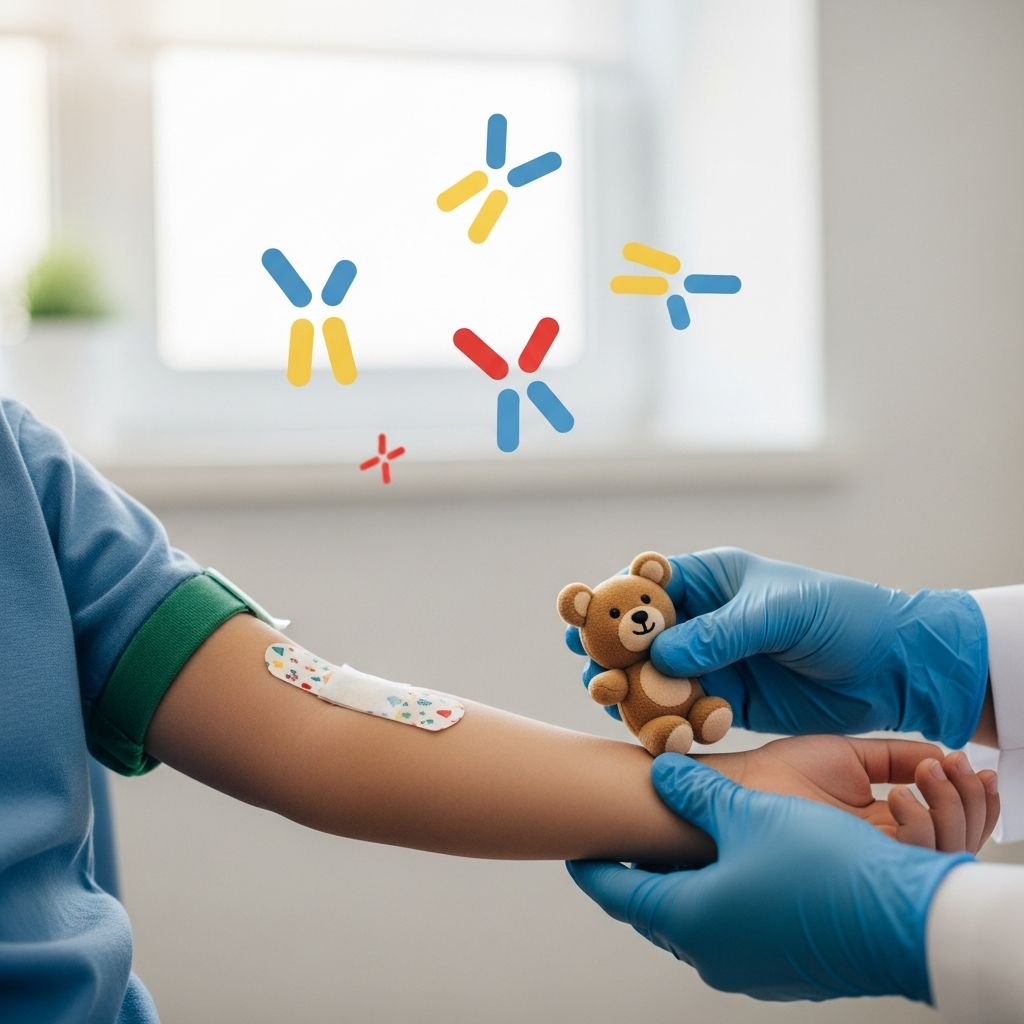
Immunoglobulin tests measure key antibodies in a child’s blood to assess immune function, helping diagnose deficiencies or excesses that lead to frequent infections or other issues. These tests focus on IgA, IgG, and IgM, providing vital insights into how well a young immune system combats threats.
The Role of Antibodies in Your Child’s Defense System
Antibodies, or immunoglobulins, are specialized proteins crafted by the body’s plasma cells to neutralize invaders like bacteria, viruses, and allergens. In children, these proteins are crucial for building long-term protection, especially as their immune systems mature.
When a child encounters a new pathogen for the first time, the immune response kicks off with IgM production, offering immediate defense. Over time, IgG takes over for sustained immunity, while IgA guards mucosal surfaces like the respiratory and digestive tracts.
- IgM: First responders that peak early in infections and decline as others rise.
- IgG: Most abundant, providing memory against repeat exposures.
- IgA: Protects linings of the mouth, lungs, and gut from entry points.
This coordinated effort ensures children develop resilience, but imbalances can signal underlying problems.
Why Pediatricians Recommend These Tests
Doctors order immunoglobulin panels when children show patterns of recurrent infections, such as repeated earaches, sinus issues, pneumonia, or gut troubles like chronic diarrhea. These symptoms may indicate hypogammaglobulinemia, where antibody levels fall too low.
Testing also aids in evaluating allergies, autoimmune disorders like juvenile arthritis or celiac disease, and monitoring conditions such as HIV or cancers like multiple myeloma. For instance, persistent fevers, unexplained rashes, or failure to thrive might prompt this check.
| Symptom | Possible Link to Low Immunoglobulins |
|---|---|
| Frequent respiratory infections | Suggests IgA or IgG deficiency |
| Chronic diarrhea | Often tied to IgA shortages |
| Unusual or severe infections | Indicates broader immune weakness |
| Autoimmune signs (rashes, joint pain) | May involve IgG elevations |
Early detection through testing can prevent complications and guide therapies like antibody infusions.
How the Blood Draw Works for Kids
Preparation is simple: no fasting required, though parents should comfort anxious children with stories or distractions. A phlebotomist cleans the arm, applies a tourniquet, and inserts a small needle into a vein, usually in the inner elbow.
The process takes under five minutes, with mild discomfort like a quick pinch. For toddlers or infants, numbing cream or smaller lancets from a heel or finger might be used. Post-draw, pressure stops bleeding, and a bandage protects the site.
Rarely, cerebrospinal fluid (CSF) testing via lumbar puncture is needed, involving a back needle under sedation for safety. Parents receive results in days, discussed in follow-up visits.
Decoding Normal Ranges and Abnormal Findings
Normal levels vary by age, as children’s immune systems evolve rapidly. Infants rely on maternal IgG at birth, which wanes by 6 months, prompting their own production.
Low levels (deficiencies) heighten infection risks, while high levels might point to chronic inflammation, allergies, or malignancies. Labs use methods like electrophoresis to quantify proteins.
- Low IgG: Common in primary immunodeficiencies; may need IVIG therapy.
- Low IgA: Linked to gut and respiratory vulnerabilities; often asymptomatic.
- Low IgM: Rare, but signals early response flaws.
- High levels: Could indicate liver disease, infections, or autoimmunity.
Pediatricians interpret alongside clinical history for accurate diagnosis.
Treatment Pathways for Imbalanced Levels
If deficiencies are confirmed, treatments range from prophylactic antibiotics to intravenous immunoglobulin (IVIG) replacements, administered monthly to mimic natural levels. Vaccines remain key, though some live ones may be avoided.
For excesses, addressing root causes like infections or inflammation is priority. Regular monitoring tracks progress, with lifestyle tweaks like hygiene and nutrition supporting immunity.
Risks, Side Effects, and Family Preparation
The test poses minimal risks: bruising, dizziness, or infection at the site (rare). Allergic reactions to needles occur seldom. Parents can ease fears by explaining it’s a ‘superhero check’ for the immune army.
Post-test care involves keeping the site clean and watching for swelling. Discuss results calmly, empowering kids with age-appropriate facts.
FAQs for Concerned Parents
At what age are immunoglobulin tests typically done?
Any age, but common from infancy if infections recur. Levels naturally fluctuate in early childhood.
Can diet or vaccines affect test results?
Vaccines boost specific antibodies, but total levels remain stable. Recent infections may temporarily elevate readings.
What if my child’s levels are borderline?
Further tests like vaccine responses or subclass assays clarify. Observation may suffice if healthy.
Is this test covered by insurance?
Usually yes, when medically indicated. Check with providers for pediatric immunology panels.
How often are follow-up tests needed?
Depends on diagnosis: every 3-6 months for monitoring therapy, or annually for stable cases.
Empowering Families Through Knowledge
Immunoglobulin testing demystifies immune challenges, enabling proactive care. Collaborate with specialists like immunologists for tailored plans. Track symptoms in a journal to inform doctors.
While most kids thrive without issues, awareness ensures timely intervention. Promote overall wellness with balanced diets, sleep, and exercise to bolster natural defenses.
Expand on immunoglobulin importance: These proteins not only fight acute threats but train the adaptive immune system. In pediatrics, subclass testing (e.g., IgG1-4) refines diagnoses when totals are normal but function lags.
Historical context: Discovered in the 1960s, immunoglobulin assays revolutionized immunodeficiency care, reducing child mortality from infections. Modern labs use nephelometry for precise quantification, ensuring reliable pediatric norms adjusted for growth stages.
Case insights: A child with 10 sinus infections yearly might have selective IgA deficiency, affecting 1 in 500, often managed conservatively unless symptomatic. Conversely, common variable immunodeficiency (CVID) with pan-hypogammaglobulinemia requires lifelong IVIG, dramatically improving quality of life.
Genetic factors: Many deficiencies are hereditary, like X-linked agammaglobulinemia, warranting family screening. Prenatal counseling aids high-risk pregnancies.
Global perspective: In developing regions, malnutrition exacerbates deficiencies, underscoring nutrition’s role. U.S. guidelines from AAP emphasize testing thresholds for recurrent infections.
Research frontiers: Gene therapies target root causes, with trials showing promise for severe cases. Parents should stay informed via reputable sources.
Holistic support: Probiotics may aid IgA production in gut health, per emerging studies, complementing medical care. Stress management for families prevents immune suppression.
Navigating diagnosis: If initial tests flag issues, antibody function tests (e.g., pneumococcal responses) confirm production quality. Bone marrow biopsies rarely assess plasma cell counts.
Long-term outlook: With treatment, most children lead normal lives, attending school and sports. Annual flu shots and hygiene remain pillars.
Parental advocacy: Join support groups for shared experiences. Educate schools on needs like hand sanitizer access.
Preventive strategies: Breastfeeding transfers maternal IgA, buffering infants. Delaying allergens might calibrate responses.
References
- Immunoglobulins (IgA, IgG, IgM Blood Test) — Testing.com. 2023-05-15. https://www.testing.com/tests/immunoglobulins-iga-igg-igm/
- Immunoglobulin Test: High vs Low vs Normal Levels — WebMD. 2024-02-10. https://www.webmd.com/a-to-z-guides/immunoglobulin-test
- Quantitative Immunoglobulins — UCSF Health. 2023-11-20. https://www.ucsfhealth.org/medical-tests/quantitative-immunoglobulins
- Blood Test: Immunoglobulins (IgA, IgG, IgM) — Nemours KidsHealth. 2024-01-05. https://kidshealth.org/en/parents/test-immunoglobulins.html
- Quantitative Serum Immunoglobulin Tests — RACGP. 2013-04-01. https://www.racgp.org.au/afp/2013/april/quantitative-serum-immunoglobulin-tests
- Immunoglobulin G (IgG): Function, Tests & Disorders — Cleveland Clinic. 2024-08-12. https://my.clevelandclinic.org/health/body/igg