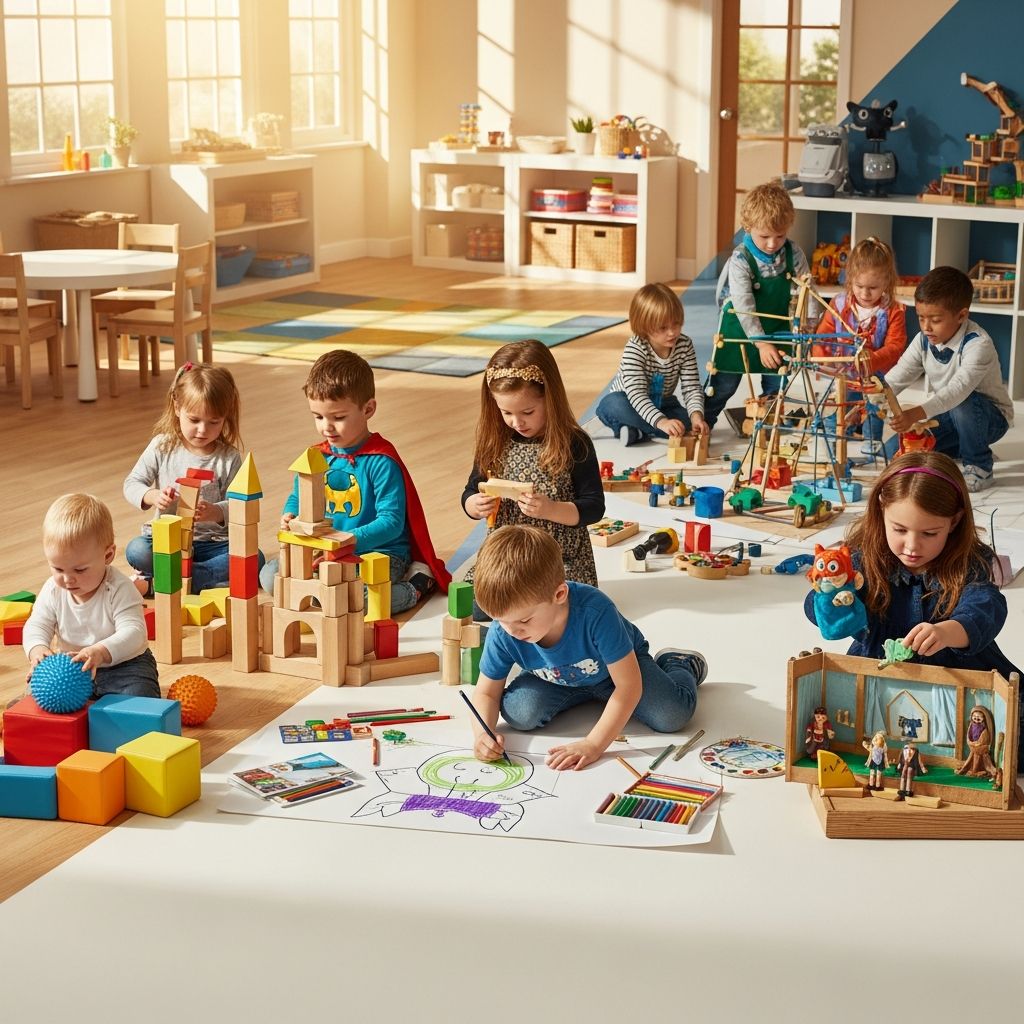
Understanding the Progression of Imaginative Play in Preschoolers
Between the ages of three and four years, children experience a remarkable transformation in how they engage with the world through play. What begins as simple pretend scenarios evolves into increasingly complex fantasy narratives where children invent detailed storylines, create multiple characters, and collaborate with peers in shared imaginative worlds. This developmental stage marks a crucial period where children harness their growing cognitive abilities to construct elaborate games that extend far beyond basic role-playing, demonstrating sophisticated thinking patterns and creative problem-solving capabilities.
The Foundation: Building on Earlier Play Skills
By the time children reach three years old, they have already developed foundational pretend play abilities established during their toddler years. Earlier developmental stages introduced children to simple symbolic play—using objects to represent other things and performing basic pretend actions like pretending to drink from a cup or feeding a doll. However, the sophistication of play during ages 36-48 months represents a qualitative leap from these simpler beginnings.
During this period, children can sustain spontaneous play activities for extended periods, often lasting up to an hour throughout the course of the day. This extended engagement reflects not only improved attention spans but also the development of sustained narrative thinking. Children begin planning their play scenarios in advance, determining what story they want to enact and gathering necessary materials before commencing play activities.
Characteristics of Fantasy Play Development
The imaginative play that emerges during this developmental window exhibits several defining characteristics that distinguish it from earlier play stages:
- Multi-role performance: Children can adopt and switch between multiple characters within a single play session, such as playing a fairy, then a pirate, and subsequently a doctor, often within the same extended play period.
- Complex narrative structures: Fantasy scripts expand significantly, incorporating ideas derived from books, television shows, and movie characters alongside personal experiences. Children weave together diverse plot elements to create original stories.
- Symbolic object transformation: Children demonstrate remarkable creativity in repurposing everyday objects, using building blocks to construct trains, using their arms as fences, or transforming a round pillow into a pizza. This shows advanced abstract thinking where form and function become flexible.
- Problem-solving through play: Imaginative narratives now include challenges and obstacles—a broken train needs repair, a doll becomes ill and requires care—allowing children to explore solutions within safe, controlled play environments.
- Emotional attribution: Toys and dolls receive increasingly sophisticated emotional characteristics and personality traits, moving beyond simple animate/inanimate distinctions to nuanced portrayals of feelings and motivations.
The Role of Props and Environmental Supports
While children’s imaginative capacity flourishes during this period, the physical environment and available materials continue to play important supporting roles. Props serve as catalysts for elaborate play scenarios. Dress-up clothing, dolls, toy vehicles, and household items become essential tools for constructing detailed fantasy worlds.
Parents and educators notice that children increasingly seek out and request specific objects needed for their play activities. Rather than playing passively with whatever materials are available, three- to four-year-olds actively plan their play scenarios and deliberately gather resources to support their narratives. This intentional approach to play preparation demonstrates emerging executive functioning skills and goal-directed behavior.
Social Dimensions of Imaginative Play
A significant development during this period involves the increasingly social nature of fantasy play. While younger toddlers engage primarily in solitary or parallel play—playing alongside peers without direct interaction—children aged 36-48 months begin transitioning toward more collaborative imaginative experiences.
During associative play, which characterizes much of this age group’s social engagement, children play together with loose interaction and shared ideas. However, their collaborative play differs from the fully cooperative, goal-directed play that emerges later. In these earlier stages, children might play pretend together but maintain separate narrative threads—one child might be feeding stuffed animals while another engages the same animals in different activities.
This intermediate form of play serves important developmental functions. Children practice social skills, negotiate shared spaces, learn from observing peers’ creative approaches, and begin understanding that others have different perspectives and ideas. They experiment with turn-taking and learn to adjust their play when interacting with others, foundational skills for later cooperative play and group activities.
Connecting Play to Broader Cognitive Development
The expansion of imaginative play during ages three to four reflects broader advances in cognitive development. Enhanced symbolic thinking—the ability to use one object to represent another and to manipulate ideas mentally—enables children to construct increasingly elaborate fantasy scenarios. Growing vocabulary and language skills allow children to narrate their play, explain their imaginative scenarios to others, and incorporate dialogue between characters.
Memory development supports the maintenance of extended play narratives. Children can recall plot elements from previous days’ play and build upon established storylines, creating narrative continuity that spans multiple play sessions. They remember which toys belong to which scenarios and can retrieve specific materials needed to continue developing their fantasies.
Additionally, play during this period serves as a vehicle for practicing problem-solving and social-emotional skills. When a toy breaks during play or a conflict arises between playmates, children develop strategies for overcoming obstacles and managing challenges within the context of their imaginary worlds. These experiences, though occurring in fantasy contexts, build capabilities applicable to real-world situations.
Individual Variations in Play Development
| Play Characteristic | Typical Expression at Ages 3-4 | Supporting Factors |
|---|---|---|
| Narrative Complexity | Multi-episode stories with cause-and-effect relationships | Language development, exposure to stories, cognitive maturation |
| Duration of Play | Up to one hour of sustained engagement | Improved attention span, motivation, environmental support |
| Role Flexibility | Multiple role shifts within single play session | Self-awareness development, perspective-taking abilities |
| Object Symbolism | Creative repurposing of ordinary items | Abstract thinking development, prior play experience |
| Social Interaction | Collaborative play with loose coordination | Social skills development, peer exposure, adult facilitation |
Supporting Rich Imaginative Development
Understanding the sophistication of play during this developmental period helps caregivers and educators provide appropriate support and enrichment. Children benefit from access to diverse materials—blocks, dress-up clothes, dolls, vehicles, art supplies—that enable them to construct varied scenarios. Open-ended toys that allow flexible use encourage more imaginative applications than highly specific, realistic toys.
Exposure to stories through reading, film, and discussion provides children with narrative templates and character ideas they can incorporate into their own fantasy play. When adults discuss stories, highlight characters’ feelings and motivations, and ask children about their own imaginative scenarios, they reinforce the cognitive skills underlying sophisticated play.
Time and space matter significantly. Children need extended, uninterrupted periods for their imaginative play to develop fully. Play that gets repeatedly interrupted cannot achieve the complexity and sustained engagement characteristic of this developmental stage. Similarly, providing adequate physical space where children can spread out materials, construct settings, and move freely supports more elaborate scenarios.
The Connection Between Play and Learning
Imaginative play at this developmental stage serves far more than entertainment purposes. Through fantasy play, children consolidate learning, practice emerging skills, and explore concepts in safe contexts. A child pretending to be a doctor practices language skills, engages in problem-solving (determining what the sick toy patient needs), explores cause-and-effect relationships, and learns about roles and responsibilities within society.
The flexibility inherent in symbolic play allows children to represent situations and feelings that might feel overwhelming in reality. They can practice managing emotions, responding to conflicts, and navigating social situations through the emotional distance that fantasy provides. A child worried about a doctor’s visit might repeatedly play out medical scenarios with dolls, gradually building comfort and understanding through controlled repetition.
Variations Across Different Play Contexts
Children’s imaginative play may vary significantly depending on their environment and available resources. In naturalistic outdoor settings, children might construct elaborate fantasy worlds using sticks, leaves, dirt, and found objects, demonstrating remarkable ingenuity in their material repurposing. In structured settings with manufactured toys, play might follow different narrative patterns influenced by the toys’ designs.
Cultural contexts also influence the themes, characters, and scenarios children select for their imaginative play. Children incorporate cultural values, family traditions, and community practices into their fantasies, making their play a reflection of their specific social worlds. Some children may gravitate toward domestic scenarios reflecting their family experiences, while others might focus on adventure narratives or role-playing community professions.
Peer Learning and Play Influence
During this period, children increasingly learn from observing peers’ imaginative approaches. When playing alongside other children, they absorb new ideas for play scenarios, observe how others handle props creatively, and discover alternative narratives for familiar play situations. This peer learning happens naturally through parallel and associative play, even when children aren’t directly collaborating toward shared goals.
Exposure to peers with different play styles, interests, and creative approaches expands individual children’s imaginative repertoires. A child who primarily engages in domestic play scenarios might discover adventure themes through watching peers, while another child might learn new narrative structures by observing how classmates develop storylines.
Frequently Asked Questions
How much time should children spend in imaginative play daily?
Children benefit from extended, uninterrupted play periods. While individual needs vary, allocating 1-2 hours daily for imaginative play supports optimal developmental outcomes. Quality matters more than quantity—focused engagement in complex play provides greater developmental benefit than fragmented play periods interrupted by frequent transitions.
Should parents and caregivers direct children’s imaginative play or let them lead?
Child-led play is generally most beneficial for supporting their creative development and autonomous thinking. However, thoughtful adult participation can enrich play—asking questions about their narratives, offering suggestions when play stalls, or introducing new materials expands possibilities without dominating their creative direction.
What if a child seems uninterested in imaginative play?
Children develop at different rates and prefer different play styles. Some children may focus more on constructive play or physical play initially. Providing diverse materials, reading engaging stories, playing alongside them, and allowing adequate time often helps children discover imaginative play interests.
How does imaginative play support learning in other areas?
Imaginative play develops language, social-emotional skills, problem-solving, creativity, and cognitive flexibility. Children practicing professional roles learn about community members, playing out scenarios with numbers develops math concepts, and narrative play strengthens literacy foundations.
Are screen-based toys and media harmful to imaginative play development?
While open-ended, unstructured play provides maximum creative benefits, character-based play from books and shows can inspire imaginative scenarios. The key is balance—ensuring children spend significant time with open-ended materials and experiences that demand their creative input rather than passive consumption.
References
- Play ideas for toddler imagination and creativity — Raising Children Australia. 2024. https://raisingchildren.net.au/toddlers/play-learning/play-toddler-development/imagining-play-toddlers
- A Parent’s Guide to Pretend Play Developmental Milestones — Australian Occupational Therapy Association. 2024. https://occupationaltherapy.com.au/pretend-play-developmental-milestones/
- Stages of Play from 24–36 Months: The World of Imagination — Zero to Three. 2024. https://www.zerotothree.org/resource/stages-of-play-from-24-36-months-the-world-of-imagination/
- Stages of play development: Solitary play, parallel play and associative play — Coral Care. 2024. https://www.joincoralcare.com/blog/stages-of-play-development-solitary-play-parallel-play-and-associative-play
- Toddler & Preschool: 6 Stages of Play Activities by Age — Bumbu Toys. 2024. https://www.bumbutoys.com/blog/wooden-toys/toddler-preschool-6-stages-of-play-activities-by-age
- Play Developmental Milestones — Lurie Children’s Hospital. 2024. https://www.luriechildrens.org/en/specialties-conditions/pediatric-occupational-therapy/developmental-milestones/play-developmental-milestones/
- How Kids Learn to Play: 6 Stages of Play Development — Pathways.org. 2024. https://pathways.org/kids-learn-play-6-stages-play-development