Many young children talk, play, or argue with someone that adults cannot see: an imaginary friend. For many parents, this experience raises the same questions: Is this normal? Does it mean something is wrong? Or could it actually be a healthy part of growing up?
This article explores what imaginary friends are, why they appear, what they can reveal about your child’s development, and how to tell the difference between normal pretend play and possible warning signs that deserve professional attention.
What Is an Imaginary Friend?
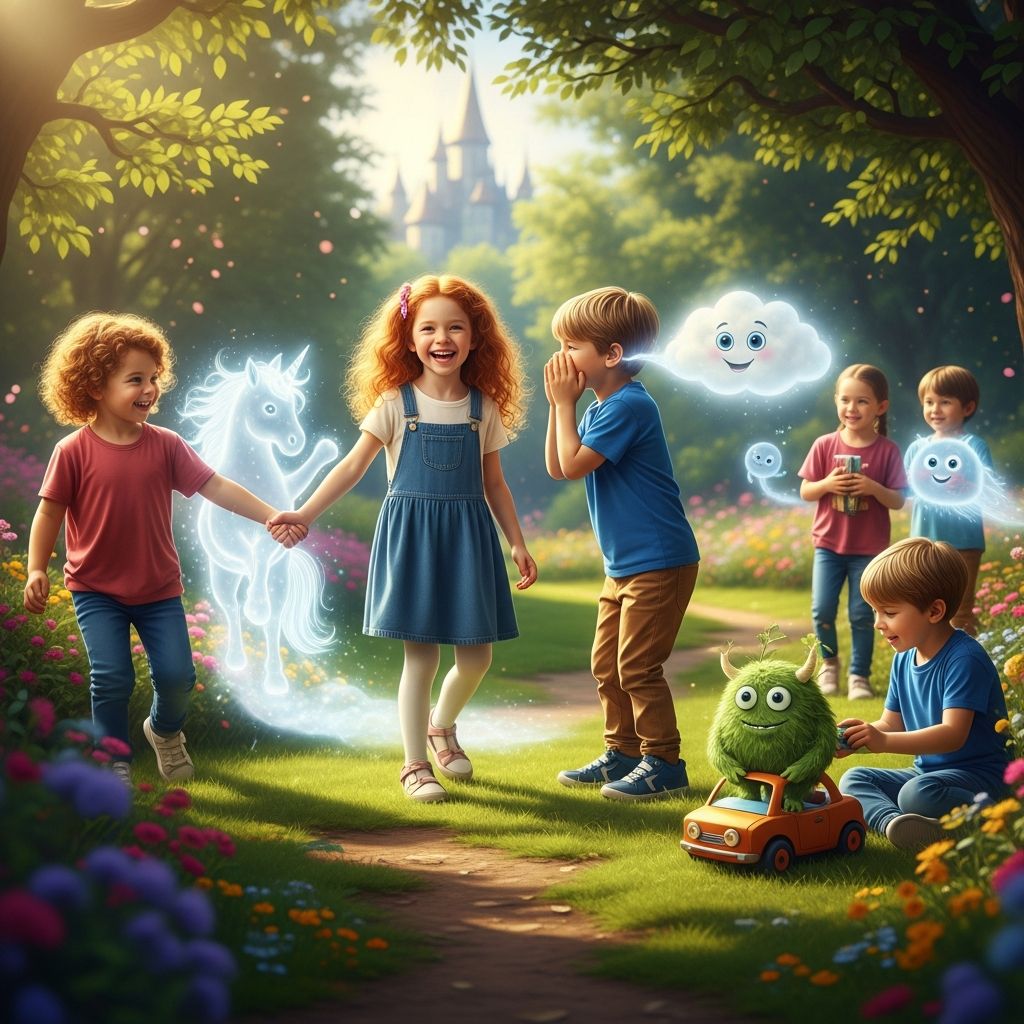
An imaginary friend is a made-up companion a child experiences as a real presence in their play or daily life. The friend may be a person, an animal, a fantastical creature, or even an object with a “personality,” and the child typically gives it a name, traits, and a backstory.
- Some children describe their imaginary friend as if it were physically present (for example, saving a seat at the table).
- Others treat toys, stuffed animals, or dolls as fully alive, with complex feelings and opinions.
In most cases, children know on some level that this companion is pretend, even if they talk about it in a very serious way. Imaginary friends usually show up during the preschool years, when imagination and pretend play are rapidly expanding.
When Do Imaginary Friends Appear?
Imaginary friends most commonly appear between ages 3 and 7, when pretend play becomes more complex and children can invent detailed stories and roles. However, some children may begin a bit earlier or keep an imaginary companion into the early school years.
There is wide variation in how long an imaginary friend sticks around. For some, it lasts a few weeks; for others, it can be part of their lives for several years, fading gradually as real-world friendships and activities become more central.
- Duration alone rarely indicates a problem.
- It is more important to look at how your child functions in daily life, relationships, and school.
Why Children Create Imaginary Friends
Imaginary friends serve several emotional and psychological functions for children. They are not simply random fantasies; they often help children process experiences, express feelings, and experiment with ideas that are too complicated or risky to explore directly.
Some common reasons children invent imaginary companions include:
- Practice with social interaction: Children rehearse conversations, sharing, problem-solving, and conflict resolution with a safe partner.
- Emotional expression: It can feel easier to say “my friend is scared” than “I am scared,” giving children a comfortable distance from intense emotions.
- Coping with change: Moves, new siblings, starting school, or family stress sometimes increase imaginative play and the appearance of imaginary friends.
- Companionship: Even socially active children enjoy the constant, cooperative presence of an imaginary friend who always understands and supports them.
- Exploring identity and control: By “being in charge” of a friend’s personality and choices, children test ideas about power, responsibility, and morality.
Normal Developmental Benefits
Contrary to common fears, imaginary friends are more often associated with positive developmental traits than with problems. Many children who invent them are creative, verbally expressive, and socially aware.
Some observed benefits include:
- Richer language skills: Children often create complex dialogues and narratives involving their imaginary friend, which exercises vocabulary and storytelling.
- Better emotional understanding: By assigning feelings and thoughts to another “person,” children practice seeing situations from multiple perspectives.
- Stronger problem-solving: Deciding what the friend wants, feels, or should do helps children think through options and anticipate outcomes.
- Increased creativity: Building an entire world around a pretend companion encourages flexible, imaginative thinking.
Imaginary Friends vs. Normal Pretend Play
Not all pretend play involves a full-fledged imaginary friend, and not every child will have one. Many children prefer role-play with toys, costumes, or real friends instead. What distinguishes an imaginary friend is the consistency and personal relationship the child maintains with that character.
Key differences include:
| Feature | General Pretend Play | Imaginary Friend |
|---|---|---|
| Consistency | Characters change frequently; roles are flexible. | Same named character shows up across days or weeks. |
| Relationship | Brief roles (hero, villain, etc.) during a game. | Child describes a stable relationship (best friend, helper, sibling-like). |
| Presence in daily life | Mainly during explicit playtime. | Included in routines (meals, car rides, bedtime) or decisions. |
| Emotional weight | Fun, light, and easy to change. | Sometimes used to discuss worries, fears, or big feelings. |
Both kinds of play are normal and healthy. Having or not having an imaginary friend does not, by itself, predict future adjustment or intelligence.
Common Parental Concerns
Parents often worry that an imaginary friend might signal loneliness, mental illness, or difficulty separating fantasy from reality. In most cases, these fears are unfounded. For many families, the bigger day-to-day challenge is simply knowing how to respond.
Typical concerns include:
- “My child blames everything on their imaginary friend.”
- “They seem more interested in their imaginary companion than in real kids.”
- “The friend is sometimes scary or bossy, and my child seems upset.”
- “I’m afraid this means serious psychological problems later on.”
These worries are understandable, but they rarely point to serious issues on their own. It helps to look at patterns over time and consider the overall context of your child’s behavior.
What’s Perfectly Normal
Several behaviors that may seem odd at first are usually harmless. Parents can generally relax if their child is otherwise developing well, enjoying age-appropriate activities, and forming real-world relationships.
- Talking aloud to an imaginary friend during play or bedtime.
- Assigning feelings, needs, or preferences to the friend (for example, “She doesn’t like broccoli.”).
- Including the friend in family routines, such as saving them a seat or setting aside a toy for them.
- Using the friend for comfort in stressful situations, such as medical visits or new social settings.
- Occasional mild fibs or excuses involving the friend (“He spilled the milk.”) that respond to gentle guidance.
Within these boundaries, imaginary companions are typically just one expression of a lively imagination.
When Imaginary Friends May Signal a Problem
Although most imaginary friends are benign, certain patterns can signal that a closer look is needed. Problems usually become apparent because of intensity, distress, or interference with daily life.
Signs that warrant consulting a pediatrician, child psychologist, or other qualified professional include:
- Loss of control: The child feels unable to make the friend disappear or stop doing frightening things.
- Significant distress: The friend frequently threatens, bullies, or terrifies the child, and the child appears genuinely overwhelmed or panicked.
- Severe social withdrawal: The child consistently avoids peers, family, or school in favor of the imaginary friend.
- Marked changes in behavior or mood: Sudden aggression, regression, or anxiety that persists, especially after stressful events.
- Difficulty distinguishing fantasy from reality: Strong insistence that adults must obey the friend or that the friend is responsible for dangerous actions.
These signs do not automatically mean something is seriously wrong, but they do justify a professional evaluation, particularly if they appear alongside other developmental or emotional concerns.
Imaginary Friends and Mental Health
Parents sometimes confuse imaginary friends with hallucinations or serious psychiatric symptoms. In typical cases of pretend companions, children remain grounded in reality, can shift attention when needed, and function normally at home and school.
By contrast, mental health difficulties that involve seeing or hearing things others do not are usually accompanied by broader problems, such as intense fear, confusion, disorganized thinking, or marked decline in daily functioning. If you are worried about this distinction, a qualified professional can help clarify what is happening.
How Parents Can Respond
Parents do not need to endorse every detail of the imaginary friend’s existence, but harshly dismissing or mocking the child’s experience can damage trust. A respectful, light, and curious approach usually works best.
- Use the friend as a conversational doorway: ask what they like, what they are afraid of, or how they feel.
- Stay calm and matter-of-fact; treat mentions of the friend as normal parts of conversation rather than alarming events.
- Gently set household rules that apply equally to the child and the imaginary companion.
- Encourage play and creativity without turning the friend into a constant focus.
Healthy Ways to “Play Along”
Many experts suggest that parents can safely “play along” with imaginary friends, as long as they keep clear boundaries and do not rely on the friend to manage serious issues. Joining in occasionally shows respect for the child’s inner world.
Examples of helpful responses include:
- “Oh, your friend is here today. Would they like to sit next to you?”
- “What does your friend think about going to the park?”
- “If your friend feels shy, maybe you can both say hello together.”
At the same time, parents can avoid inflating the fantasy by not rearranging the entire household around the friend’s supposed needs.
Setting Limits and Avoiding Misuse
Imaginary friends should not become a shield against responsibility or everyday expectations. When blame-shifting or rule-breaking appears, parents can respond firmly but kindly.
Practical strategies include:
- Refocusing responsibility: If your child says, “My friend broke the lamp,” you might respond, “The lamp is broken and we need to be more careful. Let’s clean it up together.”
- Consistent rules: Emphasize that all members of the household (real or pretend) follow the same safety and courtesy rules.
- Natural consequences: Allow reasonable consequences for behavior without arguing about what the imaginary friend did or did not do.
This approach respects the child’s imaginative world while teaching accountability and respect for others.
Imaginary Friends, Siblings, and Family Changes
Imaginary companions often appear or become more important around times of transition, such as the arrival of a new baby, a parent’s absence, or a move to a new home or school. The friend may serve as a source of comfort and stability when other parts of life feel uncertain.
In some cases, the imaginary friend seems to express emotions the child is hesitant to claim, such as jealousy of a sibling, anger at a parent, or fear of being replaced. Listening carefully to the stories your child tells about the friend can give clues about feelings that need extra attention and support.
Do All Children Have Imaginary Friends?
No, not all children create imaginary friends, and that is perfectly fine. Some children prefer real-life playmates, structured games, or non-social interests instead. The absence of an imaginary friend does not indicate a lack of creativity or emotional depth.
Likewise, having an imaginary friend does not guarantee higher intelligence, special gifts, or future artistic talent. It is one of many possible pathways through normal development, not a requirement or a badge of superiority.
Supporting Real-World Social Skills
While imaginary friends can support social learning, they are not a replacement for real relationships. Parents can help children balance fantasy and real life by providing regular opportunities for interaction with peers and adults.
Helpful practices include:
- Arranging playdates, group activities, or classes that match your child’s temperament.
- Coaching basic social skills such as taking turns, sharing, and expressing disagreement respectfully.
- Modeling empathy and perspective-taking in your own interactions at home.
Outgrowing Imaginary Friends
Most children naturally lose interest in imaginary friends as they grow older, gain confidence in real friendships, and become more involved in school, hobbies, and concrete responsibilities. The companion may gradually visit less often, take on a smaller role, or disappear without formal “goodbyes.”
Parents do not need to force a breakup. Gentle acceptance of the friend’s arrival and departure supports the child’s sense of autonomy and emotional continuity.
When to Seek Professional Help
While most cases do not require treatment, it is wise to seek a professional opinion if you observe persistent patterns that concern you. The goal is not to eliminate imagination but to understand broader emotional or developmental needs.
Consider an evaluation if you notice some combination of the following over time:
- Ongoing distress linked to the imaginary friend (nightmares, panic, or uncontrollable fear).
- Serious interference with school, friendships, or family life.
- Multiple developmental concerns, such as speech delays, loss of previously mastered skills, or frequent confusion.
- Exposure to trauma or chronic stress, combined with significant behavioral or emotional changes.
Professionals can help differentiate between typical pretend play, stress responses, and more complex mental health issues, and they can suggest supportive strategies tailored to your child and family.
Practical Takeaways for Parents
Imaginary friends can feel puzzling, charming, or worrying depending on your perspective and your child’s behavior. In general, they are a normal and often beneficial expression of imagination and emotional development.
Parents can keep these basic guidelines in mind:
- Stay curious rather than alarmed; ask open questions about the friend and what they are like.
- Allow imaginative play but maintain clear, consistent family rules.
- Encourage real-world social and emotional skills alongside fantasy play.
- Watch for patterns of distress, loss of control, or serious functional problems, and seek professional input when needed.
Frequently Asked Questions (FAQ)
1. Does an imaginary friend mean my child is lonely?
Not necessarily. Many children with plenty of friends and strong family connections still invent imaginary companions. The friend is often a tool for practice and self-expression, not proof that real relationships are missing.
2. Should I pretend the imaginary friend is real?
You do not have to fully agree that the friend is real, but you can acknowledge your child’s experience respectfully. Casual, playful responses show that you are listening without turning the friend into a source of conflict.
3. What if my child blames bad behavior on the imaginary friend?
Redirect responsibility to your child calmly and consistently. Focus on what actually happened and what needs to change, rather than debating the friend’s role. This teaches accountability while still allowing imaginative play.
4. At what age should I be worried if my child still has an imaginary friend?
The specific age matters less than how your child is functioning. If your child is older, seems distressed, or strongly prefers the imaginary friend to real people, a professional consultation can provide reassurance or guidance.
5. Can imaginary friends ever be helpful in therapy?
Yes. Some therapists use children’s imaginary friends as windows into their feelings, beliefs, and fears. Talking about the friend can make it easier for a child to share sensitive experiences in a safe, indirect way.