Huggies vs Pampers: Which Diaper Brand Is Right for Your Baby?
Choosing the right diaper brand is one of the most important decisions new parents face. With countless options available on the market, it can be overwhelming to determine which brand offers the best combination of comfort, protection, and value. The two most popular and trusted diaper brands are Huggies and Pampers, both of which have been household names for decades. Each brand offers multiple product lines designed for different stages of your baby’s development and specific needs throughout the day and night.
While both brands maintain high quality standards and have loyal followings among parents worldwide, they differ significantly in their approach to diaper design, materials, absorbency levels, and pricing. Understanding these differences can help you make an informed decision that best suits your baby’s unique needs and your family’s budget. This comprehensive guide will examine the key factors that distinguish these two leading diaper brands.
Design and Packaging Appeal
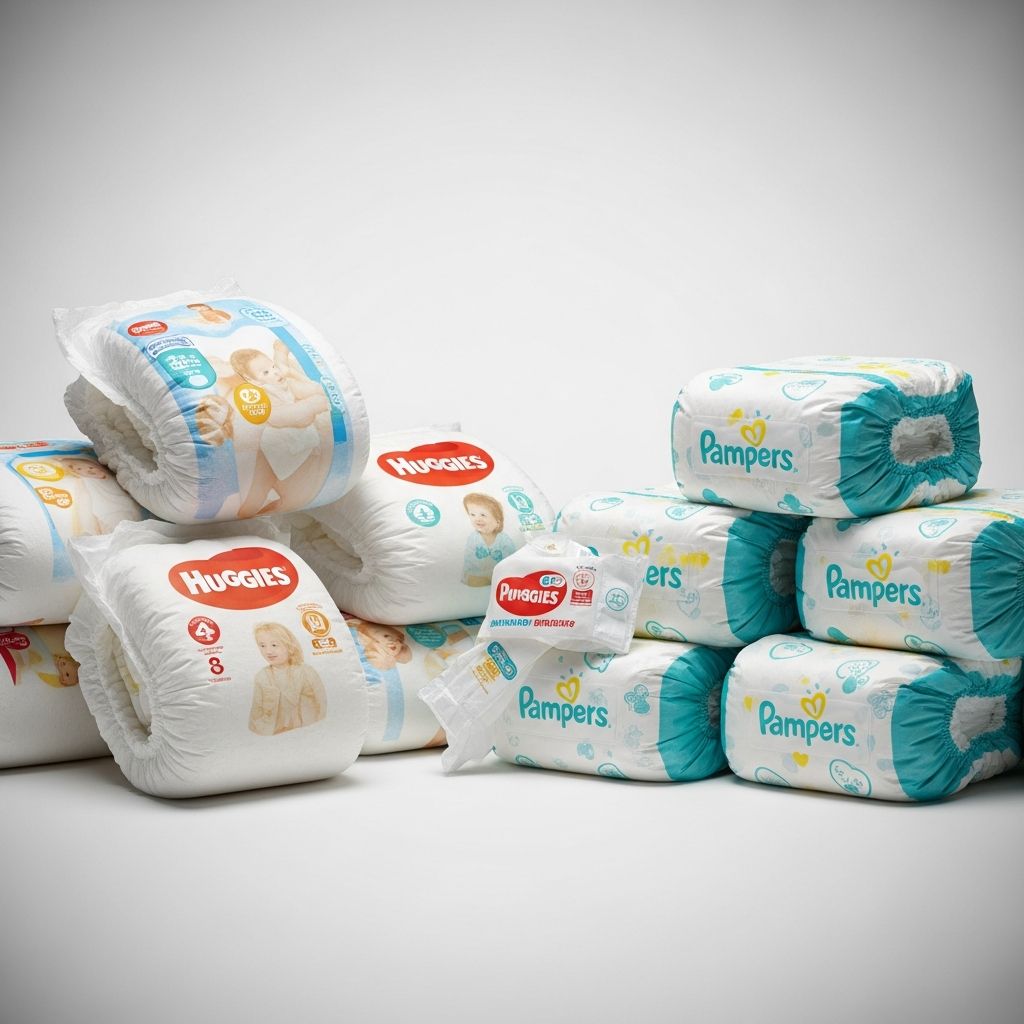
When you’re standing in the diaper aisle trying to make a quick decision, packaging often plays a subtle role in your choice. Pampers diapers come in soft yellow and green boxes that feature adorable, cuddly babies on the packaging, creating a calming and nurturing aesthetic. This gentle design approach appeals to many parents of newborns who want products that evoke feelings of warmth and comfort for their little ones.
In contrast, Huggies packaging is distinctly different with vibrant red boxes decorated with pictures of active babies and toddlers. This design choice reflects Huggies’ brand philosophy of supporting active, mobile children. The bold colors and dynamic imagery appeal to parents who prioritize their baby’s mobility and development. While packaging alone shouldn’t determine your diaper choice, the visual appeal can influence purchasing decisions, especially for first-time parents navigating the overwhelming selection of baby products.
Absorbency and Leak Protection
Daytime Diapers Performance
When it comes to daytime diaper performance, testing reveals important differences between these brands. Pampers Baby Dry demonstrates superior absorbency in controlled blot tests, particularly when exposed to heavier moisture loads. When testers poured 20ml of water into each diaper, Pampers Baby Dry transferred approximately half the amount of water compared to Huggies Little Movers, indicating better moisture containment. This superior absorbency translates to fewer diaper changes throughout the day and less risk of moisture reaching your baby’s skin.
Pampers Baby Dry is the #1 pediatrician recommended brand and offers five layers of protection with up to 12 hours of dryness capability. The diaper features Dual Leak-Guard Barriers that protect where leaks happen most and LockAway Channels that absorb wetness and lock it away from your baby’s skin. A Breathefree Liner helps soothe and protect delicate baby skin. These features combine to make Pampers Baby Dry an excellent choice for daytime use when you need reliable protection throughout multiple hours between diaper changes.
Overnight Diapers Performance
The performance gap widens dramatically when comparing nighttime diapers. Huggies OverNites emerged as the clear winner in overnight protection tests. During a five-night trial, Pampers Swaddlers Overnights leaked three out of five nights, while Huggies OverNites never leaked. Additionally, Pampers Swaddlers Overnights proved prone to leaking when compressed, such as when a baby is picked up and carried on a parent’s hip—a situation that completely soaked through a tester’s shirt in one instance.
Huggies OverNites are scientifically designed specifically for sleep and represent the most absorbent HUGGIES diapers available. They feature Double Leak Guard protection for up to 12 hours and a SnugFit waistband combined with Double Grip Strips to ensure a secure fit that doesn’t shift during sleep. A wetness indicator stripe that changes color when the diaper is wet helps parents determine when it’s time for a change. For parents struggling with nighttime leaks and frequent wake-ups, Huggies OverNites provide the reliability needed for better sleep.
Material Quality and Feel
Material quality significantly impacts your baby’s comfort and skin health. Pampers materials generally feel softer and more pleasant to the touch compared to Huggies. Many parents report preferring the gentle, luxurious feel of Pampers diapers against their baby’s delicate skin. However, Huggies diapers still maintain good quality, though with a slightly firmer texture.
Huggies diapers feel thick and sturdy, suggesting they can withstand the demands of active babies and the daily rigors of infant care. The material construction is designed for durability rather than pure softness. While not as plush as Pampers, Huggies materials remain comfortable and provide adequate cushioning for your baby’s sensitive skin. The waistband and leg areas on Huggies are more stretchy and contoured, creating a snugger fit that some parents prefer for active babies.
Fit and Comfort Considerations
Proper diaper fit is crucial for both comfort and leak prevention. Pampers generally offers a superior overall fit, particularly for newborns and younger infants. The elastic leg and waistband areas conform closely to your baby’s body, preventing gaps where leaks can occur. This attention to fit detail makes Pampers particularly effective for smaller newborns who need a snug, secure fit.
Huggies Little Movers provide a fit optimized for more active babies, with leg and waistband design that accommodates increased movement. While the fit is good, some parents report that Huggies fits vary slightly depending on the diaper line, with slip-on versions sometimes not performing as well as traditional styles in holding moisture and preventing leaks. The brand’s emphasis on active infant design means the fit prioritizes mobility alongside leak protection, though the results don’t always match Pampers’ precision fit for every baby.
Price Comparison and Value
Standard Daytime Diapers
When comparing basic pricing between the two brands, differences are minimal but noteworthy. A package of 16 Huggies Little Movers diapers costs approximately $8.96, calculating to 56 cents per diaper. Pampers Baby-Dry offers a package of 17 diapers for $8.97, bringing the cost to approximately 53 cents per diaper. At this base level, Pampers offers slightly better value per diaper.
However, pricing dynamics shift when you move to larger box sizes. As diaper sizes increase, Huggies becomes the more cost-efficient option, though the difference remains minimal. Additionally, both brands pack fewer diapers in larger size boxes while maintaining similar pricing, which effectively increases the per-diaper cost as your baby grows. Parents should factor in subscription services and bulk purchasing options, as both brands offer volume discounts through various retailers.
Overnight Diapers Cost
Overnight diapers command premium pricing from both brands due to enhanced absorbency. A 48-count package of Huggies OverNites costs $24.27, making each diaper approximately 51 cents. Pampers Swaddlers Overnights are priced at $24.94 for 42 diapers, calculating to roughly 60 cents per diaper. For overnight protection, Huggies offers better value while also delivering superior leak protection, making them the more economical choice for nighttime use despite premium overnight pricing across both brands.
Performance by Age Group
Birth to 6 Months
For newborns and very young infants, Pampers Swaddlers emerge as the superior choice. The exceptional fit and leak protection during this critical early stage make Pampers the winner for the youngest babies. Pampers’ careful attention to newborn-specific design elements ensures that delicate, underdeveloped digestive systems and minimal muscle control don’t result in frequent leaks and clothing changes.
6 Months to 1 Year
As babies develop greater mobility and their bodies mature, Huggies Little Movers become the preferred option. Enhanced leak protection and improved feel during this active stage give Huggies the advantage. Babies at this age move significantly more, roll over, and begin crawling, requiring diapers engineered for increased motion without sacrificing absorbency.
1 to 2 Years
Pampers Cruisers regain the advantage during the toddler stage. While Huggies Little Movers slip-on versions offer convenience, they don’t perform as well at moisture retention and prove prone to leaks. The traditional tab-style Pampers Cruisers provide more reliable protection during this transition year when toddlers are increasingly active.
2 Years and Beyond
For older toddlers, Huggies Pull-Ups demonstrate superior performance, absorbing more moisture while feeling softer against skin. This product line’s enhanced design makes transition training easier while maintaining reliable protection during active play and overnight sleep.
Key Product Comparison Table
| Feature | Pampers Baby Dry | Huggies Little Movers | Pampers Swaddlers Overnight | Huggies OverNites |
|---|---|---|---|---|
| Absorbency | Excellent (12 hrs) | Very Good | Excellent (12 hrs) | Superior (12 hrs) |
| Material Feel | Soft & Plush | Thick & Sturdy | Soft & Plush | Sturdy |
| Fit Quality | Excellent | Very Good | Excellent | Excellent |
| Price Per Diaper | ~53¢ | ~56¢ | ~60¢ | ~51¢ |
| Leak Protection | Excellent | Very Good | Good | Excellent |
| Best For | Daytime (Newborn-Toddler) | Active Babies (6m-2y) | Overnight (General Use) | Overnight (Superior Protection) |
Loyalty Programs and Rewards
Beyond the physical product, loyalty programs provide added value for frequent diaper purchasers. Pampers’ loyalty program significantly outperforms Huggies’ offerings, providing better rewards and more achievable redemption thresholds. However, it’s worth noting that meaningful rewards through either program typically require years of consistent purchases. Parents should evaluate whether the loyalty program benefits justify brand choice or if other factors like leak protection and fit should take priority in decision-making.
Making Your Decision
Choosing between Huggies and Pampers ultimately depends on your baby’s individual needs and your family’s priorities. Consider starting with Pampers for newborns, as their superior fit and leak protection during this critical stage create fewer stressful nights and diaper changes. As your baby grows and becomes more mobile, transitioning to Huggies Little Movers may provide better value and performance. For nighttime protection, Huggies OverNites consistently outperform Pampers overnight options and provide better value per diaper.
Test both brands if possible, as individual babies respond differently to diaper materials and fits. Some babies thrive with Pampers’ softness while others prefer Huggies’ sturdier construction. Keep receipts when trying new products so you can exchange if needed. Don’t hesitate to use multiple brands—daytime Pampers combined with nighttime Huggies might provide optimal protection and value for your family.
Frequently Asked Questions
Which diaper brand is cheaper overall?
At the base price level, Pampers Baby Dry offers slightly better value at approximately 53 cents per diaper compared to Huggies Little Movers at 56 cents. However, Huggies becomes more cost-efficient with larger box sizes. For overnight diapers, Huggies OverNites are significantly cheaper at 51 cents per diaper versus Pampers Swaddlers Overnights at 60 cents.
Do Pampers or Huggies have fewer blowouts?
Pampers generally has fewer blowouts for younger infants due to superior fit, while Huggies performs better for older, more active babies. For overnight protection specifically, Huggies OverNites virtually eliminate leaks and blowouts compared to Pampers overnight options.
Are Pampers softer than Huggies?
Yes, Pampers materials generally feel softer and more luxurious than Huggies. However, Huggies’ thicker, sturdier material construction also provides excellent comfort and may actually feel better for some babies and parents who prefer durability.
Which brand is recommended by pediatricians?
Pampers is the #1 pediatrician recommended brand, having earned this distinction through consistent quality and safety standards. Both brands maintain high quality standards, but Pampers’ pediatric endorsement reflects professional confidence in their formulation and design.
Can I use different brands for daytime and nighttime?
Absolutely. Many parents use Pampers during the day and switch to Huggies OverNites for nighttime, combining the strengths of each brand. This hybrid approach often provides optimal protection and value throughout your baby’s day and night cycles.
Do these diapers work well for sensitive skin?
Both brands offer options for sensitive skin. Pampers Pure, for example, is specifically formulated for sensitive skin with fewer chemicals. If your baby experiences diaper rash or sensitivity, try the hypoallergenic lines from either brand rather than assuming all products from that brand will work.
How long do babies typically stay in each size?
Size duration varies by individual baby, but typically babies spend 2-3 months in each size before transitioning. Newborn and size 1 diapers are used most frequently and for the longest period compared to larger sizes.
References
- Huggies vs Pampers – The Best Diaper Brand — Product Playoffs. 2024-12-04. https://www.productplayoffs.com/huggies-vs-pampers/
- Diapers: Pampers vs Huggies Detailed Comparison — Loyal Parents. 2024-12-04. https://www.loyalparents.com/helpful-tips-for-parents/diapers-pampers-vs-huggies-detailed-comparison/
- The Best Disposable Diapers | Tested & Rated — Baby Gear Lab. 2024-12-04. https://www.babygearlab.com/topics/diapering-potty/best-disposable-diaper
- Huggies Little Snugglers vs Pampers Swaddlers — Smart.DHgate. 2024-12-04. https://smart.dhgate.com/huggies-little-snugglers-vs-pampers-swaddlers-are-huggies-really-worth-the-extra-cost-for-newborns/