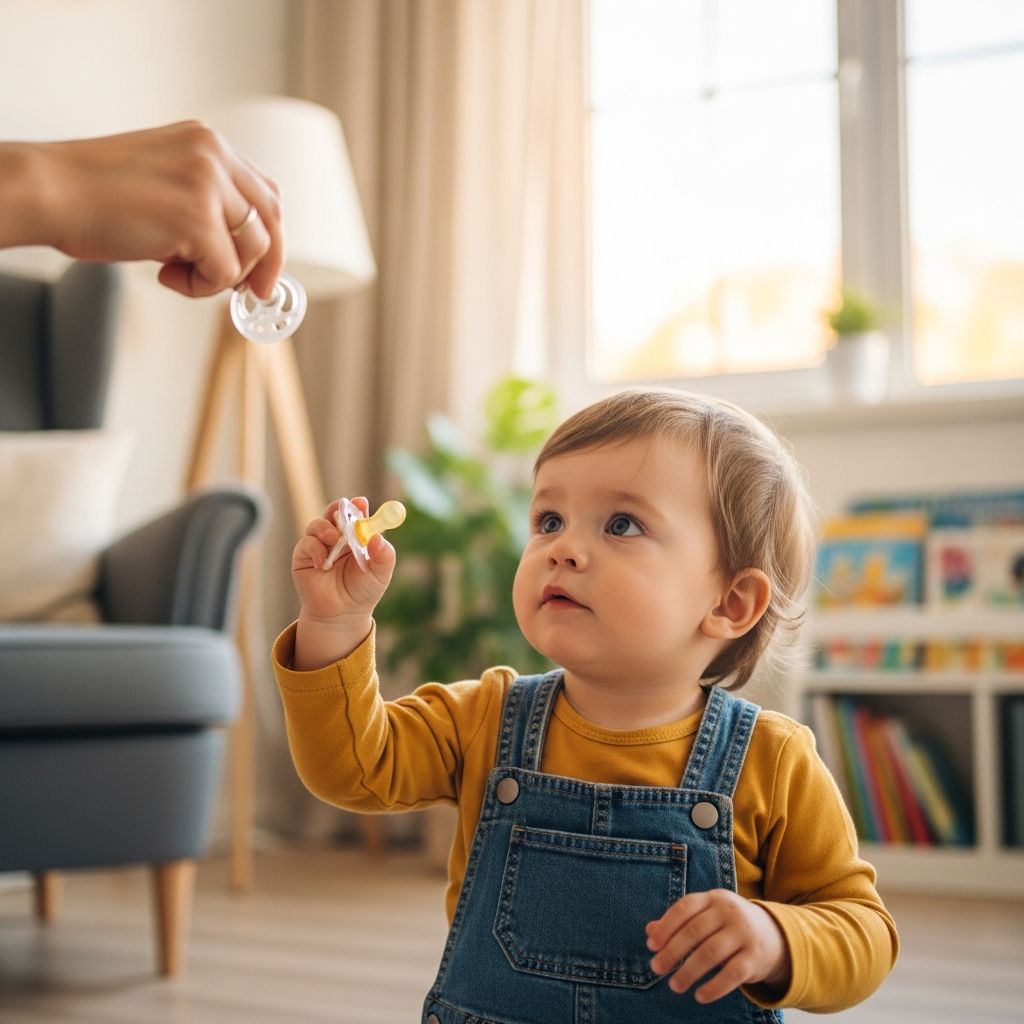
Many toddlers adore their pacifiers. For them, it is comfort, routine, and security all rolled into one small piece of silicone. For parents, that same object can start to feel like an obstacle to sleep, speech, dental health, and independence. This guide walks you through how to help your toddler let go of the pacifier in a way that is kind to both of you.
Why Toddlers Love Pacifiers So Much
Before planning any change, it helps to understand what the pacifier actually represents to your child. To an adult, it is a small object; to a toddler, it can be a powerful coping tool.
- Built-in soothing mechanism: Sucking is calming for young children, helping regulate big feelings and transitions.
- Predictable routine cue: Many toddlers associate the pacifier with sleep, snuggles, or car rides, so it becomes part of their daily rhythm.
- Portable comfort: Pacifiers are easy to carry anywhere, which can lead to constant use unless limits are set.
Recognizing how important the pacifier feels to your toddler makes it easier to approach weaning with empathy instead of frustration or shame.
Is Your Toddler Ready to Wean?
There is no single perfect age that guarantees an effortless transition, but there are helpful readiness signs to watch for. Think of pacifier weaning as a process you time around your child’s development and your family’s stress level.
- Emotional stability: Your toddler can calm down with your help at least some of the time using cuddles, songs, or a favorite toy.
- Communication skills: They can understand simple explanations like “later,” “all done,” or “you are getting bigger.”
- Life context: There are no major changes happening right now such as a new sibling, a house move, starting daycare, or toilet training.
| More Helpful Timing | More Challenging Timing |
|---|---|
| Several quiet weeks at home with predictable routines | During holidays, long trips, or guests visiting |
| When sleep has been relatively stable for a while | Right after illness or frequent night wakings |
| When your toddler is in a generally cheerful, flexible phase | During intense tantrum phases or frequent regressions |
| When you as the parent feel resourced and patient | When you are burned out, overwhelmed, or short on support |
If several “challenging timing” boxes are checked right now, there is no harm in waiting a bit until life settles. A calmer baseline usually means fewer battles and faster progress.
Clarifying Your Own Goals and Boundaries
Parents often feel pulled between expert recommendations, family opinions, and their child’s obvious attachment. Getting clear about your own reasons for weaning helps you stay steady when things get emotional.
Ask yourself questions like:
- “What is bothering me most: all-day use, speech concerns, dental worries, or dependence for sleep?”
- “Am I aiming to limit use to certain times, or to remove the pacifier completely?”
- “What do I want things to look like one month from now?”
Once you know your primary goal—such as pacifier only at sleep times or fully pacifier-free—you can choose a method that matches that vision instead of trying every trick at once.
Preparing Your Toddler for the Transition
Preparation often matters more than the specific method. Toddlers do best when they know what to expect and feel involved in the process.
Use Simple, Honest Explanations
Keep your language straightforward and calm. You do not have to give long speeches; a few repeated phrases help your toddler understand what is happening.
- “Pacifiers are for sleeping, not for playing.”
- “Your mouth is getting bigger and stronger; soon you will sleep without a pacifier.”
- “We are going to help your body learn new ways to feel calm.”
Create a Supportive Environment
- Check your own tone: Speak with warmth, not threat. Avoid shaming language like “You are too big for that” or “Only babies use pacifiers.”
- Practice new comfort tools: Introduce a lovey, soft blanket, song, or back rub before the pacifier changes so those tools feel familiar.
- Inform caregivers: Make sure relatives, babysitters, and daycare all understand the new pacifier rules and stick to them consistently.
Choosing a Weaning Style That Fits Your Family
There is no one “correct” way to retire the pacifier. Consider your child’s temperament, your living situation, and how much disruption you can handle in the short term.
Option 1: Gradual Reduction
Gradual weaning is often a good fit for sensitive or cautious toddlers, or for parents who prefer small changes over a short, intense upheaval.
- Step 1: Restrict locations. Decide that pacifiers live only in the bed or in one calm place, not scattered around the house.
- Step 2: Restrict times. Shift to pacifier use at naps and night only, then later at night only.
- Step 3: Shorten use windows. Instead of having the pacifier the entire night, remove it after your child is fully asleep or give it only for falling asleep.
- Step 4: Full removal. When your child is used to less frequent use, choose a specific night to stop offering it entirely.
Option 2: Firm Cut-Off (“All Done Day”)
This approach works well for toddlers who adapt quickly to change and for families who prefer a clear, one-time shift rather than a drawn-out process.
- Pick a specific date. Talk about the upcoming “all done day” for a few days in simple, positive terms.
- Collect pacifiers together. Let your child help gather them in a box or bag so they feel involved.
- Stay consistent afterward. Once the pacifiers are gone, do not bring them back, even if the first nights are rough.
Option 3: Story-Based or Ritual Good-Bye
Some families like to create a small ritual that frames the transition as something special, not as a loss. This can make the experience feel meaningful and memorable instead of purely difficult.
- Good-bye letter: Help your toddler draw or scribble a “thank you” picture for the pacifier and talk about how it helped when they were smaller.
- Gift exchange: Have your child trade the pacifiers for a new comfort item, like a special stuffed animal or night-light.
- Planting or crafting: Place the pacifier inside a small box or container and bury it in the yard or tuck it away; mark the spot with a stone your child decorates.
Sample Day-by-Day Gradual Weaning Plan
Every child is different, but the outline below offers a realistic example of how you might structure a gradual approach across two weeks. Adjust the pace slower or faster depending on your toddler’s response.
| Days | Parent Actions | What to Expect |
|---|---|---|
| Days 1–3 | Pacifier only allowed at home; remove during play and outings. | Some whining or brief protests, but many toddlers adapt quickly in new settings. |
| Days 4–6 | Pacifier limited to naps and bedtime only. | More vocal complaints when you say no, but shorter duration tantrums if you stay calm. |
| Days 7–10 | Pacifier only for falling asleep; quietly remove once fully asleep. | Some extra night waking initially; keep other soothing tools handy. |
| Days 11–14 | Announce final “good-bye night,” then retire the pacifier completely. | One to three tougher nights followed by a new, more settled routine. |
Think of this table as a template, not a rulebook. If your child struggles at one step, you can pause there for a few extra days before moving on.
Helping Your Toddler Cope With Big Feelings
Removing a beloved comfort object will almost always stir up big emotions. That does not mean you are doing anything wrong; it simply means your child is adjusting to a new way of coping.
Offer Extra Connection
- More physical comfort: Prepare to give more hugs, cuddles, and back rubs at bedtime and during transitions.
- One-on-one time: Build in a short, predictable “special time” each day where you focus fully on your child for 10–15 minutes.
- Calm presence during crying: Remind yourself that tears are a release, not something you must stop instantly by giving the pacifier back.
Use Simple Supportive Phrases
Instead of arguing or over-explaining, pick a few calm phrases you can repeat.
- “You really miss your pacifier. I am right here while you are sad.”
- “It is hard to fall asleep in a new way. Let’s hold hands and breathe together.”
- “You are safe. We will keep our new plan.”
Common Challenges and How to Handle Them
Even with solid preparation, pacifier weaning can come with bumps in the road. Anticipating these issues helps you respond calmly instead of second-guessing yourself in the moment.
Challenge: Increased Night Wakings
- What is happening: Your toddler is used to using the pacifier to bridge sleep cycles, so without it they may call out more frequently.
- What can help: Try a consistent, low-key response: brief check-ins, soothing words, maybe a gentle back rub, and then leaving the room again.
- What to avoid: Lengthy play, screens, or snacks in the middle of the night that accidentally reinforce waking.
Challenge: Asking for “Just One More” Pacifier
- What is happening: Toddlers test boundaries to see if rules are solid or negotiable.
- What can help: Stick to your decision kindly but firmly, using the same short responses each time.
- Helpful phrase: “I know you want it. We are all done with pacifiers. I will stay and snuggle.”
Challenge: Setbacks After Illness or Travel
Life disruptions can stir up old habits. If your child was recently sick or your routine changed dramatically, you may see renewed requests for the pacifier, even if you already weaned successfully.
- If the pacifier is fully gone, keep it that way and lean harder on cuddles, stories, and gentle routines.
- If you chose to temporarily bring it back during a crisis, frame it clearly as short-term and select a new weaning date once things stabilize.
Supporting Yourself as a Parent Through the Process
Pacifier weaning is not just an adjustment for the child; it also affects adult sleep, schedules, and emotions. Taking care of your own needs will make the experience smoother for everyone.
- Lower expectations briefly: Expect a few rockier nights and plan for earlier bedtimes for yourself if possible.
- Share the load: If there are two caregivers, take turns handling bedtime or night wakings so one person is not exhausted.
- Watch your self-talk: Remind yourself that frustration does not mean you are failing; you are guiding your child through an important transition.
It can help to think of the weaning period as a short, intense project. A few weeks of effort can lead to long-term benefits in flexibility, speech clarity, and dental health.
Frequently Asked Questions About Toddler Pacifier Weaning
How long does pacifier weaning usually take?
For some toddlers, especially those using only at bedtime, the process takes just a few days. For others who rely on the pacifier all day, a gentle approach may unfold over several weeks. The key is consistency: changing the plan frequently is more confusing than going slowly but steadily.
Will taking away the pacifier harm my child emotionally?
Letting go of a comfort object can feel big, but it is not harmful when done with empathy, honesty, and alternative sources of comfort. Staying present with your child’s tears and offering reassurance teaches them that feelings are safe and that you are their true source of security.
What if my toddler starts sucking fingers or thumbs instead?
Some children naturally shift to another soothing habit for a period of time. Generally, a mild increase in thumb-sucking is not a reason to panic. You can gently guide them toward other calming strategies—like snuggling a stuffed animal, squeezing a pillow, or practicing “blowing out candles” breaths—rather than scolding or shaming.
Is it better to fix sleep first or the pacifier first?
If sleep is extremely disrupted, it can be wise to stabilize your bedtime routine and wake-ups before tackling pacifier changes. Once your child is falling asleep more predictably, they will have more capacity to handle the extra challenge of weaning.
What if my child is older than I planned when we finally wean?
Many parents feel guilty when pacifier use stretches longer than they expected. It is never too late to make a positive change. Focus less on what “should have” happened earlier and more on taking thoughtful, kind steps right now.
Key Takeaways for a Calm Pacifier Goodbye
- There is no perfect age, only a combination of your child’s readiness, your goals, and your family’s stress level.
- Preparation, clear boundaries, and gentle consistency matter more than the exact method you choose.
- Your connection is the real comfort; the pacifier is just a tool. When it goes, your relationship remains.
With realistic expectations, a steady plan, and plenty of empathy, your toddler can absolutely learn to sleep, play, and cope with big feelings without a pacifier—and you can feel confident guiding them through this important step.