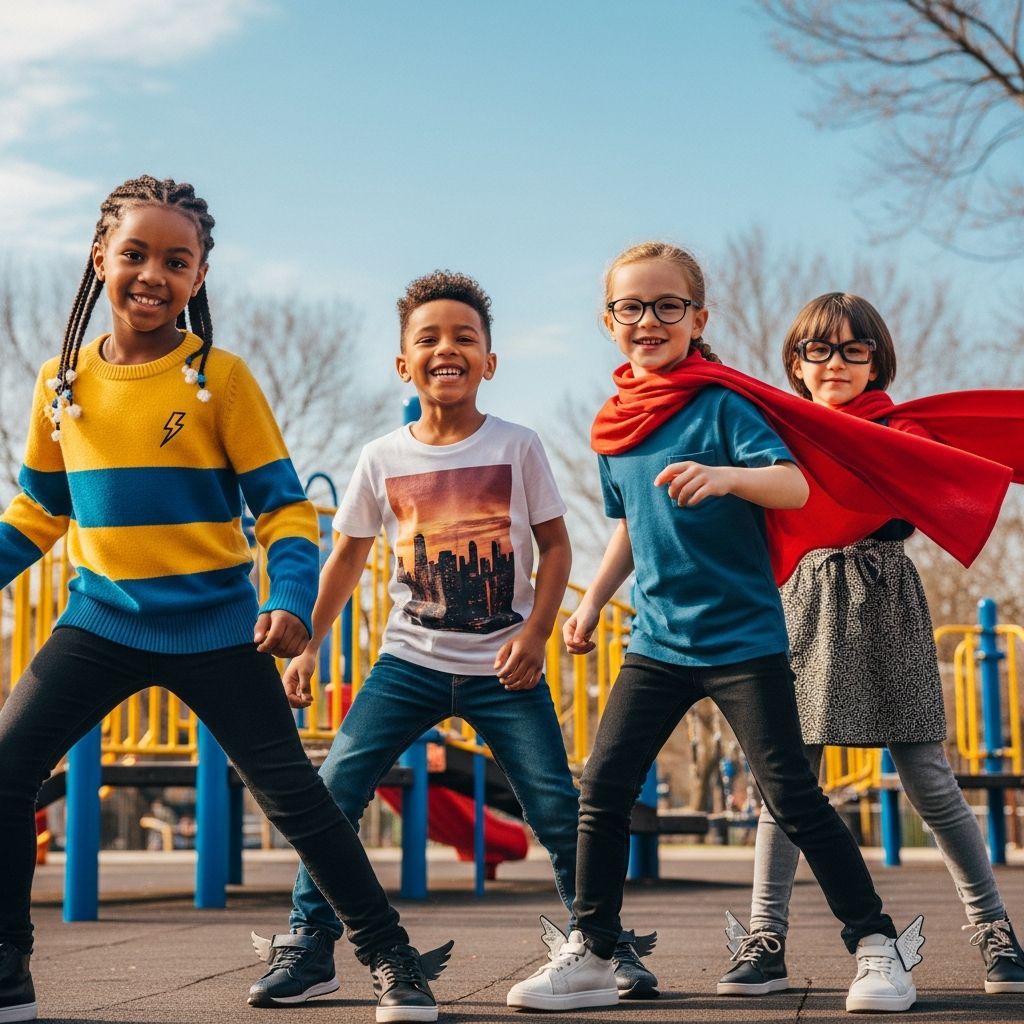
Superheroes capture kids’ imaginations because they are bold, colorful, and brave. When used thoughtfully, this fascination can become a powerful way to help children feel confident, kind, and capable in real life. This article explores how to bring superhero energy into your child’s wardrobe, playtime, and daily routines—without needing fancy costumes or expensive gear.
Why Kids Love Superheroes (And Why It Matters)
Before thinking about capes and masks, it helps to understand why superhero stories matter so much to children. These characters symbolize courage, justice, and the idea that even ordinary people can do extraordinary things. When kids connect with that message, it can shape how they see themselves and how they treat others.
- Superheroes represent clear values: bravery, fairness, loyalty, and persistence.
- They give kids a language for talking about big feelings like fear, anger, and responsibility.
- They provide a safe way to explore power and vulnerability through pretend play.
By channeling this interest into clothing, conversations, and games, parents can gently guide children toward healthy self-esteem and empathy, rather than just focusing on fights and explosions.
Designing a “Hero Closet” Without Buying a Costume Shop
You do not need a closet full of licensed outfits for your child to feel heroic. A small set of flexible pieces can be mixed and matched to create everyday looks that hint at superhero flair, while still being comfortable and practical for school and play.
Key Pieces for Everyday Hero Style
Start with simple items that echo superhero silhouettes and colors without becoming full costumes. Think bold but wearable, fun but functional.
- Graphic tees: Tops with stars, lightning bolts, planets, shields, or abstract symbols rather than specific characters.
- Color-blocked leggings or joggers: Stripes at the knees, contrasting cuffs, or side panels suggest action and movement.
- Layering hoodies: A bright hood or lining can feel like a secret cape when it flips up.
- Soft capes or capelets: Detachable pieces that snap to the shoulders or loop around the neck with soft closures for safe play.
- Comfy sneakers: Shoes in bold colors or with reflective details that feel fast and powerful.
Focus on fabrics that stretch, breathe, and wash easily. If a piece is scratchy or restrictive, it will quickly become clutter instead of confidence-boosting gear.
Safety and Comfort First
While dramatic capes and masks look exciting, they can pose tripping or visibility hazards if worn in the wrong setting. The goal is to capture the feeling of power, not to recreate movie costumes.
- Choose capes that are short enough to stay off the floor and use breakaway fasteners that release under pressure.
- Save full-face masks for supervised indoor play; for daily wear, try eye masks made from soft felt or painted face designs for special occasions.
- Make sure shoes, belts, and accessories do not pinch, rub, or distract from important tasks like running, climbing, or paying attention at school.
As children learn the difference between dress-up time and public spaces, include them in conversations about safety: where capes are okay, when hoods should come down, and why they must be able to see and move freely.
Creating a Unique Hero Identity for Your Child
Instead of focusing only on famous heroes, encourage your child to invent a character that reflects their personality, strengths, and dreams. This helps them see themselves as the main character in their own story, not just a copy of a movie figure.
Building a Custom Hero Persona
You can turn this into a playful family activity on a rainy afternoon or weekend. Ask open-ended questions and let your child lead the way.
- “What makes your hero special that no one else can do?”
- “Does your hero fly, solve puzzles, heal, talk to animals, or build amazing inventions?”
- “What colors match your hero’s personality?”
- “What symbol belongs on your hero’s chest or shield?”
Write down their answers and sketch a rough design—even stick figures work. The important part is that the character feels personal and meaningful to your child, not polished or perfect.
Translating a Hero Persona into Outfits
Once the character exists, start weaving their traits into clothing choices in subtle, fun ways. This keeps the theme present without turning every day into Halloween.
| Hero Trait | Symbol or Color | Practical Outfit Idea |
|---|---|---|
| Animal whisperer | Paw print, green or brown tones | Forest-green hoodie with small paw-print patch and earth-toned joggers |
| Science genius | Gears, atoms, neon accents | Graphic tee with abstract shapes, bright shoelaces, and a pocket notebook |
| Peacekeeper | Olive, white, doves or olive branches | Soft white tee, olive vest, and calm blue sneakers |
| Storm controller | Lightning bolts, blues and silvers | Lightning-bolt socks, navy jacket, and silver cap or hair clip |
| Speed runner | Arrows, flames, red or yellow accents | Lightweight shorts, breathable tee, and bright running shoes |
These outfits can rotate through the week so your child feels a quiet connection to their hero persona during school, sports, or playdates.
Turning Morning Routines into Secret Origin Stories
Getting dressed can become a daily confidence ritual instead of a rushed or stressful moment. By framing outfits as “hero gear,” parents can encourage kids to think about the kind of person they want to be that day.
A Simple Morning “Suit-Up” Ritual
You can introduce a quick, structured routine that adds just a minute or two to your morning but sets a positive tone.
- Choose the mission: Ask, “What is today’s mission? To be kind? To be brave? To be focused in class?”
- Pick the gear: Invite your child to choose one item that reminds them of that mission—a bracelet for kindness, fast sneakers for courage, a hoodie for comfort.
- Name the power: As they put it on, say together, “This is my kindness hoodie,” or “These are my courage shoes.”
Repeating this daily helps children connect their choices to their behavior and builds a sense of agency over how they face their day.
Using Mirrors Positively
Superhero-style play can support body confidence when the focus stays on strength and character rather than appearance. Consider using mirrors as tools for affirmations instead of criticism.
- Encourage phrases like, “I look ready to help,” or “I look strong and kind,” instead of comments about size or flaws.
- Join in the ritual by stating your own positive qualities out loud, modeling self-respect without perfectionism.
- Emphasize what bodies can do—running, hugging, drawing, thinking—more than how they look.
Over time, kids learn that heroism is about choices and actions, not unrealistic bodies or outfits.
Budget-Friendly DIY Hero Accessories
Superhero style does not require high-priced costumes. Many of the most beloved pieces can be made at home from basic materials, turning the process into a shared creative experience.
Easy Accessories from Everyday Materials
With a few supplies and some imagination, you can create accessories that are unique to your child’s hero persona and easy to store.
- Power cuffs: Cut cardboard tubes into wristbands, cover them with tape, stickers, or colored paper, and add a simple symbol.
- Symbol necklaces: Trace a shape onto sturdy paper, decorate it, and hang it on yarn or ribbon with a breakaway knot.
- Mini capes: Use an old t-shirt, cut off the back panel, and attach loops that slide over shoulders like backpack straps.
- Hero belts: Add fabric scraps or felt shapes to an existing belt with Velcro so designs can change with new storylines.
Keep a labeled bin or drawer for “Hero Gear” so kids know where to find and return their accessories. This encourages independence and responsibility along with creativity.
Making Craft Time About Character
As you create accessories, talk openly about what each piece represents in terms of values and choices. This turns art projects into moments of character education.
- Ask, “What does this symbol remind you to do when you are angry or frustrated?”
- Explore how a “truth badge” could help with honesty or how “patience gloves” could help with waiting turns.
- Invite kids to design gear for real-life heroes they know, such as nurses, teachers, or neighbors who help others.
By linking accessories to inner strengths, children begin to understand that their greatest powers are emotional and relational, not just physical.
Heroic Play: Games That Build Empathy and Courage
Clothing sets the stage, but play is where superhero themes come fully alive. The most helpful games move away from endless battle scenes and focus instead on rescue, cooperation, and problem-solving.
Cooperative Hero Missions
Design simple scenarios that encourage kids to act together rather than compete against each other. These can be as elaborate or low-prep as your time allows.
- Rescue Relay: Scatter stuffed animals around the room as “citizens” and invite kids to work as a team to bring them to a safe spot before a countdown ends.
- Bridge Builders: Use pillows, blankets, or blocks to create broken “bridges” the heroes must fix together to reach someone in need.
- Power-Up Puzzles: Hide puzzle pieces or clue cards that lead to a positive message like “Heroes share” or “Heroes listen.”
Emphasize teamwork with phrases like “No hero saves the day alone” and praise acts of cooperation loudly and specifically.
Everyday Hero Challenges
You can also extend superhero play into real-life kindness missions that blend pretend and reality in a gentle way. This gives kids chances to practice empathy and responsibility.
- Create a “Hero Log” where children record or draw one helpful act they did each day.
- Offer small weekly challenges, such as “Use your listening power at dinner” or “Use your courage power to try a new food.”
- Celebrate these efforts with simple acknowledgments—stickers, extra story time, or verbal recognition—rather than prizes tied to appearance or popularity.
Over time, the line between pretend hero and real-life helper becomes delightfully thin.
Balancing Fantasy and Reality
While superhero themes can be inspiring, it is important to maintain a healthy balance so children do not feel pressured to be perfect or invincible. They should know that true courage includes asking for help and admitting mistakes.
Talking Honestly About Limitations
Use age-appropriate conversations to ground superhero play in reality. This helps kids understand that they are safe, cared for, and not expected to fix everything themselves.
- Explain that unlike fictional heroes, real people need rest, support, and practice to learn new skills.
- Normalize fear by sharing times when you felt scared but acted carefully and wisely, not recklessly.
- Clarify that fighting is not how real heroes solve problems; listening, speaking up, and seeking help are stronger tools.
Returning regularly to these ideas keeps superhero stories inspiring but not overwhelming.
Including a Variety of Role Models
To avoid narrow stereotypes, introduce children to a wide range of heroes, both fictional and real. This broadens their ideas about who can be powerful and what power looks like.
- Highlight characters and people with different body types, cultures, abilities, and genders.
- Share stories of scientists, artists, activists, and community helpers alongside costumed heroes.
- Talk about “quiet powers” such as patience, creativity, and listening in the same excited tone as you describe speed or strength.
When kids see heroism in many forms, they are more likely to recognize and value their unique place in the world.
Frequently Asked Questions
Is it healthy for kids to be this obsessed with superheroes?
In many cases, a strong interest in superheroes is a normal part of childhood. It offers a structured way to think about good and bad, power and responsibility. What matters most is how adults frame the stories: focusing on courage, kindness, and problem-solving rather than only on battles or winning.
What if my child only wants to wear superhero clothes?
Instead of banning hero-themed items, try expanding the definition of “superhero style” to include plain pieces in bold colors, symbol-based designs, and comfy basics that feel powerful. You can set reasonable limits—like saving full costumes for weekends—while still validating your child’s desire to feel brave and expressive.
How can I bring superhero fun into school-appropriate outfits?
Focus on subtle details such as patterned socks, small pins, color-coordinated outfits, or accessories that can be removed easily if needed. Encourage your child to imagine that their backpack, sneakers, or hairband are “gear” linked to specific strengths like focus, kindness, or creativity.
What if my child is sensitive to scary villains or intense stories?
You can still enjoy superhero play by simplifying the plots and softening the conflict. Replace villains with puzzles, natural obstacles, or characters who are confused rather than evil. Emphasize rescue missions, cooperation, and creative problem-solving instead of fights.
How do I keep superhero play from becoming too rough?
Set clear, consistent rules that physical contact must always be gentle and consensual, and that “hero training” is about agility, balance, and teamwork instead of tackling or hitting. Offer plenty of active alternatives—obstacle courses, jumping games, and relay races—so kids can burn energy without harming each other.
Making Superhero Style Your Own
When used thoughtfully, superhero themes are more than a passing trend or a pile of capes in the corner. They can become tools for helping children understand their strengths, explore big feelings, and practice kindness in daily life. By blending comfortable clothes, imaginative play, and gentle guidance, families can transform simple outfits and games into a shared language of courage and care.
You do not need a movie-level costume or a perfect craft corner to raise an everyday hero. You simply need attention, creativity, and a willingness to see the heroic potential in ordinary moments—like getting dressed for school, helping a sibling, or trying again after a hard day. In those small choices, superhero style becomes something far more powerful: a way of living with heart.