Dealing with a congested baby can be heartbreaking, especially when their stuffy nose disrupts sleep, feeding, and comfort. The NoseFrida nasal aspirator offers a powerful solution by using gentle parental suction to remove mucus more effectively than traditional bulb syringes. Developed with input from medical professionals, this device helps infants breathe freely without relying on batteries or harsh mechanical force. Proper use ensures maximum relief while minimizing risks like irritation or infection.
Understanding Nasal Congestion in Infants
Infants under six months cannot blow their noses or fully clear mucus on their own due to underdeveloped sinuses and nasal passages. Common colds, allergies, or dry air lead to buildup that causes discomfort, poor sleep, and feeding difficulties. Unlike adults, babies are obligate nose breathers, meaning they prefer breathing through their noses, especially during feeds. Clearing this congestion promptly improves oxygen intake and reduces secondary issues like ear infections.
Saline drops paired with aspiration hydrate and loosen thick mucus, making removal easier. Pediatric guidelines recommend this combination over standalone suction to avoid drying out delicate nasal tissues.
Essential Components of the NoseFrida Kit
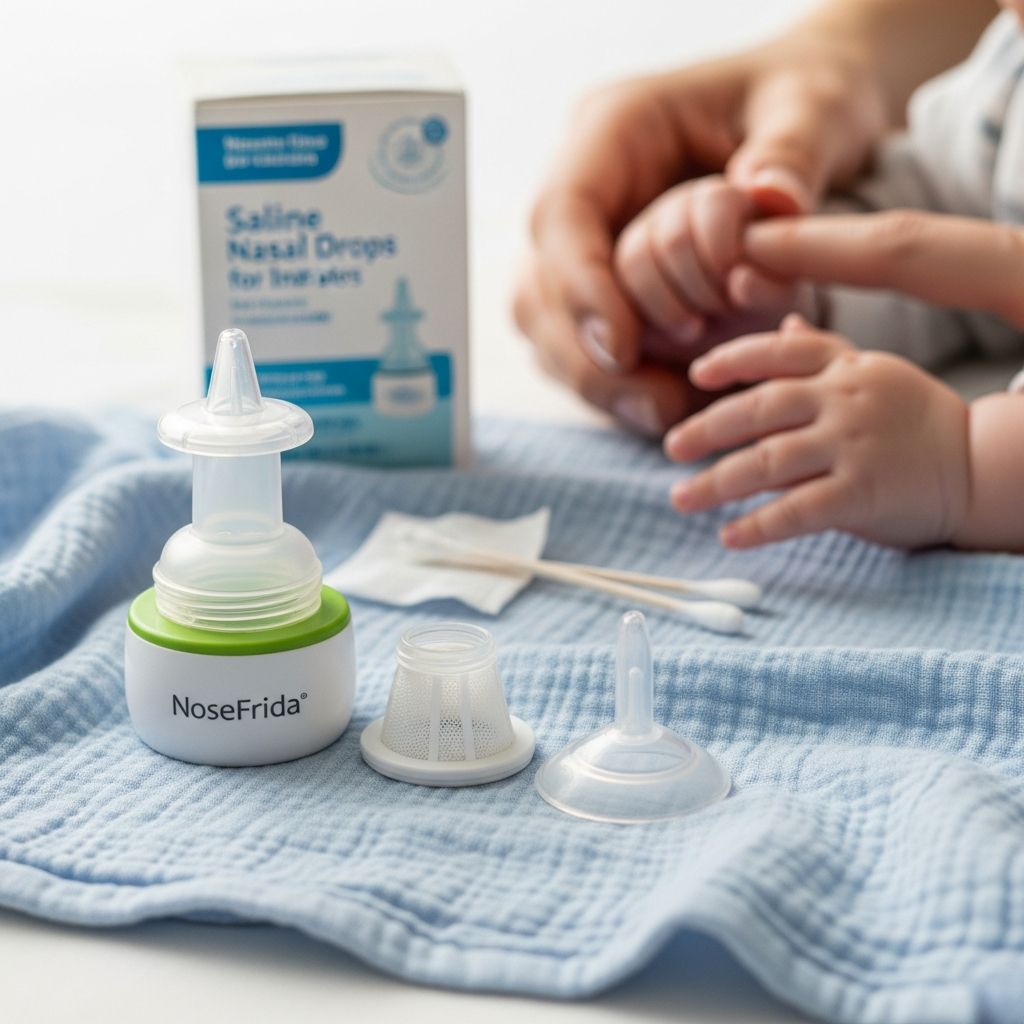
The NoseFrida consists of four main parts designed for hygiene and efficiency:
- Snot straw: The clear tube that seals against the nostril to capture mucus.
- Nose hose: Connects the straw to the mouthpiece, allowing controlled suction.
- Mouthpiece: Red end where parents apply gentle suction.
- Hygiene filters: Disposable sponges that prevent backflow of mucus into the mouth.
Replacement filters are crucial; a pack typically provides dozens of uses. Always keep extras on hand for frequent colds.
Step-by-Step Setup Guide
Assembling the NoseFrida takes seconds and ensures readiness during unexpected congestion episodes.
- Insert a fresh hygiene filter into the end of the snot straw until it clicks securely. This barrier is non-negotiable for safety.
- Attach the nose hose to the filter end of the snot straw, twisting until it locks.
- Connect the mouthpiece to the opposite end of the nose hose. Test the seal by gently blowing through it—no leaks should occur.
Store assembled in a clean, dry area. Disassemble only for thorough cleaning.
Preparing Your Baby for Effective Suction
Success starts with preparation. Position your baby comfortably on their back on a flat surface, perhaps swaddled in a soft blanket to minimize wiggling. Have saline drops, tissues, and a waste bin nearby. Explain in a soothing voice that this will help them feel better, even if they protest.
| Age Group | Recommended Saline Drops per Nostril | Wait Time |
|---|---|---|
| Under 6 months | 3-5 drops | 30-60 seconds |
| Over 6 months | 8-10 drops | 1 minute |
Use squeeze-bottle saline, not sprays, to control drops precisely. Tilt the head slightly back to aid flow.
Detailed Usage Instructions
Follow these steps for each nostril to clear congestion thoroughly:
- Apply saline: Administer drops into one nostril while gently occluding the other with your finger to direct flow.
- Position the device: Place the snot straw tip flush against the nostril entrance—never insert it. A tight seal forms naturally.
- Suction gently: Place the mouthpiece in your mouth and suck steadily. You’ll hear bubbly sounds and see mucus travel through the tube. Continue until flow stops.
- Expel mucus: Blow lightly into the mouthpiece over a tissue. Avoid forceful blows to keep the filter in place.
- Repeat: Switch nostrils, reapplying saline if needed. Finish with a final dry suction to remove residual saline.
During suction on one side, cover the opposite nostril with your finger for deeper clearing.
Optimal Timing and Frequency
Timing maximizes benefits. Use before feeds, naps, and bedtime when clear airways matter most. Limit to 2-4 sessions daily to prevent nasal irritation from over-manipulation. If congestion persists beyond 3-5 days or worsens, consult a pediatrician to rule out infections.
- Before nursing or bottle-feeding to improve latch and intake.
- Prior to sleep to promote restful breathing.
- After playtime if dust or allergens trigger stuffiness.
Comprehensive Cleaning and Maintenance
Hygiene prevents bacterial growth and reinfection. Clean after every use:
- Disassemble all parts and discard the used filter.
- Rinse with warm, soapy water, scrubbing gently with a small brush if available.
- For the nose hose, add a few drops of rubbing alcohol, shake, and rinse thoroughly.
- Air dry completely on a clean towel—moisture breeds germs.
- Reassemble with a new filter only when fully dry.
Dishwasher-safe parts (top rack) simplify routine, but hand-washing ensures longevity. Replace filters after each session; stock up on bulk packs for cost savings.
Safety Precautions and Common Mistakes to Avoid
While effective, misuse can cause harm. Key warnings from experts:
- No insertion: Keep the tip external to avoid injury.
- Gentle suction only: Strong pulls irritate tissues; control comes from your mouth.
- Fresh filters always: Reusing risks germ transfer.
- Monitor for issues: Stop if bleeding occurs; seek medical advice.
- Not a cure-all: Pair with humidifiers and elevation for holistic relief.
Avoid during acute fevers or if baby resists violently—comfort first.
Benefits Over Traditional Tools
Compared to bulb syringes, NoseFrida provides stronger, adjustable suction without collapsing nasal linings. Bulbs lose power after one squeeze and harbor bacteria if not cleaned perfectly. Electric aspirators risk over-suction; manual control trumps this.
| Tool | Pros | Cons |
|---|---|---|
| NoseFrida | Powerful, hygienic, adjustable | Requires parental effort |
| Bulb Syringe | Simple, cheap | Weak suction, hard to clean |
| Electric | Hands-free | Expensive, potential over-suction |
Tips for Squirmy Babies and Stressed Parents
Sessions under 2 minutes work best. Distract with toys, songs, or a sibling’s help holding arms. Practice on yourself first to build confidence. Over time, babies associate it with relief. For toddlers, involve them by letting them hold the tissue.
Parental disgust fades quickly—results are immediate and gratifying as breathing improves instantly.
Frequently Asked Questions (FAQs)
Is the NoseFrida safe for newborns?
Yes, safe from birth when used correctly with saline and gentle technique. Consult your pediatrician for preemies.
How often should I replace filters?
After every use to maintain hygiene and prevent backflow.
What if no mucus appears during suction?
Saline may need more time or additional drops. Ensure a proper seal and steady pull.
Can I use it on toddlers?
Absolutely, though they may resist more. Use more saline for thicker mucus.
Does it work for allergies too?
Yes, clears pollen-induced congestion effectively alongside antihistamines if advised.
Enhancing Results with Complementary Care
Combine NoseFrida with a cool-mist humidifier to maintain moisture, elevate the crib mattress head by 30 degrees, and ensure hydration. Avoid irritants like smoke. These steps amplify effectiveness and speed recovery.
Word count: 1728 (excluding HTML tags and metadata).
References
- How to use the NoseFrida nasal aspirator, according to pediatricians — Business Insider. 2023-10-15. https://www.businessinsider.com/guides/parenting/how-to-use-nosefrida-nasal-aspirator
- How to Use a Bulb Syringe or NoseFrida Nasal Aspirator — Children’s Hospital Colorado (YouTube transcript). 2022-05-20. https://www.youtube.com/watch?v=KTWkmTmv3aU
- Using an At-Home Nasal Aspirator (NoseFrida®) — Children’s Hospital Colorado. 2024-01-10. https://chcopatiented.blob.core.windows.net/documents/RESP_NoseFrida_Eng.pdf