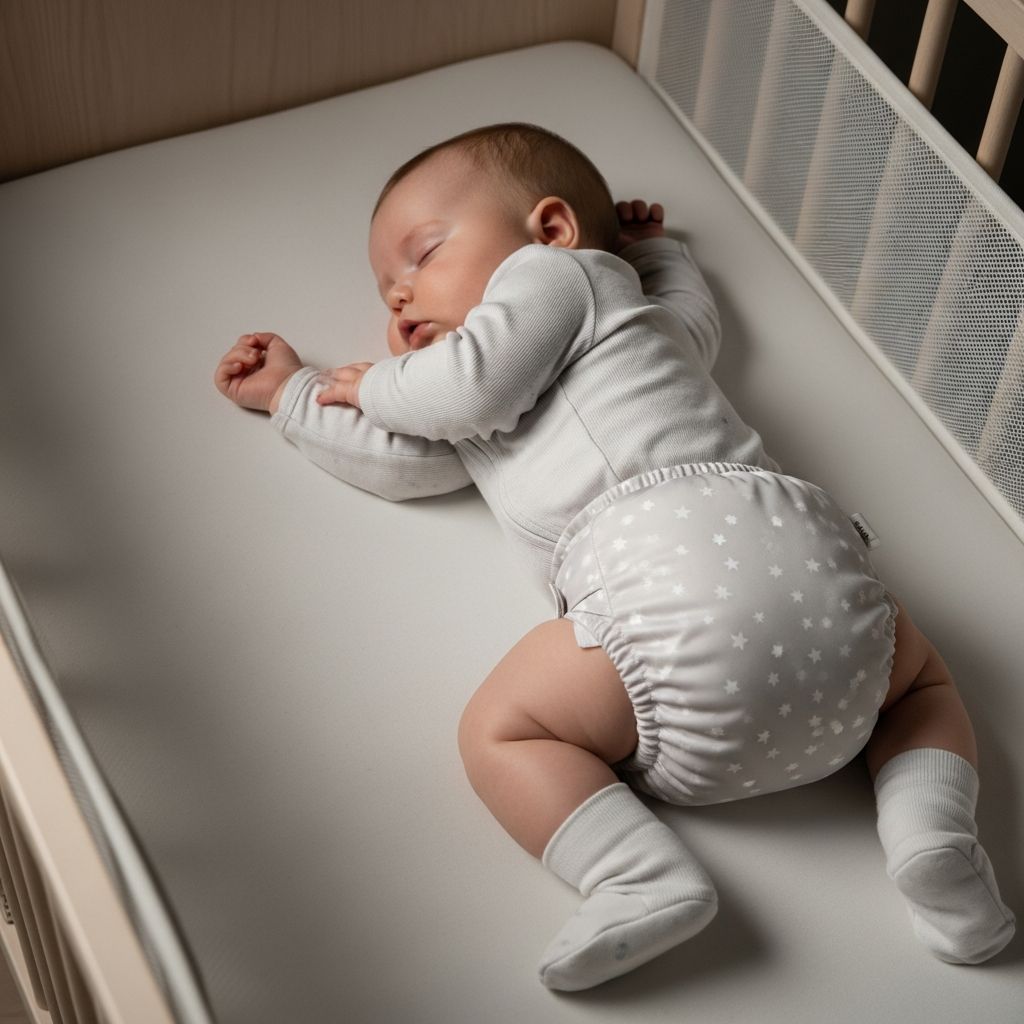
Staying with cloth diapers around the clock is absolutely possible, even for long stretches of overnight sleep. The key is combining the right fabrics, fit, and absorbency so your baby wakes up dry, comfortable, and rash-free.
This guide walks you through how to build an effective nighttime cloth diaper system, how to troubleshoot leaks, and how to keep your baby’s skin healthy while still protecting your sleep.
Why Nighttime Cloth Diapering Is Different
Daytime diapers are changed often, but nighttime diapers may need to last 10–12 hours. That long stretch puts unique pressure on your setup.
- More urine volume: As babies sleep for longer blocks, the total overnight output increases dramatically.
- Less chance to adjust: Parents usually avoid changing diapers unless absolutely necessary to protect everyone’s sleep.
- Higher risk of leaks and rash: A saturated or poorly fitted diaper can leak or trap moisture against the skin for hours, promoting irritation.
Cloth diapers absorb using fabric layers instead of superabsorbent gels found in disposables, so you need enough fabric and the right fibers to handle overnight capacity.
Core Building Blocks of an Overnight Cloth Diaper
Every successful nighttime setup combines three elements: absorbent core, moisture management, and waterproofing.
1. Absorbent Core
Natural fibers shine at night because they absorb a lot of liquid and stay effective for many wash cycles.
- Cotton: Affordable, durable, and easy to wash; great as a base layer or prefold.
- Bamboo: Very absorbent and soft; good for boosting heavy wetters.
- Hemp: Extremely absorbent and trim, ideal as an inner layer or doubler for maximum capacity.
2. Moisture Management Next to Skin
A stay-dry layer can keep your baby feeling comfortable even when the inner layers are very wet.
- Stay-dry fleece or suedecloth: Wicks moisture into the absorbent layers and feels relatively dry on the skin.
- Natural-only option: If you prefer all-natural fibers, you can skip synthetics and use soft cotton or bamboo; just change promptly in the morning.
3. Waterproofing and Containment
The outer layer keeps moisture inside the diaper and off pajamas and sheets.
- PUL (polyurethane laminate) covers: Thin, water-resistant, easy to wipe between uses.
- Wool covers: Breathable, naturally water-resistant, and can absorb up to about 30% of their weight in moisture while still feeling dry.
| Component | Best Options for Night | Primary Benefit |
|---|---|---|
| Absorbent Core | Hemp, bamboo, cotton prefolds | High capacity and durability |
| Stay-Dry Layer | Fleece, suedecloth | Comfort against skin |
| Waterproofing | PUL or wool cover | Leak protection and breathability |
Common Nighttime Cloth Diaper Setups
You can build an effective overnight system using different diaper styles. Here are common setups that work well for many families.
Fitted Diaper with Cover
A fitted diaper is fully absorbent (waist, front, and back) and fastens with snaps or Velcro. Pair it with a separate waterproof cover.
- Excellent for heavy wetters because the entire diaper can absorb.
- Easy to boost by adding hemp or bamboo inserts underneath the cover.
- Use wool or PUL as the cover, depending on your climate and preference.
Prefold or Flat with Cover
Prefolds and flats are versatile rectangles of absorbent fabric that you can fold to place multiple layers in the wet zone.
- Budget-friendly and quick to wash and dry.
- Customizable layering for front, middle, or back wetters.
- Work especially well with an extra booster and a snug cover.
Pocket Diaper Stuffed for Night
Pocket diapers have a water-resistant outer and a stay-dry inner with a pocket in between for inserts.
- Quick to put on—great for wiggly or sleepy babies.
- Easy to customize absorbency by layering inserts: microfiber on top for speed, hemp or bamboo beneath for capacity.
- Good choice if other caregivers are nervous about more complex systems.
All-in-One with Extra Boosting
Some all-in-one diapers are specifically designed for overnight use, with multiple sewn-in layers plus pockets or snap-in inserts.
- Most similar in feel to a disposable, with everything attached.
- Useful for travel, babysitters, or daycare if they are open to cloth.
- Often need an extra booster for older babies or toddlers.
Choosing Fabrics and Inserts for Overnight Success
The materials you use for inserts make the biggest difference in leak protection and comfort.
Comparing Popular Insert Materials
| Fiber | Absorbency | Drying Time | Best Use at Night |
|---|---|---|---|
| Cotton | Moderate | Fast | Main prefold or base insert |
| Bamboo | High | Medium | Top booster for softness |
| Hemp | Very high | Slower | Bottom booster for maximum capacity |
| Microfiber | High (fast absorption) | Medium | Inside pockets only, not against skin |
Strategies for Heavy Wetters
- Layer a hemp insert under a cotton or bamboo insert to catch overflow and prevent compression leaks.
- Position extra absorbency where your baby wets most: front, center, or back.
- If leaks start after your baby begins sleeping longer than about 6 hours, consider adding a dedicated overnight booster.
Getting the Fit Right to Prevent Leaks
Even the most absorbent diaper will leak if it does not fit well. A good nighttime fit is snug but not tight.
Key Fit Checks
- Waist: Should be snug enough that you cannot easily pull it away, but not leaving deep marks.
- Legs: Elastics should sit in the underwear line, not on the thigh, forming a gentle seal.
- Rise: The top of the diaper should sit high enough to cover the bum and lower back when your baby is lying down.
Common Fit Issues at Night
- Leaks at the legs: Often caused by gaps or too little absorbency in the wet zone.
- Leaks up the back: May indicate the rise is set too low or your baby is a back-wetter who needs more fabric in that area.
- Compression leaks: If pee squeezes out when your baby lies on their tummy, add a more stable fiber like hemp under fluffier inserts.
Protecting Baby’s Skin During Long Overnight Stretches
Prolonged exposure to moisture can irritate the skin and increase the risk of diaper rash. Diaper rash is common and often linked to contact with urine and stool, friction, or infection.
Skin-Friendly Nighttime Habits
- Use breathable materials: Natural fibers like cotton, bamboo, and wool allow more air flow and help regulate temperature.
- Apply barrier cream if needed: A thin layer of cloth-safe barrier cream can protect delicate skin overnight.
- Change promptly in the morning: Even if there are no leaks, change as soon as your baby wakes to reduce moisture contact.
Recognizing When to Seek Medical Advice
If you see persistent redness, blistering, or sores that do not improve with basic care, consult a pediatrician. The American Academy of Pediatrics notes that severe or recurrent rashes may require medical treatment or evaluation for infection.
Sample Nighttime Cloth Diaper Routines by Age
Every baby is different, but the amount of absorbency needed often increases with age and longer sleep stretches.
Newborn to 3 Months
- Babies usually wake to feed every 2–4 hours.
- A standard daytime cloth diaper setup is often sufficient at night.
- Frequent feeds mean frequent changes, which naturally prevent long exposure.
4 to 9 Months
- Many babies begin sleeping longer stretches (5–7 hours).
- Start adding a booster to your fitted, prefold, or pocket diaper.
- Check in the early morning for dampness at legs or waist and adjust absorbency placement accordingly.
9 Months and Up
- Some babies sleep 10–12 hours and may also drink more during the day.
- Use a high-capacity combination: for example, a fitted diaper plus hemp doubler plus wool or PUL cover.
- Consider wool covers if you frequently battle damp pajamas or sweaty skin; wool helps regulate temperature and absorb small leaks.
Balancing Cloth and Disposable Options at Night
Many families use a mixed approach, choosing cloth during the day and either cloth or disposables overnight, depending on their baby’s needs.
- Disposable diapers contain gels that can hold large volumes of liquid and are highly convenient for long stretches.
- Cloth offers reusability, lower waste, and exposure to fewer synthetic chemicals, especially when using natural fibers.
- Parents can choose all-cloth nights, cloth with extra boosting, or disposables for specific situations such as illness or travel.
Practical Tips to Make Nighttime Cloth Easier
Small adjustments in your routine can make nighttime diapering feel more manageable.
- Pre-stuff or pre-fold: Prepare all nighttime diapers before bed so changes are quick and quiet.
- Use a waterproof crib or bassinet liner: This protects the mattress while you’re dialing in the right absorbency.
- Track leaks for a few nights: Note time of night and where the diaper is soaked to guide your boosting strategy.
- Have a backup plan: Keep one extra overnight diaper ready in case of a middle-of-the-night blowout or unexpected leak.
Frequently Asked Questions (FAQs)
Q1: Can cloth diapers really last all night without leaks?
Yes. With enough absorbent layers, good fit, and an effective cover, cloth diapers can last through 10–12 hours for many babies. You may need to experiment with boosters and materials to find the right combination.
Q2: When should I start using special overnight inserts or boosters?
Most babies need extra absorbency when they begin sleeping longer than about six hours, or when you notice consistent dampness at the legs or waistband in the morning.
Q3: Are nighttime cloth diapers always bulky?
Nighttime setups are usually bulkier than daytime diapers because they contain more fabric layers. Using high-absorbency fibers like hemp can help keep the diaper trimmer while still increasing capacity.
Q4: Is it safe for my baby’s skin to stay in the same cloth diaper all night?
For most babies, it is safe when you combine high absorbency, a stay-dry layer, and a morning change. If your baby is prone to rash or skin conditions, you may want to add a barrier cream, increase airflow with breathable covers, or consult your pediatrician.
Q5: How do I wash heavily soaked overnight diapers?
Rinse or pre-wash heavily saturated diapers in cool water, then run your normal cloth diaper wash routine with adequate detergent and a hot wash. Follow your washer manufacturer’s and detergent instructions; a second rinse can help remove residues.
References
- Nighttime Cloth Diapering Guide: Sleep Dry & Comfortable — SuperBottoms. 2023-08-10. https://superbottoms.com/blogs/diapering/ultimate-guide-nighttime-cloth-diapering
- Can I use cloth diapers overnight or do I need to use disposables? — Esembly Baby. 2023-05-17. https://esemblybaby.com/blogs/trash-talk/using-cloth-diapers-overnight
- Ensure a Successful Night’s Sleep with Cloth Diapers — BabeeGreens. 2022-06-21. https://babeegreens.com/blogs/blog/ensure-a-successful-nights-sleep-with-cloth-diapers
- Cloth Diapers Pros and Cons: Disposable vs Cloth Nappies — Petite Capsule. 2021-04-03. https://petitecapsule.com/cloth-diapers-pros-and-cons/
- How to Choose Cloth Diapers vs Disposable Diapers — Bumpers Baby Co. 2022-09-12. https://bumpersbabyco.com/blogs/news/cloth-diapers-vs-disposable-diapers
- Diaper Rash — American Academy of Pediatrics / HealthyChildren.org. 2023-03-28. https://www.healthychildren.org/English/ages-stages/baby/diapers-clothing/Pages/diaper-rash.aspx