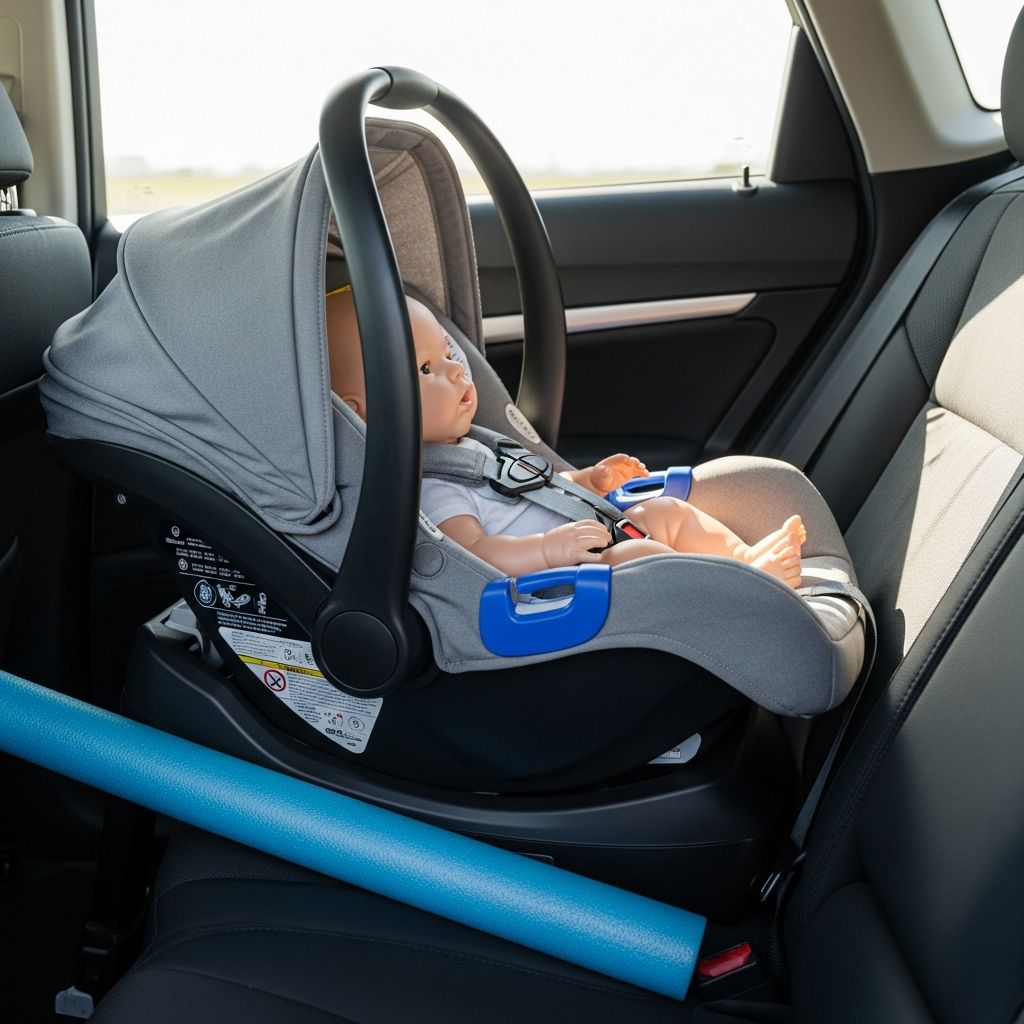
Leaving the hospital with a newborn often feels less like a sweet movie moment and more like a high-stakes puzzle: how on earth should that car seat fit, tilt, and click so that a tiny, floppy baby is actually safe? For many parents, the seat is either too upright, too wobbly, or simply confusing. This guide walks through what a well-installed car seat should look like, how to check it in minutes, and when a simple helper like a pool noodle or rolled towel can make the ride safer and more comfortable for your little one.
Why Car Seat Fit Matters More Than Price
A high-end car seat is not automatically safer than a budget model. What matters most is that the seat matches your child’s size, fits your vehicle, and is installed and used exactly as designed. A lower-priced seat that you understand and can install tightly is safer than a fancy one that always feels loose or tilted wrong.
Think of the seat as a custom safety shell. If the angle is off, the straps are loose, or the base shifts around, that shell can’t protect your baby the way it’s meant to. Getting the basics right turns an intimidating piece of gear into a reliable part of your daily routine.
Key Principles of a Safe Car Seat Setup
Before reaching for any hacks or helpers, it helps to understand the fundamentals of a safe setup. These principles apply to most infant and convertible seats, though you should always follow your specific seat’s manual.
- Rear-facing as long as possible: Babies and toddlers are safest when they ride rear-facing until they reach the height or weight limit for that mode.
- Tight installation: The seat base should not move more than about an inch side-to-side or front-to-back when you tug at the belt path.
- Correct recline: Newborns need a reclined angle that keeps their airway open and prevents the head from flopping forward.
- Snug harness fit: Harness straps should lie flat, be at the correct height, and be snug enough that you can’t pinch extra slack at the shoulders.
- Nothing extra under or behind baby: Avoid aftermarket inserts, cushions, or padding that did not come with the seat or are not approved for that model.
Rear-Facing Recline: Why the Angle Is So Important
The angle of a rear-facing seat is one of the trickiest parts for new parents, but it is also one of the most important. Too upright, and a newborn’s heavy head can slump forward, narrowing the airway; too reclined, and the baby may not be properly positioned for crash protection. Most infant seats include a built-in level or indicator that tells you when the recline is correct.
Because vehicle seats are shaped and sloped differently, the indicator may read “too upright” even when the seat feels tight. This is where carefully using a firm, supportive object under the base—like a tightly rolled towel or pool noodle, when allowed—can help you reach the correct angle.
Safe Helpers: Rolled Towels and Pool Noodles
New parents often discover that the car’s seat and the baby’s car seat aren’t built to pair perfectly. A gap at the back of the base, a steeply sloped cushion, or a stubborn recline indicator stuck in the wrong zone are all common problems. Instead of forcing the seat or accepting an unsafe angle, you can sometimes use a simple helper placed under the base at the vehicle seat crease.
Two of the most common and accessible helpers are:
- Tightly rolled bath towel: Rolled into a firm cylinder, taped or tied so it does not unwind, and positioned at the crack between the seat back and seat bottom.
- Dense pool noodle: Cut to width and placed at the seat crease to elevate the foot of the car seat base and adjust the recline.
Basic Steps for Using a Helper Under the Base
The exact process varies by vehicle and seat, but the general idea is simple: fill the gap so the base can sit level and stable. The helper never replaces the seat belt or lower anchors; it only supports the angle.
- Check your car seat manual to confirm that using a rolled towel or pool noodle under the base is permitted.
- Place the helper snugly in the crease where the seat back and bottom meet.
- Set the car seat base on top, with the foot resting on the helper.
- Buckle the seat belt or attach the lower anchors and press down firmly on the base while tightening.
- Check the built-in recline indicator; adjust the helper’s size or position if needed.
- Confirm that the base does not move more than about an inch at the belt path.
When a Pool Noodle (or Towel) Is Helpful
Not every car or child seat combination needs extra support under the base, but there are clear situations where it can make a dramatic difference. The goal is not to modify the car seat, but to let it rest at the angle the manufacturer expects inside a vehicle that may not cooperate.
| Issue | What You See | Potential Fix |
|---|---|---|
| Seat too upright for a newborn | Recline indicator shows too steep, baby’s head tilts forward | Add a single pool noodle or tightly rolled towel at seat crease to lift the front of the base |
| Seat too reclined | Indicator in the “too reclined” zone; baby appears almost lying flat | Remove extra helpers, adjust built-in recline setting, or move to a flatter spot on the vehicle seat |
| Gap under front of base | Front of base hovers above cushion after tightening | Use a slightly thicker noodle section or firmer towel roll to support the front edge |
| Sloped rear seats | Seat tilts forward even when you follow the basic instructions | Combine a built-in recline adjustment with a helper at the crease for a more level base |
Safety Rules for DIY Angle Helpers
Using a pool noodle or towel should always respect the rules of your car seat and vehicle. The idea is to support proper installation, not to improvise a new design. A few clear boundaries keep these helpers safe and sensible.
- Never use more helpers than the manufacturer allows; many seats recommend a maximum of one to three pool noodles.
- Do not stack objects in creative ways or use soft items like pillows, blankets, or stuffed animals under the base.
- Ensure the noodle or roll is dense and firm; squishy foam that compresses fully will not provide stable support.
- Secure the towel roll with tape or string so it cannot unroll and flatten over time.
- Re-check the recline indicator and base tightness regularly, especially after long trips or seasonal temperature changes.
Harness Fit: Getting the Straps Right Every Time
Even a perfectly-installed seat cannot do its job if the harness is too loose or positioned incorrectly. Many new parents worry about pinching skin or making baby uncomfortable and stop tightening prematurely, leaving hidden slack that matters in a crash.
A good rule is that harness straps should sit at or below the shoulders for rear-facing children, run flat with no twists, and be tight enough that you cannot pinch any extra webbing at the collarbone. The chest clip should rest at armpit level, not on the belly or near the neck.
Everyday Habits That Improve Car Seat Safety
Safe travel is not just about the day you install the seat; it is about the habits you build every time you buckle your child in. Small, repeatable steps quickly become routine, and they add a layer of protection that is just as important as the hardware itself.
- Remove bulky coats and thick blankets before buckling; use layers over the harness instead.
- Take a quick look at the recline indicator and belt path at least once a week.
- Re-check harness height as your child grows and adjust according to the manual.
- Keep toys and loose items to a minimum to avoid projectiles in a sudden stop.
- Model good behavior by always wearing your own seat belt correctly.
Signs Your Car Seat Setup Needs a Second Look
It can be hard to know when you have moved from “good enough” to truly safe. Fortunately, there are clear visual and practical cues that suggest it is time to re-check, re-install, or ask a trained technician for help.
- The base or seat moves more than about an inch when pulled at the belt path.
- The recline indicator is outside the recommended range for your child’s age and size.
- Your child’s head consistently falls forward during normal driving.
- You notice new rattling or shifting after someone else has driven the car or adjusted the seats.
- The harness straps seem to slide off the shoulders or require frequent tightening mid-trip.
When to Avoid DIY Fixes and Call the Experts
Pool noodles and towel rolls should never substitute for professional guidance, especially if you feel unsure about any part of your setup. Certified child passenger safety technicians can check your installation, show you how to correct the angle, and confirm whether your chosen helper is appropriate for your seat.
You should seek expert help right away if you cannot get the base tight, the recline indicator never reaches the safe zone, your car has unusual seat shapes or non-removable headrests that interfere with the seat, or your child has medical or positioning needs that make a typical recline impossible.
Practical Packing Tips for Smoother Rides
Once the technical side is handled, the day-to-day experience of using the car seat becomes the next challenge. Good planning can reduce screaming car rides and rushed, distracted buckling that can compromise safety.
- Keep a small kit in the car with extra diapers, wipes, a spare onesie, and a light blanket.
- Use a simple, non-dangling toy clipped to clothing or the seat fabric away from the face.
- Plan feeding and diaper changes so the baby is not buckled in hungry or soaked if you can avoid it.
- In hot weather, pre-cool the car and cover the seat with a light cloth when parked to avoid hot buckles.
Frequently Asked Questions
Can every car seat use a pool noodle or towel for support?
No. Some seats are designed to install correctly without anything underneath, and the manufacturer may prohibit extra support. Always read both the car seat manual and your vehicle manual; if they do not clearly allow a noodle or towel, do not use one. When in doubt, contact customer support for your seat or visit a certified technician.
Is it safe to use more than one pool noodle?
Many popular installations use one to three noodles taped together in a small pyramid, but the exact number and shape should follow the car seat maker’s instructions. Stacking noodles just to get a dramatic tilt can be unsafe. The ideal setup is the fewest, firmest helpers needed to bring the recline indicator into the safe zone with a tight installation.
What if my baby’s head still flops forward?
If your baby’s head falls forward while you are driving on normal roads, the angle is likely too upright for their age and size. First, re-check the recline indicator and adjust the position of the base or helper. If the indicator is already in the correct range and the issue persists, consult your pediatrician and a child passenger safety technician for advice tailored to your child.
Can I put a rolled blanket behind my baby’s back or under their bottom?
Do not place anything behind your child’s back or under their bottom unless your car seat manufacturer specifically approves that exact practice. Extra padding in those areas can change how the harness fits and behaves in a crash. If you need to prevent slouching, many manuals allow a small roll between the crotch buckle and the baby’s body or rolls beside the hips, but only if clearly stated in the instructions.
How often should I check the installation?
Make it a habit to give the base a quick tug at the belt path every week and after any long trip. Also re-check after anyone else installs or moves the seat, after detailing or cleaning the car, and every time you adjust the recline or switch between vehicles. Regular checks catch issues early, before they become a risk during an emergency stop.
When do I stop worrying about the recline angle?
The recline angle is most critical in the early months when your baby has limited head and neck control. As your child grows and gains muscle strength, many seats allow a slightly more upright rear-facing position within their indicators. However, you should always follow the angle guidelines specific to your seat for each weight or age range until your child transitions to the next stage of restraint.
Bringing It All Together for Safer Drives
A well-installed, properly angled car seat can transform car rides from stressful and uncertain to calm and predictable. With a clear understanding of how the base should sit, how the harness should fit, and when a simple helper like a pool noodle or rolled towel is appropriate, you can approach each trip knowing you have done everything reasonable to protect your child.
The goal is not perfection, but informed, consistent habits. Learn your seat, trust the indicators and instructions, and reach out for expert support when something does not look or feel right. Over time, adjusting the angle, tightening the harness, and giving the base a quick shake will feel as automatic as starting the engine.