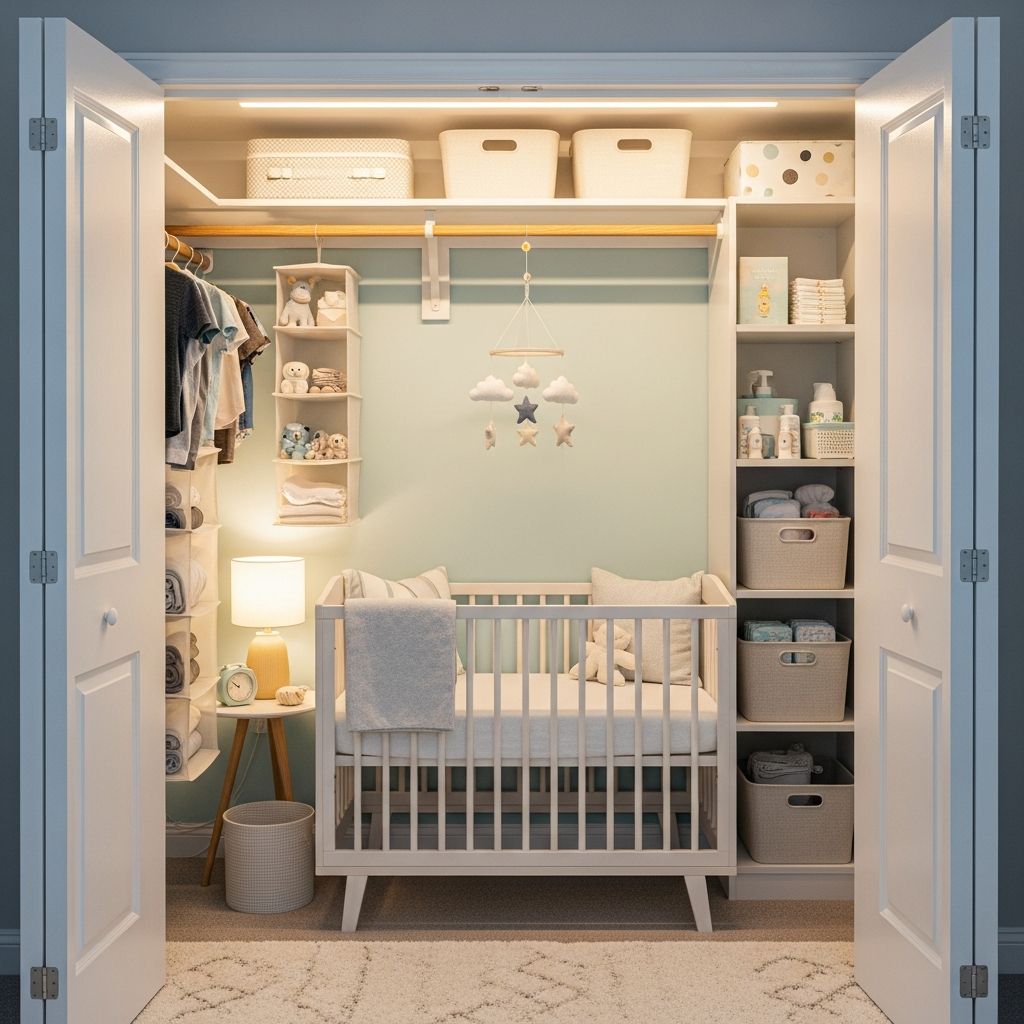
In modern homes where square footage is at a premium, parents often face the challenge of creating a dedicated sleep area for their newborn. Turning a closet into a crib space offers a clever solution, blending functionality with safety. This approach not only saves room for play areas or family furniture but also provides a dark, quiet environment ideal for infant rest. All crib installations must adhere to strict federal safety guidelines to protect babies from common hazards.
Why Choose a Closet for Your Baby’s Crib?
Closets provide natural sound insulation and light control, mimicking womb-like conditions that promote longer sleep stretches. By repurposing unused closet space, families can keep the main room versatile for daily activities. This setup is particularly beneficial in apartments or urban dwellings where every inch counts. Safety remains paramount; all cribs sold in the U.S. must meet Consumer Product Safety Commission (CPSC) standards, including slat spacing no wider than 2 3/8 inches and firm mattress supports.
Parents report fewer disturbances from household noise, and the enclosed space helps maintain consistent temperatures. However, proper ventilation and accessibility are crucial to avoid overheating or entrapment risks.
Essential Crib Safety Standards for Closet Installations
Before any setup, verify your crib complies with post-2011 federal regulations, which banned drop-side models and strengthened slats, hardware, and supports. Cribs manufactured after June 28, 2011, align with 16 CFR 1219 for full-size and 16 CFR 1220 for non-full-size units. Avoid secondhand cribs older than 10 years, as they may not meet these updated rules.
- Slat Spacing: No more than 2 3/8 inches apart—test with a soda can; it shouldn’t pass through.
- Mattress Fit: Must measure at least 27 1/4 x 51 5/8 inches for standard cribs, with less than 1 inch gap on sides.
- No Prohibited Items: Ban bumpers, blankets, pillows, or inclines over 10 degrees per the Safe Sleep for Babies Act.
- Hardware Check: Ensure all screws, brackets are tight; no missing or loose parts.
- Corner Posts: No more than 1/16 inch above head/footboards to prevent strangulation.
Place the crib away from cords, windows, or unsecured furniture. Secure monitors with cord sheaths if within 3 feet. Always position baby on their back on a firm, flat surface with only a fitted sheet.
Measuring and Planning Your Closet Crib Space
Start by assessing closet dimensions. Standard cribs need about 28 x 52 inches interior space, plus 2-3 feet clearance for access. Measure depth (minimum 24 inches), width (at least 30 inches), and height (36+ inches for rail safety). Remove doors for better airflow or install sliding panels.
| Closet Type | Ideal Dimensions | Best Crib Size | Pros | Cons |
|---|---|---|---|---|
| Walk-in | 5×4 ft | Full-size | Ample room, ventilation | May need partitioning |
| Reach-in | 2×6 ft | Mini or portable | Compact fit | Limited access |
| Armoire | 3×2 ft | Bassinet conversion | Freestanding option | Lower height limit |
Account for ventilation: Add a small fan or ensure 6-inch gaps above. Test mattress firmness—a baby’s head shouldn’t sink more than 1 inch.
Practical Installation Methods for Closet Cribs
Wall-Mounted Crib Platforms
Secure a sturdy platform to wall studs using heavy-duty brackets. This elevates the crib, freeing floor space below for storage. Choose GREENGUARD-certified wood to minimize chemical exposure, aligning with ASTM standards for low phthalates. Ensure the platform supports 50+ pounds with no wobble.
Floor-Level Custom Builds
For deeper closets, build a low-profile frame from plywood, anchored to walls. Line with breathable mesh panels for airflow. This method suits mini cribs, which fold for easy removal as baby grows.
Portable Crib Adapters
Use travel cribs with clamp-on closet bars. These snap into place without permanent changes, ideal for renters. Verify JPMA certification for voluntary safety exceedance.
Each method requires level flooring—shim if needed—and smoke/CO detectors nearby.
Design Ideas to Make Closet Cribs Stylish and Functional
Blend nursery aesthetics into tight spaces with soft LED lighting strips for nighttime checks. Opt for neutral palettes: whites, pastels, or woods for a calming vibe. Add pull-out drawers under the crib for diapers and linens.
- Lighting: Motion-sensor nightlights prevent trips.
- Storage: Over-door organizers for essentials.
- Decor: Wall decals above crib level—no hanging mobiles.
- Fabric: Blackout curtains for doorways enhance sleep.
Incorporate multifunctional elements like a fold-down changing station on the closet door.
Addressing Common Challenges in Closet Crib Setups
Ventilation Worries: Install mesh screens or a low-speed fan; monitor room humidity at 40-60% to prevent mold.
Access Issues: Use a 30-inch wide opening; practice reaching in blindfolded.
Noise Reduction: Add rubber mats under crib legs.
Convertibility: Select cribs that transition to toddler beds for longevity.
For multi-child homes, stack vertical storage around the crib area.
Maintenance and Long-Term Use Tips
Inspect monthly for loose hardware or chew marks. Clean with mild soap—avoid harsh chemicals. As baby reaches 35 inches or climbs out, transition promptly. Repurpose the space into a play nook seamlessly.
Frequently Asked Questions About Closet Cribs
Is a closet crib safe for newborns?
Yes, if it meets CPSC standards for slats, mattress fit, and placement away from hazards like cords. Ensure excellent airflow and easy parental access.
Can I use a secondhand crib in a closet?
Avoid if over 10 years old or pre-2011; check for recalls and compliance with 16 CFR 1219/1220.
How do I ventilate a closet crib properly?
Openings at top/bottom, mesh panels, or fans; never seal completely.
What mattress is best for closet setups?
Firm, tight-fitting, GREENGUARD Gold certified, under 6 inches thick.
Does a closet crib affect baby development?
No evidence; it provides secure, dark sleep promoting healthy patterns.
References
- Shopping for a Safe Crib? Consider These 5 Features Before You Buy — Consumer Reports. 2023-10-12. https://www.consumerreports.org/babies-kids/cribs/crib-safety-a1086241268/
- Safe Baby Sleep: Keep Decorating ‘Extras,’ Blankets Out of Infant Cribs — Checkup Newsroom. 2023-05-15. https://www.checkupnewsroom.com/safe-baby-sleep-keep-decorating-extras-blankets-out-of-infant-cribs/
- 5 Crib Safety Tips — Monica + Andy. 2024-02-20. https://monicaandandy.com/blogs/ma-edit/5-crib-safety-tips
- Safety Considerations for Secondhand Cribs — Encore Baby Registry. 2023-11-08. https://www.encorebabyregistry.com/safety-considerations-for-secondhand-cribs/
- What Everyone Ought to Know About Crib Safety Standards — Furniture Concepts. 2022-12-01. https://furnitureconcepts.com/what-everyone-ought-to-know-about-crib-safety-standards/
- Use this checklist to know if our crib is safe — WIChealth.org. 2024-01-15. https://www.wichealth.org/Member/Resource/index/3976