Keeping your baby’s and child’s nails short and smooth is more than a cosmetic task. Well-trimmed nails help prevent painful scratches, reduce the risk of infection from trapped dirt, and support overall hand and foot hygiene. This guide explains, in clear steps, how to trim nails safely at every age and how to make nail care a calm, routine part of family life.
Why Children’s Nail Care Matters
Kids’ nails grow quickly and can be surprisingly sharp, especially in newborns and infants. Short, clean nails are important because they:
- Reduce scratches on the face, scalp, and body (both your child’s and yours).
- Lower infection risk by reducing trapped dirt and germs under the nail edge.
- Help prevent ingrown nails when they are cut straight across and not too short.
- Encourage hygiene habits that kids can carry into adulthood.
Public health guidance emphasizes keeping nails short, trimming them often, and cleaning under them during handwashing as part of basic hygiene.
Understanding Kids’ Nails: What’s Normal?
Children’s nails differ slightly from adults’ nails. Knowing what is typical can help you recognize problems early and avoid unnecessary worry.
| Age Group | Common Nail Features | Practical Implications for Trimming |
|---|---|---|
| Newborns (0–3 months) | Soft, flexible, may appear to “peel” or flake at the ends. | Often easiest to shorten with a soft emery board; clippers used cautiously. |
| Infants (3–12 months) | Grow quickly; can be sharp despite small size. | Need trimming about once a week for fingers; toenails slightly less often. |
| Toddlers & preschoolers | Nails are firmer; kids resist more. | Make nail trimming playful; continue to cut straight across to avoid ingrown nails. |
| School-age kids | Stronger nails, more independent. | Begin teaching them safe self-care with supervision and age-appropriate tools. |
Essential Tools for Safe Nail Trimming
You do not need many gadgets, but the right tools make trimming safer and more comfortable.
- Baby nail clippers with a small cutting edge and good grip, designed for tiny nails.
- Blunt-tipped baby nail scissors as an alternative for parents who prefer a scissor motion.
- Soft emery board or nail file to smooth edges and, for newborns, to gently shorten nails without cutting.
- Clean washcloth to dry hands and feet and to gently push back finger pads while you cut.
- Good lighting so you can clearly see where the nail ends and the skin begins.
Professional pediatric guidance recommends using child-specific clippers or a soft emery board and being very careful with sharper tools to avoid nicks to the fingertip.
When and How Often to Trim Nails
There is no single schedule that fits every child, but generally:
- Fingernails often need trimming once a week because they grow faster.
- Toenails may only need trimming every 2–3 weeks, depending on growth and activity.
A good time to trim is when your baby or child is relaxed, such as:
- Right after a bath, when nails are softer and easier to cut.
- While a baby is sleeping or drowsy, if they startle less when touched.
- During a calm activity, like reading a story or watching a short show.
Step-by-Step: Trimming a Baby’s Nails
Many new parents feel anxious about cutting a baby’s nails. A slow, deliberate approach helps build confidence.
- Prepare the space.
Choose a clean, well-lit, quiet area. Sit somewhere stable, such as a couch or bed, and support your baby securely on your lap or beside you. - Wash hands and clean the nails.
Wash your own hands, and if needed, gently clean your baby’s hands and feet with warm water and mild soap. Dry thoroughly. - Position your baby.
Cradle their hand in yours. You may ask another adult to help hold or distract the baby if they are very wiggly. - Push the fingertip pad down.
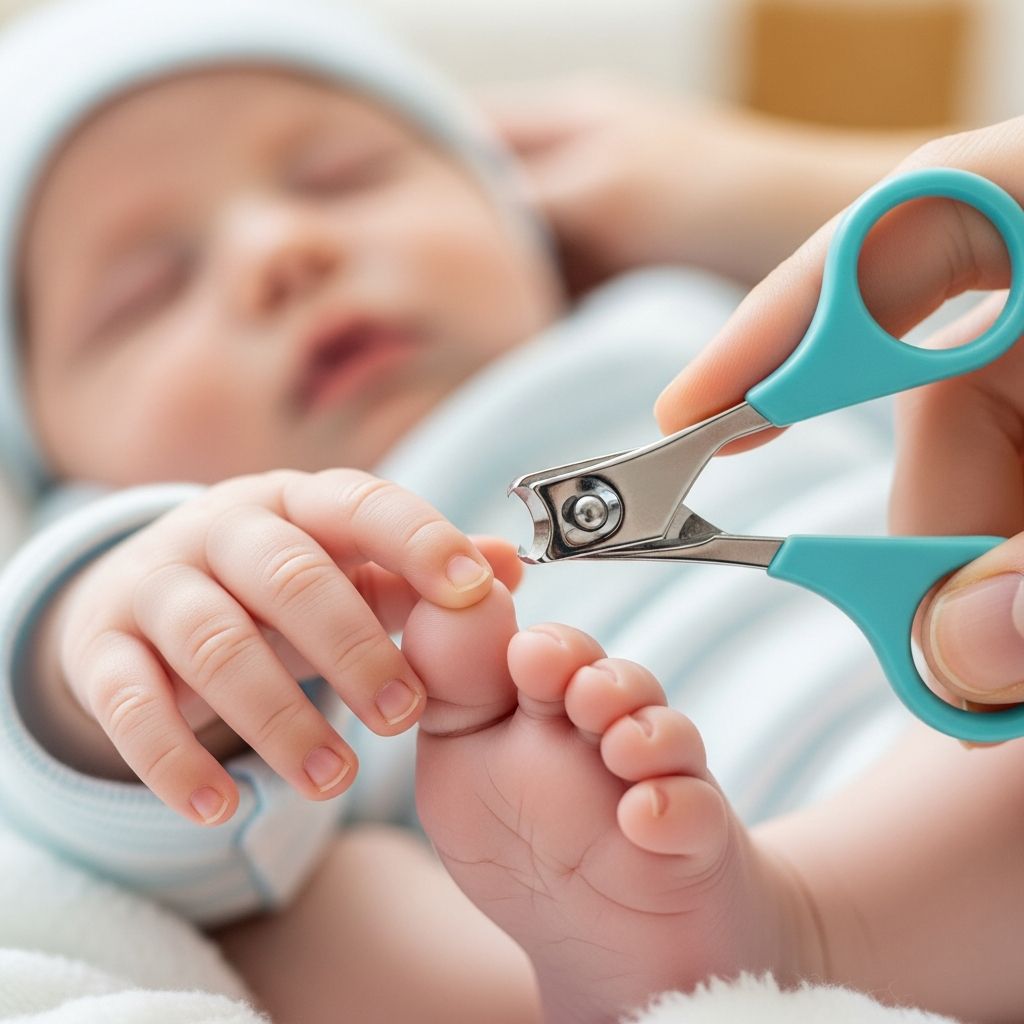
Use your thumb to gently press the soft finger pad away from the nail. This creates a small space and helps prevent cutting the skin. - Trim carefully.
With baby nail clippers or blunt scissors:- Cut straight across the nail, following its natural line.
- Avoid cutting so short that the skin under the nail becomes exposed.
- File sharp corners.
Use a soft emery board to gently round off any rough or sharp edges, always filing in one direction to avoid splitting. - Repeat for toes.
Toenails are usually thicker but shorter. Trim straight across to reduce the risk of ingrown toenails, which can be painful and infected. - Offer comfort and praise.
After trimming, cuddle, feed, or play briefly to help your baby associate nail care with comfort.
Step-by-Step: Trimming Nails for Toddlers and Older Kids
As children grow, they may become fearful or resistant to nail trimming. Turning the process into a familiar, positive routine helps.
- Explain in simple words.
Tell your child you are “giving their nails a little haircut” so they do not scratch themselves or get dirt trapped underneath. - Choose a distraction.
Read a story, sing a favorite song, or let them hold a special toy while you work. - Inspect and clean.
Look for dirt or sand under the nails. Clean gently with warm water and soap or a soft nail brush, then dry thoroughly. - Trim the nails.
Use child-size clippers or scissors:- Cut straight across, following the nail edge.
- Do not cut into the corners, which can encourage ingrown nails, especially on toes.
- Smooth the edges.
File lightly to remove any snagging points that might catch on clothes or bedding. - Involve your child.
For older kids, let them try filing or trimming one nail while you guide their hand. Closely supervise to ensure safety.
Preventing Infections and Ingrown Nails
Simple habits can significantly reduce common nail problems in children.
Everyday Hygiene Habits
- Keep nails short and clean. Short nails trap less dirt and bacteria, which helps prevent nail infections and skin infections around the nails.
- Teach proper handwashing. Encourage your child to scrub around and under their nails with soap and water during handwashing.
- Avoid nail biting and picking. These habits can damage the skin around nails and introduce germs. Offer substitutes like a stress ball or fidget toy.
- Moisturize dry skin. After bathing or handwashing, apply a gentle moisturizer to nails and surrounding skin to reduce cracking and hangnails.
Warning Signs to Watch For
Contact your child’s healthcare provider if you notice:
- Redness, warmth, or swelling around a nail.
- Pain when the nail or surrounding skin is touched.
- Pus or yellow drainage from around the nail.
- A toe or finger where the nail edge seems to grow into the skin, especially if it is painful or hard for your child to wear shoes.
Ingrown toenails are less common in young children but can occur, especially if nails are cut too short or curved at the sides, or if shoes are too tight. Medical evaluation is important if symptoms persist or worsen.
Making Nail Care Comfortable and Tear-Free
The emotional tone you set can turn nail trimming from a struggle into a manageable routine.
- Stay calm and patient. Children quickly pick up on adult anxiety. Speaking softly and moving slowly reassures them.
- Use positive language. Avoid calling clippers “scary” or “dangerous.” Instead, describe them as “tools that help keep nails healthy.”
- Give choices where possible. Let your child pick which hand you do first or which song you sing during trimming.
- Reward cooperation. Offer a sticker, extra bedtime story, or praise after a successful trim.
- Trim a few nails at a time. For very resistant children, do only a couple of nails per session and return later rather than forcing all ten at once.
Safety Tips for Nail Products and Tools
If your child is interested in nail polish or “spa days,” you can enjoy these activities together with safety in mind.
- Store sharp tools safely. Keep clippers, scissors, and files out of reach of young children when not in use.
- Use kid-friendly products. Choose gentle polishes labeled as low in harsh solvents and follow directions carefully.
- Ventilate the room. If using polish or remover, open a window or use a fan to reduce fumes.
- Protect younger siblings. Keep polishes, removers, and tools away from babies and toddlers, who may put them in their mouths or spill them.
Age-by-Age Nail Care Summary
| Age | Primary Goal | Main Technique | Parental Role |
|---|---|---|---|
| 0–6 months | Prevent scratches | Filing or gentle clipping after baths or during sleep | Parent performs all trimming |
| 6–24 months | Maintain comfort & safety | Regular clipping, distraction techniques | Parent trims; child comforted and distracted |
| 2–5 years | Build positive routine | Scheduled “nail day,” straight-across cuts | Parent leads; child may help file under supervision |
| 6+ years | Teach self-care | Guided practice with safe tools | Parent supervises, checks for rough edges or problems |
Frequently Asked Questions (FAQs)
Q: How soon after birth should I start trimming my baby’s nails?
You can begin caring for your baby’s nails in the first days of life. Initially, many parents prefer using a soft emery board to gently shorten and smooth nails before introducing clippers, especially while they gain confidence.
Q: Is it safer to file or to clip a newborn’s nails?
Both methods can be safe if used carefully. Pediatric guidance notes that a soft emery board or baby clippers with rounded edges are appropriate; using a file only in the first weeks can feel less stressful for some parents.
Q: My child hates nail trimming and cries every time. What can I do?
Try trimming just one or two nails at a time, using distractions like songs or stories, and offering lots of praise afterward. Keeping sessions short, predictable, and calm, and choosing times when your child is already relaxed, often reduces resistance over a few weeks.
Q: How do I know if my child has an ingrown toenail?
Signs include redness, swelling, and tenderness along the side of a toenail, sometimes with visible skin overlapping the nail edge or containing pus. If your child limps, refuses shoes, or the toe looks infected, contact a healthcare provider.
Q: Can I let my school-age child trim their own nails?
Yes, with supervision. Show them how to cut straight across, avoid cutting too short, and use a file for shaping. Check their nails afterward to ensure there are no jagged edges or signs of injury until you are confident they can manage independently.
References
- Nail Care: Fingers and Toes — American Academy of Pediatrics / HealthyChildren.org. 2022-05-01. https://www.healthychildren.org/English/ages-stages/baby/bathing-skin-care/Pages/Nail-Care-Fingers-and-Toes.aspx
- Healthy Habits: Nail Hygiene — Centers for Disease Control and Prevention (CDC). 2022-09-20. https://www.cdc.gov/hygiene/about/nail-hygiene.html
- Finger and Toenail Care for Kids — Nationwide Children’s Hospital. 2025-05-01. https://www.nationwidechildrens.org/family-resources-education/700childrens/2025/05/finger-and-toenail-care-for-kids
- Nail Trimming Without Tears: Safe Tips for Your Infant — Sun Pediatrics. 2023-04-10. https://sunpediatrics.com/nail-trimming-without-tears-safe-techniques-for-infants/
- Tips for Safe Toenail Care for Kids — Rocky Mountain Foot & Ankle Center. 2015-08-01. https://www.rockymountainfootandanklecenter.com/blog/tips-for-safe-toenail-care-for-kids
- Your Nails (for Kids) — Nemours KidsHealth. 2022-01-15. https://kidshealth.org/en/kids/your-nails.html