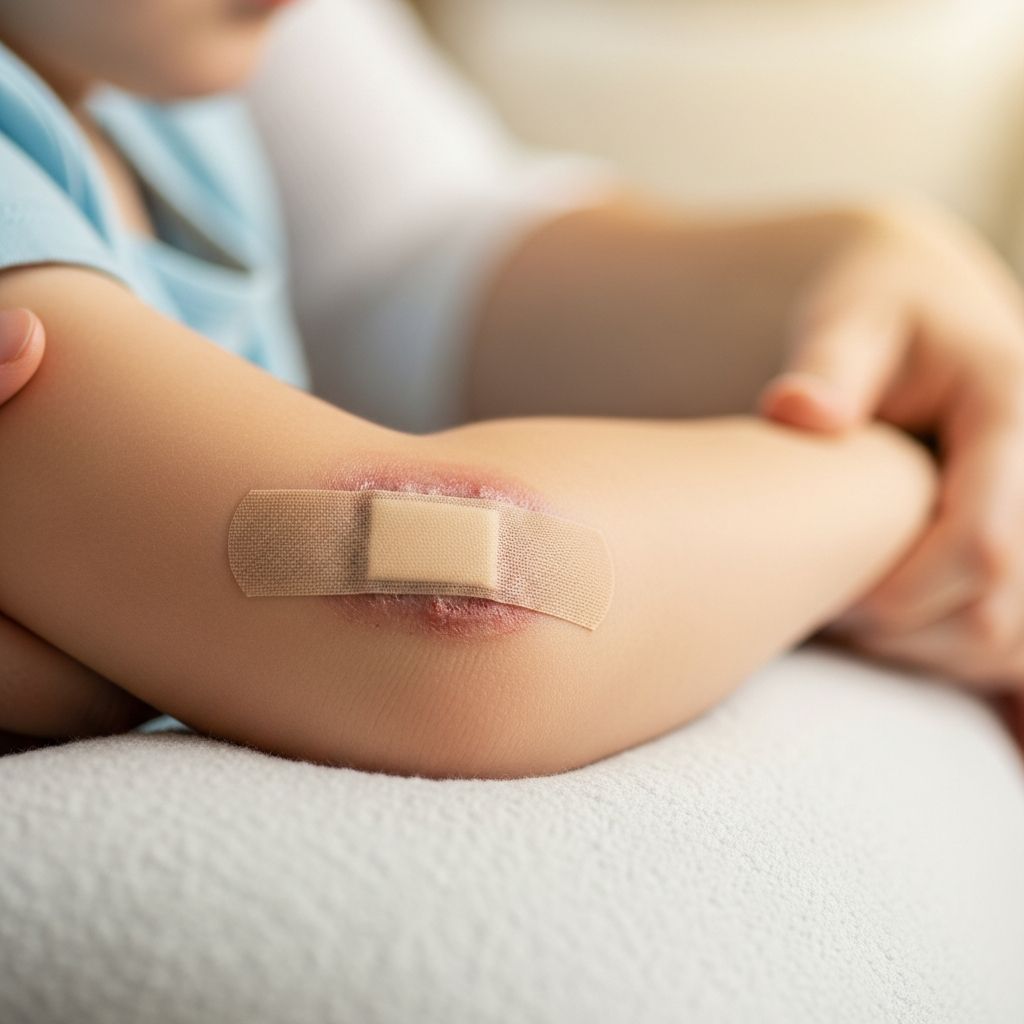
Active kids often fall on outstretched arms, so the elbow is a common place for cuts, scrapes, and other open wounds. Knowing how to respond calmly and correctly helps stop bleeding, lower infection risk, and protect your child’s ability to bend and use the joint comfortably.
This guide explains how to assess an elbow wound, give safe first aid at home, and recognize when professional medical care is needed.
Understanding Elbow Wounds in Children
An elbow wound usually happens when the skin over the bony point or sides of the elbow is scraped, cut, or punctured after a fall or direct blow. Because children often land on their arms, these injuries are very common in playground, sports, and bike accidents.
Common Types of Elbow Wounds
- Scrape (abrasion): Surface skin is rubbed off, often leaving a raw, oozing area with tiny bits of dirt or gravel.
- Cut (laceration): A slice or tear in the skin, which may be straight or jagged and sometimes gaping or deep.
- Puncture: A small but deep hole from a sharp object (like a nail or stick) that may introduce germs deep under the skin.
- Avulsion or flap: A piece of skin is partly torn away, sometimes exposing tissue underneath.
Even minor wounds can look dramatic on the elbow because the area flexes and is close to bone, but many can be safely treated at home with basic first aid.
First Steps: Stay Calm and Check for Serious Problems
Before focusing on the skin, quickly scan for signs of a more serious injury, such as a broken bone or major bleeding.
Quick Safety Check
- Make sure the scene is safe (away from traffic, sharp objects, or moving equipment).
- Reassure your child and have them sit or lie down to prevent fainting.
- Wash or sanitize your hands if possible before touching the wound.
Look for Red Flag Signs
Seek emergency care or call your local emergency number right away if:
- Bleeding soaks through cloth and does not slow after 10–15 minutes of firm pressure.
- Blood is squirting or pulsing, which can signal an injured artery.
- Your child cannot move the elbow or forearm, or the joint looks crooked or deformed (possible fracture or dislocation).
- You can see bone, tendon, or fat inside the wound.
- The wound is the result of a major fall, car accident, or other high-energy trauma.
Controlling Bleeding Safely
For most minor elbow cuts, gentle pressure is enough to stop the bleeding.
How to Stop the Bleeding
- Have your child sit or lie with the injured arm supported.
- Place a clean cloth, gauze, or the cleanest available fabric directly over the wound.
- Press firmly with your hand for 10–15 continuous minutes without lifting to “check.”
- If blood soaks through, add another layer on top; do not remove the first layer.
Once bleeding has slowed to a trickle or stopped, you can move on to cleaning. If heavy bleeding continues after 10–15 minutes of direct pressure, your child needs urgent medical care.
Cleaning an Elbow Wound: Step-by-Step
Cleaning removes dirt and germs that can lead to infection. For minor elbow scrapes and small cuts, this can usually be done at home.
Supplies You May Need
- Clean running tap water or sterile saline
- Mild soap for surrounding skin
- Gauze pads or soft cloth
- Tweezers cleaned with alcohol (for visible, easy-to-reach debris)
- Adhesive bandage, non-stick pad, or flexible wrap
- Optional: over-the-counter antibiotic ointment, if recommended by your doctor
Cleaning Process
- Wash your hands thoroughly with soap and water, if available.
- Rinse the wound under cool to lukewarm running water for several minutes to flush out dirt and bacteria.
- Gently clean the skin around the wound with mild soap and water, avoiding getting soap deep inside the cut, which can cause irritation.
- If you see small particles of dirt or gravel, remove them carefully with alcohol-cleaned tweezers if they are easy to reach. Do not dig into the wound; see a doctor if debris is deeply embedded.
- Pat dry the area around the wound with a clean cloth or gauze. Do not rub.
Many children find rinsing stings briefly. Explain what you are doing and remind them that good cleaning helps the wound heal and prevents infection.
Should You Use Ointments or Antiseptics?
Guidance on ointments and antiseptics has changed as experts have learned more about skin healing.
| Product Type | Typical Use | Key Points for Parents |
|---|---|---|
| Antibiotic ointment | Thin layer on clean minor cuts and scrapes | May reduce infection risk in some wounds; use sparingly and stop if rash or irritation develops. |
| Strong antiseptic creams or solutions | Previously used widely to “disinfect” wounds | Some can irritate tissue and may slow healing; many pediatric sources do not recommend routine use unless advised by a clinician. |
| Plain petroleum jelly | Keeping a clean wound moist | Helps maintain a moist environment that supports normal healing when used with a dressing. |
Always follow advice from your child’s doctor or local pediatric guidance if it differs from general recommendations.
Covering and Protecting an Elbow Wound
The elbow bends frequently and brushes against clothing, floors, and playground surfaces. Good protection helps prevent reopening and infection.
Choosing the Right Dressing
- Small scrapes or shallow cuts: An adhesive bandage designed for joints or a flexible, fabric strip that can bend around the elbow.
- Larger abrasions: Non-stick pad over the wound plus wrap or tape around, but not directly on, the injured area.
- Deep or gaping wounds: Often need stitches, medical glue, or adhesive strips placed by a clinician; follow your provider’s dressing instructions closely.
How to Apply the Dressing
- After cleaning and drying the area, apply a thin layer of antibiotic ointment or petroleum jelly if advised.
- Place a sterile, non-stick pad or bandage over the entire open area.
- Secure the dressing so it stays in place when the elbow bends but does not cut off circulation.
- Change the dressing at least once a day or sooner if it becomes wet or dirty.
Keeping the wound lightly covered and moist, rather than exposed and very dry, can support faster healing and more comfortable scab formation.
Monitoring for Signs of Infection
Even with careful care, any open wound can become infected. Children’s hospitals list several warning signs parents should watch for.
Early Signs to Watch
- Increasing redness around the wound, especially if it spreads or forms red streaks.
- Worsening swelling or pain after the first day or two.
- Warmth or throbbing at the wound site.
- Cloudy fluid or pus draining from the wound.
- Fever, feeling unwell, or your child complaining that the elbow is very sore or hard to move.
Small scrapes usually look better within a few days and heal within 3–7 days; deeper abrasions may take up to 1–2 weeks or longer. If the wound looks worse instead of better after 48–72 hours, contact your child’s doctor.
When a Doctor Should Close the Wound
Some elbow wounds are better closed by a healthcare professional to lower infection risk, speed healing, and reduce scarring.
Situations That Often Need Medical Closure
- Cuts that are deep, gaping, or more than about 1 inch long.
- Wounds with ragged edges or skin that does not come together easily.
- Injuries caused by dirty or rusty objects, animal or human bites, or heavily contaminated surfaces.
- Cuts that cross the joint or involve areas where scarring may limit motion.
Clinicians may use stitches, medical tape, or a special skin adhesive to bring the wound edges together. Follow their instructions carefully for cleaning, bathing, and stitch removal.
Pain Relief and Comfort Measures
Elbow wounds can be uncomfortable because the skin stretches and moves each time your child bends the arm.
Safe Pain Management
- Ask your child’s doctor about using acetaminophen or ibuprofen for pain, and follow age-appropriate dosing instructions exactly.
- Avoid aspirin in children and teens unless a doctor specifically recommends it, because of the risk of Reye syndrome.
- Elevating the arm on a pillow and using a cool compress around (not directly on) the dressing may ease discomfort.
Helping Healing: Activity and Protection
Children will naturally want to return to play quickly. You can balance healing with healthy activity using a few simple strategies.
Activity Tips
- Encourage gentle use of the arm once serious injury has been ruled out, but avoid contact sports or rough play until the wound has closed.
- Teach your child not to pick at scabs or edges of the dressing, which can restart bleeding and delay healing.
- Use long sleeves, elbow pads, or soft bandage wraps during risky activities once your doctor says it is safe to resume sports.
Preventing Future Elbow Injuries
No parent can prevent every fall, but some steps reduce the chance of serious elbow wounds.
- Make sure protective gear such as elbow pads and properly fitted helmets are used during biking, skating, or contact sports.
- Encourage children to follow playground and sports rules and to avoid pushing or roughhousing on hard surfaces.
- Teach older kids basic first aid skills, such as applying pressure and telling an adult right away if they are hurt.
Frequently Asked Questions (FAQs)
How do I know if my child’s elbow wound is “minor”?
A wound is usually considered minor if it is shallow, less than about an inch long, stops bleeding with 10–15 minutes of pressure, and your child can move the elbow normally without severe pain. If in doubt, contact your child’s doctor.
Can I leave a small scrape on the elbow uncovered?
Some very small scrapes can be left open to the air once a protective scab forms, but keeping the area lightly covered and moist often leads to more comfortable healing, especially on a joint that bends and rubs against clothing.
What if my child’s elbow wound gets wet in the bath?
Brief showers are usually fine once bleeding has stopped and the wound has begun healing, but soaking in a bath or pool can soften the scab and raise infection risk. Follow any specific instructions from your child’s clinician, especially after stitches or medical glue.
Does my child need a tetanus shot after an elbow cut?
Deep, dirty, or puncture wounds may require a tetanus booster depending on your child’s vaccination history and when they last received a dose. Your doctor or urgent-care clinician can review the record and advise you.
How long will it take the elbow wound to heal?
Most small scrapes and minor cuts improve significantly within a few days and heal in about 3–7 days. Larger or deeper abrasions and lacerations may take 1–2 weeks or more, and scars can continue to fade over several months.
References
- Wound Infection in Kids — Children’s Hospital Colorado. 2023-03-01. https://www.childrenscolorado.org/conditions-and-advice/conditions-and-symptoms/symptoms/wound-infection/
- Treating Minor Injuries in Children — University of Rochester Medical Center / American Academy of Pediatrics. 2022-06-01. https://www.urmc.rochester.edu/encyclopedia/content.aspx?contenttypeid=1&contentid=4078
- A to Z: Open Wound, Elbow (for Parents) — Nemours KidsHealth / CHOC Children’s. 2021-01-01. https://kidshealth.org/CHOC/en/parents/az-elbow-wound.html
- Kids Health Info: Cuts, Grazes and Lacerations — The Royal Children’s Hospital Melbourne. 2023-05-01. https://www.rch.org.au/kidsinfo/fact_sheets/Cuts_grazes_lacerations/
- Scrapes (Abrasions) in Children: Care Instructions — MyHealth Alberta. 2022-04-01. https://myhealth.alberta.ca/Health/aftercareinformation/pages/conditions.aspx?hwid=zx4640
- Scrape (Abrasion) Symptom Guide — HealthyChildren.org (American Academy of Pediatrics). 2022-09-01. https://www.healthychildren.org/English/tips-tools/symptom-checker/Pages/symptomviewer.aspx?symptom=Scrape
- Wounds in Children Factsheet — Sydney Children’s Hospitals Network. 2021-07-01. https://www.schn.health.nsw.gov.au/wounds-children-factsheet