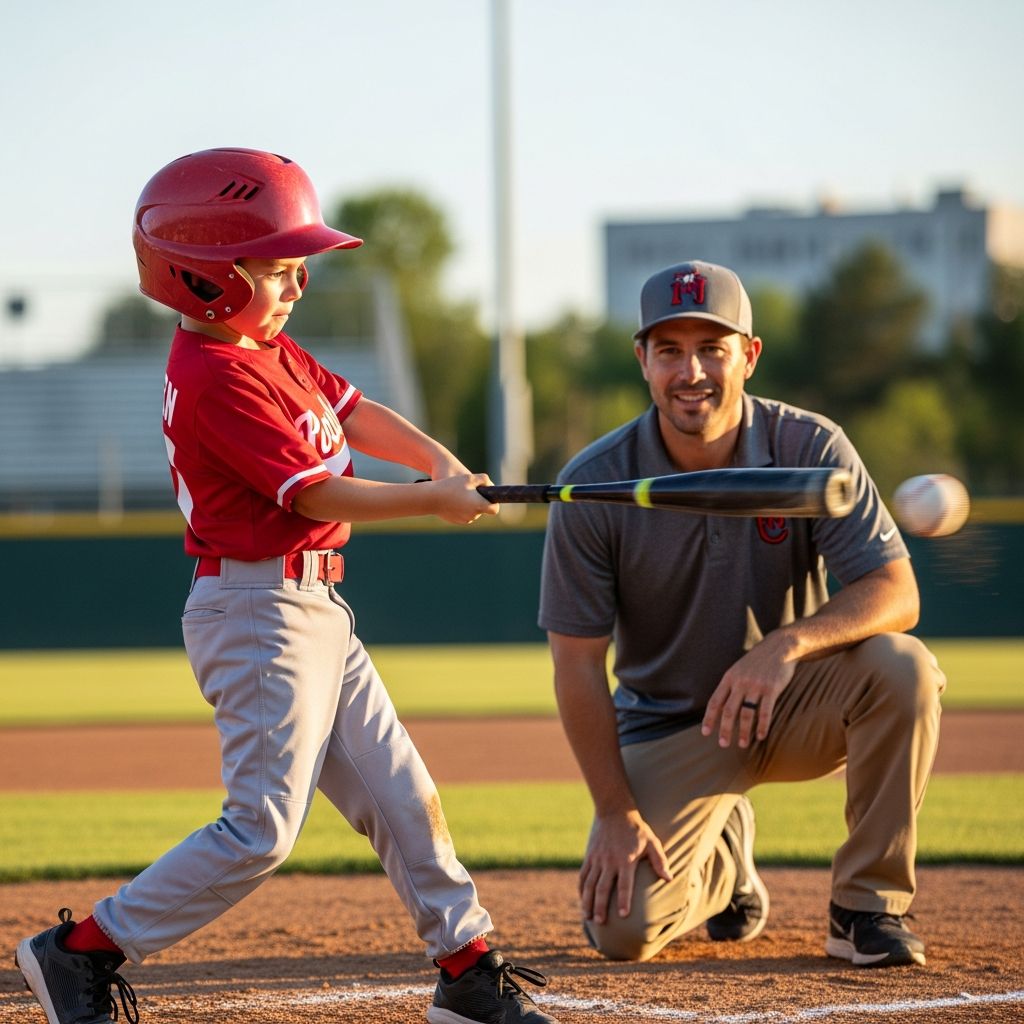
Helping children master the art of hitting in baseball requires patience, clear instruction, and engaging practice methods. This guide provides parents and coaches with foundational techniques, progressive drills, and strategies to foster proper mechanics while keeping sessions fun and effective for young athletes.
Building a Strong Foundation in Hitting Mechanics
The cornerstone of successful hitting begins with understanding core body positions and movements. Young players must first establish a stable base to ensure consistent contact and power generation.
Start with **stance and grip**. Position feet shoulder-width apart, with knees softly bent and weight balanced on the balls of the feet. The bat should be held firmly yet relaxed, with the top hand’s knuckles aligned and the bottom hand providing control. This setup promotes quick reactions to pitches.
Next, emphasize **balance and posture**. A centered head position and even weight distribution allow hitters to track the ball from release to contact. Hand-eye coordination drills, like following a tossed ball with eyes only, sharpen this skill before swinging.
Incorporate the three key principles: plane the pitch by matching the bat path to the ball’s trajectory, lead with hips to create torque for power, and keep hands inside the ball to avoid casting the bat outward. These elements form the bedrock for all advanced training.
Progressive Drills to Develop Swing Consistency
Drills should escalate from stationary to dynamic to mimic game conditions. Begin with simple exercises to ingrain muscle memory without overwhelming beginners.
- Tee Drills for Contact Mastery: Set up a batting tee at various heights and locations over the plate. Encourage level swings focusing on full extension and follow-through. Aim for line drives by hitting 10 balls inside, middle, and outside. This builds confidence and repeatability.
- Soft Toss for Timing: From the side, underhand toss lightweight balls while the hitter practices short, compact swings. Focus on watching the ball from the tosser’s hand and adjusting for pitch location. Sessions of 15-20 tosses per side improve reaction speed.
- Bottom Hand Isolation: Grip the bat with only the bottom hand to enhance bat speed and wrist strength. Hit off a tee or soft toss, keeping the elbow tucked and swing compact. Perform 10 reps per side to develop power without sacrificing control.
Table of Drill Progression:
| Drill Level | Focus Area | Reps per Session | Equipment Needed |
|---|---|---|---|
| Beginner | Tee Work | 20-30 | Batting Tee, Balls |
| Intermediate | Soft Toss | 25-40 | Net, Lightweight Balls |
| Advanced | Front Toss/Live | 15-25 | Partner, Protective Screen |
Rotate drills to maintain engagement, limiting each to 10-15 minutes for short attention spans.
Advanced Techniques for Power and Game Simulation
Once basics are solid, introduce elements that bridge practice to competition. These methods enhance timing, pitch recognition, and situational awareness.
**Front Toss and Live Pitching:** Position a coach 15-20 feet away behind a screen for underhand front tosses. Progress to overhand or machine-fed pitches at reduced speeds. Stress loading the hands back, striding minimally, and driving through the ball with hip rotation.
**Power V and Torque Drills:** Teach the ‘Power V’ where the front elbow points toward the pitcher at contact, ensuring hands stay inside. Use the ‘Trombone Drill’ by sliding hands along an imaginary path to contact, emphasizing hip-lead separation for explosive torque.
**Game-Like Scenarios:** Simulate pressure with runners on base or targets for hits (e.g., cones for gaps). Award points for line drives or specific zones to gamify practice, boosting competitiveness and focus.
For bat speed, incorporate top-hand drills with lighter bats, focusing on quick acceleration through the zone. Always prioritize form over distance to prevent bad habits.
Common Mistakes and How to Correct Them
Young hitters often develop flaws that hinder progress. Early identification prevents entrenched issues.
- Stepping Out or Dropping Hands: Caused by over-striding; correct with ‘foot-down’ drills where the front foot plants firmly during swing.
- Uppercutting or Rolling Over: Fix by reinforcing level bat plane and inside-hand path. Use chair drills placing a chair behind the tee to block casting.
- Poor Balance: Drill with eyes-closed stance holds or one-legged balance to build stability.
- Head Movement: Emphasize ‘head still, eyes on ball’ with verbal cues during tee work.
Provide immediate, positive feedback: praise efforts and suggest one adjustment per swing. Video analysis via phone apps helps visual learners self-correct.
Making Practice Fun and Sustainable
Repetition without enjoyment leads to burnout. Infuse playfulness to sustain motivation.
- Turn drills into competitions: teams score for hitting zones or most line drives.
- Use smaller balls (e.g., tennis or whiffle) for beginners to increase contact success.
- Incorporate music or themes, like ‘home run derby’ challenges.
- Keep sessions 45-60 minutes, mixing hitting with fielding for variety.
Parental involvement shines through encouragement over criticism. Celebrate small wins, like solid contact, to build resilience. Consistent 3-4 weekly practices yield noticeable improvements in weeks.
Age-Appropriate Milestones and Equipment
Tailor expectations by age:
- Ages 5-7: Focus on fun contact with tees and soft toss; use lightweight plastic bats.
- Ages 8-10: Introduce timing drills; standard youth bats (26-30 inches).
- Ages 11-12: Live pitching and simulations; drop-10 or BBCOR bats.
Safety first: always use helmets, protective screens, and supervise closely. Proper sizing prevents strain.
Frequently Asked Questions (FAQs)
What age should kids start learning to hit?
Around 5-6 years old with tee work and soft toss to build fundamentals without pressure. Progress based on readiness, not age.
How often should kids practice hitting?
3-4 times weekly for 30-45 minutes. Quality over quantity prevents fatigue and ingrains habits.
What’s the most important hitting principle for beginners?
Keeping hands inside the ball and maintaining balance for consistent contact.
How do I fix a child who swings too early?
Use front toss and verbal ‘wait-for-it’ cues; practice with varied speeds to improve timing.
Can parents coach without experience?
Yes, focus on basics, use videos for demos, and emphasize fun. Seek local clinics for advanced help.
Mastering baseball hitting empowers kids with discipline, coordination, and joy. Consistent, positive practice transforms novices into confident players ready for the field.
References
- Key Youth Baseball Hitting Drills Every Coach Should Know — GOROUT. 2023. https://gorout.com/youth-baseball-hitting-drills/
- Hitting Basics — Coach Baseball Right. 2023. https://coachbaseballright.com/coaching-academy/hitting-basics/
- 3 ESSENTIAL Baseball Hitting Drills for Kids! — YouTube (Video). 2023. https://www.youtube.com/watch?v=pRjscfWpdMw
- Basic Hitting 4 Easy Steps (Pro Speed Baseball) — YouTube (Video). 2023. https://www.youtube.com/watch?v=G_n_tlesB-I
- How to Teach Kids to Hit a Baseball: A Parent’s Guide — Field Sports Training. 2023. https://fieldsportstraining.com/blogs/news/how-to-teach-kids-to-hit-a-baseball-a-parents-guide