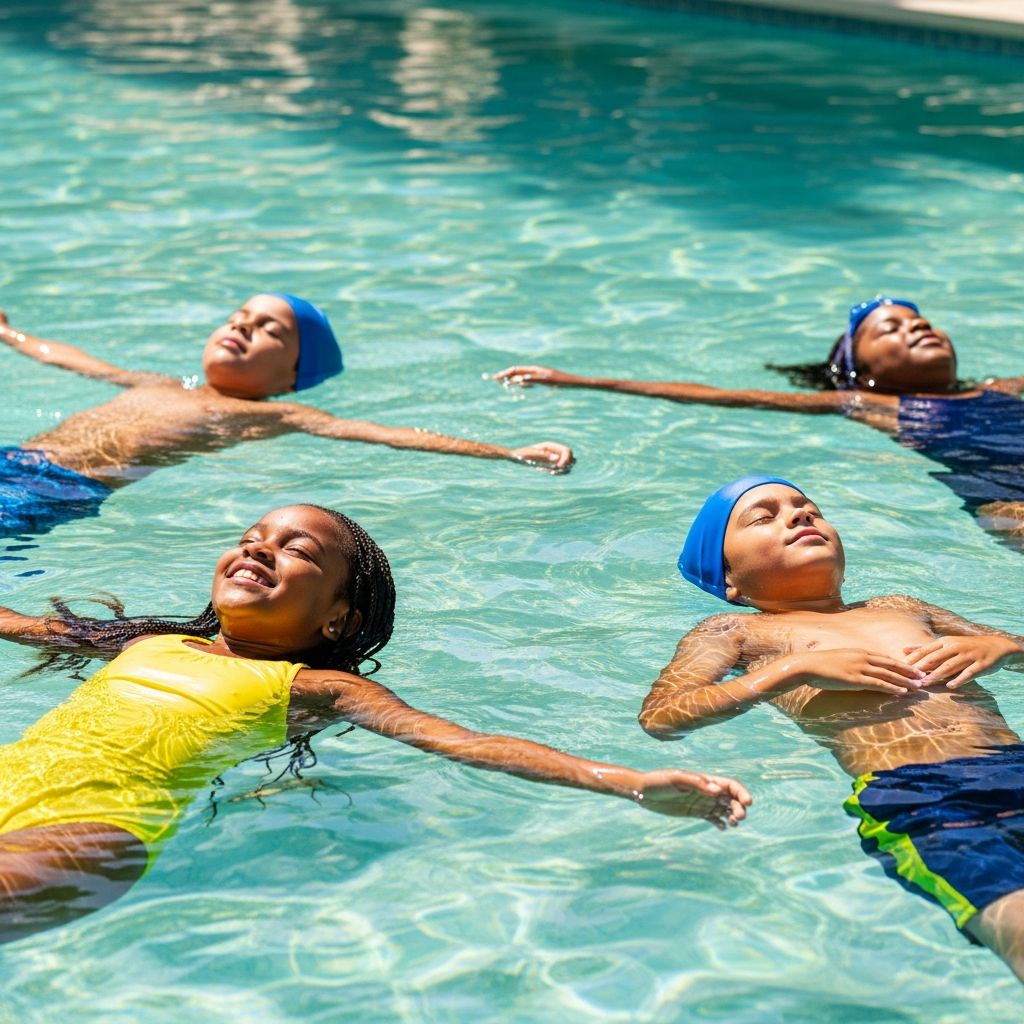
Teaching children to float is a cornerstone of water safety and swimming development. This fundamental skill helps kids feel buoyant, builds trust in water, and serves as the base for advanced strokes. Parents can guide this process at home or in shallow pools, fostering confidence without formal lessons.
Why Floating Matters for Young Swimmers
Floating teaches body position awareness, breath control, and relaxation—key to preventing panic in water. Organizations emphasize it as a primary safety measure, reducing drowning risks, which claim lives annually despite preventable measures. Mastery here transitions smoothly to gliding and propulsion.
- Builds buoyancy confidence: Kids learn water supports them when relaxed.
- Enhances safety: Independent floating buys time in emergencies.
- Prepares for strokes: Proper alignment sets up freestyle and backstroke forms.
Start in calm, shallow areas like pool steps or bathtubs to minimize fear. Patience yields results, turning hesitant splashers into poised floaters.
Preparing Your Child for Floating Success
Before floats, ensure comfort with water exposure. Practice face submersion and bubble blowing daily. These reduce tension, vital since stiff bodies sink.
| Prerequisite Skill | Purpose | Practice Tip |
|---|---|---|
| Face Wetting | Desensitizes to water on face | Pour cups over head, model smiling |
| Bubble Blowing | Teaches breath control | Blow through straws or mouth in tub |
| Superman Pose | Promotes straight-body line | Hold arms forward on dry land |
Use positive reinforcement: celebrate small wins with high-fives or choices like ‘two or three tries?’ Consistency across baths and pools accelerates progress.
Step-by-Step Back Floating Techniques
Back floating feels secure with head support first. Position in chest-deep water, facing the child.
- Initial Support: Cradle head on your shoulder like a pillow. Hands under back, lift belly to surface. Legs dangle relaxed.
- Spread and Relax: Guide arms to T-shape, legs slightly apart. Whisper ‘starfish’ for limb extension.
- Head Transition: Gently shift head to water surface, ears submerged. Maintain back support.
- Reduce Assistance: Use fewer fingers, then one hand. Encourage counting to chosen numbers for duration.
- Independence: Hands-off when buoyant; stay nearby.
Key cues: ‘Head back, belly up’ aligns body. Momentum from gentle rocking aids buoyancy. Practice 5-10 minutes per session.
Front Float Fundamentals for Prone Buoyancy
Front floats demand face-in-water comfort. Prerequisites: goggles optional, strong bubble skills. Begin at pool edge or steps.
- Arm Extension: Child grips step in Y-pose, arms forward.
- Leg Lift: Feet off bottom, legs surface-parallel. Support tummy if needed.
- Face Dip: Big breath, eyes down, blow bubbles steadily.
- Body Alignment: Arms out like wings, body straight. Loosen grip gradually.
- Progression: Away from edge, less support. Alternate bubble-breathe cycles.
Phrases: ‘Eyes to bottom,’ ‘Bubble pattern.’ Finger-counting games extend submersion. Relaxed starfish pose maximizes surface area.
Transitioning to Standing from Floats
Kids often struggle returning upright. End each float with clear cues.
- Back Float Stand: Tuck chin, push head forward off shoulder, sweep knees down.
- Front Float Stand: Lift face, exhale remaining air, knees to chest, feet plant.
Practice: ‘Feet down to stand.’ Repeat until automatic. This prevents disorientation.
Fun Games to Reinforce Floating
Games disguise drills, boosting engagement.
- Number Challenge: Float while counting to escalating numbers.
- Starfish Freeze: Pose on command, hold.
- Sink or Float: Predict toys’ behavior, mimic.
- Airplane Drift: Arms forward, gentle push for glide.
Incorporate songs: Float to rhythm of ‘Row, Row, Row Your Boat.’ Track progress in a sticker chart.
Safety Guidelines Every Parent Must Know
Supervise constantly; no distractions. Use within-arm’s reach rule. Avoid flotation aids initially—they hinder natural buoyancy learning. Check for cold shock risks in open water. Enroll in certified lessons post-basics.
Water safety campaigns stress practice: Drownings drop with skilled floaters.
Common Mistakes and Fixes
| Mistake | Why It Happens | Fix |
|---|---|---|
| Tense muscles | Fear of sinking | Deep breaths, games for relaxation |
| Head up too high | Breath holding panic | ‘Ears in water’ cue |
| Quick submersion quits | No rhythm | Bubbles-breathe pattern |
| Curled body | Unfamiliar pose | Land drills first |
Frequently Asked Questions (FAQs)
What age is best to start teaching floats?
Around 2-4 years, once comfortable in water. Adjust for readiness, not calendar age.
How long until independent floating?
Varies: weeks for some, months for others. Daily short sessions speed it up.
Can I teach without lessons?
Yes, for basics. Supplement with Red Cross programs for certification.
What if my child fears water?
Go slower: songs, toys, zero pressure. Model calm yourself.
Pool vs. ocean for practice?
Start pool: controlled depth, no currents. Ocean later with supervision.
Advanced Progressions After Floating
Once mastered, add kicks: Hold under tummy, flutter legs. Introduce rolls: Back to front for breaths. These evolve to full swims. Track via videos for form checks.
Parental involvement yields empowered swimmers. Consistent, joyful practice saves lives and creates memories.
References
- Swim Lessons for Life: Learn to Swim — USA Swimming. 2023-05-15. https://www.usaswimming.org/swim-lessons-for-life
- Water Safety: Learn to Swim — American Red Cross. 2024-02-10. https://www.redcross.org/take-a-class/swimming/swim-lessons/water-safety
- Swimming and Water Safety Skills Chart — American Red Cross. 2023-11-01. https://www.redcross.org/content/dam/redcross/training-services/swimming-and-water-safety/american-red-cross-swimming-and-water-safety-skills-chart.pdf
- Pool Safely Campaign Toolkit — U.S. Consumer Product Safety Commission (CPSC). 2025-01-20. https://www.poolsafely.gov/
- National Drowning Prevention Guidelines — World Health Organization (WHO). 2024-06-12. https://www.who.int/news-room/fact-sheets/detail/drowning